

The best CRM for short term rental hosts is one that captures every guest automatically into a database you own, not one Airbnb controls. Most hosts never realize they are building someone else’s guest list until a returning traveler books through the OTA again, costing another 15 to 20 percent in commission. The right guest CRM changes that equation permanently.
TL;DR: Key Takeaways
- A purpose-built STR CRM automatically captures guest contact data from every direct booking, so you own the relationship rather than surrendering it to Airbnb or Booking.com.
- The global property management software market is projected to grow from USD 29.19 billion in 2026 to USD 61.41 billion by 2034, according to Fortune Business Insights, signalling that purpose-built STR tech is accelerating fast.
- Solo hosts with 1 to 3 properties need a lightweight CRM that handles post-stay emails and basic segmentation. Professional managers running 20-plus properties need automation, multi-property pipelines, and deep PMS sync.
- The most overlooked CRM capability for STR operators is data portability: the ability to export your guest list as a CSV and own it permanently, independent of any platform.
- Repeat guest revenue is the highest-margin income stream in short-term rentals. A past guest who books direct skips the OTA fee entirely, meaning every returning visitor represents pure recovered profit.
- Boostly Connect automatically captures every direct booker into a host-owned CRM, then fires pre-built email sequences that convert past guests into permanent direct bookers, without any manual follow-up after setup.
At Boostly Connect, we have spent years helping more than 2,000 hosts across 25 countries build direct booking channels that collectively generate over one billion dollars in commission-free revenue. The most consistent pattern we see: hosts who win at direct bookings own their guest data. The ones who stay trapped on OTAs never do.
This article breaks down what a CRM actually does for short-term rental operators, how to match the right tool to your portfolio size, and why data ownership is the variable that separates a sustainable direct booking business from one that restarts from zero every season.

What Is a CRM and Why Do Short-Term Rental Hosts Need One?
A CRM, or customer relationship management system, is a database that stores guest contact information, booking history, and communication preferences so you can market directly to past guests without relying on a third-party platform. For short-term rental hosts specifically, a CRM is the operational foundation of any repeat booking strategy. Without it, every guest you welcome is effectively a stranger you will never hear from again unless they return through Airbnb.
The core problem is structural. When a guest books through Airbnb or Booking.com, the OTA retains the contact data. You see a first name and a masked email address. The OTA uses that guest’s full profile to remarket your own competitor’s properties the next time they search. You paid to deliver a great stay; the platform harvested the relationship.
A CRM built for STR operators flips that dynamic. Every guest who books through your direct channel has their full contact details, stay history, and preferences stored in a system you control. You can segment by visit frequency, average spend, or property preference and then send targeted campaigns at exactly the right moment, such as a pre-summer email to a guest who stayed last July, offering an early-bird direct rate before they think to check Airbnb.
Guest segmentation is one of the most valuable CRM capabilities in practice: distinguishing high-value repeat guests from first-time bookers and communicating differently with each group produces meaningfully better conversion rates than a single blast to your full list. This is the kind of precision marketing that OTA-dependent hosts simply cannot execute because they never owned the guest relationship in the first place.
What Software Do Short-Term Rental Hosts Use to Manage Guest Relationships?
Short-term rental hosts use a spectrum of tools to manage guest relationships, ranging from their PMS’s built-in contact records to standalone CRM platforms to all-in-one direct booking systems with CRM built in. Each category serves a different operator profile, and choosing the wrong one for your scale creates friction rather than solving it.
PMS-Native Guest Records
Most property management systems store basic guest data as a byproduct of booking management. You get a name, an email, a stay date, and a payment total. This is not a CRM. It is a transaction log. It does not enable segmentation, automated follow-up, or campaign triggers. For hosts just starting out with 1 to 2 properties and no direct booking channel yet, the PMS record is the baseline, but it is also the ceiling.
General-Purpose CRM Platforms
Platforms like Salesforce, HubSpot, and Pipedrive are powerful tools built for B2B sales teams. Some STR operators attempt to adapt them for guest management. The fundamental mismatch: these tools are designed around deal pipelines and sales stages, not around booking cycles, seasonal demand, and stay-based automation triggers. You can make them work, but you will spend significant setup time rebuilding logic that a purpose-built STR CRM handles automatically.
STR-Specific All-in-One Platforms
The strongest CRM approach for most short-term rental hosts is a system built specifically for the STR booking cycle: one that connects to your PMS, captures direct bookers automatically, fires post-stay sequences based on checkout dates, and stores guest data in an export-ready format you own permanently. This is the approach we built into Boostly Connect, because the generic alternatives consistently broke down at the exact moment hosts needed them most: when a repeat guest was ready to come back and there was no automated path to recapture that booking directly.
What Are the Best Property Management Systems for Short-Term Rentals?
The best property management systems for short-term rentals combine operational functionality (calendar sync, payment processing, housekeeping workflows) with guest data infrastructure that feeds a CRM. The key distinction in 2026 is whether the PMS treats guest contact data as an operational byproduct or as a strategic asset you can own and activate.
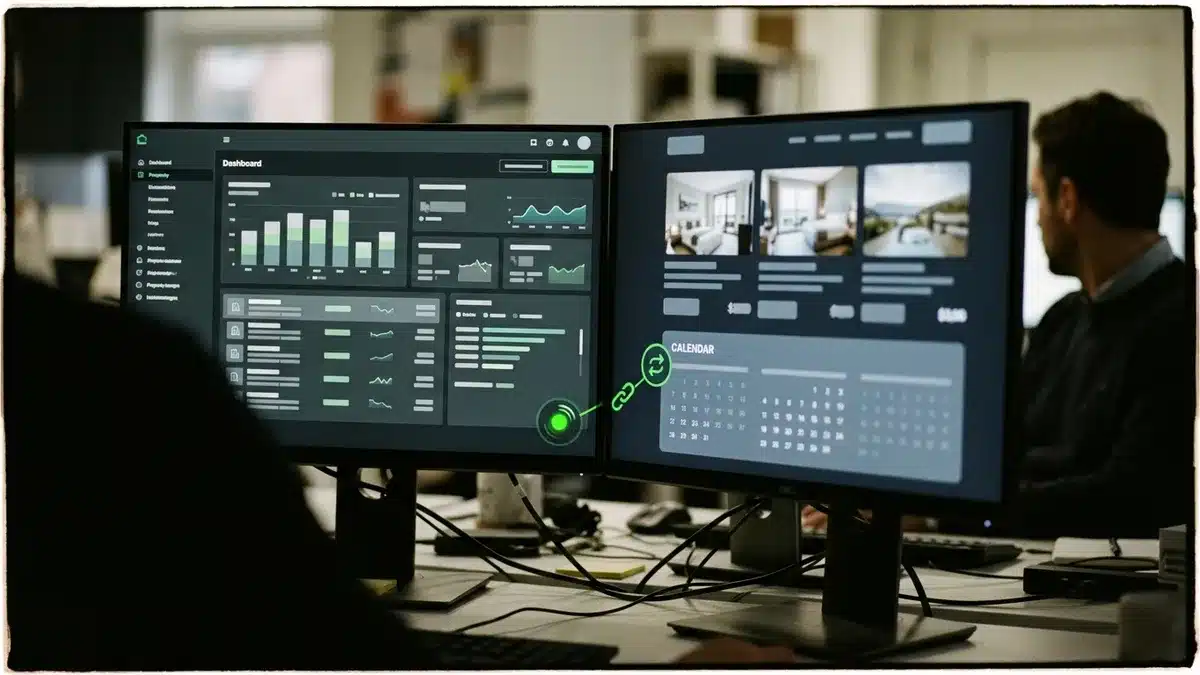
Boostly Connect supports 8 PMS integrations, including Hospitable, Guesty, Hostfully, Lodgify, and OwnerRez. Rather than replacing any of these tools, the platform sits on top of them, pulling live availability and real-time pricing into your direct booking website while simultaneously routing every direct booker’s data into your guest CRM. The PMS handles operations; Boostly Connect handles guest ownership.
What to Look for in a PMS-CRM Integration
When evaluating PMS and CRM compatibility, four criteria matter most. First, does the integration sync in real time or on a delay? A 15-minute sync window creates double-booking risk at peak demand. Second, does guest data flow automatically from the PMS into the CRM, or does it require a manual export? Manual processes break down at scale and create gaps in your guest record. Third, can you export your full guest database as a CSV at any time? This is the portability test, and it is the one most hosts forget to ask. Fourth, does the CRM trigger automation based on booking and checkout events from the PMS, or does it require manual campaign scheduling?
These four questions will surface the real capability of any PMS-CRM stack faster than a feature comparison table. Most platforms answer “yes” in their marketing copy. The actual integration depth is what separates a working system from a promise.
How Does Data Ownership Change the Direct Booking Equation?
Data ownership refers to whether the guest contact information collected during a booking is permanently accessible to the host or controlled by a third-party platform that can restrict, anonymize, or revoke access at any time. This distinction is the single most important and consistently overlooked factor in choosing a CRM for short-term rental hosts.
When a guest books through Airbnb, the platform provides you with a masked email address and a first name. After checkout, Airbnb retains the full guest profile, including email, booking history across the platform, and behavioral data. That profile is used to serve the guest future property recommendations, including your direct competitors. You delivered the stay; Airbnb owns the customer.
A direct booking through your own website changes this entirely. The guest’s full name, email address, phone number, stay preferences, and booking history sit in a database you control. You can email that guest directly. You can offer them a loyalty discount. You can send them a pre-season campaign tied specifically to the property they loved. And if you ever change CRM platforms, you take the entire list with you.
How to Build a Portable, Platform-Independent Guest Database
Building a truly portable guest database requires three things working together. First, a direct booking website that collects full guest contact details at the point of reservation, not a masked alias. Second, a CRM that stores those details in a structured format with export functionality. Third, a habit of treating your guest list as a business asset, not a byproduct of operations.
In practice, this means verifying that your CRM allows full CSV export at any time. It means ensuring your direct booking confirmation flow captures email opt-in for marketing communications (a legal requirement under GDPR for European guests and a best practice under CCPA for California guests). And it means having an email platform, whether integrated directly into your CRM or connected via an API, ready to activate that list the moment a campaign is relevant.
We built this data capture flow directly into Boostly Connect because we watched hosts work for years to build a guest database, only to realize the data lived inside a platform they did not fully control. Every direct booking through a Boostly Connect website adds the guest to a host-owned CRM automatically. No manual export. No data held hostage. The list is yours from the first booking forward.
What Are the Legal Considerations for Storing Guest Data in a CRM?
Storing guest data in a CRM creates real legal obligations that the vast majority of STR hosts are not aware of. In 2026, two regulatory frameworks apply to most English-speaking operators: the General Data Protection Regulation (GDPR) for guests who are European Union residents, and the California Consumer Privacy Act (CCPA) for guests who are California residents. Both require affirmative consent for marketing communications and give guests the right to request deletion of their data.
In practical terms, this means your direct booking confirmation flow must include a clear opt-in for email marketing, separate from the booking confirmation itself. It means your CRM must support unsubscribe requests and data deletion. And it means you should not import an Airbnb guest list into your CRM just because you have their email from a past stay: that data was collected under Airbnb’s privacy policy, not yours, and repurposing it for marketing is a compliance risk.
None of this is a reason to avoid building a guest CRM. It is a reason to build one correctly from the start. Consent-based email lists consistently outperform purchased or scraped lists on open rates, conversion, and long-term subscriber retention. Guests who actively opted in to hear from you are the guests most likely to rebook directly. Compliance and commercial performance point in the same direction here.
How Do CRM Needs Differ by Portfolio Size?
CRM needs for short-term rental hosts differ substantially by portfolio size, and most comparison articles ignore this entirely. A solo host managing 1 to 3 properties has fundamentally different automation needs, budget constraints, and technical bandwidth than a boutique property manager running 20-plus listings across multiple markets. Using an enterprise-grade CRM for a single property wastes time and money. Using a lightweight tool at scale creates blind spots and manual gaps.
Solo Hosts: 1 to 5 Properties
At this scale, the priority is simplicity and automatic capture. You want a CRM that requires zero manual data entry after setup, fires a post-stay email sequence without you touching it, and gives you a clean guest list you can segment by past stay. Complex pipeline management and multi-user workflows add overhead you do not need yet.
The most important feature at this scale: integration with your direct booking website so that every guest who books directly is in your CRM before you even see the reservation notification. That automatic capture is the difference between a CRM you actually use and one you eventually abandon because manual entry felt like too much work after a busy weekend.
Boutique Property Managers: 10 to 30 Properties
At this scale, guest segmentation becomes critical. Not every guest in your database should receive the same campaign. A guest who stays in your mountain cabin should hear about your new lakefront listing when it opens. A corporate travel guest who books mid-week blocks should receive different messaging than a family who stays during school holidays. A CRM that cannot segment by property type, stay pattern, or guest category will produce campaigns that feel impersonal and underperform.
You also need reliable multi-property pipeline management. At 15-plus properties, manual follow-up on every guest interaction is not operationally realistic. Automation triggers tied to checkout events are the only way to maintain consistent guest communication without hiring staff to manage it. This is exactly the problem the Boostly Connect email marketing infrastructure was built to solve: pre-built sequences that fire automatically based on checkout date, stay length, and property type, without requiring a marketing team to execute them.
Multi-Property Portfolio Operators: 30-Plus Properties
At this scale, the CRM is no longer a marketing tool. It is a business intelligence layer. You need to see repeat guest rates by property, revenue per guest over multiple stays, and campaign attribution that shows which email sequence drove which direct booking. You also need a CRM that connects seamlessly to your accounting workflow so that the revenue captured from direct bookings is tracked separately from OTA revenue.
One case study that illustrates the scale trajectory: after consistently applying direct booking strategies through Boostly, one operator grew from a handful of their own properties to a portfolio of more than 30 listings achieving 55 percent direct bookings. The guest CRM was not just a marketing tool at that point. It was the infrastructure that made landlord acquisition possible: a professional system that demonstrated to property owners that their assets were being managed with real marketing discipline, not just listed on Airbnb and forgotten.
How Can a CRM Help You Drive Direct Bookings and Reduce OTA Dependency?
A CRM drives direct bookings by converting past guests, who already trust you, into a repeat booking engine that operates independently of Airbnb’s algorithm. This is the highest-ROI use of guest data available to any short-term rental host, and it is the one most consistently underutilized because hosts never owned the data in the first place.
The core tactic is a post-stay email sequence. Within 24 to 48 hours of checkout, a warm message goes out acknowledging the stay and inviting the guest to rebook directly for their next visit, often with a direct-only discount code that gives them a concrete financial reason to bypass Airbnb. A second email at the 60 to 90 day mark re-engages guests who opened the first email but did not book. A seasonal campaign the following year catches guests at the moment they are planning a return trip.
This sequence does not require a large list to produce meaningful revenue. A B&B operator who implemented this approach through Boostly reached 90 percent direct bookings and 60 percent repeat guests. The sequence ran automatically after initial setup. No staff. No manual follow-up. The CRM and email automation handled the entire guest relationship lifecycle.
The math on repeat guest revenue is straightforward. A guest who paid for a previous stay and returns directly skips the 15 to 20 percent OTA commission entirely. If that stay is worth a meaningful amount, every repeat direct booking represents substantial recovered profit. Multiply that across your guest list over 12 months and the CRM pays for itself many times over.
How Do You Compare CRM Options for Short-Term Rental Hosts?
Comparing CRM options for short-term rental hosts requires evaluating tools across five dimensions that matter in practice: guest data ownership, PMS integration depth, automation capability, compliance readiness, and data portability. The table below maps these criteria across the three main approaches hosts take.
| Criteria | OTA-Native Guest Records (Airbnb/Booking.com) | General-Purpose CRM (adapted for STR) | STR-Specific CRM with Direct Booking Integration |
|---|---|---|---|
| Guest data ownership | Platform retains full guest profile; host receives masked contact only | You own what you manually import; no automatic capture from OTA | Full guest details captured automatically at direct booking; host owns the database |
| PMS integration | Native to PMS; no external sync needed | Requires custom integration or manual CSV import | Direct PMS sync via API; real-time or near-real-time update |
| Post-stay automation | Limited to platform-native review request; no direct marketing | Possible with configuration; requires significant setup time | Pre-built sequences trigger automatically on checkout event |
| Compliance readiness (GDPR/CCPA) | Platform manages compliance for OTA-sourced data | Manual compliance setup required; no built-in consent capture | Consent capture built into direct booking flow; unsubscribe managed automatically |
| Data portability | No export of masked guest data; data stays on platform | Full CSV export typically available | Full CSV export available; data is host-owned and portable |
| Best for | Hosts with no direct booking channel (transitional phase only) | Tech-comfortable operators willing to invest in configuration | Hosts at any scale who want an automatic, owner-operated guest database |
The general-purpose CRM option is worth noting honestly. If you already have a strong email platform and a developer relationship, adapting a tool like HubSpot for STR guest management is possible. It is not the most efficient path, but it works for operators who have specific customization requirements that purpose-built STR tools do not cover. The trade-off is setup time and ongoing maintenance versus a system that works out of the box for the STR booking cycle.

What Does Airbnb Actually Do with Your Guest Data?
Airbnb retains full guest profiles, including email addresses, booking history across the platform, behavioral data, and travel preferences, and uses that data to power its own remarketing engine. When a guest who stayed at your property opens the Airbnb app two months later, the platform shows them properties similar to yours: your direct competitors, in your market, at competitive rates. You hosted the stay. Airbnb owns the remarket.
This is not a criticism of Airbnb as a discovery platform. OTAs are genuinely effective at acquiring new guests who would never have found your property otherwise. The problem is not using Airbnb; the problem is assuming that Airbnb guests are your guests. They are Airbnb’s guests who happened to stay with you. The distinction is commercial, not philosophical: every returning guest who books through Airbnb again costs you another commission on revenue you already earned once.
The 75/55 rule that surfaces in Airbnb hosting discussions refers to Airbnb’s host cancellation policy thresholds rather than any data ownership framework. But the data ownership issue is the more pressing commercial concern for hosts focused on building a sustainable business. Building a direct booking channel alongside your OTA presence, rather than instead of it, gives you the discovery benefit of Airbnb while giving you the relationship equity of direct guest ownership.
What Practical Steps Should You Take to Set Up a Guest CRM That Works?
Setting up a guest CRM that actually drives direct bookings requires four steps in the right order. Skip any of them and the system develops gaps that accumulate silently until you try to run a campaign and realize half your guest records are incomplete.
- Launch a direct booking website with a native booking engine. Your CRM is only as good as the data that flows into it. A direct booking website with a secure payment flow captures full guest details at the point of reservation. Without this, you have no legal basis to collect and store guest contact information for marketing purposes, and you have no automatic source of new records.
- Connect your PMS to the booking site and CRM simultaneously. The PMS should be the single source of truth for availability and pricing. The booking website reads from the PMS in real time. The CRM receives guest data from every completed booking. This three-way connection eliminates manual data entry entirely. Boostly Connect connects all three in under 20 minutes, with no developer required,.
- Configure post-stay automation sequences before you go live. Do not launch the direct booking site and plan to set up the email sequences later. They rarely get done. Build the post-stay sequence first: a 24-hour checkout message, a 60-day re-engagement email with a direct booking incentive, and a pre-season campaign trigger. These three sequences cover the majority of repeat booking opportunities for most STR operators.
- Verify your data export and compliance setup. Before your first direct booking arrives, confirm that your CRM exports a clean CSV, that your booking confirmation flow includes a clear marketing opt-in, and that your unsubscribe mechanism works. Run a test booking yourself. These three checks take less than 30 minutes and prevent compliance issues that are far more time-consuming to fix retroactively.
For hosts who want to see the full workflow in action across their specific PMS and portfolio size, learn more about how Boostly Connect’s real-time pricing and booking integration works before deciding on a CRM approach. Seeing the data flow in a live environment is the fastest way to assess whether a system will genuinely serve your portfolio or require workarounds from day one.
Frequently Asked Questions
What is the best CRM for short term rental hosts with a small portfolio?
For hosts managing 1 to 5 properties, the best CRM for short term rental hosts is one that captures guest data automatically from every direct booking, requires minimal manual setup, and fires post-stay email sequences without ongoing intervention. An all-in-one platform that combines a direct booking website, PMS sync, and built-in CRM is more practical than a standalone CRM that requires separate configuration. The priority at this scale is automatic capture, not advanced segmentation.
What does Airbnb do with guest data after a stay?
Airbnb retains the full guest profile, including email address, booking history, and travel preferences, and uses it to power its own remarketing engine. Hosts receive only a masked contact alias and a first name. The guest’s full details remain inside Airbnb’s platform, which uses them to recommend competing properties to the same guest on future searches. This is why building a direct booking channel, which captures full guest data into a host-owned CRM, is commercially significant for any host focused on repeat revenue.
Is it legal to store guest data in a CRM for marketing purposes?
Yes, provided you collect affirmative consent at the point of booking. For European Union guests, GDPR requires a clear opt-in for marketing communications, separate from the booking confirmation itself. For California guests, CCPA applies similar consent and data deletion rights. Your direct booking confirmation flow should include a marketing opt-in checkbox, and your CRM should support unsubscribe requests and data deletion. Building these compliance elements in from the start is faster than retrofitting them after your list has grown.
What CRM does Airbnb use internally?
Airbnb uses enterprise-scale customer relationship management infrastructure to manage its global platform, including guest and host communications, but this internal tooling is not accessible to individual hosts. Hosts listed on Airbnb do not have access to Airbnb’s CRM or the guest data it manages. This is precisely why building your own guest CRM through a direct booking channel is the only way to own the guest relationship independently of whatever platform you use for distribution.
Can I export my guest list from a CRM if I switch platforms?
Yes, if you choose a CRM with data portability built in. Any CRM worth using for short-term rental guest management should allow full CSV export of your guest database at any time, with no restriction and no data held back. This is the portability test: before committing to any CRM, confirm you can export your full list in a standard format. If the answer is no, or if the process requires a support ticket and a waiting period, treat that as a disqualifying signal. Your guest list is a business asset that should travel with you.
What is the 75 55 rule for Airbnb?
The “75/55 rule” as it circulates in hosting communities typically refers to Airbnb’s Extenuating Circumstances cancellation policy thresholds, where certain cancellation rates trigger host review, rather than any guest data or CRM framework. It is not a direct booking or CRM concept. For hosts focused on reducing OTA dependency, the more commercially relevant figures are the 15 to 20 percent commission Airbnb charges on every reservation and the 65 percent direct booking rate that represents a sustainable long-term channel balance for most independent operators.
How do I use a CRM to get more direct bookings from past guests?
The most effective approach is a three-step post-stay sequence: a warm checkout email within 24 to 48 hours that invites the guest to rebook directly for their next visit, a re-engagement email at the 60 to 90 day mark offering a direct-only discount, and a seasonal campaign the following year timed to when the guest is likely planning a return trip. These sequences should trigger automatically based on the checkout date in your CRM, not require manual scheduling. Hosts who implement this approach consistently see meaningful repeat direct booking rates that compound over time as the guest list grows.
How long does it take to set up a direct booking website with a CRM integration?
With Boostly Connect, the PMS integration takes under 5 minutes for any of the 8 supported systems. The full direct booking website, including live availability, payment processing, and CRM connection, goes live in under 20 minutes. No developer and no coding knowledge are required. The post-stay email sequences are pre-built and activate automatically after the CRM connection is live. The total time from decision to first direct booking infrastructure is shorter than most hosts expect.
Conclusion: Own Your Guest List or Keep Paying to Borrow It
The best CRM for short term rental hosts is not a software feature checklist. It is a decision about who owns your guest relationships. Every year you operate without a host-owned guest database is a year where returning guests default back to Airbnb, costing you commission on revenue you already earned once. The CRM is the infrastructure that stops that loop.
In 2026, the tools to build a fully automated guest capture and re-engagement system are faster to set up and more affordable than most hosts realize. The global STR market is expanding, according to Precedence Research, and the operators who will capture the most of that growth are the ones who own their guest data today, not two seasons from now when the market becomes more competitive.
The practical path forward is clear: launch a direct booking website that captures full guest details, connect it to your PMS, configure three automated email sequences, and verify your data portability. That four-step process converts a guest list you borrowed from Airbnb into a business asset you own permanently.
Boostly Connect clients reach 65 percent direct bookings within 12 months, and if they do not, we keep working with them at no additional cost until they do. That guarantee applies to hosts who implement the full system: website, CRM automation, and email sequences working together. More than 2,000 hosts across 25 countries have already built exactly this, collectively generating over one billion dollars in direct bookings. The next step is a 20-minute demo.
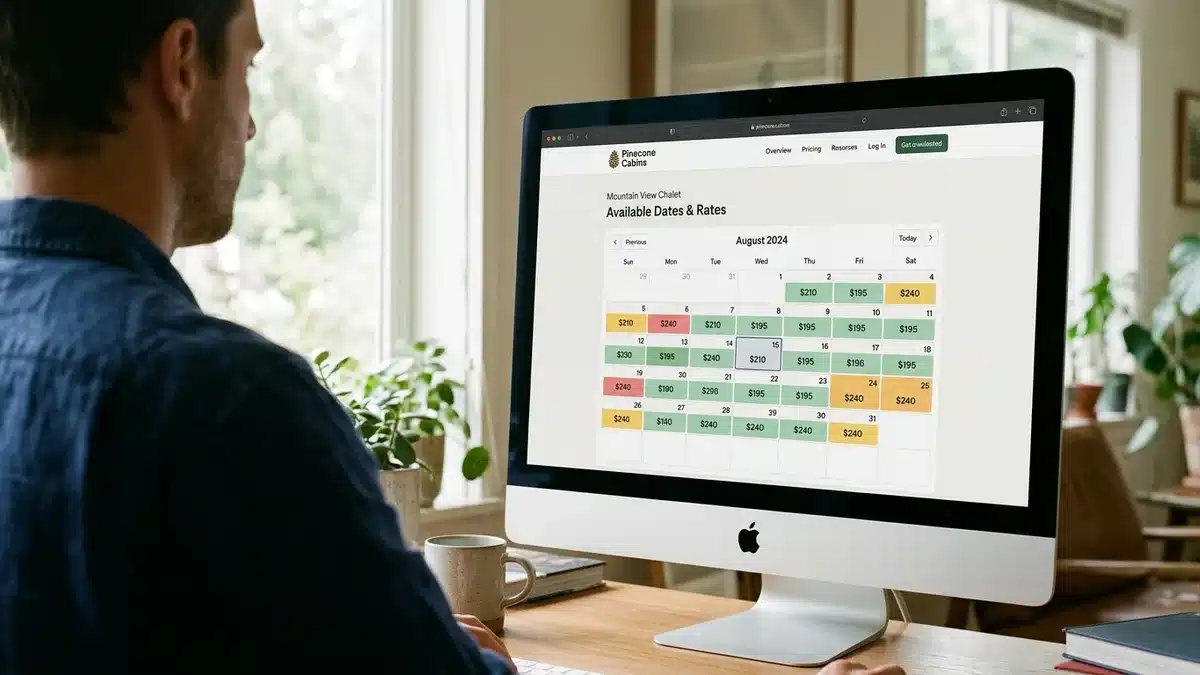
If you are ready to stop building Airbnb’s guest list and start building your own, get started with Boostly Connect and see how the PMS sync, direct booking website, and guest CRM work together for your specific portfolio. Book a demo at connectyourpms.com and we will show you exactly what the system looks like on your own properties.