

Airbnb pay refers to the payout a host receives after a guest’s stay, calculated as the nightly rate plus any extra charges like cleaning fees, minus Airbnb’s host service fee and any co-host share. For most reservations, Airbnb releases that payout by the end of the business day after the guest’s scheduled check-in, though the money can take additional time to land in a bank account depending on the payout method selected.
Key Takeaways
- Airbnb typically releases host payouts by the end of the business day after scheduled check-in for most home reservations, though your bank or payment provider adds its own processing time on top of that.
- Airbnb charges guests a service fee on top of the nightly rate, and separately deducts a host service fee directly from the payout before it ever reaches your account.
- Reservations of 28 nights or longer follow a different schedule: hosts get paid in monthly installments rather than one lump sum after checkout.
- New hosts or accounts flagged for policy issues can see delayed payouts, sometimes released only after checkout instead of check-in.
- Co-hosts have 14 days to confirm or decline a payout split proposal, with options ranging from a flat cleaning fee to a percentage of the total booking.
- Every dollar routed through Airbnb pay is a dollar subject to commission and delay; Boostly Connect gives hosts a direct booking channel where the guest pays the host directly, with no payout schedule to track or fee to reverse-engineer.
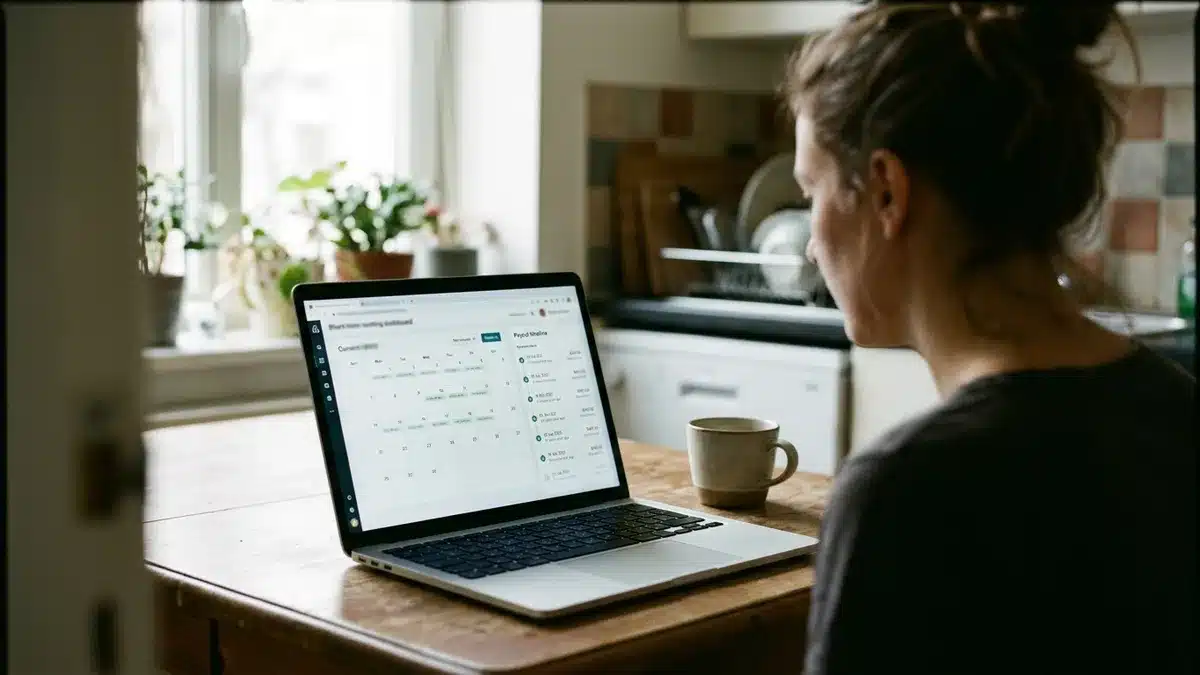
If you host on Airbnb, you’ve probably stared at your Earnings dashboard wondering why the number doesn’t match what you expected, or why a payout that should have landed on Tuesday still hasn’t shown up in your bank account by Thursday. That confusion is common, and it’s rarely explained well in one place.
In 2026, Airbnb still runs on a rigid payout system: a release date set by Airbnb, followed by a separate delivery window controlled by your bank or payment provider. Most hosts conflate the two, which is where the frustration starts. At Boostly Connect, we work with hosts every day who are trying to reconcile OTA payout timing against their own cash flow, and the pattern is always the same: nobody explains the four separate dates involved until something goes wrong.
This guide walks through how Airbnb pay works step by step, covering release timing, payout methods, the fee math behind your actual deposit, and monthly stay installments, plus what to do when a payout is missing. We’ll also cover why relying entirely on this system leaves money and control on the table for every host who never builds a direct booking channel alongside it.
How Does Airbnb Pay Work?
Airbnb pay works by holding the guest’s full payment at booking, then releasing the host’s share on a schedule tied to check-in, not checkout. Airbnb initiates the payout by the end of the business day after scheduled check-in for most home reservations, assuming the guest’s payment clears successfully.
That release date is the first of four separate dates hosts need to track. The second is when Airbnb actually sends the funds to your chosen payout method. The third is your payment provider’s processing window. The fourth is when the money physically posts to your bank account, which can lag behind the other three by days depending on your bank’s own systems.
A bank transfer or direct deposit can take a few business days beyond the release date, while faster methods like Pay to card typically arrive in 30 minutes or less once released, in regions where that option is available. Hosts who confuse “released” with “received” are the ones most likely to file a support ticket over a payout that is just still moving through their bank’s system.
This is exactly the kind of operational friction that disappears when a guest pays you directly instead of through a third party. A direct booking through your own site settles through your own payment processor on your own terms, without a separate release schedule layered on top of a separate bank processing window.
What Is the 80/20 Rule for Airbnb?
There is no officially documented “80/20 rule” published by Airbnb for host payouts or pricing, and hosts searching for this term are often looking for guidance on service fee structure or occupancy targets. What is well documented is the split-fee model Airbnb uses for most bookings, where a guest-side service fee is charged on top of the nightly rate, and a separate host service fee is deducted from the payout before it reaches the host.
Airbnb charges guests a service fee on top of the nightly rate. The host-side fee is calculated as a percentage of the total booking subtotal and is automatically subtracted before your payout is calculated, which is why the number in your Earnings dashboard is always lower than the nightly rate you set.
If you came looking for a specific ratio to plan your pricing around, the more useful framework is understanding that guest and host fees are charged separately, on different sides of the same transaction. As a result, the price a guest sees is never the number you actually receive.
We’d rather hosts spend less energy chasing informal “rules” and more energy understanding their real net revenue per booking, which is exactly what the true cost of Airbnb commission deserves a closer look at on its own.
How Does Airbnb Pay $0 Now Work?
Airbnb’s “Pay $0 now” or split-payment option lets guests reserve a stay by paying only a portion of the total upfront, with the remaining balance charged automatically closer to check-in. For hosts, this changes nothing about payout timing on your end. Your payout is still calculated and released relative to the check-in date, regardless of how the guest chose to pay.
The risk sits entirely on Airbnb’s side of guest payment collection, not yours. If a guest’s second charge fails, Airbnb handles that collection issue internally. Your payout schedule and payout amount are based on the full reservation total, not on whether the guest has fully paid yet at the time your payout is calculated.
What matters more for hosts is understanding that flexible guest payment options like this are a retention feature for Airbnb, designed to reduce booking abandonment on their platform. It has no equivalent benefit for you as the host beyond the booking itself going through.
This is one more example of a payment mechanic entirely controlled by the platform, with no visibility or control handed to the host. A guest booking directly through your own website pays you on your terms, whether that’s full payment at booking or a deposit structure you design yourself.
How Much Does Airbnb Charge as a Fee?
Airbnb charges fees on both sides of a booking: a guest-side service fee added at checkout, and a separate host service fee deducted from your payout. Guests pay a service fee on top of the nightly rate and any extras; the exact percentage varies by reservation.
The host-side fee is calculated by multiplying your total booking subtotal , nightly rate plus applicable extra charges , by a set percentage, then deducting that amount automatically before your payout is finalized. You never manually pay this fee; it’s already subtracted by the time the number hits your Earnings dashboard.
For 2026, this remains Airbnb’s core monetization model: a percentage taken from both guest and host on nearly every transaction that flows through the platform. Airbnb’s scale runs into the millions of active listings and hosts globally, and that fee structure compounds into a substantial annual transfer of host revenue to the platform itself.
That’s the exact math we built Boostly Connect to interrupt. Every booking that moves to your own direct channel, synced from your existing property management system to your own WordPress site, is a booking where that host service fee simply does not apply. We’ve watched enough hosts calculate their true annual commission loss to know it’s rarely a small number once you add up every reservation across a full year.
What Determines When Airbnb Releases Your Payout?
Airbnb’s payout release date is determined primarily by your reservation’s check-in date, your hosting history, and your account’s verification status. For most home reservations, both host and co-host payouts go out by the end of the business day after scheduled check-in.
Several factors can shift that timeline earlier or later:
- Standard reservations: Released the business day after check-in, per Airbnb’s Payments Terms of Service, provided guest payment clears successfully.
- Policy or standards violations: A host who breaches Airbnb’s terms, policies, or community standards may have their payout held until one business day after checkout instead of check-in.
- New or unverified hosts: Hosts with fewer than two completed stays and an unverified listing location may see payout timing shift, particularly on longer bookings.
- Weekend and holiday timing: “Business day” excludes weekends and bank holidays, so a Friday check-in can push the actual release into the following week.
The payout method you’ve selected adds its own delay on top of Airbnb’s release date. A bank transfer moves at your bank’s pace; a faster method like Pay to card generally settles in 30 minutes or less after release, in eligible regions.
This is why we always tell hosts in our coaching calls to check two things separately: when Airbnb marks a payout as “released” in the Earnings dashboard, and when your specific payout method actually delivers funds. Treating those as the same date is the single most common source of payout confusion we hear about.
How Do You Set Up a Payout Method on Airbnb?
Setting up a payout method on Airbnb is done through your account’s payment settings, where you select from available options like bank transfer, Pay to card, or a regional method such as Western Union, depending on your country. You cannot receive a payout until at least one method is added and verified.
Here’s the general process:
- Go to your Airbnb account payments and payouts section.
- Select “Add payout method” and choose the option available in your country or region.
- Enter your bank account, card, or transfer service details exactly as required, since a mismatch will delay verification.
- Confirm any identity verification steps Airbnb requests, particularly for new hosts.
- Set your preferred method as default if you have more than one on file.
Processing times vary meaningfully by method. Western Union payouts typically arrive within one business day, though this varies by country. An international wire payout generally takes three to seven business days after Airbnb releases the funds, which is significantly slower than domestic options.
Hosts sometimes assume a slow payout means something went wrong with the reservation, when it’s just the method they chose. If cash flow timing matters to your business , and it usually does when you’re covering cleaning costs between bookings , choosing the fastest available method for your region is worth the setup time.
Where Can You Check Your Airbnb Payout Status?
You can check your Airbnb payout status in the Earnings section of your host dashboard, which shows upcoming payouts, completed payouts, and itemized details for each individual booking. This is the single source of truth Airbnb points hosts to for any payout question.
The dashboard typically breaks payouts into a few states: upcoming (calculated but not yet released), in progress (released by Airbnb but still processing through your payment method), and completed (funds delivered). Each entry lets you drill into the itemized breakdown showing nightly rate, extra charges, and fees deducted.
For hosts managing several properties, reconciling this dashboard against a bank statement and a separate spreadsheet becomes its own monthly chore. This is one of the reasons we built a unified reporting layer into Boostly Connect. Instead of toggling between an OTA dashboard and your own books to figure out what actually landed, your direct booking revenue sits in one place you control, with no third-party release schedule to track at all.
How Does Airbnb Calculate Your Net Payout?
Airbnb calculates a host’s net payout using a fixed formula: nightly rate multiplied by number of nights, plus any optional extra charges like a cleaning fee or extra-guest fee, minus the host service fee and any co-host payout share. This is the exact math behind every number in your Earnings dashboard.
Here’s a simplified worked example using round numbers for clarity. Say a guest books five nights at $200 per night, for a $1,000 subtotal, plus a $75 cleaning fee, for a total of $1,075 before Airbnb’s host service fee is deducted. The host service fee is calculated as a percentage of that $1,075 subtotal and subtracted automatically. Whatever remains after that deduction, and after any co-host share if one applies, is your actual net payout.
| Line Item | Example Calculation | Running Total |
|---|---|---|
| Nightly rate x nights | $200 x 5 nights | $1,000 |
| Cleaning fee | Flat fee added | $1,075 |
| Host service fee | Percentage deducted from subtotal | Reduces total |
| Co-host share (if applicable) | Percentage or flat amount per agreement | Further reduces total |
| Net host payout | Amount released to payout method | Final deposit amount |
This is precisely the reconciliation gap most competing payout explainers skip: they explain the formula in the abstract but never show a guest’s total price alongside the host’s actual deposit side by side. Once you can see that gap in dollar terms across a full year of bookings, the case for building a direct channel becomes obvious rather than theoretical.
How Do Monthly Stay Installments Change the Payout Schedule?
Airbnb pays hosts for reservations of 28 nights or longer through monthly installments rather than a single lump sum after checkout. This schedule exists because long-term stays tie up significantly more money per booking, and Airbnb spreads the release risk across the reservation length.
For a host with fewer than two completed stays whose listing location is not verified, the first installment on a 28-night-or-longer reservation may not release until 28 days after check-in, notably later than the standard schedule. Verified, established hosts generally see installments release on a more predictable monthly cadence tied to the stay’s progress.
If you manage properties that lean toward extended stays , relocation guests or remote-work travelers, for example , this installment structure directly affects your cash flow planning. A single 90-night booking isn’t one payout event; it’s three, spaced roughly a month apart, each calculated independently.
Multi-property operators juggling several long-stay bookings across different listings often lose track of which installment is due when. That’s a scheduling problem our multi-property clients solve by centralizing bookings and guest data in one system rather than tracking installment dates across a dozen separate Airbnb listings, which is exactly what a connected approach to managing multiple vacation rentals is designed to prevent.
What Should You Do When a Payout Is Missing or Delayed?
A missing Airbnb payout is usually explained by one of a handful of common causes: an unverified payout method, a policy-related hold, a weekend or holiday delay, or a transaction still under review. Working through these in order resolves most cases without needing to contact support.
Use this checklist before assuming something is broken:
- Check your Earnings dashboard status first. If it shows “upcoming” rather than “in progress,” Airbnb hasn’t released it yet, and no amount of bank checking will find money that hasn’t been sent.
- Confirm your payout method is verified. An unverified or recently changed payout method can hold a release until verification completes.
- Account for weekends and bank holidays. A “business day” release timeline skips non-business days entirely, which can add two to three calendar days without anything being wrong.
- Check for a transaction review flag. Airbnb occasionally reviews transactions for standard fraud-prevention reasons, which pauses release until the review clears.
- Review your account standing. A policy violation hold shifts your release timing from check-in-based to checkout-based, which can look like a delay if you’re expecting the standard schedule.
- Verify your listing location status if you’re a newer host, since unverified locations affect timing on longer stays specifically.
If all five checks come back clean and the payout is still missing past the expected window, that’s the point to contact Airbnb support directly with your reservation confirmation code ready.
How Do Co-Host Payouts Work?
Co-host payouts on Airbnb work through a payout proposal the listing owner sets up, which the co-host must confirm or decline within 14 days. Once confirmed, that split applies automatically to future payouts without either party needing to manually calculate anything per booking.
Co-host payout structures generally fall into a few configurations:
- A flat cleaning fee only, where the co-host is compensated purely for turnover work.
- A cleaning fee plus a percentage of the remaining booking total, excluding the cleaning fee itself.
- A percentage of the full payout, which can be structured to include or exclude the cleaning fee.
- A fixed dollar amount per booking, regardless of nightly rate or length of stay.
For most home reservations, both the host and co-host portions are released by the end of the business day after scheduled check-in, following the same core timing rules as a standard payout, just split between two payout methods instead of one.
Boutique property managers running co-hosted portfolios told us repeatedly that reconciling multiple co-host splits across different owners was their single biggest bookkeeping headache. That’s part of why we built reporting into Boostly Connect that separates direct booking revenue by property automatically, so a management fee or co-host arrangement doesn’t require a separate spreadsheet on top of what the platform already shows.

Data Snapshot: Payout Methods and Typical Timing
The table below summarizes typical timing differences across common payout methods referenced in Airbnb’s own payment documentation. Actual timing always depends on your bank, region, and account status, so treat these as general ranges rather than guarantees.
| Payout Method | Typical Delivery Time After Release | Best Suited For |
|---|---|---|
| Pay to card | Around 30 minutes or less, in eligible regions | Hosts who want the fastest access to funds |
| Bank transfer / ACH | Several business days, bank-dependent | Hosts prioritizing standard, low-fee transfers |
| Western Union | Typically one business day, varies by country | Hosts in regions with limited bank transfer options |
| International wire | Three to seven business days after release | Hosts receiving payouts across borders |
Notice that even the fastest method here is still bound entirely by Airbnb’s release schedule first. In contrast, a direct booking through your own site can settle through your own payment processor without a separate platform-level release gate sitting in front of your bank’s processing time.
Why Does Relying Solely on Airbnb Pay Limit Your Business?
Relying entirely on Airbnb pay means every dollar you earn passes through a fee structure and release schedule you don’t control. It also means Airbnb, not you, holds the guest’s contact information for future marketing. That second point matters more than most hosts realize until a returning guest books through the platform again instead of coming back to them directly.
Airbnb operates at massive scale globally, with millions of active listings and a large share of the vacation rental market. That scale is exactly why competition for visibility keeps intensifying, even as the fee structure taking a cut of every booking stays constant.
We founded Boostly Connect because our own founder, Mark Simpson, personally recovered over $30,000 a year once he stopped routing every booking through OTA commissions. That recovered revenue came specifically from building a direct channel where guests book, pay, and stay in his own CRM rather than Airbnb’s remarketing database.
In practice, that means connecting your existing property management system , whether that’s Hospitable, Hostfully, Lodgify, or Guesty , directly to your own WordPress website in under 20 minutes, with live availability and real-time pricing pulled straight from your PMS. Every guest who books that way lands in your own CRM automatically, not Airbnb’s. You can read more about what to actually prioritize in a direct booking website for short-term rentals if you’re evaluating your options.
How Should Hosts Balance Airbnb Payouts With Direct Booking Revenue?
The most sustainable approach for hosts in 2026 is running both channels simultaneously rather than abandoning Airbnb outright. Airbnb remains a genuine discovery engine for new guests, while a direct booking channel is where you retain and monetize repeat guests without paying a recurring commission on relationships you already built.
We consistently see hosts worry that shifting focus toward direct bookings will hurt their Airbnb search ranking. It doesn’t have to. You keep your existing listings live and active while simply redirecting returning guests, past inquiries, and referral traffic to your own site instead. Airbnb doesn’t penalize you for having a website; it only ranks you based on your performance on its own platform.
Our case data across the Boostly community backs this up directly. One bed and breakfast operator grew from a generic, inconsistent website to 90 percent direct bookings and 60 percent repeat guests by focusing marketing effort on their own channel rather than abandoning OTAs cold. A separate independent operator went from zero to 55 percent direct bookings across a growing portfolio over time, after starting with a single £800 direct booking from one tactic learned in a free challenge.
The practical first step is usually the smallest one: capture guest emails and phone numbers from every booking you already have, and start sending past guests directly back to your own site for their next stay. That’s the exact function our CRM built for short-term rental hosts automates, so repeat-guest outreach doesn’t depend on you remembering to export a guest list manually. You can see more on structuring that balance in our guide to balancing OTA and direct bookings in 2026.
Frequently Asked Questions
What percentage does Airbnb take from hosts?
Airbnb deducts a host service fee calculated as a percentage of your total booking subtotal, separate from the guest-side service fee guests pay at checkout. The host-side fee is deducted automatically before your payout is calculated, so check your specific reservation breakdown in the Earnings dashboard for the exact figure applied to that booking.
How much of a cut does Airbnb take overall?
Airbnb takes a cut from both sides of nearly every transaction: a guest service fee added at checkout and a separate host service fee subtracted from your payout. The exact combined impact varies by reservation length, extra charges, and region, which is why reviewing the itemized breakdown on each booking in your dashboard gives a more accurate picture than any single flat percentage.
What CRM does Airbnb use for guest data?
Airbnb manages guest and host messaging internally through its own platform and does not give hosts export access to a full CRM of guest relationship data in the way a dedicated CRM tool would. This is why hosts who want to own their guest data and repeat-booking outreach need a separate system; Boostly Connect automatically captures every direct booking guest into the host’s own CRM rather than leaving that data inside Airbnb’s platform.
How does Airbnb pay hosts after checkout?
For most home reservations, Airbnb releases the host payout by the end of the business day after scheduled check-in, not checkout. The exception is when a host has a policy or standards violation on their account, in which case the release timing shifts to one business day after checkout instead.
How long does it take to set up a direct booking website with Boostly Connect?
Boostly Connect syncs your existing PMS to a done-for-you WordPress website in under 20 minutes, with no developer and no coding required, supporting up to 10 listings at no upfront cost. Live availability and real-time pricing pull directly from your connected PMS as soon as setup completes.
Will switching to direct bookings hurt my Airbnb search ranking?
No. You keep your existing Airbnb listings active and visible while building a direct booking channel alongside them. Airbnb ranks listings based on performance on its own platform, not on whether a host also markets a separate website, so most hosts run both channels together rather than choosing one over the other.
Which property management systems integrate with Boostly Connect?
Boostly Connect supports 27 PMS integrations, including systems like Hospitable, Hostfully, Lodgify, and Guesty, letting hosts plug in their existing property system in under five minutes and immediately display live availability and real-time pricing on their own site.
Conclusion: Understanding Airbnb Pay Is Only Half the Picture
Airbnb pay follows a predictable formula once you separate the release date, the payout method’s processing time, and the fee deductions applied along the way. Standard reservations release by the end of the business day after check-in, long stays follow a monthly installment schedule, and co-host splits run through a confirmation process before payouts even begin. Understanding that sequence resolves most of the confusion hosts run into with missing or delayed money.
But understanding the system doesn’t change what it costs you. Every payout that flows through Airbnb still carries a host service fee, and every guest who books that way stays inside Airbnb’s guest database rather than yours. The math on that adds up fast across a full year of bookings, and it compounds every time a repeat guest rebooks through the platform instead of coming back to you directly.
Fixing that doesn’t require a developer, a new tech stack, or months of setup. It requires connecting the PMS you already use to a website built to convert repeat guests into direct bookings, which is exactly what Boostly Connect does in under 20 minutes. If you’re ready to see what a direct booking channel synced to your own property data looks like in practice, get started with Boostly Connect and book a demo to walk through it with your own listings.

If you’re tired of watching your Earnings dashboard tell you what Airbnb decided to release rather than what your business actually earned, a direct booking website changes that math permanently. See how Boostly Connect connects your PMS, website, and CRM so your next repeat guest pays you directly instead.