

When a guest cancels an Airbnb booking, what you get paid depends on which cancellation policy you have set on your listing and how many days before check-in the guest cancels. Under a Flexible policy, guests get a full refund up to 24 hours before check-in. Under Firm, the window stretches to 30 days. Everything in between determines whether you keep the booking revenue or watch it disappear.
Key Takeaways
- Airbnb’s guest cancellation refund amount depends on the host’s chosen policy tier: Flexible, Moderate, Limited, Firm, or Strict for long-term stays.
- Guests cancelling a home reservation under a Limited or Firm policy inside the free window still get 50% back for all nights if they cancel between 7 and 14 (or 7 and 30) days before check-in.
- For monthly stays of 28+ nights, hosts are paid 100% for the remaining nights if the guest cancels with fewer than 30 nights left on the reservation.
- Airbnb typically charges guests a service fee on top of the nightly rate, separate from any refund a host owes on a cancelled stay.
- Cancelled dates typically reopen on your calendar once the cancellation processes, but timing varies by policy tier and payout status.
- Boostly Connect reduces how often a cancelled Airbnb reservation becomes a total loss by routing repeat guests to a direct booking channel you control, rather than a platform reservation you can’t influence after the fact.
Every host who has run a short-term rental for more than a season has felt this moment: the notification pops up, a guest has cancelled, and now you’re doing mental math on refund percentages instead of guest turnover. As short-term-rental supply keeps expanding and occupancy sits in the mid-range for much of the market, every cancelled night matters more, not less.
This guide walks through exactly what happens on both sides of a guest cancellation on Airbnb: what refund the guest receives, what payout you keep, and how the calendar behaves afterward. We also cover the parts most cancellation explainers skip entirely, like refund processing timelines and what a guest actually sees when they cancel through the app.
At Boostly Connect, we work with hosts every day who are frustrated by how little control they have once a booking lives entirely inside Airbnb’s system. Understanding the mechanics of a guest cancel Airbnb scenario is the first step. Building a channel where you have more say in the outcome is the next.
What Happens If a Guest Cancels on Airbnb?
When a guest cancels on Airbnb, the reservation status changes immediately, the guest’s refund is calculated against your listing’s cancellation policy, and your payout is adjusted to match whatever portion of the stay falls outside the guest’s free cancellation window. The policy tier does all the work here, not luck or timing on your part.
Airbnb calculates the cancellation deadline based on the listing’s local check-in time, or 3:00 PM if no check-in time is set on the listing. If you’ve never explicitly set a check-in time, Airbnb defaults to 3:00 PM for the purpose of the refund clock, which can shift the deadline by hours depending on your actual check-in window.
As a result, the guest receives a full refund, a partial refund, or no refund, and your payout follows the opposite pattern, depending entirely on the timing. This is why choosing the right policy tier when you list a property is not a minor setting. It’s the difference between a cancelled stay costing you one night’s revenue or the entire reservation.
In our experience working with independent owners and boutique property managers, the hosts who get hurt hardest by cancellations are the ones running a Flexible or Moderate policy on a high-demand property, where a same-week cancellation leaves almost no time to refill the calendar.
Do Airbnb Guests Get Penalized for Cancelling?
Airbnb guests don’t face a direct fee for cancelling, but they forfeit some or all of their payment depending on your cancellation policy and how close to check-in they cancel. The “penalty,” functionally, is the money they don’t get back.
Under a Flexible policy, a guest who cancels more than 24 hours before check-in faces effectively no penalty; they’re refunded in full. Under Moderate, that window is 5 days. Under Limited, guests cancelling 7 to 14 days out still get 50% back for all nights, not zero. Under Firm, that same 50% floor applies between 7 and 30 days out.
Cleaning fees are fully refunded only if the guest cancels during the free cancellation period tied to your policy. Cancel outside that window, and the cleaning fee typically stays with the payout structure rather than being returned.
For long-term stays of 28 nights or more, a separate Strict long-term policy applies: guests can cancel within 48 hours of booking and at least 28 days before check-in for a full refund. Miss that window on a monthly stay, and the payout math shifts to the 30-remaining-nights rule described below.
How to Cancel an Airbnb Guest Without Penalty (For Hosts)
Host-initiated cancellations work differently from guest cancellations, and they come with real consequences you should understand before you ever hit that button. Airbnb’s host cancellation policy imposes a minimum cancellation fee of $50 USD for host-caused cancellations, and the fee scales up from there.
Host cancellation fees can run 10%, 25%, or 50% of the reservation amount, depending on how close to check-in you cancel. The closer to arrival, the steeper the fee. This structure exists because a last-minute host cancellation leaves a guest scrambling for alternative lodging, often at a higher price, so Airbnb designs the penalty to discourage it.
If you need to cancel a reservation you accepted, review the situation carefully first. A pending trip request, one the guest submitted but you haven’t yet accepted, can be withdrawn or declined without triggering reservation or service fees on either side. That’s meaningfully different from cancelling a confirmed booking.
For situations involving a documented Major Disruptive Event, something outside anyone’s control like a large-scale service disruption in the destination, Airbnb’s separate disruption policy may waive the standard host cancellation penalty. This is not the same as ordinary host discretion; it requires the event to meet Airbnb’s specific criteria.
If host-caused cancellations are becoming a recurring problem in your portfolio, that’s usually a signal of an overbooking or calendar-sync issue rather than a policy question. We built managing multiple vacation rentals without chaos content around exactly that problem, and Boostly Connect’s PMS-synced direct booking site is designed to keep availability accurate across every channel so you’re never forced into a costly host cancellation because two platforms both confirmed the same date.
Can You Remove Yourself as a Guest on Airbnb?
Guests can remove themselves from a reservation by canceling their own booking through the Trips page, but they cannot simply “opt out” of a confirmed stay without triggering the cancellation policy that applies to that listing. There’s no separate mechanism for quietly stepping away from a booking.
To cancel, a guest opens the Trips section of their account, selects the reservation, and follows the cancellation flow, which displays the refund amount before the guest confirms. This same flow works whether the guest is cancelling a home reservation or a service or experience booking.
For services and experiences, the cancellation structure is simpler and shorter. Most listings use a 1-day cancellation policy, allowing cancellation until 24 hours before the start time, while some hosts set a 3-day policy requiring cancellation 72 hours out. These deadlines are based on the local time zone of the service or experience, not the guest’s home time zone.
If a guest cancels a service or experience booking outside that free window, they typically receive no refund unless a special policy or host discretion applies. That structure is stricter than most home reservation tiers, and it catches first-time bookers off guard.
What If a Guest Cancels an Airbnb Reservation After Check-In?
If a guest cancels after they’ve already checked in, Airbnb expects them to leave the property right away, and the remaining nights are typically handled according to the same policy tier that governed the original booking. This is one of the least-covered edge cases in most cancellation guides, and it creates real logistical friction for hosts.
For a standard short stay, a mid-stay cancellation usually means you retain payout for nights already used plus whatever the policy dictates for the remaining nights. For a long-term stay, the monthly rule kicks in: if fewer than 30 nights remain when the guest cancels, you’re paid 100% for those remaining nights, which meaningfully protects payout on extended reservations.
Separately, guests who experience a genuine problem with the property, something broken, unsafe, or materially different from the listing, have a different path. They must start a cancellation request tied to a reservation issue within 72 hours of discovering the problem to remain eligible for a refund under that process, and Airbnb typically asks them to document the issue with photos or video.
This is different from a standard preference-based cancellation, and it’s worth knowing the distinction because it affects whether you, as the host, might be asked to cover a refund outside your normal policy tier.
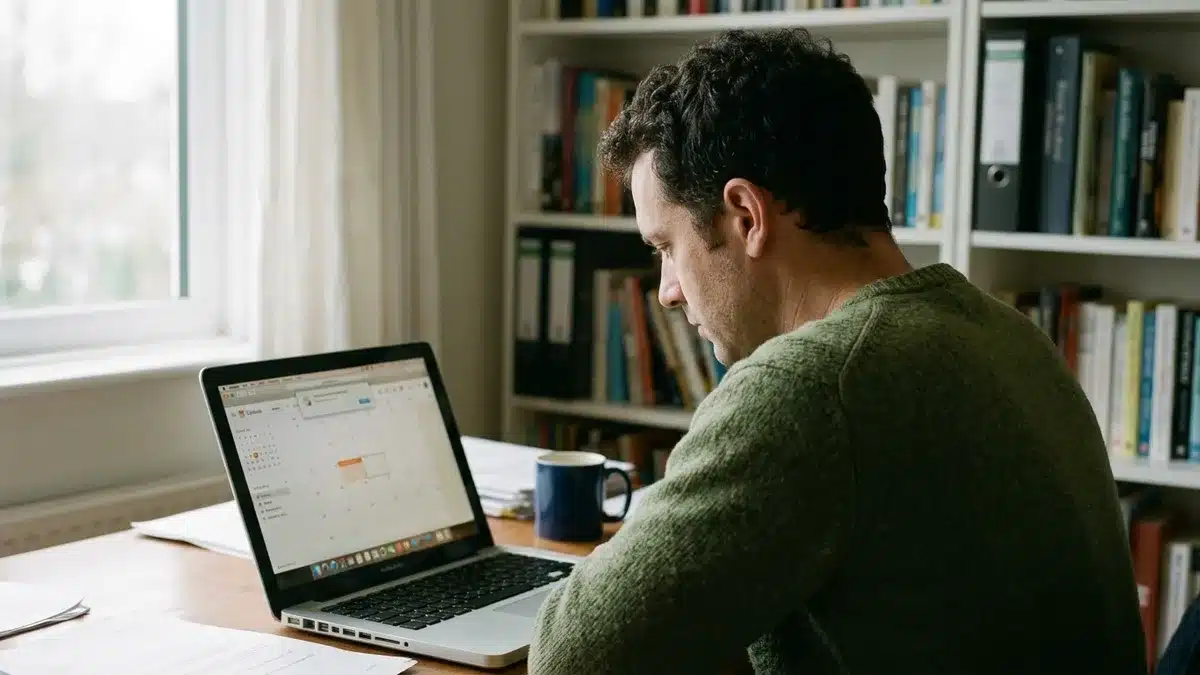
Airbnb Cancellation Policies Compared: Which One Should You Choose?
Airbnb’s cancellation policy tiers each strike a different balance between guest flexibility and host revenue protection, and the right choice depends on your booking lead time and how far in advance your calendar typically fills. Here’s how the core tiers stack up.
| Policy Tier | Full Refund Window | Partial Refund Rule | Best Fit For |
|---|---|---|---|
| Flexible | Up to 24 hours before check-in | None beyond the window | High-demand urban listings with short lead times |
| Moderate | Up to 5 days before check-in | None beyond the window | Balanced hosts wanting guest-friendly terms with some protection |
| Limited | Up to 14 days before check-in | 50% for all nights if cancelled 7 to 14 days out | Seasonal or destination properties with longer booking cycles |
| Firm | Up to 30 days before check-in | 50% for all nights if cancelled 7 to 30 days out | Premium listings with high fixed turnover costs |
| Strict (long-term) | Within 48 hours of booking, at least 28 days before check-in | 100% for remaining nights if under 30 nights left at cancellation | Monthly stays and extended-stay portfolios |
None of these tiers protect you from the guest data problem underneath all of this. When a guest cancels through Airbnb, whatever you learn about that guest stays inside Airbnb’s system. If they rebook later, they’re just as likely to search Airbnb again as to come find you directly, because you never captured their contact details in the first place. Our piece on owning guest data from Airbnb goes deeper on why that matters long after the refund is processed.
How Long Does an Airbnb Cancellation Refund Take to Process?
Airbnb cancellation refunds are typically processed by Airbnb within a short window after the cancellation is confirmed, but the funds’ actual arrival in the guest’s account depends on their bank or card issuer’s own processing timeline, which Airbnb does not control. This two-step lag is where most guest confusion, and most host support messages, actually originates.
For hosts, the payout side works differently: your payout adjustment reflects the cancellation policy calculation immediately in your Airbnb account, even if the guest’s refund hasn’t fully posted on their end yet. First-time hosts should also know that Airbnb may hold the payout until 30 days after the reservation was originally confirmed, which affects how quickly a cancellation-driven adjustment reaches your bank account.
If a guest disputes a refund amount or believes they’re owed more under AirCover or a Major Disruptive Events situation, that review process runs separately and can extend the timeline considerably. Airbnb continues to lean on these structured policies rather than case-by-case negotiation for most standard cancellations, which is generally good for predictability even when it doesn’t favor the host in a given case.
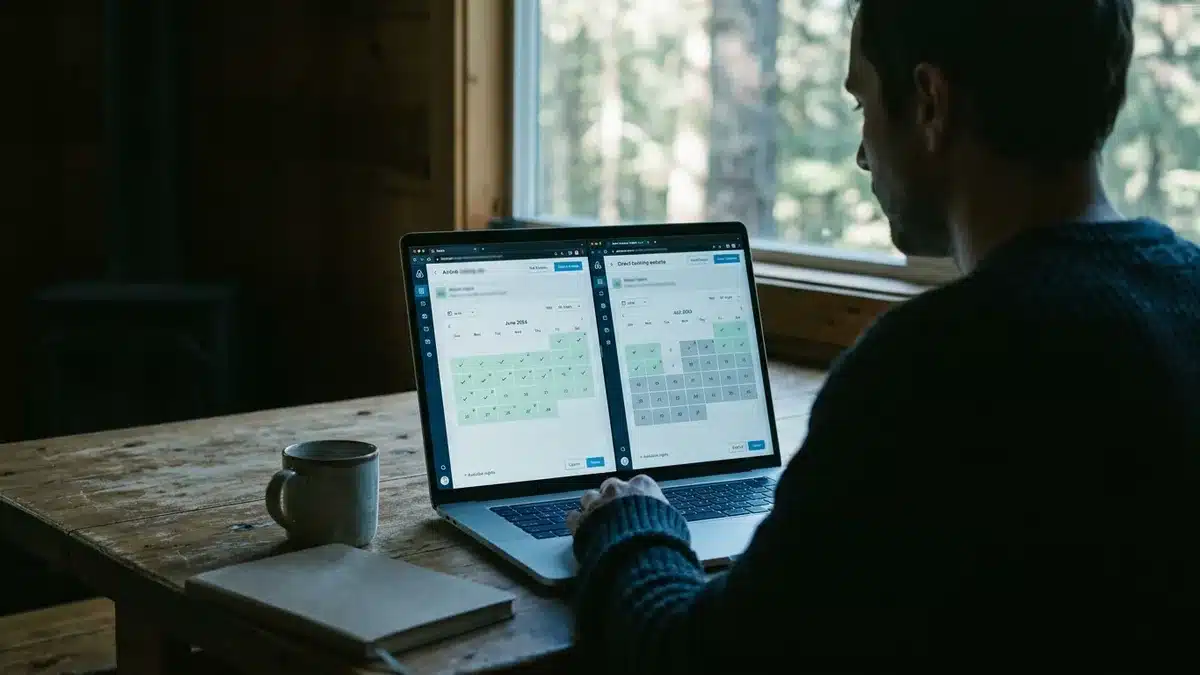
When Do Cancelled Dates Reopen on Your Calendar?
Cancelled Airbnb dates typically reopen on your listing’s calendar shortly after the cancellation is processed, but the exact timing can vary depending on whether the cancellation is guest-initiated, host-initiated, or tied to a disputed reservation issue under review. A standard guest cancellation usually frees the dates fast enough to still capture last-minute demand, particularly for short lead-time bookings.
This is exactly the moment where a lot of hosts lose revenue they didn’t need to lose. If your only booking channel is Airbnb, you’re now hoping Airbnb’s own search algorithm resurfaces your newly available dates to the right traveler in time. There’s no way to actively market that specific reopened window to anyone.
This is one of the clearest cases where a direct booking channel changes the outcome. With a direct booking website for short-term rentals synced to your live PMS calendar, a reopened date shows up instantly with real-time pricing on your own site, and you can push it directly to your CRM list of past guests who’ve stayed with you before, rather than waiting passively for Airbnb search traffic to find it.
What Percentage Does Airbnb Take, and How Does That Affect a Cancelled Booking?
Airbnb charges guests a service fee on top of the nightly rate and any host-side host service fee. When a booking cancels, this matters because the service fee refund treatment can differ from the nightly rate refund treatment depending on the circumstances.
That’s a separate question from what Airbnb takes from hosts, which is typically a host service fee charged on the reservation subtotal. That fee structure is why so many hosts run the math and realize a cancelled Airbnb booking under a Flexible policy costs them almost the full reservation, commission included, with essentially nothing to show for the guest relationship afterward.
Airbnb’s marketplace operates at massive scale, and that scale is precisely why the platform can afford rigid, non-negotiable cancellation tiers: no individual host has leverage to negotiate an exception. That’s a structural reality of operating inside someone else’s marketplace, not a flaw specific to any one policy.
We think about this constantly at Boostly Connect, because it’s the exact commission conversation that leads most hosts to us in the first place. If you want a fuller breakdown of what that fee structure costs across a full year of bookings, our piece on how much Airbnb commission actually costs you per year lays out the math in detail.
Practical Guidance: Protecting Revenue From Guest Cancellations
Reducing the financial hit from cancellations starts with matching your policy tier to your actual demand pattern, not copying whatever a nearby competitor uses. A few practical steps:
- Match your policy to your lead time. If most of your bookings come in within a week of check-in, Flexible or Moderate protects your occupancy better than Firm, which can scare off last-minute bookers entirely.
- Check your check-in time setting. If it’s blank, Airbnb defaults the cancellation deadline calculation to 3:00 PM. Set it explicitly so you’re not surprised by where the clock actually starts.
- Document reservation issues immediately. If a guest reports a problem, respond fast and keep your own photos and messages organized. Guests have 72 hours to file a reservation issue claim, and a slow host response can tip an ambiguous case against you.
- Track which guests cancel and rebook. Many property managers still aren’t collecting guest contact data in a system they control. If that’s you, you have no way to follow up with a guest who cancelled and offer them a better window later.
- Build a channel Airbnb’s policy tiers don’t govern. A guest who books directly through your own website operates under terms you set, not a fixed five-tier system designed for a marketplace of millions of listings.
That last point is where Boostly Connect fits directly into the conversation. Every guest who books through a Boostly Connect direct booking site lands in your own CRM automatically, so a cancellation doesn’t erase the relationship. You still have their contact details to invite them back for a different set of dates, something a guest cancel Airbnb scenario simply doesn’t allow when the guest relationship lived entirely inside Airbnb’s platform. If you’d rather build that repeat-guest pipeline proactively instead of reacting to it, our guide on how to re-engage past vacation rental guests in 2026 walks through the follow-up sequence we recommend.
Common Mistakes Hosts Make With Cancellation Policies
The most common mistake is choosing the strictest policy tier available under the assumption it maximizes revenue protection, without accounting for how policy strictness affects booking conversion in the first place. A Firm policy might protect a confirmed reservation, but it also discourages some travelers from booking at all, particularly first-time guests unfamiliar with your property.
A second mistake is ignoring the service versus home distinction. Hosts who offer both experiences and home stays sometimes assume one policy governs everything, when in fact experiences and services run on their own separate 1-day or 3-day cancellation structure, unrelated to the home reservation tiers.
A third mistake, and in our view the most costly, is treating every cancellation as a dead end rather than a data point. A guest who cancels once, for a legitimate reason like a schedule change, is often a strong candidate to rebook later if you have any way to reach them directly. Losing that thread because the guest’s contact information stayed inside Airbnb’s messaging system is one of the quieter costs of full OTA dependency.
Frequently Asked Questions
What percentage does Airbnb take from a booking?
Airbnb charges guests a service fee on top of the nightly rate, while hosts pay a separate host service fee on the reservation subtotal. These fees are distinct from any refund amount owed if a guest cancels.
How much of a cut does Airbnb take compared to a direct booking?
Airbnb’s combined guest and host fee structure means a portion of every booking’s total value goes to the platform rather than the host, whereas a direct booking through your own website avoids that OTA commission entirely. That difference compounds significantly for hosts running dozens of bookings a year.
How much commission does Airbnb take on cancelled reservations?
Commission treatment on a cancelled reservation depends on whether the cancellation falls inside or outside the guest’s free cancellation window under your chosen policy tier. Service fees and host fees can be handled differently than the nightly rate refund, so the net commission impact varies case by case.
What CRM does Airbnb use for guest data?
Airbnb manages guest communication and booking history within its own internal messaging and reservation system rather than exposing that data to a host-owned CRM. Boostly Connect’s built-in CRM closes that gap, capturing every direct booking guest’s contact details into a system the host actually owns.
What happens if a guest cancels on Airbnb close to check-in?
The closer to check-in a guest cancels, the less refund they typically receive, and the more of the reservation value the host retains, depending on the specific policy tier (Flexible, Moderate, Limited, or Firm) attached to the listing. Under Limited or Firm policies, guests still receive 50% back for all nights if they cancel within the 7-to-14 or 7-to-30 day partial refund window.
Can a host cancel an Airbnb reservation without penalty?
Generally no. Airbnb’s host cancellation policy imposes a minimum $50 fee for host-caused cancellations, with fees scaling to 10%, 25%, or 50% of the reservation depending on timing. The main exception is withdrawing a pending request before it’s accepted, which carries no penalty, or a documented Major Disruptive Event that qualifies under Airbnb’s separate disruption policy.
Do cancelled Airbnb dates automatically become available again?
Yes, cancelled dates typically reopen on your Airbnb calendar once the cancellation processes, though timing can vary for disputed reservation issues under review. If your calendar is synced to a direct booking site through your PMS, those same reopened dates appear on your own website in real time as well.
Conclusion: What Guest Cancellations Really Cost You
A guest cancel Airbnb scenario is never just a scheduling inconvenience. It’s a direct revenue event governed by a five-tier policy system, and the outcome depends entirely on which tier you’ve chosen and how close to check-in the guest cancels. Flexible protects almost nothing; Firm and Strict protect meaningfully more, but at the cost of some booking conversion.
The part most cancellation guides leave out is what happens to the guest relationship itself. When a cancellation happens inside Airbnb, you lose the booking and, just as often, you lose any real path back to that guest later. Building a direct channel where cancelled guests remain reachable, and where reopened calendar dates get marketed proactively instead of passively, changes the math on every future cancellation you’ll ever deal with. Protecting every booking you already have matters more than chasing new ones.
If you’re ready to stop treating every cancellation as a total loss, book a demo with Boostly Connect and see how your existing PMS, a direct booking website, and a built-in guest CRM connect together in under 20 minutes, no developer required.

Instead of watching a cancelled Airbnb reservation vanish with no way to follow up, a synced direct booking dashboard shows you exactly which guests booked direct, which are repeat candidates, and which dates just reopened on your calendar. See how Boostly Connect sets this up for your own listings.