
The right way to balance OTA and direct bookings is to treat Airbnb, Vrbo, and Booking.com as acquisition channels for new guests while building a direct booking website and CRM that captures repeat stays and referrals. Most healthy operators keep OTA share between 30 and 50 percent of total reservations rather than eliminating platforms entirely.
-
Healthy channel mix targets 30-50% OTA share, with the remainder split between a direct booking website, repeat guests, and referral traffic, according to industry benchmarking commonly used by professional rental operators.
-
OTAs work best for acquisition, first-time guests, and filling low-season gaps, while direct channels perform better for repeat stays, longer bookings, and higher-margin weekends.
-
Direct-only incentives like 10-15% discounts, late checkout, or flexible cancellation terms are the industry-standard tools for pulling guests toward your own site without violating OTA rate parity rules.
-
Online bookings are projected to account for 66.2% of total reservations in 2026, according to StayFi, meaning your direct site needs to convert on mobile just as well as any OTA listing.
-
A B&B operator using Boostly grew direct bookings to 90% and 60% repeat guests by prioritizing their own website over third-party platforms, proof that the mix can shift dramatically over time with the right infrastructure.
-
Boostly Connect syncs your existing PMS to a direct booking website in under 20 minutes, giving you the infrastructure to capture direct revenue without pulling your listings off OTAs.
If you manage short-term rentals in 2026, you already know the tension. Airbnb and Booking.com bring you guests you’d never find on your own, but they also take a 15-20% cut of every reservation and keep the guest’s contact details for themselves. Pull away from OTAs entirely and your calendar empties fast. Lean on them too heavily and you’re renting your own business back from a platform that can change its algorithm, fees, or search visibility whenever it wants.
This is a distribution problem, not a loyalty problem. You don’t need to pick a side. You need a system that uses OTAs for what they’re genuinely good at, discovery and first-time bookings, while building a direct channel strong enough to capture repeat guests, longer stays, and referral traffic without commission. At Boostly Connect, we’ve worked with hosts wrestling with exactly this tradeoff, and the operators who get it right treat channel mix as a number they actively manage, not something that just happens to them.
Below, we break down what a healthy mix actually looks like, how to shift the ratio without tanking your OTA visibility, and the specific tech and marketing decisions that determine whether your direct channel ever gets off the ground.
1. What Is a Healthy OTA to Direct Booking Ratio?
A healthy OTA to direct booking ratio typically keeps OTA-sourced reservations between 30 and 50 percent of total bookings, with the rest coming from your own website, repeat guests, and referrals. This benchmark holds for independent hotels and professional vacation rental operators alike.
Some independent hotel operators specifically target 35-45% direct bookings, 30-40% OTA bookings, and 15-25% from partnerships and other channels. That’s a useful reference point, but it’s not gospel. Notably, hotels are often advised to aim even higher, targeting a 40-60% direct share against a 40-60% OTA share, essentially splitting the difference and treating both channels as roughly equal partners.
What matters more than hitting an exact percentage is knowing your current number and having a plan to move it. Most hosts we talk to have no idea what their real split is because their booking data lives in three different places: the OTA dashboard, their PMS, and a spreadsheet nobody updates. Boostly Connect’s reporting dashboard tracks direct booking revenue and conversion in one place, so you can actually see the ratio instead of guessing at it.
As of 2026, with online bookings projected to capture 66.2% of total reservations according to StayFi, the channel where that booking happens matters more than ever for your margin. A guest who books directly through a mobile-optimized site keeps you the full rate. The same guest booking through an OTA app hands over 15-20% before you’ve made the bed.
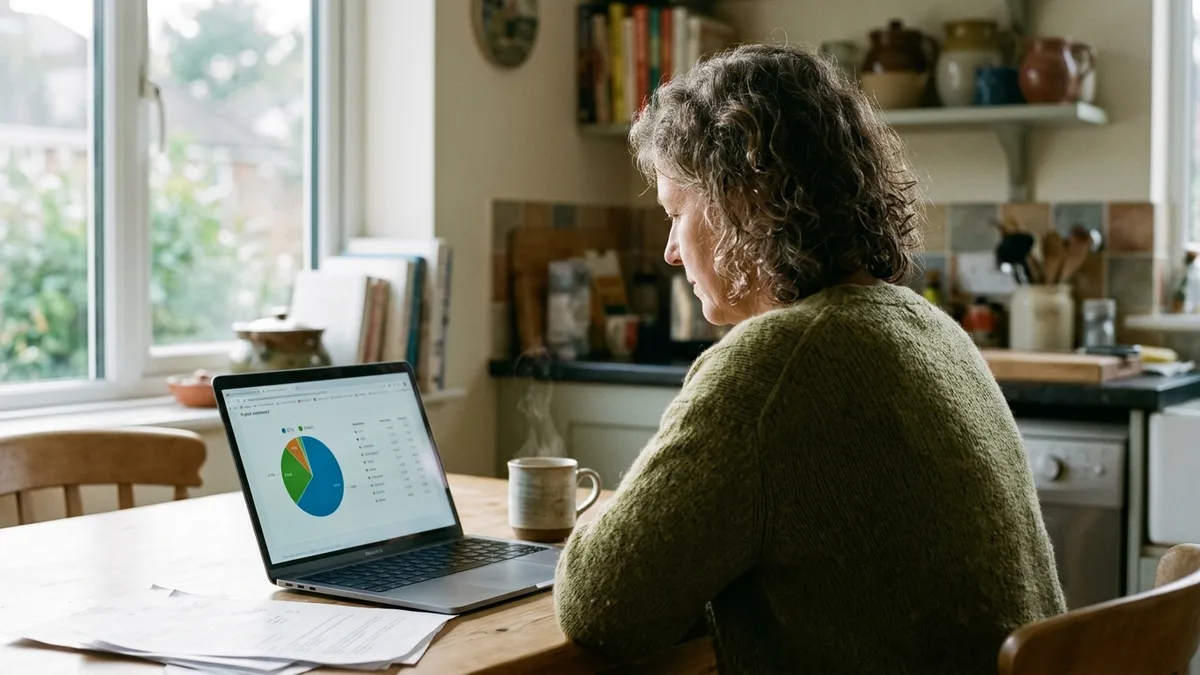
a vacation rental host reviewing a dashboard with a pie chart showing OTA versus direct booking
2. When Should You Rely on OTAs Versus Your Direct Channel?
OTAs perform best for acquiring first-time guests and filling low-occupancy periods, while your direct channel should be reserved for repeat guests, longer stays, and higher-margin weekends. This division of labor is the core principle behind most professional channel management strategies.
Think of Airbnb and Vrbo as your top-of-funnel. A guest who has never heard of your property searches a destination, filters by amenities, and books blind. That’s discovery, and OTAs are genuinely better at it than you are, at least for now. Trying to compete with Airbnb’s search algorithm for cold traffic is a losing game for most independent operators.
But once that guest has stayed with you, the equation flips. They already trust you. They know your check-in process, your welcome basket, your neighborhood recommendations. That relationship is worth capturing, and OTAs actively prevent you from doing it by masking contact information. This is exactly the problem Boostly Connect was built to solve: every guest who books direct through your synced website lands automatically in your own CRM, not Airbnb’s.
Best-practice advice in the industry includes blocking your highest-margin weekends from OTA inventory during peak season and reserving that availability for direct bookers. It’s a deliberate allocation decision, not something you leave to chance. First-time visitors and shoulder-season gaps go to OTAs. Repeat stays, corporate bookings, and premium dates go direct.
3. How Do You Design Direct Booking Incentives Without Violating Rate Parity?
Direct booking incentives work by adding value outside the room rate rather than discounting the rate itself, which keeps you compliant with OTA rate parity clauses while still making your own site more attractive. Common tactics include late checkout, room upgrades, and flexible cancellation.
Rate parity agreements typically require you to list the same nightly rate across all channels. Undercut Airbnb’s price on your own site and you risk penalties or reduced search visibility on the platform. So the incentive has to live somewhere else.
Industry data points to a few reliable levers. Common direct-only incentives include 5-10% discounts on the total stay (not the nightly rate), free breakfast where applicable, flexible cancellation terms, and guaranteed early check-in or late checkout. Some operators structure discounts closer to 10-15% for direct bookers specifically, framed as a loyalty or “book direct” perk rather than a rate change.
Here’s the tactical piece most guides skip: how you communicate this without breaking OTA rules. You can’t advertise “cheaper on our website” on your Airbnb listing description. But you can mention it in your post-stay guest messaging, in your welcome guide, and on your own booking engine’s homepage where OTA terms don’t apply. Boostly Connect’s built-in CRM automates that post-stay outreach with review requests and repeat-stay nurture sequences, so the direct-booking pitch happens automatically instead of relying on you remembering to send an email.
Gift vouchers and discount codes tied specifically to your direct site are another underused lever. They let you run a promotion without touching your public rate at all.
4. How Do You Structure Your Tech Stack for Channel Management?
A channel management tech stack needs a property management system, a channel manager to sync availability across OTAs, and a direct booking website connected to a guest CRM, all feeding the same source of truth. Without this, hosts end up manually reconciling calendars across platforms, which is where double bookings happen.
This is the content gap most channel-mix articles skip entirely: what does the actual stack look like? For a single-property host, the setup is simpler. You need your PMS (Hospitable, Hostfully, Lodgify, or Guesty are common choices) connected to a direct booking site with live availability, so a guest browsing your website sees the exact same calendar as your Airbnb listing.
For boutique managers running 5-20 properties, the stakes rise. A messy, disconnected tool stack, one app for pricing, another for messaging, a spreadsheet for owner reporting, breaks down fast once you’re juggling multiple calendars. Boostly Connect supports 8 PMS integrations specifically so operators don’t have to rebuild their existing workflow to add a direct channel. You connect your existing system, and live availability and real-time pricing appear on your own website without a developer or manual sync work.
The CRM layer is the piece most channel managers ignore entirely, because they’re built for distribution, not retention. That’s a critical gap if repeat guests are supposed to be your direct-channel engine. A true single source of truth connects your PMS, your website, and your guest database so a booking on any channel updates all three automatically.
Minimum Stack Components
-
PMS for calendar, pricing, and reservation management
-
Channel manager or direct PMS-to-OTA sync to prevent double bookings
-
Direct booking website with live, real-time availability
-
Guest CRM that captures contact data from every direct reservation
-
Payment processing (commonly Stripe) with no added booking fees on direct bookings
5. How Do You Measure Whether Your Channel Mix Is Actually Working?
Measuring channel mix performance requires tracking net revenue per booked night, not just gross booking volume, because OTA commissions, cancellation rates, and guest-spend differences change what each channel is actually worth to you. Occupancy and average daily rate alone don’t tell the full story.
Recommended metrics include occupancy, average daily rate (ADR), net revenue per booked night, cancellation rate, and repeat guest share. Notice that four of those five metrics require you to look past the headline booking number and into what’s left after fees, cancellations, and ancillary guest spend.
Here’s a comparison of what that actually looks like across a typical channel mix:
MetricOTA BookingsDirect BookingsCommission cost15-20% per reservationNone (payment processing fees only)Guest contact dataRetained by platformCaptured into host CRMTypical guest typeFirst-time, price-comparingRepeat, referral, longer staysRate flexibilityLocked by parity agreementsFull control over packages and perksBest allocation windowLow season, first bookingsPeak weekends, repeat stays
Review this table monthly against your actual numbers. If your repeat guest share isn’t climbing while your direct booking percentage grows, something in your CRM or nurture sequence isn’t converting. That’s where the automated repeat-stay sequences inside Boostly Connect’s CRM layer earn their keep, since they run without you manually tracking who stayed six months ago and is due for a follow-up email.
6. What Mistakes Do Hosts Make When Trying to Shift Channel Mix?
The most common mistake hosts make when shifting toward direct bookings is pulling listings off OTAs too aggressively before their direct channel has enough traffic to replace that volume. This creates a revenue gap during the transition period that can take months to close.
A second mistake: building a direct booking website and expecting it to generate traffic on its own. It won’t. A direct site is infrastructure, not a marketing plan. You still need email campaigns to past guests, social content, and SEO-optimized property pages to drive anyone there in the first place. This is why we bundle website design with email marketing and social media management at Boostly Connect rather than shipping a bare website and calling it done.
Third mistake: ignoring mobile experience on the direct site. With online bookings trending toward two-thirds of all reservations in 2026 per StayFi’s data, a direct booking page that isn’t mobile-first is losing conversions before a guest even sees your rate.
Fourth: treating the guest CRM as optional. If your direct bookers’ contact information doesn’t land somewhere you own, you’ve built a nicer-looking OTA with extra steps. The entire point of the direct channel is repeat-guest capture, and that requires an actual database, not just a booking confirmation email.
A Quick Checklist Before You Shift Your Mix
-
Confirm your PMS syncs live availability to both OTAs and your direct site to avoid double bookings
-
Set a target channel mix (for example, 40% OTA, 60% direct) and review it monthly, not annually
-
Build direct-only incentives that live outside your public rate to respect parity agreements
-
Automate guest capture into a CRM the moment a direct booking is confirmed
-
Drive traffic to your direct site through email, social, and search before reducing OTA reliance
7. How Long Does It Realistically Take to Rebalance Your Channel Mix?
Shifting channel mix meaningfully typically takes 6 to 12 months of consistent effort, not a one-time website launch, based on patterns we’ve observed across hosts building direct channels from scratch. The timeline depends heavily on how much repeat guest history you already have to market to.
One case worth noting: a rental operator built a portfolio starting from a handful of properties and grew direct bookings from 0% to 8% in the first 12 months after launching a professional website, then continued applying the same strategies to eventually reach 55% direct bookings across 30-plus properties over subsequent years. That’s not an overnight shift. It’s compounding, driven by consistent marketing and a growing repeat-guest base rather than a single tactic.
Another example: a serviced accommodation host went from 0% to 40% direct bookings after launching a direct booking site, with a specific goal of reaching 60%. In that case, a single direct booking generated £6,000 in revenue, illustrating how quickly one high-value reservation can shift the economics once the infrastructure exists to capture it.
The realistic expectation for most operators falls somewhere between these examples. If you’re starting from zero direct bookings, expect the first few months to be about infrastructure and traffic-building rather than results. The compounding tends to show up in year two, once repeat guests and referrals start stacking on top of new website traffic.

a timeline graphic style scene showing a calendar with growing markers representing direct booking
8. Is It Worth Building a Direct Booking Channel If You Only Manage One or Two Properties?
Building a direct booking channel is worth it even for single-property hosts, because commission savings and guest data ownership compound over time regardless of portfolio size. A host with modest annual OTA revenue is still handing over a meaningful chunk of it in commission every single year with no plan to recover that margin.
The objection we hear most from solo hosts is that a website feels like overkill for one listing. But the math doesn’t change with scale, only the total dollar amount does. If you’re paying 15-20% commission on every OTA booking, that’s money leaving your business permanently, on every single reservation, forever, unless you build an alternative.
This is where the “no-code, no developer” positioning actually matters for the audience it’s meant for. A tech-averse host managing one or two units doesn’t have the bandwidth to hire a developer or maintain a custom site. Boostly Connect syncs to your existing PMS in under 20 minutes and is free for up to 3 listings on the Discover map, which removes the two biggest objections we hear from smaller operators: cost and technical complexity.
One example that speaks directly to smaller operators: a UK-based host applied a single tactic from a free direct booking challenge and generated an £800 booking with zero prior direct booking experience. That’s not a portfolio-scale case study. It’s proof that the first direct booking doesn’t require a mature marketing engine, just the infrastructure to capture it when it happens.
Frequently Asked Questions
How much commission does Airbnb actually charge hosts?
Airbnb typically charges hosts a service fee in the range of 15 to 20 percent depending on the host’s fee structure and cancellation policy. Booking.com and Vrbo charge comparable commission ranges, which is why hosts pursuing a direct booking strategy focus on recovering that margin through their own website.
Will building a direct booking website hurt my Airbnb search ranking?
No, launching your own direct booking website does not affect your Airbnb search ranking, since Airbnb’s algorithm evaluates factors like response rate, reviews, and booking history on its own platform. Maintaining both channels simultaneously is standard practice among professional operators who keep OTA share between 30 and 50 percent while growing direct traffic.
What percentage of bookings should come from OTAs versus direct?
Most professional operators target somewhere between 30 and 50 percent OTA share, with hotels sometimes advised to aim for a 40 to 60 percent split in either direction. There’s no universal number, but tracking your current ratio monthly matters more than hitting a specific target immediately.
How do I get guests to rebook directly instead of going back to Airbnb?
Getting guests to rebook directly requires capturing their contact information at the time of their OTA stay and following up with automated email or SMS sequences that highlight your direct booking perks. Without a CRM capturing that data, most hosts have no way to reach past guests at all once Airbnb’s messaging thread closes.
Which property management systems integrate with direct booking platforms?
Widely used property management systems including Hospitable, Hostfully, Lodgify, and Guesty commonly integrate with direct booking platforms to sync live availability and pricing. Boostly Connect supports 8 total PMS integrations, letting hosts connect an existing system without switching their core software.
How long does it take to set up a direct booking website?
Setting up a direct booking website synced to an existing PMS can take under 20 minutes once you connect your property management system, with no developer or coding required through platforms built for no-code setup. The ongoing marketing work to drive traffic to that site takes considerably longer and requires sustained effort.
Do OTAs and direct bookings require different pricing strategies?
OTAs and direct bookings generally require the same published rate due to rate parity agreements most platforms enforce, but hosts can differentiate through added perks rather than rate discounts. Common direct-only incentives include flexible cancellation, late checkout, or loyalty-style discounts framed outside the nightly rate itself.
What’s the biggest risk of relying too heavily on OTAs?
The biggest risk of over-relying on OTAs is losing control of guest relationships, since platforms like Airbnb retain contact data and can remarket your past guests to competing listings. This makes it difficult to build repeat business or respond quickly if the platform changes its fee structure or algorithm.
Conclusion: Building a Channel Mix That Works for You
Balancing OTA and direct bookings comes down to allocation, not elimination. Keep OTAs working for first-time discovery and low-season gaps, then build the website, CRM, and incentive structure that lets repeat guests and premium weekends flow through your own channel instead. Most operators land somewhere between 30 and 50 percent OTA share once that system is running, and the shift compounds over 6 to 12 months rather than happening overnight.
The hosts who make real progress on this treat their direct channel as permanent infrastructure, not a side project they’ll get to eventually. If you’re still relying on OTAs for 90-100% of your bookings with no CRM capturing guest data and no plan to change that, 2026 is a reasonable year to fix it. Get started with Boostly Connect and see your existing PMS synced to a live direct booking website in under 20 minutes, no developer required.
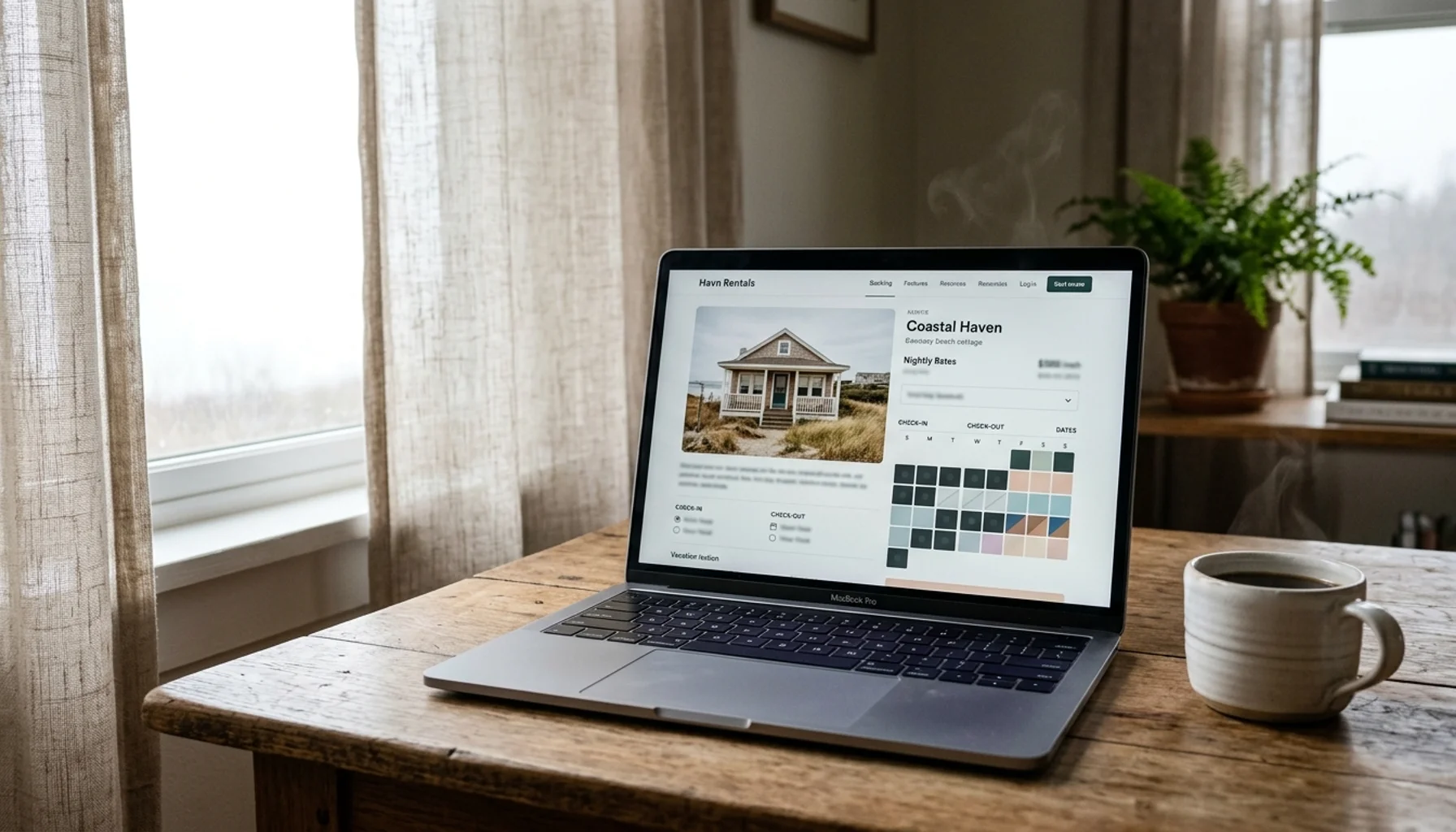
Live rates on your direct booking site keep guests from heading back to the OTAs.
If keeping guests from drifting back to OTAs after their first stay is the piece you haven’t solved yet, a direct booking site with live rates does the heavy lifting for you. Book a demo and we’ll walk through connecting your PMS in real time.
For related reading on this topic, see our guides on how much Airbnb commission actually costs you per year, how to own guest data from Airbnb, and how to grow your direct booking channel from zero.