
Becoming an Airbnb host means creating a verified account, listing a property or room with photos and pricing, and agreeing to pay Airbnb a host service fee, typically in the 3 to 5 percent range of the booking subtotal, on every reservation. The setup itself takes an afternoon. Understanding what it costs you over a full year of bookings is the part most first-time hosts skip, and it’s the part that matters most.
Key Takeaways
- Airbnb has more than 8 million active listings and over 5 million hosts worldwide, with lifetime host payouts exceeding $300 billion since launch.
- The average US Airbnb host earned roughly $14,000 to $44,000 in supplemental income in 2026, depending heavily on market, property type, and management quality.
- Superhost status requires at least 10 completed stays (or three long-term reservations totaling 100 nights), a 4.8+ overall rating, a 90%+ response rate, and a cancellation rate under 1%.
- Airbnb collected and remitted about $2.7 billion in tourism-related taxes on behalf of hosts in the United States in 2026, but hosts are still often responsible for local registration and compliance.
- Nationwide Airbnb occupancy averages roughly 48 to 60 percent, and listings that clear 65 percent are considered strong performers.
- Boostly Connect helps hosts who list on Airbnb also build a direct booking website tied to their existing property system, so repeat guests can rebook without a second trip through Airbnb’s fee structure.
If you’re weighing whether to list a spare room or a fully separate rental in 2026, you’re stepping into a market that’s grown well past its early “rent a couch” reputation. The global vacation rental market was valued at roughly $101.7 billion in 2026, and Airbnb alone generated $12.2 billion in revenue that year, up 9 to 10 percent year over year. That growth is real, but it also means competition for guest attention is sharper than it was five years ago.
This guide walks through exactly what happens when you decide to become an Airbnb host: the account setup, the listing mechanics, what Airbnb actually pays you and when, the licensing questions competitors gloss over, and the Superhost criteria that determine whether your listing gets buried or featured. We’ll also cover something most Airbnb-focused guides never mention: what happens to your guest relationships after checkout, and why that gap is where a lot of hosts quietly lose money every year.
We work with short-term rental operators every day at Boostly Connect, and the pattern is consistent. Hosts get the Airbnb setup right. Almost none of them plan for what happens to a guest’s contact information the moment the reservation ends.
What Are the Basic Steps to Become an Airbnb Host?
Becoming an Airbnb host follows a fixed sequence: create and verify an account, choose what you’re listing (entire home, private room, or shared space), build the listing with photos and a description, set pricing and calendar rules, then connect a payout method. Airbnb’s Resource Center frames this as a linear workflow, and in practice it is.
- Create an Airbnb account and complete identity verification, including a government ID and, in many cases, a selfie match.
- Decide what type of space you’re offering. You’ll need to specify bedrooms, bathrooms, beds, and maximum guest count.
- Build your listing: upload photos, write a title and description, and select amenities.
- Set your nightly rate, minimum stay rules, and house rules, then open your calendar for bookings.
- Add a payout method and verify your bank account before your first reservation completes.
The mechanical setup rarely takes more than a few hours. What takes longer, and what most new hosts underestimate, is getting photos and pricing dialed in well enough to actually convert browsers into bookers. A rushed listing with phone-camera photos and a guessed nightly rate will sit unbooked while a well-optimized one down the street fills its calendar. This is also the exact point where hosts start thinking beyond a single platform: once your listing is live, you’ll want a way to capture the guests who book once and would happily book again directly next time, which is the core problem Boostly Connect’s direct booking website was built to solve.
How Much Does an Airbnb Host Get Paid?
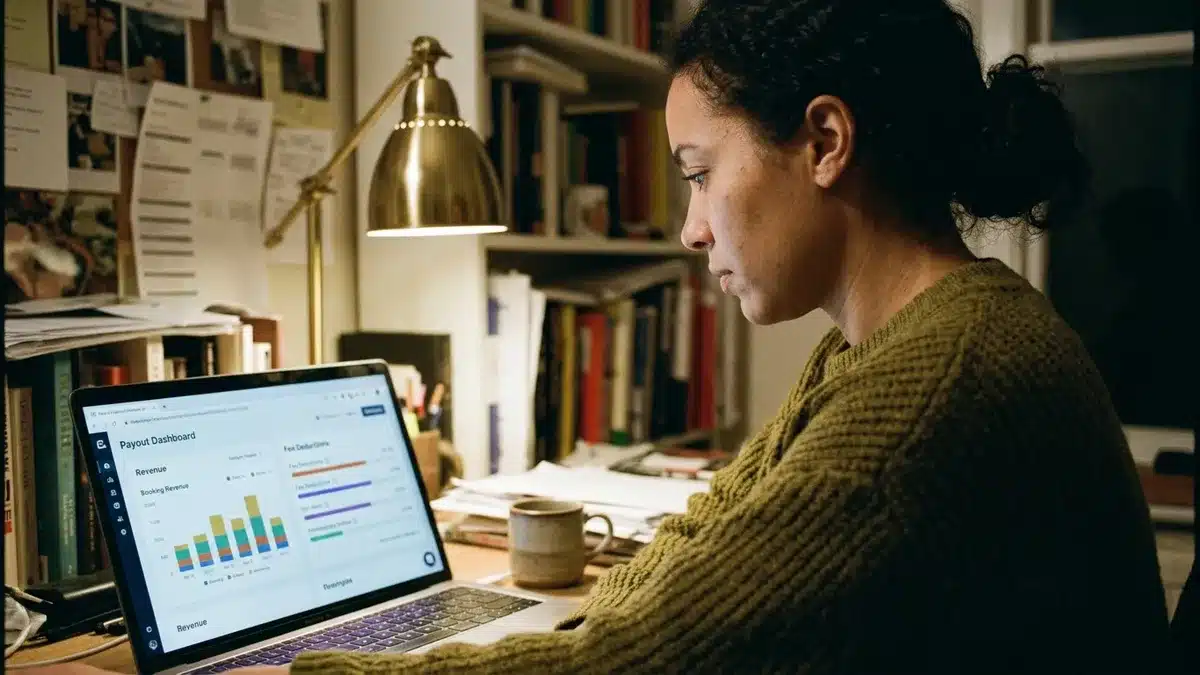
Airbnb hosts get paid after Airbnb deducts its host service fee, typically in the 3 to 5 percent range of the booking subtotal, and payouts are generally released to the host’s bank account about 24 hours after the guest’s scheduled arrival. The exact timing depends on your chosen payout method and region.
Your gross earnings depend far more on occupancy and nightly rate than on the fee percentage itself. According to AirDNA’s 2026 performance data referenced across the industry, the average US Airbnb host earned somewhere between $14,000 and $44,000 in supplemental income in 2026, a wide range driven by market, property type, and how actively the host manages pricing and guest experience.
Two structural facts matter here. First, Airbnb often automatically collects and remits sales and tourism taxes on a host’s behalf in many jurisdictions, which simplifies part of your tax obligation but doesn’t eliminate it entirely, since income tax reporting is still on you. Second, payouts are held until identity and bank verification is complete, so don’t expect same-day cash on your very first booking.
Where hosts actually lose money isn’t the service fee itself, it’s the guests who never rebook direct. A returning guest who books through Airbnb a second and third time pays that same fee percentage every single time, forever, unless you give them another way to reach you. That’s the specific gap a synced direct booking site closes, since it puts your availability calendar in front of a past guest without Airbnb sitting in the middle of the transaction.
How Much Does It Cost to Become an Airbnb Host?
Becoming an Airbnb host costs nothing to create an account or list a property, since Airbnb charges no upfront listing fee. Your real costs are operational: furnishing and staging the space, professional photography, cleaning between stays, and any local licensing or permit fees required in your jurisdiction.
For a first-time host converting a spare bedroom, startup costs are usually limited to linens, basic amenities, and a lockbox or smart lock for check-in. For a dedicated vacation rental, budget realistically for furniture, a deep clean before your first guest, and a photographer, since listings with professional photos and virtual tours can lift revenue by roughly 20 percent and occupancy by around 15 percent according to industry benchmarks.
Ongoing costs include cleaning fees (often passed to the guest, but you still need a reliable cleaner or service), utilities, and whatever local occupancy tax applies, which can range from roughly 3 to 15 percent of the nightly rate depending on state and city. Multiply your projected monthly revenue against your mortgage or rent, utilities, and cleaning costs before you commit calendar dates, not after.
A financial planning mistake we see constantly: hosts calculate expected revenue off Airbnb’s suggested nightly rate, without stress-testing it against a slower month. Run your numbers assuming 50 percent occupancy, not 80 percent, and see if the business still works. If it doesn’t, the property needs a rate adjustment or a different marketing approach before you list, not after your first slow quarter forces the issue.
Do I Need an LLC to Be an Airbnb Host?
You do not need an LLC to become an Airbnb host; individuals list and operate rentals under their personal name every day. An LLC is a liability protection and tax structuring choice, not a platform requirement, and whether it makes sense depends on your state, your property’s exposure, and your broader financial picture.
Airbnb itself doesn’t require a business entity to create a listing. What it does require, in most jurisdictions, is proof that you’re legally permitted to rent short-term at that address. That’s a separate question from your business structure, and conflating the two is a common first-time host mistake.
Where an LLC often makes sense: multiple properties, higher-value homes, or markets with active litigation risk around short-term rentals. Where it’s often overkill: a single spare room rented occasionally, where the administrative cost of forming and maintaining an entity outweighs the protection for a low-risk, low-frequency listing.
This isn’t legal advice, and the right answer depends on your state’s specific rules around liability shields and pass-through taxation. Talk to a local attorney or accountant who knows short-term rental law in your area before deciding, especially if you’re scaling past a single unit.
What Legal and Regulatory Rules Should Hosts Know Before Listing?
Short-term rental regulation varies enormously by city and state, and in many jurisdictions Airbnb hosts must register their property, obtain a short-term rental permit or license, and comply with zoning and safety codes before they can legally accept guests. Skipping this step is the single most preventable mistake a new host makes.
Some cities have gone further than simple registration. New Orleans, for example, implemented strict short-term rental rules that led to reductions exceeding 80 percent in listed STRs after enforcement began, a clear signal that permitting regimes can reshape an entire local market almost overnight. Don’t assume the rules that applied when a listing near you went live years ago still apply today.
Before you publish a listing, check with your city or county’s planning or business licensing office (the exact office name varies by jurisdiction, so search “[your city] short-term rental permit” rather than guessing) to confirm zoning eligibility, registration requirements, and any cap on the number of nights you can rent annually. Also confirm what occupancy tax rate applies locally, since Airbnb’s automatic tax remittance doesn’t cover every jurisdiction or every tax type.
This is a content gap most Airbnb host guides skip entirely, treating regulation as an afterthought. It shouldn’t be. A beautifully optimized listing that gets shut down by code enforcement six months in is a worse outcome than a slower, fully compliant launch. Build your compliance checklist first, then invest in furniture and photography.
What Are Airbnb’s Superhost Criteria and Why Do They Matter?
Superhost status is Airbnb’s quality tier that rewards consistently high-performing hosts with greater search visibility and guest trust. To qualify, a host must complete at least 10 stays, or three long-term reservations totaling 100 nights, within the past 365 days, while maintaining specific performance thresholds.
| Requirement | Threshold |
|---|---|
| Completed stays | 10+ stays, or 3 reservations totaling 100+ nights |
| Overall guest rating | 4.8 or higher average |
| Response rate | 90% or higher within 24 hours |
| Cancellation rate | Under 1% (exceptions apply for major disruptive events) |
The payoff for hitting these numbers is meaningful: Superhosts earn roughly 22 percent more than a regular host on average, largely due to higher search placement and the trust signal the badge sends to guests comparing similar listings.
Response rate is where most hosts fall short, not rating. Answering every inquiry within a day, every day, is a genuine operational burden once you’re juggling more than one listing or a full-time job outside hosting. That specific pain point, guest messages piling up faster than you can answer them, is exactly why we built AI-assisted messaging into the Boostly Connect CRM, so routine questions get handled automatically without your response rate slipping below the Superhost threshold.
Is Becoming an Airbnb Host Worth It in 2026?
Becoming an Airbnb host is worth it for most property owners who can maintain occupancy above roughly 50 percent and clear local licensing requirements, given that short-term rental demand grew about 7.0 percent year over year in 2026 while supply grew only 4.7 percent, a gap that favors well-run listings. Whether it’s worth it for you depends on your specific market, property type, and appetite for hands-on management.
The macro trend supports hosting: short-term rentals captured roughly 13.9 percent of total accommodation demand in 2026, even as hotel demand contracted slightly. Stays of 7+ nights grew about 12 percent year over year, and roughly 65 percent of Airbnb bookings now happen on mobile, both signals that demand is broadening beyond the traditional weekend leisure guest.
What the “worth it” question misses in most guides is the second-year economics. Your first year, almost all your bookings come through Airbnb because that’s the only channel you have. By year two, if you’ve done nothing to capture guest contact information, you’re still paying full commission on every single repeat guest, forever. Industry research from Lodgify found the average host retains just 5 to 8 percent of guests as repeat bookers, compared to 15 to 25 percent for hosts running a deliberate retention strategy.
That gap compounds. One of our own case studies involved a bed and breakfast that grew direct bookings to 90 percent of total reservations with a 60 percent repeat guest rate, entirely by owning the guest relationship instead of leaving it inside Airbnb’s ecosystem. Another host, working with a small rental portfolio, saw direct bookings climb from zero to 55 percent over time after launching a dedicated booking website, which also attracted local landlords who wanted him managing their properties too. Airbnb is genuinely worth using to acquire your first guests. It’s a much worse long-term home for guests you’ve already earned.
How Do You Price and Optimize a New Airbnb Listing?
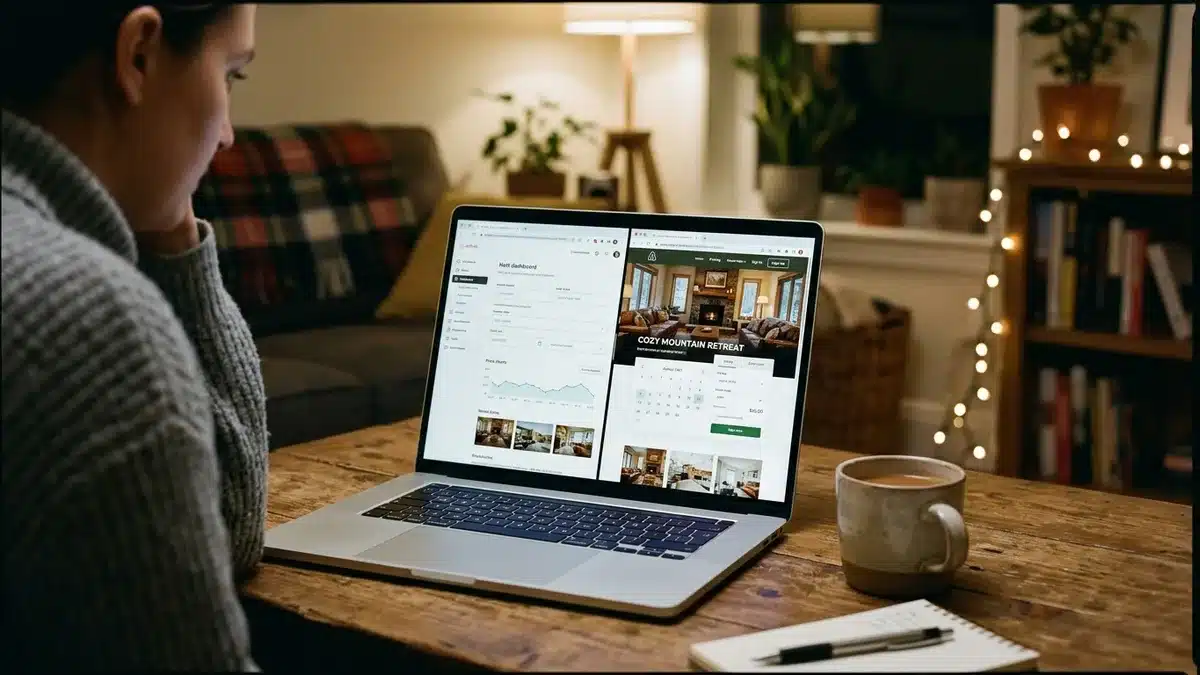
Pricing a new Airbnb listing correctly means starting with local comparable data, not Airbnb’s automated Smart Pricing suggestion alone, then adjusting weekly based on booking pace and seasonal demand. Manual pricing without data is guesswork; automated pricing without oversight can leave money on the table during high-demand windows.
Manual pricing works fine for a single listing in a stable, low-seasonality market where you can check comparable rates once a week. It breaks down fast once you’re managing multiple properties or a market with sharp seasonal swings, since July and August bookings run roughly 35 percent above the annual average nationally, and missing that window costs real revenue.
Tools like the Beyond Pricing free listing analysis tool or a market search through the RentCast rental market search tool can give you a baseline for what comparable properties in your area are charging before you set your first rate. AirDNA also publishes practical guidance on using real-time travel demand data for pricing decisions, which is worth reviewing before your first peak season.
Whichever pricing approach you choose, the underlying lesson is the same: your nightly rate should reflect what’s actually happening in your market this month, not a number you picked once and forgot about. Reviewing your pricing every one to two weeks during your first year catches both underpricing and overpricing before either costs you a season’s worth of bookings.
How Do You Handle Difficult Guests and Bad Reviews?
Handling a difficult guest starts with documented, timestamped communication through Airbnb’s messaging system, not a phone call, so there’s a record if you need to escalate to Airbnb’s resolution process. For disputes that Airbnb’s standard tools can’t resolve, hosts can also file a formal claim through Airbnb’s resolution center, but the strongest position is always prevention through clear house rules stated upfront.
Most listing guides stop at “use the resolution center,” which is thin advice. In practice, a calm, specific message template works better than an emotional response. Something like: “I understand you’re frustrated about [specific issue]. Here’s what I can offer: [specific remedy]. If this doesn’t resolve things, Airbnb’s support team can review our message history.” That keeps the tone professional and creates a paper trail simultaneously.
A one-star review isn’t necessarily a dead end. Respond publicly, briefly, and without defensiveness, acknowledging the specific issue and stating what changed as a result. Future guests read host responses to negative reviews as closely as they read the review itself, and a thoughtful response often does more reputational work than the original complaint did damage.
The recovery play that most hosts never attempt: reach back out to guests who had a rough stay, once the issue is resolved, with a genuine offer to host them again at a discount. Airbnb’s own Special Offers feature lets you send a personalized discount directly to a past guest, which works well as a goodwill gesture even inside the platform. Pairing that kind of outreach with your own CRM record of what went wrong and what you offered is exactly the workflow Boostly Connect’s guest CRM was designed to support, so that history doesn’t just live in your memory or a buried message thread.
Data Snapshot: What the Numbers Actually Show
The table below consolidates the verified figures referenced throughout this guide, so you can see the full financial and operational picture in one place before deciding how to structure your hosting business in 2026.
| Metric | Figure | Source Context |
|---|---|---|
| Airbnb 2026 revenue | $12.2 billion (9-10% YoY growth) | Airbnb 2026 financial reports |
| Global active listings | 8 million+ | Airbnb 2026 impact report |
| Average US host income (2026) | $14,000 to $44,000 | AirDNA 2026 performance data |
| Nationwide occupancy average | 48% to 60% | AirDNA 2026 performance data |
| Repeat guest rate, no strategy | 5% to 8% | Lodgify 2026 study |
| Repeat guest rate, with retention strategy | 15% to 25% | Lodgify 2026 study |
| Superhost earnings premium | ~22% higher than regular hosts | Industry benchmark data |
The gap between the two repeat guest figures deserves more attention than most host guides give it. If your listing is currently converting only 5 to 8 percent of past guests into rebookings, you’re leaving a documented, quantifiable amount of revenue on the table every single year, regardless of how well your Airbnb listing itself is optimized.
How Do You Keep Your Airbnb Ranking While Growing Beyond It?
You can keep your Airbnb ranking intact while building a parallel direct booking channel, since Airbnb’s search algorithm rewards response rate, review quality, and booking activity, none of which are affected by also marketing your property elsewhere. Hosts don’t have to choose between Airbnb and their own website; most run both simultaneously.
The fear that switching focus to direct bookings tanks your Airbnb visibility is understandable but generally misplaced. Airbnb’s ranking factors are tied to how you perform on Airbnb itself: response time, cancellation behavior, review scores, and booking velocity on the platform. A separate website doesn’t touch any of those inputs.
What actually works in practice: keep your Airbnb listing active and well-maintained for new guest acquisition, since that’s still where most first-time guests will find you, and redirect only returning guests to your own site for their next stay. That’s a low-risk way to start capturing direct revenue without disrupting the channel that’s currently working.
This is the exact transition we designed Boostly Connect around. The platform syncs your existing property management system, whether that’s Hospitable, Hostfully, Lodgify, or Guesty, directly to a WordPress website with live availability and real pricing, so a guest who books once through Airbnb has somewhere else to go next time. Every guest who books through that site lands in your own CRM automatically, which means the contact data stays with you instead of staying inside Airbnb’s remarketing loop. Hosts running this setup report reaching an average of 65 percent direct bookings within 12 months.
If you want a deeper dive on running both channels without cannibalizing either one, our guide on reducing Airbnb dependence without losing occupancy walks through the sequencing in more detail, and our piece on how to re-engage past vacation rental guests covers the messaging side of that transition.
Practical Checklist: What to Prioritize Before Your First Guest
New hosts routinely spend money on the wrong things first, furniture upgrades before compliance checks, professional photos before pricing research. The sequence below reflects what actually moves the needle before your first booking.
- Confirm zoning and licensing eligibility with your local planning or licensing office before spending on furnishings.
- Research your local occupancy tax rate and whether Airbnb automatically remits it in your jurisdiction.
- Run a realistic revenue model at 50 percent occupancy, not the optimistic number, against your fixed monthly costs.
- Invest in professional photography before writing your description, since photos drive the first impression.
- Set your initial nightly rate using local comparable data, not Airbnb’s default suggestion alone.
- Build a repeatable cleaning and turnover process, whether self-managed or through a professional service.
- Decide, before your first guest checks out, how you’ll capture their contact information for a potential future direct booking.
That last step is the one almost every first-time host guide leaves off the list entirely, and it’s the single highest-leverage item on it. A guest you’ve already hosted once is dramatically cheaper to rebook than a stranger you have to find and convert from scratch. If you don’t have a system that captures their information the moment they book, you’ll never get the chance to try.
Frequently Asked Questions
How much does an Airbnb host get paid per booking?
Airbnb pays hosts the nightly rate minus its host service fee, typically 3 to 5 percent of the booking subtotal, with payouts generally released about 24 hours after guest check-in. Your total annual earnings depend far more on occupancy rate and nightly pricing than on that fee percentage.
How much does it cost to become an Airbnb host?
There’s no upfront fee to create an Airbnb account or publish a listing. Real costs are operational: furnishing the space, professional photography, cleaning services, and any local licensing or permit fees, which vary significantly depending on your city and property type.
Do I need an LLC to be an Airbnb host?
No, Airbnb doesn’t require a business entity to list a property. An LLC is a liability and tax planning decision that makes more sense for multi-property portfolios or higher-risk markets than for a single occasionally-rented room. Consult a local attorney or accountant for your specific situation.
Is becoming an Airbnb host worth it in 2026?
It’s generally worth it for hosts who can maintain occupancy above roughly 50 percent and meet local licensing requirements, given that short-term rental demand outpaced supply growth in 2026. Long-term profitability improves significantly once you also capture repeat guests through a direct booking channel instead of relying on Airbnb for every rebooking.
What is Airbnb Superhost status and how do you qualify?
Superhost is Airbnb’s recognition tier for high-performing hosts, requiring at least 10 completed stays (or three long-stays totaling 100 nights), a 4.8+ rating, a 90%+ response rate, and a cancellation rate under 1 percent. Superhosts earn roughly 22 percent more on average due to higher search visibility.
Will building a direct booking website hurt my Airbnb search ranking?
No. Airbnb’s ranking algorithm is based on your performance metrics on the platform itself, response rate, cancellations, and reviews, not on whether you market your property elsewhere. Most successful hosts run Airbnb and a direct booking site simultaneously without any ranking impact.
Do Airbnb hosts need a special license or permit?
In many cities and states, yes. Requirements vary widely by jurisdiction, so check with your local planning or business licensing office before listing to confirm zoning eligibility, registration, and any applicable occupancy tax obligations specific to your address.
Final Take: Becoming an Airbnb Host Is the Start, Not the Finish
Becoming an Airbnb host in 2026 is genuinely accessible: no upfront listing fee, a same-day setup process, and a market where short-term rental demand is outpacing supply growth. The part that separates a hobby listing from a durable business is what you do after the first few bookings land, specifically whether you build a way to keep guests coming back to you directly instead of through Airbnb every time.
The data backs this up plainly. Hosts without a retention strategy keep only 5 to 8 percent of guests as repeat bookers, while hosts with one see 15 to 25 percent. That’s not a rounding error over a full year of bookings. Get your Airbnb listing right first, then build the second channel before you need it, not after you’ve already paid full commission on a hundred repeat stays.
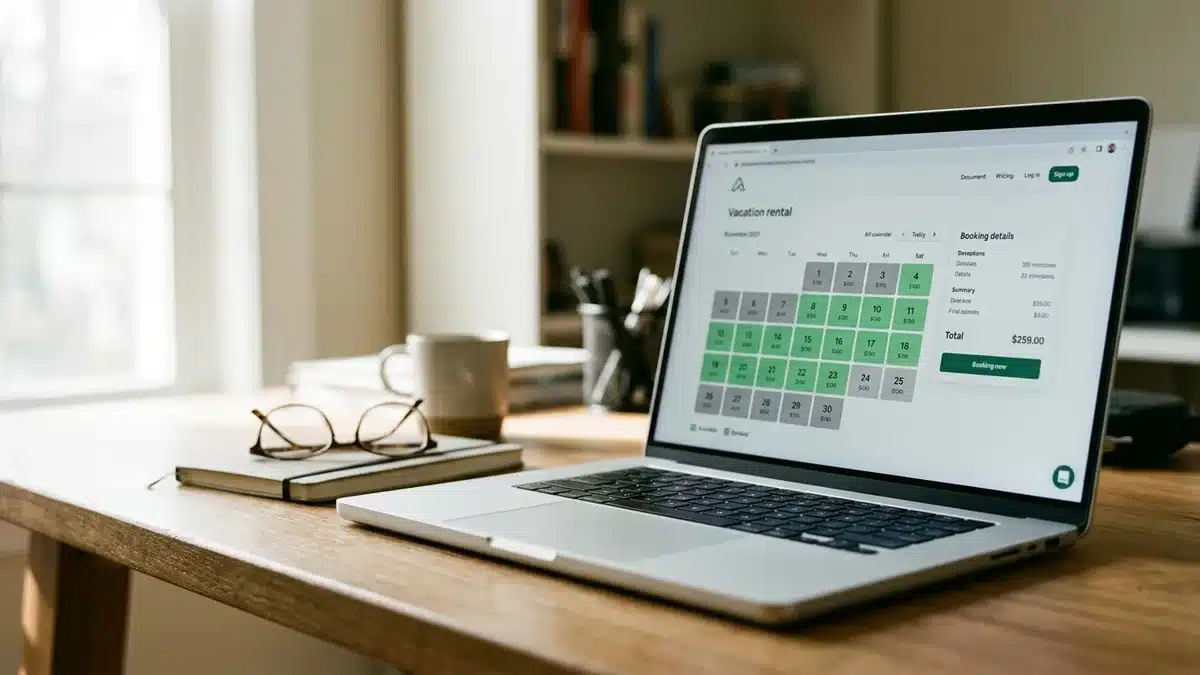
If you’re ready to see what a direct booking website connected to your own property system looks like in practice, without touching a line of code, book a demo with Boostly Connect and see your listings synced and live in under 20 minutes.