

Being an Airbnb host means listing and managing a property on the Airbnb platform in exchange for nightly revenue, minus a service fee that typically runs around 3% for hosts on the standard fee structure. In 2026, more hosts are treating Airbnb as one channel in a broader booking strategy rather than their only source of reservations, because platform commission and lack of guest data ownership add up fast over a full year.
Key Takeaways
- Airbnb charges hosts a service fee, commonly around 3% of the booking subtotal, though the exact rate depends on your cancellation policy and account type, so confirm your current rate in your host dashboard.
- Superhost status requires at least 10 reservations (or 3 reservations totaling 100+ nights), a cancellation rate under 1%, a 90%+ response rate within 24 hours, and an overall rating of 4.8 or higher.
- Industry research from AirDNA and similar market trackers shows the average repeat guest rate across the vacation rental industry sits around 5 to 8 percent for hosts without a deliberate retention strategy, compared to 15 to 25 percent for hosts who actively re-engage past guests.
- Hosts can add up to 10 co-hosts to a single listing to share cleaning, guest messaging, and calendar duties.
- Professional photography is associated with meaningfully higher earnings for Airbnb listings, based on Airbnb’s own resource center data.
- At Boostly Connect, we help hosts run Airbnb as one channel among several by syncing their property management system to a direct booking website, so returning guests have a reason to book with the host directly instead of paying platform fees a second time.
What Does It Mean to Be an Airbnb Host in 2026?
Being an Airbnb host in 2026 means you own or manage a property listed on Airbnb’s marketplace, set your own pricing and availability, and handle guest communication in exchange for a share of each booking’s revenue. You control the listing, but Airbnb controls the algorithm that decides who sees it.
That distinction matters more than most new hosts realize. You can write the perfect description and stock every essential, but your visibility still depends on Airbnb’s search ranking, which weighs response rate, review scores, and pricing competitiveness. Hosts who treat the platform as their entire business, rather than one booking channel, tend to feel that dependency the hardest when algorithm changes or fee adjustments hit their bottom line.
The global vacation rental market is projected to reach somewhere between $84 billion and $106 billion in 2026 depending on the research firm, with the U.S. short-term rental market alone expected to hit roughly $76.46 billion this year. That growth means more competition for guest attention, not less. Being an effective host in 2026 increasingly requires a plan for guest ownership, not just a well-photographed listing.
Is It Worth Being a Host on Airbnb?
Being an Airbnb host is worth it for most property owners who can maintain consistent availability and guest responsiveness, but the value depends heavily on your local market, your management style, and how much of your revenue you’re comfortable losing to platform fees. It works well as a starting point; it works less well as a permanent business model.
The upside is real. Airbnb reports well over 5 million hosts and more than 2 billion guest arrivals worldwide, according to industry data compiled by StayFi in 2026, which gives new hosts access to built-in search traffic they’d otherwise have to build from scratch. For a first-time host with one property, that discoverability is worth the commission during the first year or two.
The downside shows up over time. Every guest who books through Airbnb belongs to Airbnb’s database, not yours. When that guest wants to rebook next summer, Airbnb’s Re-book feature and Wishlists feature are both designed to keep that guest inside Airbnb’s ecosystem, not redirect them to you. This is exactly why we built Boostly Connect: to capture every guest who books direct into a host’s own CRM, so contact data stays with the property owner instead of being recycled for Airbnb’s remarketing to competing listings nearby.
If you’re weighing whether Airbnb alone is sustainable long-term, it helps to read our breakdown on how to reduce Airbnb dependence without losing occupancy, since the math changes significantly once you factor in three or more years of commission on the same repeat guests.

How Much Does a Host Make From Airbnb?
Airbnb host earnings vary widely based on property type, location, and occupancy, and there’s no single verified national average figure that applies to every listing. What’s consistent across markets is the fee structure: Airbnb typically charges hosts a service fee around 3% of the reservation subtotal under the standard host-only fee model, deducted automatically from each payout.
That 3% sounds small until you multiply it across a full year of bookings, and it doesn’t account for the guest-side service fee that can push total platform costs higher on the booking as a whole. A host running $80,000 in annual gross bookings loses roughly $2,400 a year just to the host-side fee, before factoring in any additional revenue lost from guests who priced out due to guest-side fees stacked on top.
Earnings also hinge on factors within your control. Hosts who list a property as a whole home typically earn more per booking than those renting a private room, and multi-bedroom properties in high-demand markets command higher nightly rates than studio units. Professional photography is one of the few levers Airbnb itself has publicly tied to earnings gains, based on data from Airbnb’s resource center, making it one of the highest-ROI investments a new host can make before their first listing goes live.
Where hosts leave real money on the table is repeat business. Research from Lodgify, cited via industry retention studies, shows the average short-term rental host converts only 5 to 8 percent of guests into repeat bookings, while hosts with a deliberate retention strategy see 15 to 25 percent repeat rates. That gap compounds every year you don’t have a system capturing guest contact information outside the OTA.
| Revenue Factor | Typical Impact | What You Control |
|---|---|---|
| Host service fee | Around 3% of subtotal on standard fee structure | Cancellation policy and account type affect exact rate |
| Property type | Whole home vs. private room significantly changes nightly rate | Listing configuration and amenities |
| Professional photography | Associated with higher earnings per Airbnb’s own data | One-time investment before listing |
| Repeat guest rate | 5-8% without retention strategy vs. 15-25% with one | Whether you capture guest contact data |
Is Airbnb Still Worth It for Hosts in 2026?
Airbnb remains worth it for hosts in 2026 as a discovery channel, but it works best as part of a diversified booking strategy rather than a sole source of reservations. The platform still commands roughly 59% of global home listings on the vacation rental market, per AltexSoft data, which means guest search behavior still starts there for a large share of travelers.
What’s changed is host expectations. New hosts joining the platform, at a pace industry trackers pegged around 14,000 monthly as of 2022 and likely higher now given continued market growth, are entering a more saturated marketplace than early adopters faced. With the global vacation rental supply expected to hit 1.77 million U.S. listings in 2026, standing out on price and reviews alone gets harder every year.
That saturation is precisely why more boutique property managers and growth-stage rental entrepreneurs are pairing their Airbnb presence with a direct booking website. In our work at Boostly Connect, we’ve seen this pattern repeatedly: hosts who run both channels simultaneously don’t lose Airbnb visibility, they simply redirect their existing guest list toward a channel where they keep 100% of the payment. One host we worked with grew from 0% to 55% direct bookings over roughly a year by launching a professional direct booking site, while still keeping active Airbnb listings running in parallel.
If you’re deciding how much weight to put on Airbnb versus your own channel in 2026, our guide to getting more Airbnb bookings without ads covers how to improve platform performance without over-investing in a channel you don’t control.
Does Airbnb Make You Stay With a Host?
No, Airbnb does not require guests to stay with a host present during their reservation. Most Airbnb listings are entire-home rentals where the host is offsite, and guests self-check-in using a lockbox, smart lock, or keypad code. Shared or private-room listings, where a host lives on-site, are a smaller and clearly labeled subset of the platform’s inventory.
Airbnb requires hosts to specify the listing type when creating a property: whole place, private room, or shared room. This distinction shows up prominently in search filters, so guests searching for privacy can exclude shared listings entirely. For hosts, offering a whole-place listing with self-check-in tends to reduce guest communication load significantly, since there’s no need to coordinate arrival timing around a host’s schedule.
Airbnb’s own hosting guidance recommends installing a smart lock or posting clear check-in signage to simplify this process. That single operational choice, self-check-in versus host-present, has a bigger effect on your guest messaging volume than almost any other setup decision you’ll make. It’s also the kind of repetitive question (arrival codes, parking instructions, wifi passwords) that eats hours out of a host’s week if you’re answering it manually for every reservation. That’s the exact gap our AI agents inside the Boostly CRM are built to close, fielding those routine check-in and access questions automatically so you’re not retyping the same instructions every Friday afternoon.
How Do You Set Up Your First Airbnb Listing?
Setting up an Airbnb listing follows a defined sequence: verify your identity, describe your space, set house rules, add photos and pricing, then publish. Airbnb requires identity verification, including your legal name, date of birth, and a government-issued ID, before any listing can go live.
- Confirm you’re allowed to host. Check whether your lease, co-op board, condo association, or homeowners association requires permission before you list a space. Skipping this step is one of the most common reasons new listings get shut down mid-season.
- Choose your home type and listing type. Select house, apartment, or another property type, then decide whether you’re offering a whole place, private room, or shared room.
- Add core listing details. Property type, location, bedroom and bathroom count, and maximum guest capacity all factor into how Airbnb’s search algorithm categorizes and ranks your listing.
- Stock the essentials. Fresh linens, towels, toilet paper, soap, and shampoo are the baseline Airbnb recommends for every listing, regardless of price point.
- Set your pricing. Airbnb provides a suggested starting price, but you retain full control over weekday and weekend rates and can adjust them anytime based on demand.
- Decide how you’ll manage check-in. A smart lock or clearly posted signage reduces guest questions and speeds up turnover between reservations.
- Publish and monitor your new listing promotion. Airbnb offers new listings a promotional boost to help attract the first few reviews, which matter disproportionately for future search ranking.
New hosts frequently underestimate how much of this process is really a marketing exercise disguised as a checklist. Your title, photos, and description are competing against every other listing in your market, and a generic setup gets buried fast. If you’re building a longer-term brand around your properties rather than a single listing, our piece on vacation rental brand building walks through how to make that first listing feel like the start of a real business rather than a one-off side hustle.

What Does It Take to Become an Airbnb Superhost?
Superhost status is a recognition tier Airbnb grants to hosts who meet four specific performance thresholds over a rolling 365-day period. Meeting all four consistently signals to Airbnb’s algorithm, and to guests browsing search results, that a listing is reliably well-run.
The four requirements are strict and unforgiving of inconsistency. First, you need at least 10 completed reservations, or 3 reservations totaling 100 or more nights. Second, your cancellation rate must stay under 1%, with limited exceptions for major disruptive events outside your control. Third, you must respond to at least 90% of new guest inquiries within 24 hours. Fourth, your overall guest rating must sit at 4.8 or higher.
The response-rate requirement is where most hosts quietly fall short, particularly hosts managing more than one property or a full-time job alongside hosting. Answering the same handful of questions, arrival time, parking, pet policy, dozens of times a week is exactly the kind of repetitive load that pushes hosts to either hire help or automate it. In our experience working with multi-property operators through Boostly Connect, the ones who maintain Superhost status most consistently are the ones who’ve automated first-touch guest messaging rather than manually monitoring their inbox around the clock.
Maintaining Superhost status also means updating your calendar regularly to avoid last-minute cancellations, which directly threatens the under-1% cancellation requirement. Blocked nights appear grayed out on your calendar and need to be reopened manually whenever your availability changes.
How Do Airbnb Pricing and Fees Actually Work?
Airbnb pricing and fees work on a split-fee model where hosts typically pay a service fee around 3% of the booking subtotal, while guests pay a separate service fee layered on top of the nightly rate. This structure means the total cost of a booking is meaningfully higher than your listed nightly price once both fees are added.
Hosts set their own weekday and weekend rates and can adjust pricing at any time, using Airbnb’s suggested price as a reference point rather than a mandate. In our experience, hosts who rely entirely on Airbnb’s suggested pricing tend to under-price during high-demand periods and over-price during shoulder seasons, since the suggestion algorithm reacts to broad market signals rather than your specific property’s demand curve.
For a deeper look at pairing platform pricing with live market data, resources like the AirDNA guide to real-time demand pricing and tools such as the Beyond Pricing free listing analysis tool give hosts a second data point beyond Airbnb’s own suggestion engine.
The fee structure is also precisely why direct bookings matter so much financially. A guest who books directly through your own website, rather than through Airbnb, doesn’t trigger either the host or guest service fee, meaning more of that nightly rate stays in your business. That’s the core mechanic behind Boostly Connect: syncing your existing property management system to a direct booking website so returning guests can book with you at a lower effective cost, without you losing your existing Airbnb listings in the process.
How Do You Manage Multiple Airbnb Listings Without Losing Control?
Managing multiple Airbnb listings requires centralized calendar syncing, delegated guest communication, and consistent pricing logic across every property, or the operation breaks down as soon as you add a third or fourth unit. What works for one listing on a spreadsheet stops working almost immediately at scale.
Airbnb allows hosts to add up to 10 co-hosts per listing, splitting responsibilities like cleaning coordination and guest messaging across a small team. That helps, but co-hosting alone doesn’t solve the deeper problem: every additional listing means another set of guest data trapped inside Airbnb’s system, disconnected from the others.
We’ve watched this exact scenario play out with property managers scaling from a handful of units into a real portfolio. One host we worked with grew from managing just their own properties into a network of 30 or more units, eventually reaching 55% direct bookings across the portfolio by building a professional website that caught the attention of local landlords looking for management help. That kind of growth is much harder to sustain when every listing runs on a separate manual process.
Boostly Connect supports 8 PMS integrations specifically so multi-property operators can sync pricing, availability, and guest records across an entire portfolio from one connected system, rather than duplicating effort per listing. If you’re scaling past a handful of units, our post on must-have tools for short-term rental managers covers the broader tech stack decisions that come with that growth.
How Do You Handle Guest Communication and Reviews as a Host?
Guest communication as an Airbnb host covers pre-booking inquiries, check-in instructions, mid-stay questions, and post-stay review requests, and each stage has a direct effect on your search ranking and Superhost eligibility. Slow responses at any stage compound into a lower response rate score over time.
Reviews function as your most visible trust signal on the platform, and Airbnb’s algorithm weighs your overall rating heavily in search placement. A host sitting below the 4.8 threshold required for Superhost status will typically see reduced visibility even before losing the badge itself, since guest satisfaction and search ranking are closely linked.
Most hosts handle review requests manually, sending a message after checkout and hoping the guest follows through. That approach is inconsistent by design, since it depends on remembering to send the message at the right moment for every single reservation. Automating that request, timed precisely after checkout, is one of the simplest fixes available, and it’s covered in detail in our guide to how you can automate review requests for your vacation rental.
Communication tools built into Airbnb, like the Special Offers feature, let hosts send personalized discounts to past guests to encourage rebooking. That’s a genuinely useful tool, but it still keeps the interaction, and the guest’s contact data, inside Airbnb’s ecosystem. The Boostly CRM takes the same concept, an offer to a returning guest, and routes it through your own email and SMS system instead, so the relationship and the data both stay with you.
How Do You Scale From One Listing to Multiple Properties?
Scaling from one Airbnb listing to a multi-property portfolio requires a documented process for pricing, guest communication, and cleaning coordination that doesn’t depend entirely on your personal attention to every reservation. Hosts who scale successfully build systems before they add inventory, not after.
The pattern we see most often at Boostly Connect starts small: a host launches one listing, gets comfortable with Airbnb’s operational requirements, then starts introducing a direct booking channel once repeat guests start asking if they can book without going through the app again. That question, “can I just book with you directly,” is usually the first signal that a host is ready to formalize a direct booking strategy.
From there, growth tends to follow a repeatable arc. In one case we’ve tracked, a host’s first direct booking generated a modest few hundred dollars in revenue from a single tactic learned during a free challenge. Within roughly six months, that same host had recovered a meaningful course investment, and within a year had grown to 55% direct bookings across a portfolio that expanded well beyond their original property. None of that growth required abandoning Airbnb. It required layering a second channel on top of the first.
If you’re at the early stage of that arc, our guide on how to reduce manual work in your vacation rental business is a practical next step before you add a second or third unit.
What Regulatory and Insurance Factors Should Hosts Understand?
Airbnb hosting comes with tax collection, permission, and insurance considerations that vary significantly by city and state, and these obligations exist independently of whatever Airbnb’s platform automates on your behalf. In many jurisdictions, Airbnb automatically collects and remits sales and tourism taxes for hosts, but that automation doesn’t cover every tax type or every location.
Local regulations around short-term rentals have tightened in numerous cities in recent years, and zoning restrictions or registration requirements can affect whether a property is even eligible to list. Because these rules vary widely by municipality and change periodically, always verify current requirements with your local planning or licensing office rather than relying on general guidance from any single source, including this one.
Landlord, co-op board, or homeowners association approval is another factor many first-time hosts overlook until it becomes a problem. Getting that permission in writing before your first guest checks in avoids a scenario where a listing has to be pulled mid-season due to a dispute you could have resolved before publishing.
Practical Guidance: Common Mistakes New Hosts Make
Most hosting mistakes fall into a few predictable categories: under-pricing during peak demand, ignoring guest messaging response times, and never building a system to capture repeat guest data. Each is avoidable with the right process in place from the start.
- Relying entirely on Airbnb’s suggested price. Cross-reference it against local market comps using a tool like the RentCast Rental Market Search Tool before accepting the default rate.
- Treating guest messaging as reactive rather than proactive. Slow responses hurt your Superhost eligibility and your search ranking simultaneously.
- Never following up with past guests. Without a retention system, most hosts convert only 5 to 8 percent of guests into repeat bookings, well below the 15 to 25 percent range achievable with a deliberate strategy.
- Skipping professional photography. Airbnb’s own data ties professional photos to measurably higher earnings, making this one of the cheapest fixes available to a new listing.
- Building an entire business around a single channel. Diversifying into a direct booking website doesn’t require leaving Airbnb, and hosts who run both tend to be more resilient to fee changes or algorithm shifts on any one platform.
For hosts who’ve decided a direct channel is worth building, our step-by-step post on how to build a direct booking website without hiring a developer covers the setup process from start to finish.
Frequently Asked Questions
Is it worth being a host on Airbnb in 2026?
Yes, for most property owners, especially in the first year or two while building reviews and search visibility. The value diminishes over time if you never diversify beyond Airbnb, since platform fees and lack of guest data ownership compound every year you stay single-channel.
How much does a host make from Airbnb?
Earnings vary by property type, location, and occupancy, with no single verified national average. What’s consistent is the fee structure: Airbnb typically deducts a service fee around 3% of the subtotal from every host payout, on top of whatever separate fee the guest pays.
Is Airbnb still worth it for hosts compared to other channels?
Airbnb still commands a large share of global vacation rental search traffic, but hosts increasingly pair it with a direct booking website to reduce commission exposure on repeat guests. Running both channels simultaneously, rather than choosing one, is the approach most experienced hosts land on.
Does Airbnb make you stay with a host during your booking?
No. Most Airbnb listings are entire-home rentals with self-check-in, and the host is not present during the stay. Shared or private-room listings, where a host lives on-site, are a distinct and clearly labeled category within the platform.
How do I become an Airbnb Superhost?
You need at least 10 reservations (or 3 totaling 100+ nights) in the past 365 days, a cancellation rate under 1%, a response rate of 90% or higher within 24 hours, and an overall guest rating of 4.8 or above. All four thresholds must be met simultaneously.
Can I add other people to help manage my Airbnb listing?
Yes. Airbnb allows hosts to add up to 10 co-hosts per listing, letting you delegate tasks like cleaning coordination and guest messaging without transferring ownership of the listing itself.
What’s the biggest financial mistake new Airbnb hosts make?
Never building a way to capture guest contact information for repeat bookings. Industry data shows hosts without a retention strategy convert only 5 to 8 percent of guests into repeat stays, compared to 15 to 25 percent for hosts who actively re-engage past guests through email or direct outreach.
Conclusion: Building a Sustainable Hosting Business Beyond a Single Platform
Being an Airbnb host in 2026 still works as a starting point, and the platform’s reach makes it a reasonable place to build your first reviews and cash flow. But the math on service fees and repeat guest ownership only gets heavier the longer you stay dependent on a single channel for every booking.
The fix doesn’t require leaving Airbnb. It requires layering a second channel, one you own, on top of the one you don’t. That’s the exact infrastructure gap Boostly Connect was built to close: syncing your existing property management system to a direct booking website in a fast setup process, capturing every direct guest into your own CRM, and giving you the tools to bring repeat guests back without paying platform commission a second time.
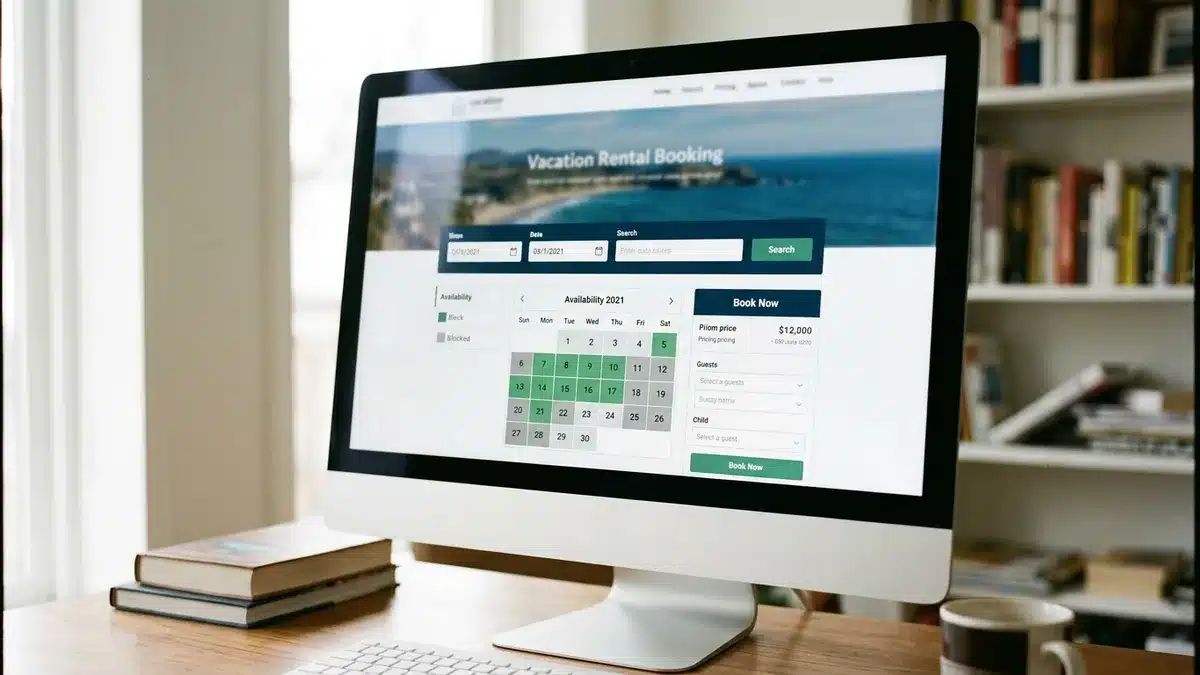
If you’re ready to see what a direct booking website connected to your existing PMS looks like with your own property data loaded in, get started with Boostly Connect and book a demo to walk through the setup with our team.