The must-have tools for short term rental managers in 2026 fall into nine categories: a property management system, dynamic pricing software, a direct booking website, a guest CRM, automated messaging, smart locks, cleaning coordination software, accounting software, and a channel manager. Skipping any one of these creates a manual workload that eventually caps how many properties you can run.
- Nine tool categories, not nine random apps. The right stack covers PMS, dynamic pricing, direct booking, guest CRM, messaging automation, smart locks, cleaning coordination, accounting, and channel management.
- Professional management now controls an estimated 42% of active short-term rental listings globally, which means the operators still running spreadsheets are competing against increasingly software-driven rivals.
- Repeat guest revenue is concentrated on OTAs by default: across a broad dataset of short-term rental operators, roughly three-quarters of repeat guest revenue flows back through OTA channels carrying 12-20% commissions, according to GetHostAI’s 2026 research, because hosts never captured guest contact data in the first place.
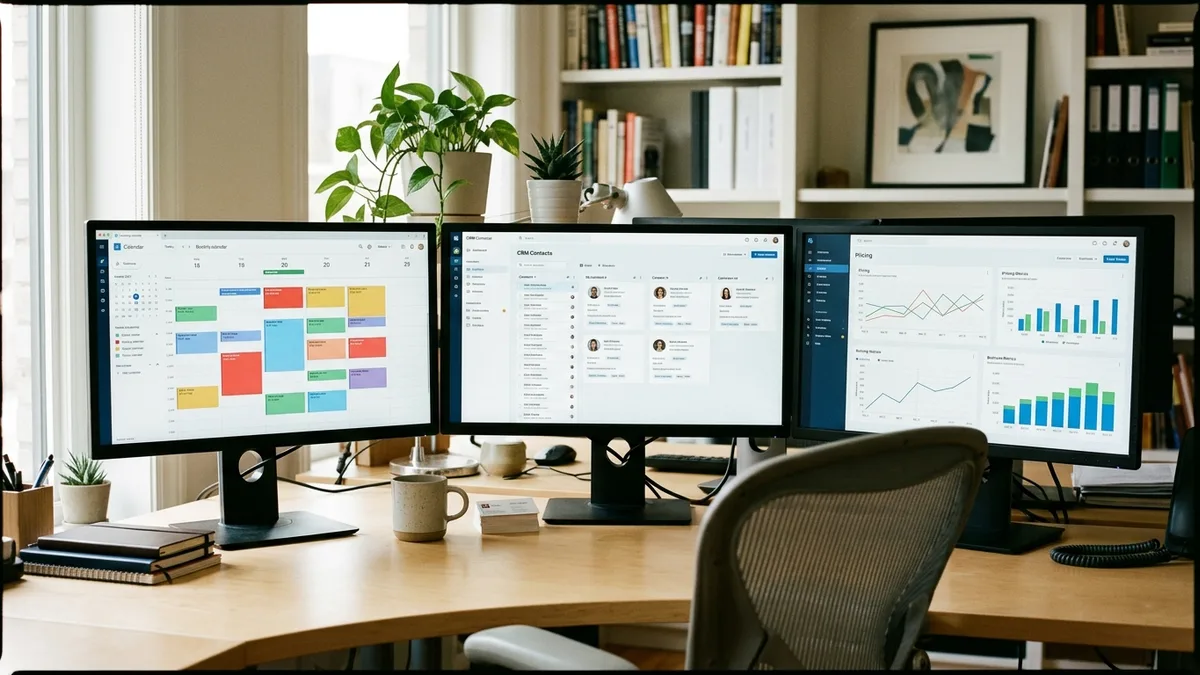
- 22.2% of property managers still aren’t collecting guest data at all, per Enso Connect’s 2022 survey, leaving a huge share of the industry with no retention strategy whatsoever.
- The vacation rental management software market is projected to grow from $0.92 billion in 2026 to $2.38 billion by 2034, according to DataintelO, a signal that manual workflows are losing ground fast.
- Boostly Connect fills the direct booking, CRM, and channel management gap in this stack by syncing your existing PMS to a live website in under 20 minutes, with guest contact data captured automatically instead of staying locked inside Airbnb.
If you’re managing even three properties without a defined tech stack, you’re already losing hours every week to tasks software should be doing for you. We hear this constantly from hosts who started with one listing on a spreadsheet and never revisited the setup as they grew.
This guide breaks down the must-have tools for short term rental managers into nine categories, based on what we consistently see work for operators at different portfolio sizes, from a single self-managed unit to a 20-plus property boutique management company. We’ll cover what each tool actually does, who needs it, and where the manual alternative breaks down.
You’ll also get a look at where most “tech stack” guides stop short. Most cover the property management system and pricing tool, then wave vaguely at “guest communication” and call it done. We’re going deeper, into the specific workflows for small operators, the tools that handle compliance and financial separation, and how to combine dynamic pricing with manual rules without overcomplicating your settings.
1. What Property Management System Should You Start With?
A property management system, or PMS, is the software that centralizes your calendar, listings, and reservations across every booking channel you use. It’s the foundation every other tool in your stack connects to, which is why choosing the wrong one early creates migration headaches later.
For operators with one to five units, a PMS with straightforward per-listing pricing and solid Airbnb, Vrbo, and Booking.com sync is usually sufficient. Industry pricing for entry-level PMS platforms commonly starts around $40 per listing at small scale, with per-listing costs dropping as your portfolio grows, so cost isn’t usually the barrier. The barrier is picking a platform that actually integrates with the rest of your stack, especially your direct booking website.
Larger portfolios, ten-plus units or multiple owners’ properties under management, typically need enterprise-tier PMS platforms that require a custom quote and offer deeper reporting, owner statements, and team permission controls. If you’re managing properties on behalf of other owners, this reporting layer becomes non-negotiable. It’s how you prove your management fee is earning its keep.
Here’s the mistake we see most often: hosts pick a PMS based on price alone, then discover months later that it doesn’t integrate cleanly with the direct booking tools they want to add. Boostly Connect currently supports 8 PMS integrations, including Hospitable, Hostfully, Lodgify, and Guesty, specifically so you’re not locked out of building a direct channel because of a PMS decision you made two years ago.
2. Do You Actually Need Dynamic Pricing Software?
Dynamic pricing software adjusts your nightly rate automatically based on real-time demand signals, seasonality, and local market comps, rather than requiring you to manually update rates across every listing. For any operator running more than one or two properties, doing this manually is not a sustainable strategy.
Dynamic pricing tools typically let you set a minimum, base, and maximum rate, then automatically flex within that range as demand shifts, including automatic last-minute discounting when a gap in your calendar starts looking risky. This is the single highest-leverage automation in the entire stack, because pricing mistakes compound every night a property sits empty or undersells.
Third-party review platforms consistently rate leading dynamic pricing tools highly. One widely cited pricing tool holds a 4.9 out of 5 rating on Capterra and a 5 out of 5 score on Hotel Tech Report in the revenue management systems category. Another ranks among the top five vacation rental software products on G2 by customer satisfaction and market presence.
Here’s the content gap most guides skip: dynamic pricing doesn’t mean handing over full control. The smartest setup for beginners is a hybrid approach: let the software handle 80% of the pricing decisions within tight guardrails, then manually override for known local events, owner-requested blackout dates, or seasonal patterns the algorithm hasn’t seen yet. Overcomplicating your rules early is the most common mistake we see new users make.
If you want a free starting point before committing to a paid tool, Beyond Pricing’s free listing analysis tool will show you whether your current rates are leaving money on the table. And for benchmarking against comparable properties in your zip code, RentCast’s rental market search tool covers more than 38,000 US zip codes worth of comparable rental data.

3. How Important Is a Direct Booking Website in Your Tool Stack?
A direct booking website lets guests book your property straight from your own domain, bypassing OTA commission entirely and giving you ownership of the guest relationship from the first inquiry. Without one, every booking, including repeat stays from guests who already know and love your property, routes back through a platform charging 15 to 20% commission.
This is the category most “tech stack” articles under-cover, treating it as a nice-to-have rather than infrastructure. That framing is backwards. A direct booking site isn’t a marketing project you check off once. It’s the channel that determines whether repeat guests, your cheapest and most reliable source of revenue, ever come back to you directly instead of re-searching Airbnb.
Building one used to require a developer, ongoing maintenance, and a separate calendar sync that broke every time your PMS updated. That’s exactly the problem we designed Boostly Connect to solve: it syncs your existing PMS to a WordPress site with live availability and real-time pricing in under 20 minutes, with no code and a free plan for up to 3 listings on the Discover map.
In one case we’ve worked with, a bed and breakfast owner went from an inconsistent, generic website to 90% direct bookings and a 60% repeat guest rate after focusing deliberately on their own booking channel instead of relying on third-party sites. That’s a dramatic outcome, but it illustrates the ceiling that’s possible once the guest relationship belongs to you, not the platform.
For a full breakdown of what to look for in a direct booking platform, our guide on direct booking websites for short-term rentals covers integration depth, template quality, and payment processing in more detail. If you’re weighing whether to build one at all versus staying OTA-only, our piece on how to get more direct bookings for your vacation rental walks through the underlying math.
4. What Does a Guest CRM Actually Do for a Rental Business?
A guest CRM is software that stores every guest’s contact details, stay history, and preferences in a database you own, rather than leaving that data locked inside a booking platform’s system. Without one, you have no way to market to past guests directly, which is exactly why so many repeat stays end up rebooked through an OTA.
According to a 2026 study by Lodgify, the average short-term rental host sees a repeat guest rate of just 5 to 8%, while hosts running a deliberate retention strategy achieve 15 to 25%. That gap is almost entirely a tooling problem, not a hospitality problem. Guests who loved their stay will rebook with you again if you can actually reach them.
Standalone CRM and email marketing tools like list-building and lead-capture platforms can bolt onto your existing setup, but they require manual export and import work to keep guest data synced across your PMS, website, and inbox. That reconciliation work is where most operators quietly give up on retention marketing altogether.
This is precisely why choosing the best CRM for short-term rental hosts matters so much. Every guest who books direct through Boostly Connect is automatically captured into your own CRM, with contact data staying in your business instead of remaining exclusively inside Airbnb’s system for Airbnb to market back to you. We built this specifically to stop what we call the repeat booking trap: guests return to the OTA not because they prefer it, but because the host never owned the relationship in the first place. For more on this, see our guide on how to own your guest data instead of leaving it with Airbnb.
5. Which Guest Messaging Tools Save the Most Time?
Automated guest messaging software sends check-in instructions, pricing answers, and booking confirmations without a host or team member manually typing a reply for every inquiry. For an operator fielding messages across five, ten, or twenty listings, manual messaging isn’t just tedious, it’s a direct constraint on how many properties you can realistically manage.
The workflow problem compounds at scale. A single-property host might handle inbound messages fine from a phone. But once you’re juggling multiple listings across multiple time zones of guests, response time drops, and slow responses correlate directly with lower conversion and lower guest satisfaction scores across the industry.
Notably, this is one area where automation genuinely outperforms manual effort rather than just saving time on it. Automated response templates handle routine questions instantly, at any hour, without waiting for someone to wake up and check their phone. Boostly Connect’s CRM layer includes AI agents built specifically to answer pricing questions and convert lookers into bookers automatically, rather than leaving that conversion moment to whoever happens to be near their inbox. Our guide on how to automate guest messaging without sounding like a bot covers how to keep automated replies feeling personal instead of robotic.
6. Do You Need Smart Locks for a Short-Term Rental?
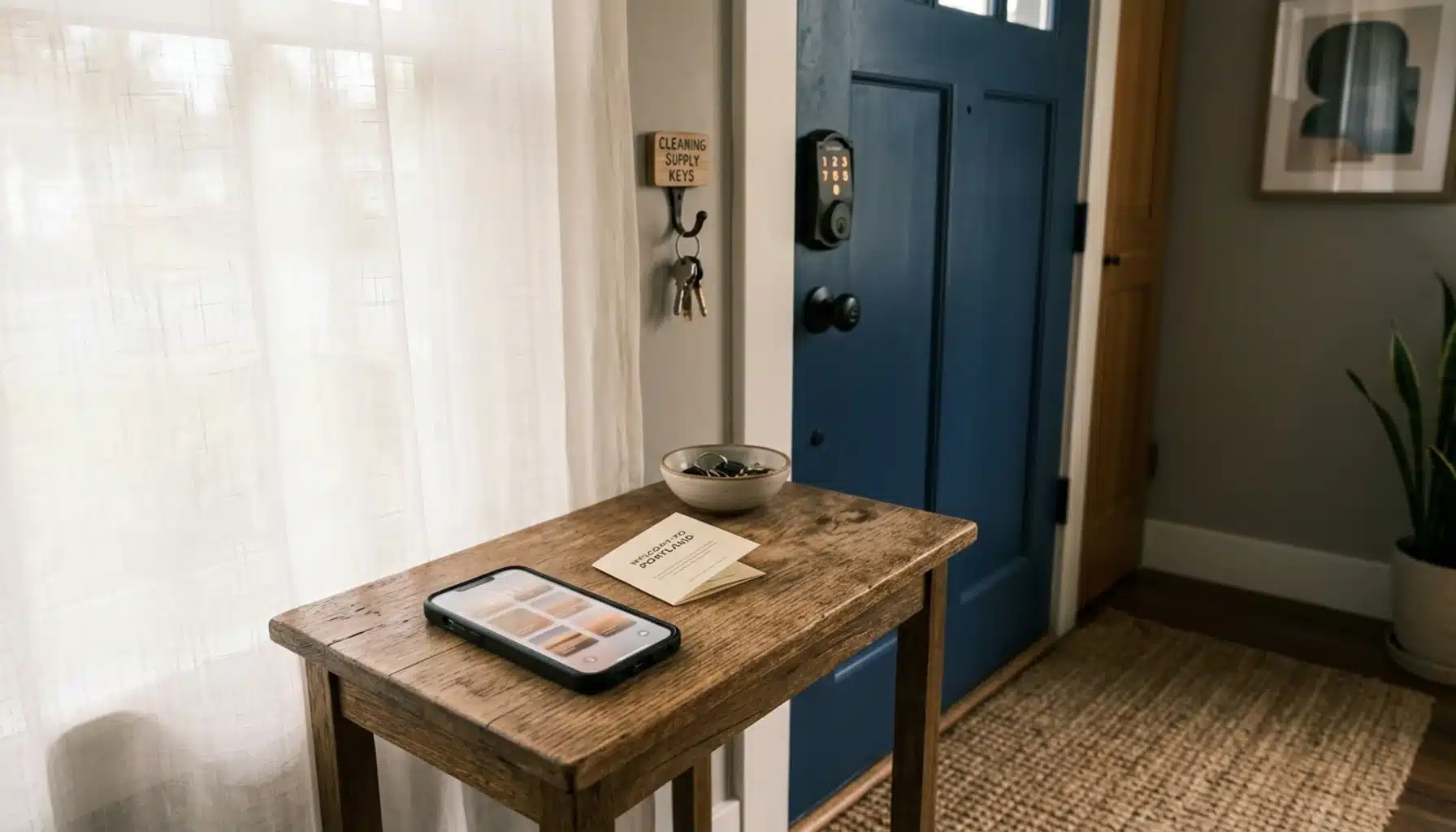
Smart locks are keyless entry systems that let guests check in with a code or app instead of a physical key, and they eliminate the logistical headache of key handoffs, lockbox coordination, and lost-key emergencies. For any operator managing properties remotely, or managing more than one or two units, smart locks aren’t optional infrastructure anymore.
Popular smart lock brands integrate directly with major PMS platforms, generating a unique code per reservation that automatically expires at checkout. Some PMS platforms specifically support integration with certain smart lock manufacturers, letting you skip manual code entry entirely.
The manual alternative, coordinating in-person key handoffs or resetting lockbox codes between every guest, doesn’t scale past a handful of properties without hiring dedicated staff just for turnovers. If you’re managing remotely, or you’re an out-of-state owner running properties in a market where you don’t live, this category becomes essential rather than convenient. It’s one of the few tools in this stack you should never skip, regardless of portfolio size.
7. What’s the Best Way to Coordinate Cleaning and Maintenance?
Cleaning and maintenance coordination software automatically schedules turnovers based on your booking calendar, assigns cleaners, and tracks task completion, replacing the group text threads and phone tag most self-managed hosts default to. As your calendar fills, manual coordination becomes the first thing that breaks.
The failure mode is predictable: a same-day turnover gets missed because nobody confirmed the cleaner saw the text, and the next guest arrives to an unmade property. Dedicated cleaning coordination apps sync directly to your PMS calendar so turnovers trigger automatically whenever a reservation is confirmed or changed, with photo verification built in so you know a unit passed inspection before the next guest arrives.
For multi-property operators specifically, this is one of the clearest examples of where manual workflows collapse the fastest. A single missed turnover with one property is an inconvenience. Across ten properties running on the same manual system, it’s a guaranteed weekly occurrence. If you’re scaling past a handful of units, our guide on how to manage multiple vacation rentals covers the operational side of this problem in more depth, including where automation fits alongside your cleaning team.

8. What Accounting Tools Do Short-Term Rental Managers Need?
Accounting software for short-term rental managers tracks income, expenses, and occupancy-based tax obligations across properties, and separates business finances from personal accounts, a step regulatory and lending institutions expect for any operator treating this as a real business. Skipping this step is one of the most common early mistakes we see.
At minimum, small operators can track income, expenses, and recurring maintenance tasks using spreadsheet tools like Google Sheets or Airtable, which cost nothing and work fine for one or two properties. But that approach breaks down fast once you’re managing occupancy tax remittance across multiple jurisdictions, or reconciling owner statements for properties you manage on behalf of clients.
Dedicated accounting software built for the rental industry automates categorization of property-specific expenses, tracks depreciation, and in many cases automates lodging tax filing across the jurisdictions where you operate. For boutique property managers juggling owner reporting on top of your own books, this isn’t optional. It’s the reporting layer that justifies your management fee to the owners you work for.
9. What Does a Channel Manager Do and Do You Still Need One?
A channel manager synchronizes your availability calendar and rates across every OTA you list on, so a booking on Airbnb automatically blocks that date on Vrbo and Booking.com in real time, preventing double bookings. Most modern PMS platforms include this functionality natively, but managers running listings on regional or niche OTAs beyond the big three sometimes need a dedicated channel management layer.
This is a content gap most stack guides gloss over: if you list on regional or country-specific booking platforms outside the usual Airbnb, Vrbo, and Booking.com trio, verify your PMS or channel manager actually supports that specific platform before assuming it’s covered. Not every integration covers every niche channel, and that gap is where double bookings happen.
Channel management and direct booking aren’t competing strategies, they’re complementary. The goal isn’t to abandon OTAs, it’s to stop being entirely dependent on them. Boostly Connect’s approach treats your direct booking website as an additional channel that runs alongside your existing OTA listings, syncing through your PMS so availability stays accurate everywhere at once. Our piece on how to balance OTA and direct bookings covers how to think about channel mix without tanking your Airbnb search ranking in the process.
How Do These Tools Compare by Portfolio Size?
The right combination of tools depends heavily on how many properties you’re running, since the manual workarounds that work fine for one unit become liabilities at five or ten. The table below breaks down priority by portfolio size, based on where we consistently see operators hit friction.
| Portfolio Size | Highest Priority Tools | Where Manual Work Breaks Down First |
|---|---|---|
| 1-2 properties | PMS, smart locks, basic spreadsheet accounting | Guest messaging response time, especially overnight inquiries |
| 3-5 properties | Dynamic pricing, direct booking website, cleaning coordination software | Turnover scheduling and rate updates across multiple calendars |
| 6-10 properties | Guest CRM, automated messaging, dedicated accounting software | Repeat guest retention and owner financial reporting |
| 10+ properties | Enterprise PMS, channel manager, multi-listing direct booking setup | Cross-property reporting and proving ROI to owner clients |
Notice that a direct booking website and guest CRM become priority tools starting around the three-to-five property mark, earlier than most operators assume. That’s the point where manual retention marketing, remembering which guest stayed when and following up personally, becomes physically impossible without software doing it for you.
What’s the Biggest Mistake Operators Make When Building a Tech Stack?
The most common mistake is buying tools in isolation instead of choosing a connected stack, which creates duplicate data entry and sync errors between your PMS, website, and CRM. We see this constantly with boutique property managers who’ve added five different point solutions over several years, none of which talk to each other.
Here’s a practical framework for avoiding that trap:
- Start with your PMS. Every other tool needs to integrate with it, so choose based on integration breadth, not just price.
- Add dynamic pricing before you add anything else. It has the fastest, most measurable return of any tool in this stack.
- Build your direct booking channel while you’re still small. Waiting until you have 15 properties to think about direct bookings means 15 properties’ worth of repeat guests already routed permanently through OTAs.
- Choose a CRM that captures guests automatically. Manual list-building from OTA reservations is tedious enough that almost nobody actually does it consistently.
- Automate cleaning coordination before you scale past five units. This is the operational failure point that causes the most guest complaints.
- Separate your finances from day one, even if you’re only running spreadsheets initially. It’s far easier to switch to dedicated accounting software later than to reconstruct two years of mixed personal and business transactions.
The through-line across all nine tool categories is connection. A PMS that doesn’t talk to your pricing tool, a website that doesn’t sync live availability, a CRM that requires manual data exports, each of these gaps creates work that should be automated. That’s the specific problem behind Boostly Connect’s design: PMS, website, and CRM operating as one connected system rather than three separate tools you’re manually reconciling every week.
Frequently Asked Questions
What is the single most important tool for a short-term rental manager?
A property management system is the most important starting point because every other tool in your stack, pricing, messaging, and direct booking, needs to sync with it. Without a PMS as your foundation, you end up manually updating calendars across every platform, which is where double bookings happen.
How much does Airbnb commission actually cost hosts?
Airbnb typically charges hosts a service fee in the 15 to 20% range per booking, which is why a direct booking channel matters so much for repeat guests. Over a full year of bookings, that commission adds up to a significant recurring cost that a direct booking website can recapture.
Do I need separate software for pricing if my PMS already has basic rate tools?
Most built-in PMS pricing tools only let you set static seasonal rates, not real-time demand-based adjustments. A dedicated dynamic pricing tool responds to shifting demand automatically, which matters most once you’re managing more than one or two properties and can’t manually check comps every day.
Will adding a direct booking website hurt my Airbnb search ranking?
No, running a direct booking website alongside your Airbnb listing doesn’t damage your Airbnb ranking, since the two channels operate independently. Airbnb ranks listings based on guest satisfaction signals and response rates on its own platform, not based on whether you also have a separate booking channel.
What tools help a self-managed host with just one or two properties avoid manual work entirely?
For one to two properties, prioritize a PMS with smart lock integration and automated messaging first, since those eliminate the most time-consuming manual tasks: key handoffs and repetitive guest questions. Dynamic pricing and a direct booking website become worth adding once you’re confident in your baseline operations.
How do I choose between a full property management software suite and individual point tools?
Choose a connected suite once you’re managing three or more properties, since point tools that don’t integrate create duplicate data entry between your calendar, pricing, and guest records. Below that threshold, individual free or low-cost tools like spreadsheets can work fine temporarily.
What percentage of bookings should come from direct channels versus OTAs?
There’s no single universal target, since it depends on your property type and market, but building any meaningful direct booking percentage reduces your OTA commission exposure. Operators who commit to a retention and direct booking strategy consistently outperform hosts who never develop one at all.
Are free tools like spreadsheets good enough for tracking a rental business?
Spreadsheet tools like Google Sheets or Airtable work reasonably well for income and expense tracking on one or two properties, but they don’t scale once you’re reconciling occupancy tax across multiple jurisdictions or reporting to property owners. Most operators outgrow spreadsheets faster than they expect.
The Bottom Line on Must-Have Tools for Short Term Rental Managers
The must-have tools for short term rental managers in 2026 aren’t a random collection of apps, they’re nine connected categories: PMS, dynamic pricing, direct booking, CRM, messaging automation, smart locks, cleaning coordination, accounting, and channel management. Miss the connections between them and you’re back to manual reconciliation regardless of how many individual tools you’ve bought.
The professional operators pulling ahead right now, the roughly 42% of listings already under professionalized, software-driven management, aren’t necessarily working harder. They’ve simply removed the manual steps that cap growth for everyone else. The direct booking and guest CRM piece specifically is where we’ve built Boostly Connect to close the gap: syncing your PMS to a live website and capturing every direct guest into your own CRM automatically, in under 20 minutes, with no developer required.
If repeat guests are still routing back through an OTA because you never had a system to capture their contact details in the first place, that’s a fixable problem, not a permanent cost of doing business. Book a demo with Boostly Connect and we’ll show you your property synced to a live, working direct booking site during the call.
If your current stack still routes every repeat guest back through an OTA, the fix starts with owning your own booking channel. Check how quickly Boostly Connect can get your properties live and see the guest CRM populate automatically from your first direct booking.