
You reduce manual work in a vacation rental business by automating the five tasks that eat the most hours: guest messaging, calendar syncing, pricing updates, cleaning coordination, and payment collection. Most operators can eliminate a large share of routine, repetitive tasks once these systems talk to each other instead of requiring manual re-entry across five different tabs.
- Guest communication is the single biggest automation win, with a large majority of routine guest messages, from booking confirmation to post-checkout review requests, capable of running without a human typing a reply.
- Calendar and pricing sync eliminate double bookings by connecting your property management system (PMS) to every channel at once, instead of updating each platform by hand.
- Cleaning coordination is where solo hosts and mid-sized teams diverge most, since a one-property host and a 15-unit manager need very different levels of scheduling automation.
- You don’t need a PMS to start reducing manual work, though operators still running spreadsheets and email will hit a ceiling faster than those on integrated software.
- Automation should protect guest experience, not replace it entirely; the operators who automate well keep a few deliberate human touchpoints while automating the repetitive middle.
- Boostly Connect reduces manual work specifically at the direct booking layer, syncing your existing PMS to your own website in under 20 minutes so availability, pricing, and guest data update themselves instead of requiring manual reconciliation.
If you’re running a short-term rental in 2026, you already know the job isn’t just hosting anymore. It’s data entry, calendar-checking, message-answering, and spreadsheet-updating, often stacked across five browser tabs before your first coffee is finished. The global vacation rental market is projected to grow from roughly $97.85 billion in 2026 to $138.74 billion by 2035, according to Precedence Research, and that growth is pulling more operators toward professional-grade tools just to keep pace. Professional management companies now control an estimated 42 percent of active short-term rental listings as of early 2026, largely because manual operations don’t scale past a handful of units.
This guide walks through exactly where manual work hides in a typical vacation rental operation, and which parts you can automate without losing the personal touch that gets you five-star reviews. We’ll cover solo-host workflows and multi-property portfolios separately, because the automation math is genuinely different depending on how many units you’re running. And we’ll be honest about the tradeoffs: automation done badly feels colder to guests, but automation done well, protecting the handful of moments that actually need a human, tends to improve guest experience rather than hurt it.
At Boostly Connect, we’ve spent years watching operators drown in manual reconciliation between their PMS, their website, and their guest lists. That’s the exact gap our platform was built to close, and we’ll point out specifically where it fits into the framework below.
What Is the 75-55 Rule for Airbnb?
The 75-55 rule is a pricing and revenue benchmark some Airbnb hosts use to describe an ideal balance between occupancy and rate: aiming for roughly 75 percent occupancy while keeping nightly rates at least 55 percent above your break-even cost. It’s not an official Airbnb policy, just an informal heuristic operators use when deciding whether to chase bookings with lower prices or hold rates and accept some empty nights.
In practice, this rule matters for manual work reduction because pricing decisions are one of the most time-consuming recurring tasks in a rental business. If you’re manually adjusting rates night by night based on gut feel, you’re spending hours that a dynamic pricing tool could handle in minutes. Automated pricing engines can push rate changes to every channel simultaneously through your channel manager, which means you set the strategy once instead of re-entering numbers on Airbnb, VRBO, and your direct site separately.
The manual alternative here is genuinely painful at scale: cross-checking comp sets, adjusting for weekends and local events, then logging into three or four platforms to update the same number. That’s exactly the kind of repetitive, low-judgment task that eats a Sunday afternoon. Boostly Connect doesn’t set your rates for you, but because it syncs real-time pricing from your existing PMS directly to your own website, any rate change you make once in your PMS reflects instantly on your direct booking site, no manual re-entry required.
What Is the 80-20 Rule for Airbnb?
The 80-20 rule, applied to vacation rentals, generally refers to the idea that roughly 80 percent of your booking revenue comes from about 20 percent of your marketing or guest acquisition effort, often your repeat guests and direct channel. It’s a variation of the classic Pareto principle, and it shows up constantly in short-term rental operations once you start tracking where revenue actually originates.
For manual work specifically, this rule has a practical implication: most operators spend disproportionate time on OTA-sourced, one-time guests while under-investing in the smaller group of repeat guests who require far less manual chasing to rebook. A returning guest who already trusts your property doesn’t need a full inquiry-to-booking sequence; they need a simple, low-friction way to book again directly.
The problem is that most hosts have no system to identify or reach those repeat guests, because Airbnb retains that contact data rather than passing it to the host. That’s the exact repeat-booking trap Boostly Connect was designed to close. Every guest who books through your Boostly Connect direct site lands automatically in your own CRM, so you’re not manually tracking spreadsheet rows to remember who stayed with you last summer. If you want a deeper breakdown of this specific problem, our piece on how to own guest data on Airbnb covers it in detail.
How Do You Reduce Manual Work in a Vacation Rental Business?
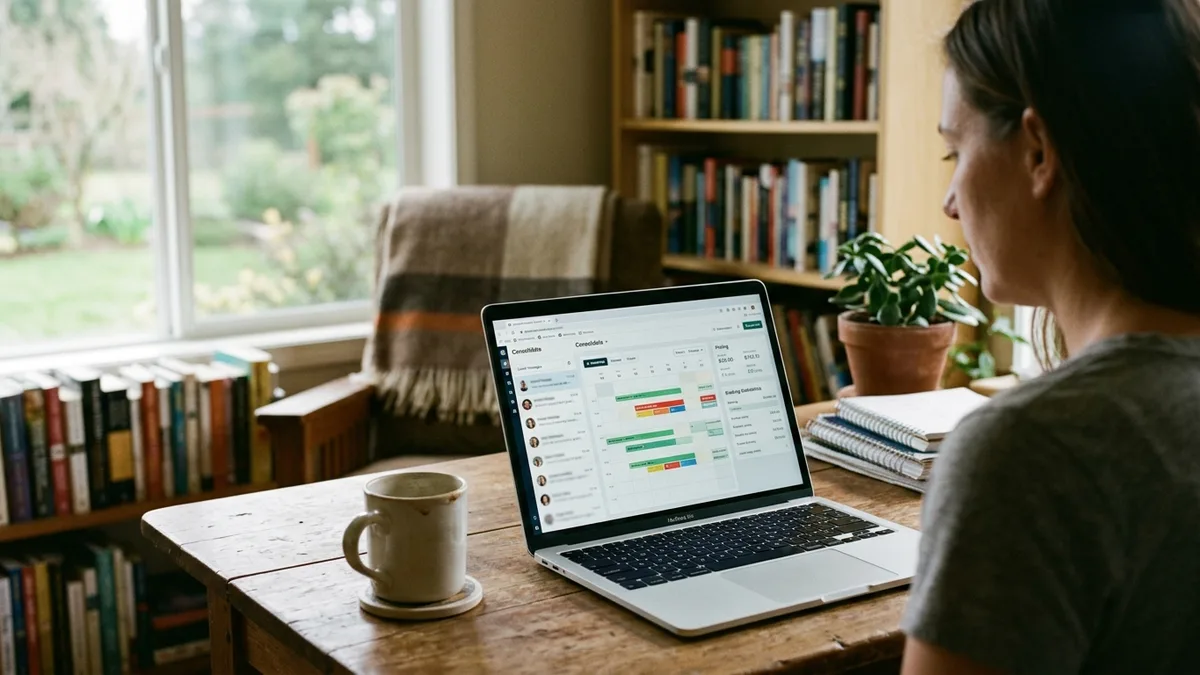
You reduce manual work in a vacation rental business by automating in a specific order: guest messaging first, then calendar and channel sync, then pricing, then cleaning coordination, then financial reporting. Tackling them in this sequence matters because messaging automation typically delivers the fastest return, while financial automation depends on the other systems already being connected.
Step 1: Automate Guest Communication
Guest messaging is the highest-volume manual task in most rental operations, and it’s also the most automatable. Industry research on modern PMS platforms shows that guest communication sequences, covering booking confirmation, pre-arrival instructions, check-in details, a mid-stay check-in, and the post-checkout review request, can be fully automated for the large majority of guests. A six-message sequence from confirmation through review request is a common structure, and it removes the need to manually type the same information over and over.
The manual version of this task looks like: copying check-in instructions from a Google Doc into a new message thread for every single booking, remembering to follow up mid-stay, then remembering again to ask for a review after checkout. Miss one step and you’ve lost a review opportunity or, worse, left a guest confused about the door code. Automated messaging tools remove that memory burden entirely. For a full walkthrough on keeping automated messages from sounding robotic, see our guide on how to automate guest messaging without sounding like a bot.
Step 2: Sync Your Calendar Across Every Channel
Calendar sync means connecting your PMS to every booking channel, Airbnb, VRBO, Booking.com, and your own direct site, so an update in one place reflects everywhere instantly. Without this, you’re one missed manual block away from a double booking, which is one of the fastest ways to damage your reputation and eat a refund.
A channel manager or integrated PMS handles this automatically. This is also where your direct booking channel needs to be part of the sync, not a separate manual task layered on top. Boostly Connect connects to 8 different PMS platforms specifically so your direct site’s availability calendar updates the moment anything changes in your existing system, no manual double-entry between your PMS and your website.
Step 3: Automate Pricing Updates
Once your calendar is synced, dynamic pricing tools can push rate adjustments to every connected channel simultaneously. This is the step most solo hosts skip because it feels optional, but manually re-pricing even a handful of properties for weekends, local events, and seasonal shifts adds up to real hours every month that automated tools handle continuously in the background.
Step 4: Automate Cleaning and Turnover Coordination
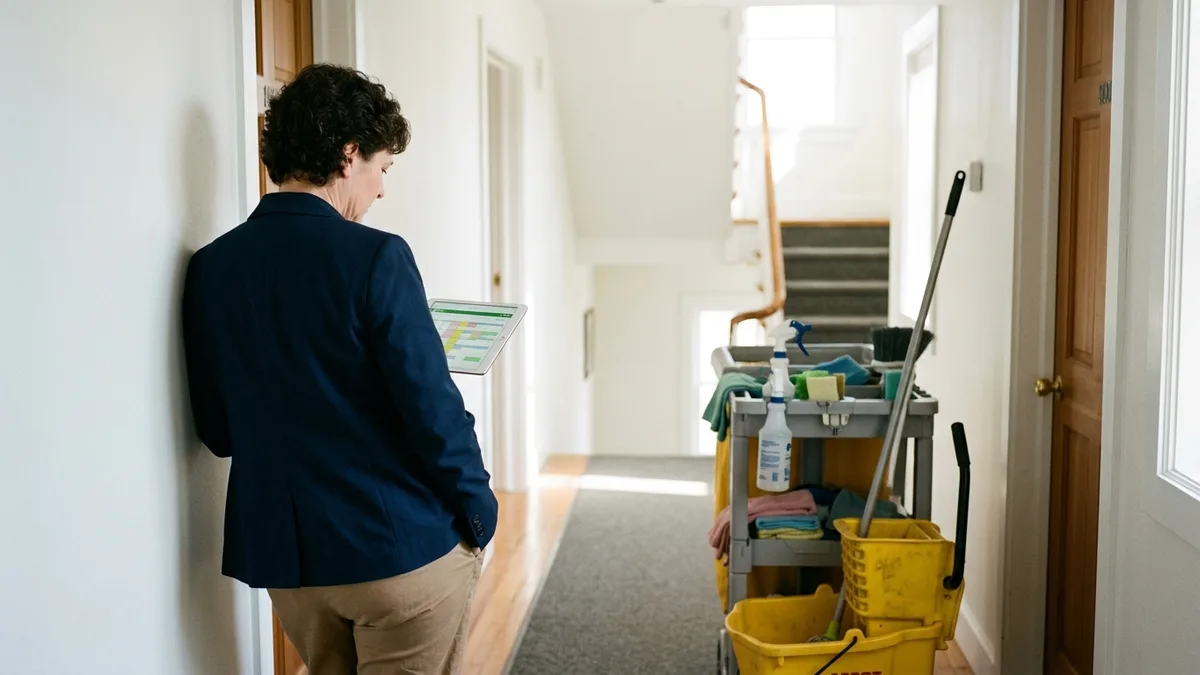
Cleaning coordination automation generates a housekeeping schedule directly from your reservation calendar, assigns tasks to staff or contractors, and confirms turnovers are complete before the next check-in. Property managers who automate this piece report saving significant weekly hours previously spent on manual text threads and phone calls with cleaners.
Step 5: Automate Owner and Financial Reporting
If you manage properties for owners, automated statement generation eliminates the one-to-two-day manual assembly process that typically happens at month-end. Owner portals that give clients 24/7 self-service access to statements and booking calendars also dramatically cut down on the inbound calls asking “how did my property do this month?”
How to Reduce Manual Work When You’re Still Using Spreadsheets, Not a PMS
Reducing manual work without a PMS starts with consolidating your booking data into a single source of truth before you add any automation tool, because automation layered on top of scattered spreadsheets and email threads just automates the chaos instead of fixing it. This is one of the most overlooked steps in vacation rental automation advice, and it’s exactly where a lot of first-time hosts get stuck.
If you’re managing one or two units through a mix of Airbnb’s dashboard, a personal calendar app, and email, your first move isn’t buying five new tools. It’s picking a single PMS that consolidates your calendar, guest messages, and pricing in one place. Only after that foundation exists does layering on a channel manager, messaging automation, or a direct booking site actually save time instead of adding a sixth system to babysit.
This is also the exact point where many tech-averse hosts get stuck; they assume any of this requires a developer or coding knowledge. It doesn’t. Boostly Connect was built with no-code setup specifically for this stage, connecting to your existing PMS in minutes with no developer required, so the leap from “spreadsheet chaos” to “connected system” doesn’t require hiring anyone or learning to code.
What Are the Best Automation Solutions for Vacation Rentals?
The best automation solutions for vacation rentals target the tasks with the highest repetition and lowest judgment requirement: guest messaging, calendar sync, dynamic pricing, cleaning scheduling, and smart home access. Notably, industry data suggests routine communication and scheduling workload can be automated to a significant degree once these systems are connected properly.
| Automation Category | What It Replaces Manually | Best Fit For |
|---|---|---|
| Guest messaging sequences | Typing the same check-in, mid-stay, and review-request messages for every booking | All operators, from solo hosts to large portfolios |
| Channel manager / calendar sync | Manually blocking dates across Airbnb, VRBO, Booking.com, and a direct site | Anyone listing on more than one platform |
| Dynamic pricing tools | Nightly manual rate checks and adjustments across every channel | Operators with fluctuating seasonal or event-driven demand |
| Cleaning and turnover scheduling | Text threads and phone calls coordinating cleaners around checkouts | Multi-property operators and portfolio managers |
| Smart locks and noise monitors | Handing off physical keys and manually checking in on noise complaints | Remote or out-of-state owners |
| Direct booking website with PMS sync | Manually updating a separate website’s availability and pricing by hand | Any host or manager wanting to reduce OTA commission dependency |
Smart locks that generate unique, expiring door codes are widely preferred by guests for self-check-in, and they remove the manual key-handoff logistics entirely, which matters most for out-of-state or remote owners who can’t physically meet guests. Noise monitoring devices like those referenced in industry guides can alert managers remotely if levels exceed a threshold, replacing manual neighbor-complaint follow-ups. AI chatbots functioning as 24/7 virtual concierges can answer Wi-Fi and house rule questions without a human on the other end at 11pm.
Where most “automation stack” advice stops short is the direct booking layer. Messaging, pricing, and cleaning tools all reduce manual work on the operations side, but if your website still requires manual availability updates separate from your PMS, you’ve just created a new bottleneck. That’s precisely the layer a properly integrated direct booking website is meant to close.
Which Automations Save the Most Time for Different Portfolio Sizes?
Automation priorities shift meaningfully depending on how many properties you operate, and articles that treat a solo host and a 15-property manager identically miss the point entirely. A single-property host’s biggest time drain is usually guest messaging and check-in logistics, while a multi-property operator’s biggest drain shifts toward cleaning coordination and owner reporting.
Solo Hosts (1-2 Properties)
If you’re self-managing one or two units, guest messaging automation delivers the fastest relief because you’re personally answering every inquiry. A smart lock removes the need to be physically present for check-in, which matters most if you have a day job. Pricing automation matters less at this scale since manual adjustments on two calendars, while tedious, aren’t overwhelming.
Boutique Managers (5-20 Properties)
At this scale, cleaning coordination becomes the dominant manual burden. Text threads with multiple cleaners, tracking which units are ready, and confirming turnovers before same-day check-ins consume hours that automated housekeeping scheduling tools eliminate by generating schedules directly from the reservation calendar. This is also the scale where a messy, disconnected tech stack starts costing real money, which is exactly what our piece on how to manage multiple vacation rentals addresses in more depth.
Multi-Property Portfolio Operators (10+ Properties)
At 10 or more units, owner reporting and financial reconciliation become the largest time sink if you manage properties for outside owners. Automated statement generation and owner self-service portals cut down dramatically on the manual month-end assembly process and the phone calls asking for updates. Boostly Connect’s reporting dashboard tracks direct booking revenue and conversion in one place at this scale, replacing the scattered spreadsheet-and-PMS-report combination most growing operators start with.
How Do You Automate Without Sacrificing Guest Experience?
You protect guest experience while automating by keeping a small number of deliberate human touchpoints, typically a personal welcome message and a genuine response to any complaint or unusual request, while letting routine, predictable communication run automatically. Guests generally don’t want a human to manually type “your check-in code is 4471”; they want it fast and accurate, which automation delivers better than a person can.
The mistake we see most often is operators assuming automation means fully removing themselves from every interaction. That’s not the goal. A pre-arrival automated message with a personal note added, or an automated review request followed by a genuine manual reply when someone leaves detailed feedback, blends efficiency with the personal touch that actually drives repeat bookings and strong reviews. According to CraftedStays research, more than half of vacation rental website traffic now comes from mobile phones, which means your automated messages and your direct site both need to work flawlessly on a small screen, not just a desktop preview.
Automating housekeeping or maintenance workflows also requires clear communication with your team before the system goes live. Cleaners and contractors who are used to a phone call need a short training session on the new scheduling tool, otherwise automation creates confusion instead of removing it. Set expectations, run one property through the new workflow first, then scale it across your portfolio once the team is comfortable.
What Mistakes Should You Avoid When Automating?
The biggest mistake operators make when automating is trying to automate everything at once instead of sequencing it, which typically breaks more than it fixes. Automation should be layered in, one category at a time, starting with the highest-volume, lowest-judgment task.
- Automating messaging before your information is accurate. An automated sequence that sends the wrong Wi-Fi password or an outdated check-in time is worse than no automation at all.
- Connecting a channel manager before verifying your calendar sync works correctly. Test a sync with a dummy block before trusting it with live bookings.
- Choosing tools that don’t talk to each other. A pricing tool, a PMS, and a website that all require separate manual updates isn’t automation, it’s just three more logins to manage.
- Skipping owner or staff communication. Housekeeping teams and property owners need a heads-up before workflows change underneath them.
- Ignoring the direct booking channel entirely. Automating OTA-side operations while your own website still requires manual availability updates leaves the most profitable channel as your most manual one.
How Long Does It Take to See Results From Automation?
Most operators notice a reduction in daily manual tasks within the first few weeks of implementing messaging automation, since it’s the fastest tool to configure and the highest-volume task it replaces. Calendar sync and pricing automation typically show results within the first booking cycle after setup, once the systems have processed a full round of reservations.
Setup time itself varies by tool. A PMS-to-website sync through Boostly Connect, for example, is designed to take under 20 minutes once your existing PMS is connected, with no developer and a free plan for up to 3 listings on the Discover map. That’s meaningfully different from stitching together separate plugins that each require their own setup and maintenance, and it’s a big part of why we built the integration this way. Cleaning automation and owner reporting tend to take longer to fully pay off, since they require your team to adjust workflows, not just your software.
By 2026, most operators evaluating new tools should expect a no-code setup process as the baseline, not the exception. If a platform still requires a developer to connect your existing PMS to a new website, that’s a sign the tool wasn’t built with this specific workflow in mind.
Frequently Asked Questions
What is the fastest automation to implement in a vacation rental business?
Guest messaging automation is typically the fastest to implement because it requires configuring a sequence of pre-written messages rather than integrating multiple systems. Most operators can have confirmation, pre-arrival, and check-in messages automated within a day or two of setup, with the review-request sequence added shortly after.
Can I reduce manual work if I only have one vacation rental property?
Yes, single-property hosts benefit significantly from automating guest messaging and installing a smart lock for self-check-in, even though pricing and cleaning automation matter less at that scale. The time saved on messaging alone often justifies setting up basic automation even with just one unit.
Does automating guest communication hurt review scores?
Not when it’s done correctly. Automated messages that are accurate, timely, and paired with a genuine human response to any unusual question or complaint tend to perform as well as, or better than, manually typed messages, since automation removes the risk of a delayed or forgotten reply.
Do I need a property management system before I can automate anything?
No, but consolidating your booking data into a single system first makes every automation tool that follows more effective. Layering automation on top of scattered spreadsheets and email threads tends to automate the disorganization rather than fix it.
How does reducing manual work affect direct bookings specifically?
Manual work is often highest on the direct booking side because hosts update their own website by hand while OTAs handle availability automatically. Syncing your PMS directly to your own website, which is what Boostly Connect does, removes that manual gap and makes your direct channel as low-effort to maintain as your OTA listings.
What is the difference between a channel manager and a PMS?
A channel manager specifically syncs calendars and rates across multiple booking platforms to prevent double bookings, while a property management system (PMS) typically handles the broader operational workflow, including guest communication, reservations, and reporting. Many modern platforms combine both functions, but the distinction matters when evaluating standalone tools.
Is it worth automating cleaning coordination for just a few properties?
It depends on your current process. If you’re coordinating cleaners through phone calls and texts for two or three properties, the time savings may be modest, but the reduction in missed-cleaning risk before a check-in is valuable regardless of portfolio size.
How do I know if my current tech stack is creating more manual work instead of less?
A common sign is needing to update the same piece of information, availability, pricing, or guest details, in more than one place manually. If your PMS, website, and CRM don’t sync automatically, you’re likely doing reconciliation work that a properly connected system would eliminate entirely.
Key Takeaways on Reducing Manual Work in Your Vacation Rental Business
Reducing manual work in a vacation rental business comes down to sequencing automation correctly: messaging first, then calendar sync, then pricing, then cleaning, then financial reporting, while keeping a handful of genuine human touchpoints intact. The operators who get this right treat their tech stack as one connected system rather than five separate logins that each need manual attention.
As the vacation rental management software market grows toward an estimated $2.38 billion by 2034 according to Data Intelo, more of that spend is going toward tools that connect rather than replace existing workflows. The hosts and managers who solve this fastest are the ones who treat their direct booking channel as real infrastructure, not an afterthought bolted onto their OTA listings. If your website still requires manual updates every time your PMS calendar changes, that’s the single biggest remaining source of manual work in an otherwise automated operation.
Boostly Connect closes that specific gap by syncing your existing PMS to your own WordPress website in under 20 minutes, no developer, no code, and a free plan for up to 3 listings on the Discover map. Every guest who books through that direct site lands automatically in your own CRM, so you’re not manually tracking who’s coming back. If manual reconciliation between your PMS, your website, and your guest list is still costing you hours every week, book a demo and we’ll show you your property synced and ready to take direct bookings in under 20 minutes.

If manual PMS-to-website updates are the last piece of busywork left in your operation, seeing a live sync in action is the fastest way to know whether it’s worth fixing. Get started with Boostly Connect and watch your existing PMS data populate your own site in real time.