

The biggest short term rental industry trends shaping 2026 come down to moderating demand growth, shrinking booking windows, and a hard pivot toward direct booking channels. U.S. short-term rental demand is projected to grow 4.1% year over year in 2026, down from 4.7% in 2026, while available listings climb to 1.77 million from 1.69 million, according to AirDNA’s 2026 Outlook Report. Operators who are winning right now aren’t reacting to these shifts one at a time. They’re rebuilding pricing, marketing, and distribution around them at the same time.
Key Takeaways
- U.S. short-term rental demand growth is projected to slow to 4.1% in 2026 from 4.7% in 2026, even as listing supply grows to 1.77 million units, according to AirDNA’s 2026 Outlook Report.
- Booking windows keep shrinking: reservations made 0 to 7 days before arrival now account for 27% of bookings in 2026, up from 21% in 2021.
- National occupancy is forecast at 57.4% for 2026, slightly above the 57.0% pre-pandemic average, with RevPAR expected to rise 2.9%, according to AirDNA data.
- Repeat guest rates separate profitable operators from struggling ones: hosts without a retention strategy see roughly 5 to 8% repeat bookings, while those with a deliberate plan report 15 to 25%.
- A large share of repeat guest revenue still flows back through OTAs paying standard commissions of 12 to 20%, which means most operators are re-paying commission on guests they already earned once.
- Boostly Connect addresses the direct booking gap by syncing a host’s existing PMS to a WordPress website with live pricing and an integrated CRM, so returning guests get captured and marketed to instead of routed back through an OTA.
We’ve spent the better part of a decade helping hosts and property managers move revenue off OTAs and onto channels they own, and 2026 is shaping up to be a year where that decision stops being optional. Supply keeps expanding faster than demand in most markets, and occupancy is essentially flat against pre-pandemic norms while guests book later than ever. That combination squeezes margin from every direction unless you change how you price, market, and retain guests.
This article walks through the short term rental industry trends worth planning around this year, organized the way you actually need them: what’s happening at the macro level, what it means for your calendar and your marketing, and where the real opportunity sits if you’re willing to build outside the OTA ecosystem. We’ll also answer the questions we hear most from hosts trying to make sense of headlines that sometimes contradict each other.
Is Airbnb Declining in Popularity?
Airbnb is not declining in overall booking volume, but its growth rate is slowing, and guests increasingly compare it against direct booking sites and other platforms before committing. Global short-term rental gross bookings reached $219.9 billion in 2026 and are projected to hit $270.6 billion by 2029, a 5.3% compound annual growth rate. North American gross bookings grew 4% to $78 billion in 2026 and are projected to reach $81.8 billion in 2026.
That’s steady growth, not collapse. But growth at the platform level doesn’t guarantee growth for individual listings. Supply is expanding faster than demand in most U.S. markets this year, which means more properties are competing for a slightly smaller slice of bookings each. International demand into the U.S. was reported 12% below the prior spring in one midyear outlook, with Canadian demand down 32% from 2026 levels, a real headwind for border-adjacent and gateway city operators.
What threatens individual hosts is rising OTA competition combined with commission rates of 12 to 20% eating into thinner margins. That’s why we built Boostly Connect, so hosts can keep their Airbnb listing live for discovery while capturing repeat guests directly instead of losing them back to the platform every time they rebook.
Is the Short Term Rental Market Growing?
The short-term rental market is growing globally but at a moderating pace. Full-year and midyear projections differ on the exact size and growth rate of the vacation rental sector because they use different methodologies and market definitions, and those differences are worth naming instead of glossing over.
Both directional reads point the same way: continued expansion, just not at the double-digit clip the industry saw in 2021 and 2022.
Domestically, AirDNA’s 2026 Outlook projects listings growing to 1.77 million units while demand growth cools to 4.1%. A separate AirDNA midyear scenario shows both demand and available listings growing 2.7% in parallel, a tighter, more balanced picture. Either way, supply is no longer scarce. Winning in a market like this depends less on adding another listing and more on converting the guests you already have into repeat, direct bookings, which is the exact gap our guest CRM built for short-term rental hosts was designed to close.

What Is the 2% Rule for Rentals?
The 2% rule is a rough real estate investment guideline suggesting a rental property’s monthly income should equal at least 2% of its purchase price to be considered a strong cash flow investment. A $300,000 property, under this rule, would need to generate around $6,000 in monthly gross rental income to clear the threshold.
It’s a screening tool, not a guarantee. In high-cost coastal and mountain markets, hitting 2% is rare even with strong short-term rental demand, because purchase prices have outpaced achievable nightly rates. In lower-cost secondary markets, some operators clear it easily but face thinner guest demand or shorter peak seasons.
The rule ignores operating costs entirely. Cleaning turnover, insurance, dynamic pricing software, and OTA commissions of 12 to 20% all come out before you see net profit. A property that technically clears the 2% threshold on gross revenue can still underperform once OTA commission losses are subtracted, which is exactly why we push you to run the math on what Airbnb commission actually costs annually before treating any gross revenue projection as real profit.
What Is the 80/20 Rule in Airbnb?
The 80/20 rule, applied to short-term rentals, generally refers to the idea that roughly 80% of your booking revenue or guest satisfaction results come from about 20% of your effort, amenities, or guests. In practice, you’ll most often apply it to repeat guests: a small share of past guests tends to generate a disproportionate share of future direct revenue if you nurture the relationship.
Repeat guests account for anywhere from 1% to 26% of total booking value across a dataset of short-term rental operators, with a median of 5%. That wide range tells you something important: most operators leave that 20% (or more) of high-value repeat business almost entirely on the table.
The reason is structural, not effort-related. If a guest’s contact information sits inside Airbnb’s messaging system instead of your own CRM, you can’t email them a return offer, and neither can most hosts running manual spreadsheets. Boostly Connect solves this by capturing every guest who books direct straight into your own CRM automatically, so the 20% of guests worth the most to your business stay reachable instead of disappearing back into the OTA’s remarketing funnel.
What Are the Core Trends Shaping Booking Behavior in 2026?
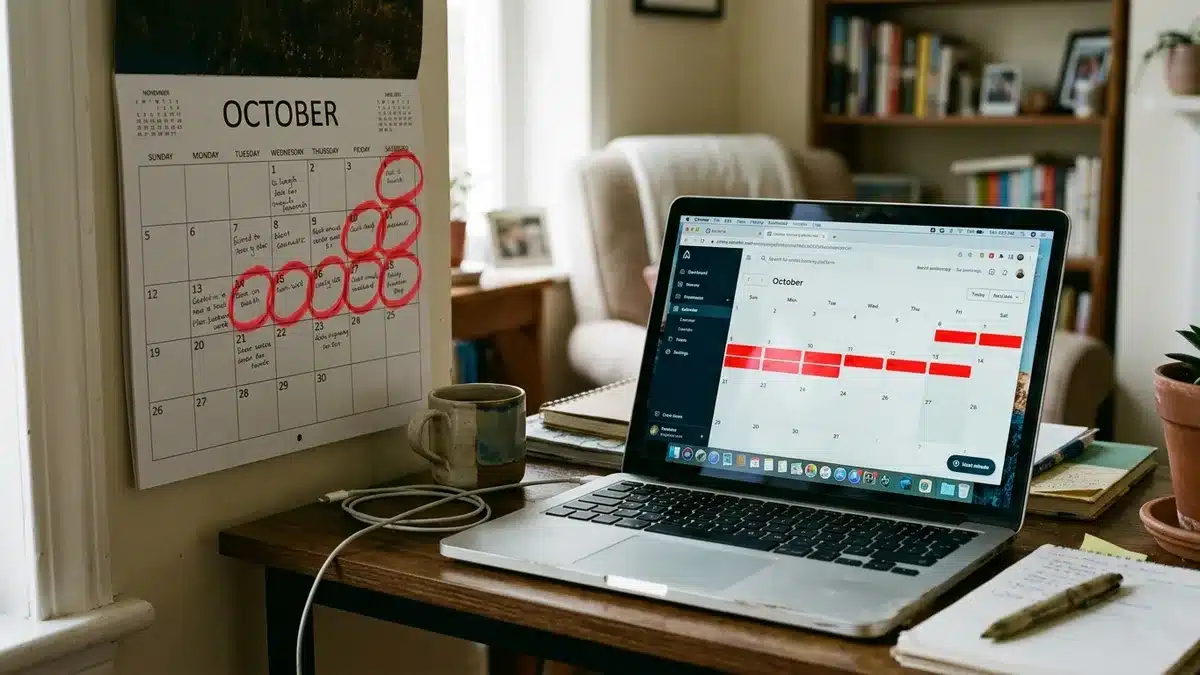
Booking behavior in 2026 is defined by compressed booking windows and rising guest price sensitivity as fee transparency rules take effect. Reservations made 0 to 7 days before arrival made up 27% of all bookings in 2026, up from 21% in 2021. Average January booking windows shrank from 19 days in 2022 to 15 days in 2026, and July peak-season windows compressed from 34 days to 29 days over the same period.
That compression forces two operational changes. First, dynamic pricing needs to update more frequently, because a rate set two weeks out is now stale for over a quarter of your bookings. Second, marketing has to reach guests closer to their travel date, which favors owned channels like email and SMS over slower-moving organic search traffic.
On the regulatory side, the U.S. Federal Trade Commission’s mandatory fee disclosure rule for short-term lodging took effect in 2026, requiring platforms and, in many cases, individual listing pages, to show an all-in trip price upfront. Guests comparing a transparent direct booking price against an OTA listing loaded with service and cleaning fees increasingly favor the clearer number, particularly for last-minute bookings where they don’t have time to dig through fine print. A direct booking site with real-time pricing synced from your PMS, which is exactly what our real-time pricing integration handles, keeps your all-in rate accurate the moment a guest lands on the page.
How Does Guest Retention Compare Across Booking Channels?
| Metric | No Retention Strategy | Deliberate Retention Strategy | Source |
|---|---|---|---|
| Repeat guest rate | 5% to 8% | 15% to 25% | Lodgify 2026 study via StayStrat |
| Repeat guest revenue routed through OTAs | Roughly three-quarters | Lower, shifts toward direct | GetHostAI, 2026 |
| Average direct booking repeat rate (industry benchmark) | N/A | 22% | CUfinder, 2026 vacation rental marketing benchmarks |
| High-performing operator repeat rate (single case) | N/A | 25.98% | Pastel Getaways, 2026 internal data |
The pattern across every source is consistent: if you run a deliberate retention program , automated post-stay emails, return offers, and a CRM that tracks who stayed and when , you’ll see repeat rates two to three times higher than operators who don’t. Without that infrastructure, most of that repeat revenue defaults back to the OTA, commission and all.
What Does the Full 2026 Data Actually Say (Reconciling Conflicting Forecasts)?
Several 2026 forecasts for U.S. short-term rentals appear to conflict at first glance because they measure different scenarios and time horizons rather than disagreeing on direction. AirDNA’s full-year 2026 Outlook projects listing growth of 4.6%, well below the 20% peak expansion seen in 2021 to 2022, alongside occupancy easing by roughly 1% and ADR rising 1.5%. A separate AirDNA midyear update shows both demand and available listings growing 2.7% in parallel, a more balanced supply-demand picture drawn from mid-year performance rather than a full annual projection.
Both are legitimate reads of the same underlying market, just captured at different points and with different assumptions baked in. The consistent thread: occupancy nationally sits around 57.4%, just above the 57.0% pre-pandemic average, and RevPAR growth of 2.9% is expected, with rate growth accelerating from about 0.7% in January to roughly 3% by spring.
City-level variation is significant. San Francisco, Anaheim, and Philadelphia posted RevPAR growth of 12.1%, 11.0%, and 10.1% respectively in midyear data, well above the national average. The 2026 FIFA World Cup is a specific tailwind for host cities, with forecast RevPAR growth of 6.3% in Philadelphia, 5.6% in Jersey City and Newark, and 5.5% in Dallas. If you operate in or near a host city, this is the year to build pricing strategy around a known demand event rather than guessing.
What Should Profitability Planning Include Beyond ADR and Occupancy?
Full profitability planning for a short-term rental in 2026 requires accounting for labor, insurance, financing, and technology costs in addition to average daily rate and occupancy. You likely track ADR and occupancy closely but underestimate how much of gross revenue gets consumed before it reaches net profit.
Consider the layers most forecasts skip entirely. OTA commissions alone run 12 to 20% per booking on platforms like Airbnb and Booking.com. Add cleaning and turnover labor, which scales directly with your compressed booking windows since more frequent, shorter stays mean more turnovers per month. Add software: you likely run 3 to 5 separate tools for pricing, messaging, channel management, and accounting, each with its own subscription cost and its own risk of sync errors between systems.
Insurance and local tax obligations vary widely by jurisdiction, and the EU’s short-term rental data regulation, which applies from May 20, 2026, adds registration and platform data-sharing requirements for operators in participating markets. In the U.S., most professional vacation rental managers operate in a single state, meaning most of you are dealing with one regulatory environment, not fifty. Still, confirm your specific local registration, tax, and disclosure requirements with your city or county office directly, since these details change.
Consolidating your tech stack matters more in this environment, not less. Every additional disconnected tool is another subscription fee and another point of failure. That’s the operational thinking behind building Boostly Connect as a single connected layer for your PMS, website, and CRM instead of another standalone app you have to babysit.
How Do Urban, Suburban, Coastal, and Event Markets Compare?
Market type materially changes which short-term rental industry trends matter most to your business. Urban markets, particularly World Cup host cities like Philadelphia, Jersey City and Newark, and Dallas, are seeing above-average RevPAR growth tied directly to a scheduled 2026 event. Coastal and gateway markets face a real headwind from softer international demand, with one midyear report showing international demand 12% below the prior spring and Canadian travel down 32% from 2026 levels.
Suburban and drive-to markets have generally benefited from travelers seeking lower-cost alternatives to compressed urban ADRs, though this varies by region and isn’t uniformly documented at a national level. Rural and mountain markets tend to carry longer average stays and more seasonal concentration, which cuts against the broader trend toward shorter, last-minute bookings.
Don’t apply a national trend to your specific market without checking whether your city fits the pattern. If you operate in a World Cup host city, price aggressively around event dates right now. If you operate in a market with softened international demand, double down on domestic drive-to marketing and direct booking capture instead of assuming OTA search volume alone will carry the year: a shift we walk through in more depth in how to balance OTA and direct bookings in 2026.
What Compliance and Fee Transparency Requirements Should You Watch in 2026?
Fee transparency and registration requirements are tightening in both the U.S. and EU in 2026, and if you ignore them you risk both compliance penalties and lost direct booking conversions. The U.S. Federal Trade Commission’s mandatory fee disclosure rule, in effect since 2026, requires an all-in price to be shown upfront for short-term lodging, reducing the ability to advertise a low base rate and add fees at checkout.
In the EU, a short-term rental data regulation applies from May 20, 2026, establishing a framework for registration procedures and platform data sharing in member states that implement local registration systems. If you operate or market to guests in participating EU markets, confirm your registration status with the relevant national authority well before that date.
Beyond formal compliance, transparent pricing is now a competitive differentiator, not just a legal requirement. A direct booking page that shows the true all-in price next to an OTA listing with fees buried until checkout wins guest trust, especially for the growing share of last-minute bookers who don’t have time to compare line by line. This is precisely the mechanism behind our direct booking website guide for short-term rentals, which walks through building a page that displays synced, accurate pricing the moment a guest arrives.
What Common Mistakes Do Operators Make Reacting to These Trends?
- Chasing supply growth instead of retention. Adding another listing when demand growth is only 4.1% often dilutes your existing occupancy rather than adding net revenue. Fix your repeat guest rate before you add units.
- Setting rates weekly instead of daily. With booking windows compressed to 15 days in January and 29 days in July, a weekly pricing review is already stale for a quarter of your bookings.
- Letting guest data live only inside the OTA inbox. If a guest messages you exclusively through Airbnb, you have no way to email them a return offer once the platform closes the thread. Owning that contact data from the first booking on is non-negotiable if repeat revenue matters to your margin, a problem covered in depth in how to own guest data from Airbnb.
- Ignoring fee transparency on your own site. If your direct booking page hides fees the same way an OTA does, you lose the trust advantage that’s supposed to make direct booking worth the effort.
- Running five disconnected tools. You likely juggle 3 to 5 separate systems for pricing, messaging, and channel management. Every manual sync between them is a chance for double bookings or pricing errors: exactly the fragmentation Boostly Connect was built to eliminate by connecting PMS, website, and CRM into one system.
How Should You Prioritize Direct Bookings Given These Trends?
Prioritizing direct bookings in 2026 means treating your website and CRM as revenue infrastructure, not a side project. Given that a large share of repeat guest revenue still routes through OTAs at 12 to 20% commission, the fastest margin gain available to you sits in converting existing repeat guests to a direct channel, not in finding new guests.
Start with the guests you already have. Every past guest who stayed with you once is a warmer lead than any new OTA search result. A post-stay email sequence with a return offer, sent automatically rather than manually tracked in a spreadsheet, is the single highest-leverage move most operators haven’t made yet. We cover the specific mechanics of this in how to re-engage past vacation rental guests in 2026.
Next, make sure your PMS, website, and CRM are actually synced, not manually updated in three different places. Boostly Connect connects to your existing property management system in minutes and pushes live availability and pricing to your own WordPress site, with every direct guest automatically captured into your CRM for future marketing. You don’t need to abandon Airbnb or Booking.com to do this. Most operators run both channels simultaneously and simply redirect returning guests toward the site they own.
Frequently Asked Questions
How can I reduce manual work and automate my vacation rental operations?
Automating vacation rental operations starts with connecting your property management system directly to your website and guest communication tools instead of updating each one by hand. Boostly Connect syncs your existing PMS to a WordPress site with live pricing and availability, and routes every direct guest into a CRM automatically, removing the manual re-entry that causes sync errors and double bookings.
How do I market to past vacation rental guests?
Marketing to past guests works best through automated email and SMS sequences triggered after checkout, offering a return incentive while the stay is still fresh. If you run a deliberate retention program you can expect repeat guest rates of 15 to 25%, compared to 5 to 8% for hosts without one. This only works if you own the guest’s contact data rather than relying on OTA messaging alone.
How do I build a direct booking website that stays synced with my vacation rental PMS availability and rates?
A direct booking website stays synced with your PMS through a live integration that pulls availability and pricing automatically, rather than requiring manual calendar updates. Boostly Connect supports integrations across 8 PMS platforms and syncs your existing system to a WordPress website in under 20 minutes, with no developer or coding required.
What tools are essential for someone new to the vacation rental business?
You generally need three core systems: a property management system to handle bookings and calendars, a direct booking website to reduce OTA commission dependency, and a CRM to capture and market to guest contact data. Running these as three disconnected tools from different providers is where most new hosts lose time to sync errors and duplicate data entry.
What is a vacation rental direct booking?
A direct booking is a reservation a guest makes through your own website rather than through an OTA like Airbnb, Vrbo, or Booking.com. Direct bookings let you keep 100% of the guest payment and retain the guest’s contact information, rather than paying a standard OTA commission of 12 to 20% and losing that guest’s data to the platform.
Will switching to direct bookings hurt my Airbnb search ranking?
No. Most hosts run Airbnb and a direct booking site simultaneously rather than choosing one over the other. Your Airbnb listing continues operating for discovery and new guest acquisition, while your direct site captures repeat guests who already know and trust your property.
Which property management systems integrate with a direct booking platform like Boostly Connect?
Boostly Connect supports 8 PMS integrations, letting you connect your existing property management system in under five minutes and immediately show live availability and real-time pricing on your own site, without switching PMS providers or losing existing operational workflows.
Conclusion: What Should You Do With These 2026 Trends?
The short term rental industry trends defining 2026 point in one clear direction: moderating demand growth, shrinking booking windows, and rising OTA commission costs are squeezing margin, while retention and direct booking infrastructure are the levers still fully in your control. National occupancy sitting at 57.4% and RevPAR growth of 2.9% mean the market isn’t shrinking, but competing on supply alone won’t grow your revenue the way it did a few years ago.
The operators pulling ahead this year aren’t necessarily adding listings. They’re capturing more value from the guests they already have, syncing their pricing daily instead of weekly, and building owned channels that don’t hand 12 to 20% of every booking to a platform. That shift doesn’t require a developer or a new tech stack. It requires connecting the systems you already run to a website and CRM built to convert, which is exactly what Boostly Connect does in under 20 minutes.

If OTA commissions are quietly eating into your margin every month while the market moderates around you, book a demo to see exactly how Boostly Connect connects your PMS, website, and CRM into one system built for the trends shaping 2026, not the ones from five years ago.