

Vacation hashtags are keyword tags like #vacation, #vacationrental, and #travelgram that short-term rental hosts attach to Instagram and TikTok posts so travelers searching those terms can discover a property organically. Used strategically, they turn social content into a free discovery channel that feeds your own booking site instead of an OTA search page.
Key Takeaways
- #vacation has been tagged on roughly 146 million Instagram posts, making it one of the highest-volume general tags available to short-term rental hosts.
- Niche tags like #vacationrental (882,277 posts) and #vacationrentals (446,017 posts) carry far less competition than broad tags, which means your post has a better shot at actually surfacing.
- #travelgram appears on over 100 million posts across major hashtag directories, and #wanderlust shows up on nearly every top-performing travel and vacation roundup.
- Mixing broad, mid-volume, and niche hashtags in the same caption gives you both reach and relevance, rather than betting everything on one saturated tag.
- Property managers overseeing multiple listings need a repeatable hashtag system, not a fresh guess every time they post, or the workflow collapses once you pass a handful of units.
- Boostly Connect captures every guest who clicks through from a hashtag-driven social post into your own CRM, so that traffic builds your owned audience instead of disappearing into a platform’s algorithm.
If you manage a short-term rental in 2026, you already know Instagram and TikTok are where a huge share of trip planning starts. Travelers scroll a destination tag, land on a property photo they like, and tap through to a profile. Whether that click ends on your own website or an OTA listing determines who keeps the booking margin.
This guide breaks vacation hashtags down by category, tells you how many to actually use per post, and covers the gaps most hashtag roundups skip entirely: how to adapt tags for different audiences, how TikTok discovery differs from Instagram, and how to track whether any of this is working. At Boostly Connect, we work with hosts every day who post consistently on social but have no system to convert that attention into a booking on their own site, so we’ve built this around what actually closes that loop.
We’ll also connect hashtag strategy to the bigger picture: a social post is only as valuable as where it sends people. If every hashtag-driven click still lands on an OTA profile, you’re doing free marketing for a platform that charges you commission on the result.
What Are Good Hashtags for Travel?
Good travel hashtags for vacation rental hosts are tags that combine strong search volume with genuine relevance to your property type, location, and target guest. The strongest performers blend broad discovery tags with specific, descriptive ones so your post reaches both casual scrollers and travelers actively planning a trip.
Based on current hashtag directory data, #travel and #travelgram remain core anchors for almost any vacation-related post, with #travelgram alone tagged on more than 100 million posts. #wanderlust shows up on virtually every major travel and vacation hashtag list for 2026, which tells you it’s still a default discovery tag travelers follow. #instatravel and #adventure round out the broad category, giving your post exposure to the widest possible travel-interested audience.
The mistake we see most often: hosts stack five or six of these broad tags and stop there. Broad tags get you volume, but they also put your post next to millions of others posted the same day. Pair them with a property-specific tag, such as your listing’s location or a niche descriptor like #cabinstay or #beachhouserental, so the algorithm has a reason to show your post to people actually likely to book. That combination, wide reach plus narrow relevance, is what separates a hashtag strategy that generates real profile visits from one that just racks up impressions nobody acts on.
Once someone clicks through from a good travel hashtag to your profile, the next question is where your bio link sends them. If it routes to an OTA listing, you’ve done the marketing work and handed the commission to somebody else.
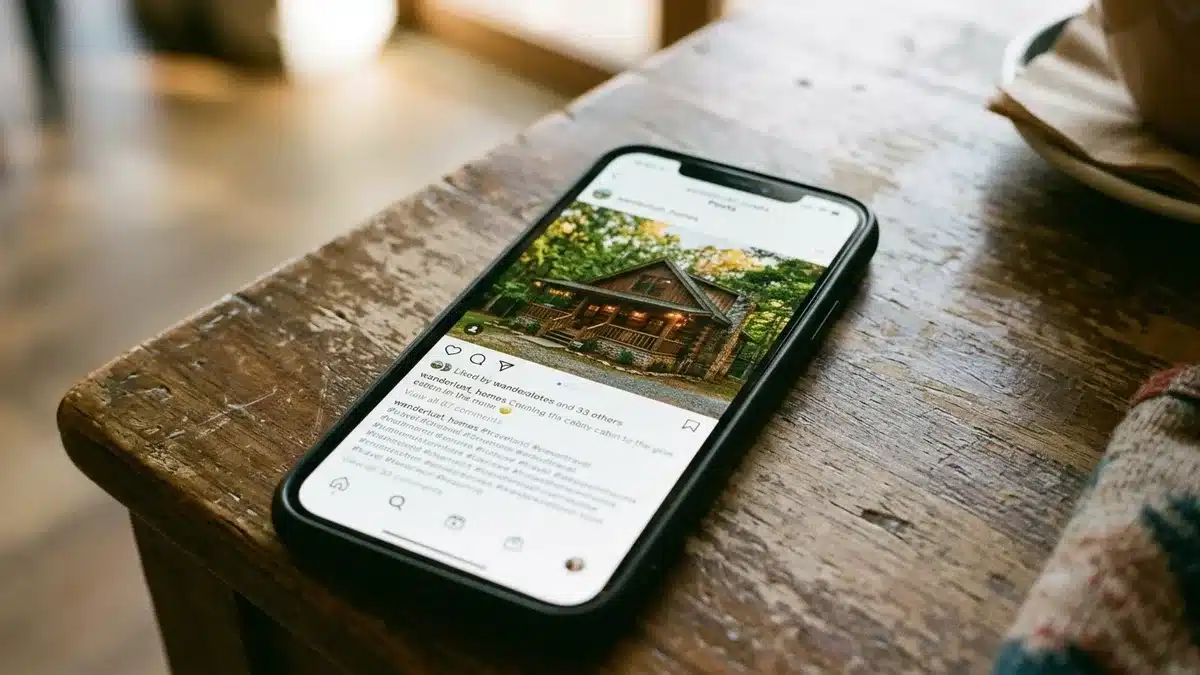
What Are Three Popular Hashtags for Vacation Posts?
The three most consistently popular vacation hashtags across current directories are #vacation, #travelgram, and #wanderlust. These three appear on nearly every high-ranking hashtag list for 2026 and represent the broadest, highest-volume entry points into travel and vacation content discovery.
#vacation itself has been used on an estimated 146 million Instagram posts, making it one of the single highest-volume tags in the entire travel category. #travelgram functions similarly as a catch-all for travel photography and lifestyle content, also exceeding 100 million posts. #wanderlust, while harder to pin an exact post count on, shows up as a constant across nearly every travel-hashtag compilation we reviewed, which signals it’s still heavily followed and searched.
Here’s the tradeoff worth understanding: these three tags will get your post seen by the largest possible audience, but that audience is not vacation-rental-specific. A traveler following #wanderlust could be planning a hostel-hop through Southeast Asia or booking a resort. Use these three as your reach layer, then add narrower tags (destination name, property type, #vacationrental) as your relevance layer in the same caption. Posting only the popular three without supporting niche tags is the most common reason hosts tell us their hashtag efforts “stopped working.”
This is also where a documented case from our own client base is useful context. One bed and breakfast owner built consistent visibility through owned channels rather than platform algorithms and reached 90% direct bookings alongside a 60% repeat guest rate. Social discovery played a role in bringing new eyes to the property, but the infrastructure behind their own site is what converted that attention into bookings that didn’t cost a commission.
What Are the Top 10 Vacation Hashtags to Use in 2026?
The top 10 vacation hashtags for short-term rental posts in 2026, ranked by a mix of volume and category coverage, are #vacation, #travelgram, #wanderlust, #vacationmode, #vacationvibes, #vacationmood, #instatravel, #adventure, #vacationrental, and #familyvacation. Together these cover broad discovery, lifestyle appeal, and rental-specific searches.
| Hashtag | Category | Approx. Post Volume | Best Use Case |
|---|---|---|---|
| #vacation | Broad | ~146 million | Any general vacation rental post |
| #travelgram | Broad | 100 million+ | Travel photography, scenic shots |
| #wanderlust | Broad | High volume, not specified | Aspirational lifestyle captions |
| #vacationvibes | Mid-volume | 743,779 | Poolside, relaxation-themed posts |
| #vacationmood | Mid-volume | 638,139 | Sunset, evening ambiance shots |
| #vacationrental | Niche | 882,277 | Direct property listing posts |
| #vacationrentals | Niche | 446,017 | Multi-property or portfolio accounts |
| #vacations | Broad exact-match | 10,165,183 | General destination or trip posts |
| #instatravel | Broad | High volume, not specified | Guest-generated content reposts |
| #familyvacation | Audience-specific | Not specified, high use | Family-friendly property features |
Notice the volume spread here. #vacation and #vacations combined represent well over 150 million posts, while #vacationrental sits under a million. That’s not a weakness, it’s a targeting opportunity. A post tagged only with high-volume terms competes against everything else posted that hour. A post that includes #vacationrental signals to Instagram’s discovery algorithm that this content is specifically relevant to people researching rental stays, not just travel content generally.
For boutique property managers running multiple listings, this table becomes a template you reuse across accounts, swapping in destination-specific and audience-specific tags per property rather than rebuilding a hashtag set from scratch every time. That’s a workflow problem, not a creative one, and it’s exactly where a documented posting system pays off over guessing week to week.
What Is the 3 Hashtag Rule?
The 3 hashtag rule refers to a common social media guideline recommending that posts include roughly three hashtags per tier, broad, mid-volume, and niche, rather than maxing out a caption with dozens of tags in a single category. The goal is balanced discoverability instead of algorithmic spam signals.
In practice, this means a single vacation rental post might include three broad tags (#vacation, #travelgram, #wanderlust), three mid-volume lifestyle tags (#vacationvibes, #vacationmood, #vacationtime), and three niche or property-specific tags (#vacationrental, your destination name, a descriptor like #lakehouserental). That’s nine total tags across three tiers, a structure that gives Instagram’s algorithm clear signals about who should see the post without triggering the platform’s spam-detection sensitivity toward tag-stuffed captions.
We’d add one caveat competitors rarely mention: the 3 hashtag rule works differently depending on whether you’re posting as a brand account, an influencer-style personal account, or a family-run property page. A brand account managing several listings benefits from consistent niche tags across posts (build recognition for #vacationrental as tied to your properties specifically). An individual host posting from a personal-feel account can lean harder into lifestyle and mood tags (#vacationmode, #relax) because that audience responds to aspirational content over promotional language. Property managers juggling both should keep separate hashtag sets documented per account type, since one-size-fits-all tagging under-performs for at least one of those audiences every time.
This is precisely the kind of manual coordination that breaks down once a host scales past a couple of properties. That’s why our approach at Boostly Connect pairs the marketing side, including social strategy guidance, with a CRM that captures whoever lands on your site from that content, so the hashtag work isn’t disconnected from your booking funnel.

How Do You Combine Vacation Hashtags for Different Audiences?
Combining vacation hashtags for different audiences means adjusting your tag mix based on who you’re trying to reach, families, solo travelers, luxury seekers, or fellow hosts, rather than using one static set across every post. Each audience responds to different signal words even when discussing the same property.
For a family audience, prioritize #familyvacation alongside kid-friendly amenity descriptors and destination tags. For solo travelers, current hashtag research shows growing use of tags like #solofemaletravel and #womenwhotravel, which signal safety and independence-focused content rather than generic vacation appeal. Luxury-focused listings perform better paired with #luxurytravel and #luxuryvacation rather than budget-oriented tags, since the algorithm and the audience both key off that distinction quickly.
Here’s a gap almost no hashtag guide addresses directly: brands and property managers need a different hashtag posture than individual influencers promoting their own trips. An influencer account can chase trending, high-volume tags because engagement itself is the goal. A property management brand account needs tags that funnel toward booking intent specifically, meaning niche property-type tags (#cabinstay, #vacationrental, #beachhouserental) should carry more weight in your rotation than pure lifestyle tags, even if the lifestyle tags post higher volume numbers.
If you manage a portfolio and post as multiple “voices” (a personal host account plus a management brand account), keep two separate hashtag documents. Cross-posting identical tag sets between a personal and brand account confuses both audiences and dilutes the signal each account sends to the algorithm.
Do TikTok Vacation Hashtags Work the Same Way as Instagram?
TikTok vacation hashtags do not function the same way Instagram hashtags do, because TikTok’s discovery algorithm weights watch time, completion rate, and sound trends far more heavily than hashtag matching alone. Hashtags on TikTok act more as content categorization signals than direct search-and-discovery tools.
This is one of the most under-covered gaps in vacation hashtag content published so far in 2026. Most existing guides treat TikTok hashtags as a copy-paste extension of Instagram tags, but that approach undersells what actually drives reach on the platform. On TikTok, a video tagged #vacation or #travel still helps categorization, but the video’s first three seconds and whether people watch to completion matter more than tag selection. For short-term rental hosts, that means property walkthrough videos, “day in the life at this rental” content, and quick transformation clips (before cleaning, after staging) tend to outperform static photo posts with heavy tag stacking.
Practically, keep your TikTok hashtag count lower than Instagram, typically 3 to 5 tags mixing #vacation, #travel, a destination tag, and one property-type tag, and invest your remaining effort into the video hook and sound choice instead of tag volume. Reposting the same caption and tag set from Instagram directly onto TikTok is a common mistake that wastes the platform’s actual discovery mechanics.
For hosts managing this across both platforms without a dedicated social media team, this is exactly the kind of workload that becomes unsustainable manually. Our STR digital marketing tactics resource covers platform-specific approaches in more depth if you’re building out a cross-channel strategy.
How Do You Track Whether Vacation Hashtags Are Actually Working?
Tracking vacation hashtag performance means measuring profile visits, link clicks, and, most importantly, whether those clicks convert into bookings on your own site rather than stopping at engagement metrics like likes and follows. Likes tell you a post resonated. They don’t tell you if anyone booked.
Most hashtag guides stop at “post consistently and track engagement,” which is a gap worth calling out directly. Engagement without conversion tracking is a vanity metric. If your Instagram bio link routes to a booking page, check your website analytics for referral traffic from Instagram and TikTok specifically, then compare that against actual reservations tied to that source. If you’re not seeing that traffic convert, the problem usually isn’t the hashtags themselves, it’s what happens after the click.
This is the exact disconnect we built Boostly Connect to close. A social post using #vacationrental or #vacation might drive a hundred profile visits, but if your bio link sends people to an Airbnb listing, you have no visibility into which of those visits actually became a guest, and Airbnb keeps that contact data rather than you. When your bio link instead routes to your own direct booking site synced live to your PMS, every booking generated from that hashtag effort gets captured into your own CRM automatically, so you can actually attribute revenue to the social work you’re doing rather than guessing.
Simple A/B testing helps too: post the same property with two different hashtag sets a week apart (one broad-heavy, one niche-heavy) and compare profile click-through. Over a month or two, you’ll have real data on which mix works for your specific audience instead of relying on generic advice.
What Hashtag Sets Work Best for Specific Vacation Types?
Different vacation types, beach, ski, cruise, road trip, and staycation, each perform better with a tailored hashtag mix rather than one generic vacation tag set, because travelers searching for a ski cabin use entirely different search behavior than travelers searching for a beach house.
Beach and Coastal Properties
Current beach-specific hashtag research points to tags like #beachparadise, #sunseasand, #sandbetweenmytoes, #beachvacay, #tropiclikeithot, and #vitaminsea as strong niche performers for coastal listings. Pair two or three of these with #vacationrental and a destination tag for the fullest coverage.
Ski and Mountain Cabins
Mountain and cabin-style properties benefit from pairing #vacationrental with destination-specific mountain tags and seasonal descriptors. Since dedicated ski-hashtag volume data wasn’t available in current directories, lean on your destination name plus #cabinstay-style descriptors and broad tags like #vacationmode to fill the gap.
Road Trip and Van Life Stays
For properties positioned as road trip stopovers, #vanlifediaries appears in current 2025-2026 travel hashtag compilations as a relevant tag for this exact audience, alongside #adventure and #trip.
Cruise Port and Staycation Properties
Properties near cruise ports or marketed as local staycation options should lean on #vacationmode, #vacationtime, and #holiday-family tags rather than destination-travel tags, since staycation guests are searching for proximity and relaxation messaging rather than far-flung travel inspiration.
Across every vacation type, the constant is this: niche relevance tags should always accompany at least one or two broad tags, never replace them entirely. And whichever type you manage, the bio link destination matters more than the tag set itself for actual revenue outcomes.
Data and Evidence: How Vacation Hashtag Volume Breaks Down
Hashtag volume data shows a clear pattern across current directories: general vacation tags carry enormous scale (#vacation at roughly 146 million posts, #vacations exceeding 10 million), while niche rental-specific tags sit in the hundreds of thousands, offering far less competition for the same relevance.
| Tag Category | Example Tags | Competition Level | Strategic Purpose |
|---|---|---|---|
| Broad/General | #vacation, #vacations, #travelgram | Very high | Maximum reach, low targeting |
| Mid-volume/Lifestyle | #vacationvibes, #vacationmood, #vacationtime | Moderate | Aesthetic and mood matching |
| Niche/Rental-specific | #vacationrental, #vacationrentals | Low | Direct booking-intent audience |
| Audience-specific | #familyvacation, #solofemaletravel, #luxurytravel | Moderate | Segment targeting |
| Type-specific | Beach, road trip, cabin tags | Low to moderate | Vacation-type relevance |
This pattern holds across the vacation rental industry broadly. Professional management companies now control an estimated 42% of active short-term rental listings globally as of early 2026, meaning competition for guest attention, both on OTAs and on social platforms, has intensified. Standing out with generic broad-only tags gets harder every year, which is why the niche and type-specific layers of your hashtag strategy matter more now than they did a few years ago.
It’s also worth remembering the broader context: the global vacation rental market is projected to reach roughly USD 109.4 billion in 2026 according to Mordor Intelligence, and mobile continues to drive the majority of vacation rental website traffic, with over 50% of visits coming from phones according to CraftedStays research. Hashtag-driven social discovery feeds directly into that mobile-first booking journey, since most people who click a hashtag-tagged post are already on their phone, one tap away from your booking page if your site loads fast and converts well on mobile.
What Mistakes Should You Avoid When Using Vacation Hashtags?
The most common vacation hashtag mistakes include using only high-volume broad tags with no niche layer, copying the same tag set across every platform without adjusting for how each algorithm actually works, and posting consistently without any way to measure whether the traffic converts into bookings.
- Relying only on broad tags. Posting exclusively with #vacation, #travel, and #wanderlust buries your content in massive volume with no relevance signal to differentiate it.
- Ignoring niche rental tags entirely. Tags like #vacationrental carry a fraction of the competition of broad tags and directly signal booking intent to anyone browsing them.
- Copy-pasting Instagram tags onto TikTok. As covered above, TikTok’s algorithm weights watch time and completion far more than hashtag matching, so the same tag strategy underperforms there.
- No bio link strategy. If your hashtag-driven traffic lands on an OTA profile instead of your own site, you’re generating free marketing for a platform that then charges you commission on the resulting booking.
- Never testing or tracking. Posting the same rotation of tags for months without checking referral traffic or conversion means you’re guessing, not optimizing.
- Overloading a single tier. Nine broad tags and zero niche tags violates the balance the 3 hashtag rule is designed to protect.
Fixing the bio link issue alone is often the highest-leverage change a host can make. If you’re still sending social traffic to a third-party listing, our guide on direct booking websites for short-term rentals walks through what a converting alternative actually looks like.
How Should You Prioritize Your Vacation Hashtag Strategy?
Prioritizing a vacation hashtag strategy means starting with your bio link destination before worrying about tag selection, since even a perfectly optimized hashtag set produces no owned revenue if the traffic it generates lands somewhere you don’t control.
Step one: audit where your current bio link sends people. If it’s an OTA listing, that’s the first fix, not your hashtag mix. Step two: build a documented hashtag set per property type or audience segment (family, luxury, solo, beach, cabin) so you’re not reinventing the wheel every time you post. Step three: apply the roughly 3-3-3 balance across broad, mid-volume, and niche tags. Step four: adjust for platform, lighter, more targeted tag sets on TikTok, fuller sets on Instagram. Step five: track referral traffic and bookings monthly, not just likes and comments.
For multi-property operators, this becomes a documentation problem as much as a marketing one. Every property gets its own tag set, updated seasonally, and someone has to own keeping that current. We built the marketing side of Boostly Connect around exactly this kind of repeatable system, pairing social strategy with a CRM and automated nurture sequences so that once a hashtag-driven visitor lands on your site, follow-up and repeat-guest marketing happen without you manually chasing it every week.
If you’re weighing how much of your channel mix should come from direct social-driven traffic versus OTA reliance, our piece on balancing OTA and direct bookings is a useful next read, and our guide to growing a direct booking channel covers the funnel end of this same strategy.
Frequently Asked Questions
What are the best vacation hashtags for a small Airbnb or rental listing?
The best starting set for a small listing combines a couple of broad tags (#vacation, #travelgram), a couple of mid-volume mood tags (#vacationvibes or #vacationmood), and one or two niche tags like #vacationrental or a destination-specific tag. This mix balances reach with relevance without overwhelming the caption.
How many hashtags should you use on a vacation rental Instagram post?
Most current strategy guidance recommends roughly nine hashtags total, split into three tiers of three: broad, mid-volume, and niche. This follows the widely referenced 3 hashtag rule and avoids the spam signals that come from stacking dozens of tags in one caption.
Do vacation hashtags actually help drive bookings, or just likes?
Hashtags help drive profile visits and awareness, but they only convert into bookings if your bio link routes to a site built to capture and convert that traffic. Tracking referral traffic against actual reservations is the only way to know if your hashtag strategy is producing revenue rather than just engagement.
Should property managers use different hashtags than individual hosts?
Yes. Individual hosts and influencer-style accounts can lean into aspirational lifestyle tags since engagement itself is often the goal, while property management brand accounts should weight niche, booking-intent tags like #vacationrental more heavily to funnel followers toward an actual reservation.
Are vacation hashtags still relevant on TikTok in 2026?
Vacation hashtags still play a categorization role on TikTok, but the platform’s algorithm weights watch time and video completion far more heavily than hashtag matching. Use a smaller, more targeted set of 3 to 5 tags on TikTok and put most of your effort into the video hook itself.
What’s the difference between #vacation and #vacationrental as hashtags?
#vacation is a broad, extremely high-volume tag (roughly 146 million posts) that reaches the widest possible travel-interested audience. #vacationrental is a niche tag with under a million posts that specifically signals rental-booking intent, making it more likely to reach travelers actually researching a stay rather than general travel content.
How often should you refresh your vacation hashtag set?
Refresh your hashtag set seasonally at minimum, since travel search behavior shifts with seasons (ski tags in winter, beach tags in summer), and audit performance monthly by comparing referral traffic and bookings against the tags used, adjusting the mix based on what’s actually converting.
Conclusion: Turning Hashtag Reach Into Owned Bookings
Vacation hashtags remain a legitimate, low-cost discovery channel in 2026, but the tag selection itself is only half the equation. #vacation, #travelgram, and #wanderlust will get your content seen; niche tags like #vacationrental determine whether the people seeing it are actually likely to book. The hosts who benefit most treat hashtags as the top of a funnel that ends on their own website, not as a standalone marketing tactic.
The pattern we see across our own client base backs this up. Hosts who pair consistent social visibility with a direct booking infrastructure convert that attention into revenue they keep, rather than traffic they hand off to a platform that takes a cut. That’s the entire premise behind what we’ve built. If your hashtag strategy is generating profile visits with nowhere productive for them to land, that’s the fix worth making before you touch another caption.
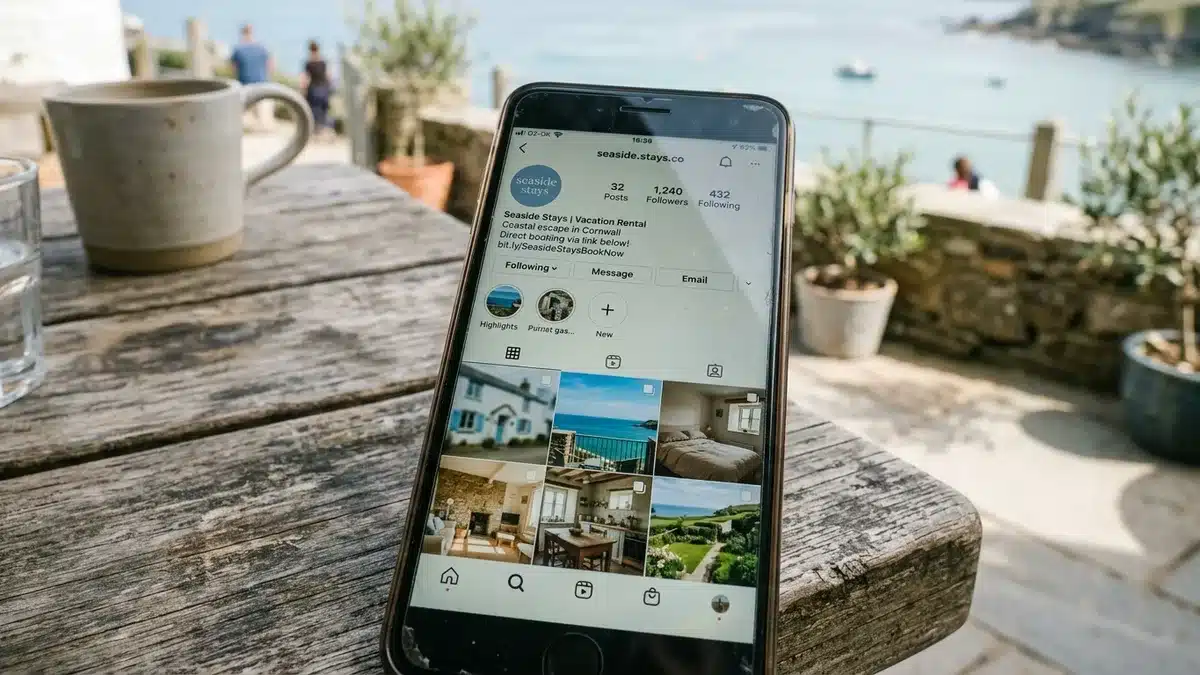
If your bio link currently sends hashtag-driven traffic to an OTA listing, it’s worth seeing what changes when it points somewhere you actually own. Book a demo with Boostly Connect and we’ll walk through connecting your existing PMS to a direct booking site built to capture and convert exactly this kind of social traffic.