
A no booking fee direct reservation is a booking path where a guest reserves a short-term rental straight through the host’s own website, paying the exact nightly rate with none of the service, cleaning-markup, or processing fees that OTAs tack on at checkout. It’s the single most effective lever hosts have for winning back guests who are one click from booking on Airbnb or Vrbo instead of booking with you directly.
Key Takeaways
- OTAs commonly charge guests a service fee on top of the nightly rate, while a host’s own direct site can show the same stay with no added booking fee, since the host controls the checkout.
- Industry research shows travelers can save in the range of 15-20% compared with OTA-booked stays for the same home, once service fees and markups are stripped out.
- Repeat guests are the highest-value audience for this strategy, and marketing benchmarks for 2026 show an average repeat guest rate of 22% for direct bookings, per CUfinder.
- One host we’ve worked with grew direct bookings from 0% to 40% after launching a direct site, including a single $6,000 (converted) booking that came straight through the no-fee path.
- The final step before checkout, not the homepage, is where most hosts lose guests back to OTAs, which is why price and fee transparency has to appear at that exact moment.
- Boostly Connect builds the synced, fee-free booking page that shows this savings automatically, so you don’t have to build the comparison logic yourself.
If you manage a short-term rental, you’ve probably watched a guest browse your Airbnb listing, check your calendar, then vanish, only to rebook the exact same dates through the platform days later. That’s not bad luck. That’s a guest who never saw a reason to book anywhere but the OTA, because no one showed them a cheaper, equally trustworthy alternative at the moment that mattered.
In 2026, the gap between what a guest pays on an OTA and what they’d pay booking direct is wide enough to notice, and savvy travelers are starting to look for it. The problem is that most hosts never surface that gap where the guest can actually see it: at the final step, right before they hit “confirm and pay.”
This article walks through what a no booking fee direct reservation actually looks like in practice, why the final-click moment is where you win or lose the guest, and the specific tactics, checkout copy, comparison design, and psychological triggers that convert an OTA browser into a direct booker. We’ll also cover how to measure whether it’s working, because a direct booking strategy without measurement is just a guess.
1. Why Am I Being Charged a Booking Fee in the First Place?
A booking fee is the service charge an online travel agency adds on top of a property’s nightly rate to cover its own platform costs, payment processing, and customer support infrastructure. Guests see it itemized (or sometimes bundled) at checkout, and it’s separate from what the host actually receives.
Specifically, this fee exists because OTAs operate as intermediaries. They don’t own the property, so their revenue model depends on charging both sides of the transaction, the host through commission and the guest through a service fee. Notably, guests rarely understand this structure; they just see a total price that’s higher than the advertised nightly rate.
This is exactly the confusion a direct reservation eliminates. When a guest books through your own site, there’s no intermediary fee to justify, because you’re not paying a platform to broker the transaction. That’s the entire premise behind how much Airbnb commission actually costs hosts and guests combined, and it’s worth understanding both sides before you build your pitch to guests.
We’ve found that once hosts explain this plainly, in a single sentence on their booking page, guests stop assuming the direct site is somehow less legitimate. Transparency is the entire trust-building mechanism here.
2. Can I Reserve a Stay Without Paying a Booking Fee?
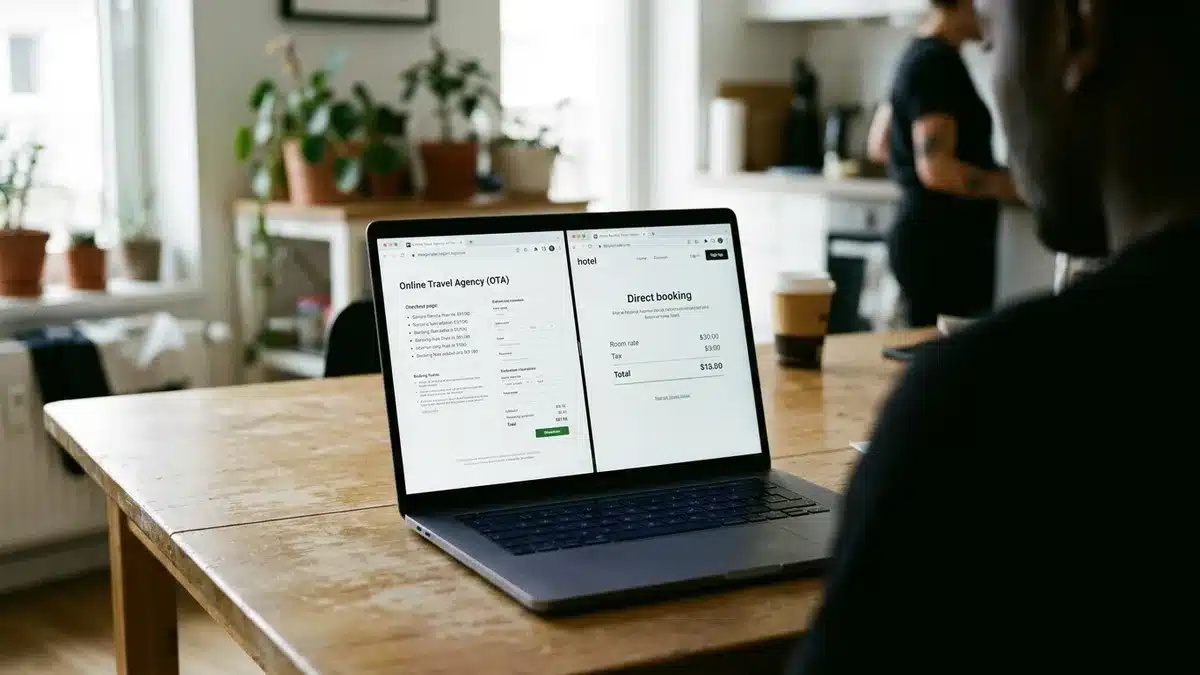
Yes, guests can reserve a short-term rental with no booking fee by booking directly through the host’s own website instead of through a third-party platform. This is possible because the host, not an intermediary, sets and controls the final checkout price.
In practice, this means the guest pays the listed nightly rate plus any cleaning fee and applicable taxes, full stop. No service percentage layered on top. Industry data on fee-free direct-booking models shows travelers can save in the range of 15-20% versus the same home booked through an OTA, once those service charges are stripped away.
For example, a $250-a-night property that shows $287 at OTA checkout (after a service fee) might show exactly $250 plus cleaning and tax on the host’s direct site. That gap is the entire pitch, and it only works if the guest actually sees it before they book elsewhere.
This is where most independent hosts stall out. Building a checkout flow that accepts secure payment, syncs live availability, and looks trustworthy enough for a stranger to hand over a credit card number is not a weekend project. That’s the specific gap Boostly Connect was built to close, syncing your existing PMS to a WordPress site with live pricing and secure Stripe payments, so the no-fee reservation path exists without you writing a line of code.
3. What Counts as a Booking Fee, and Where Do Guests Actually See It?
A booking fee, broadly, is any charge added to a reservation beyond the base nightly rate and standard taxes, most commonly a platform service fee, but sometimes bundled with cleaning markups or payment processing surcharges. Guests typically encounter it at the final checkout screen, not on the initial search results page.
This delayed visibility is deliberate on most platforms. Search results show an attractive per-night price, and the true total only appears once the guest has already invested time browsing photos, reading reviews, and mentally committing to the property. By the time the fee appears, many guests proceed anyway out of momentum.
Additionally, resort and destination fees in major markets can compound this problem. CheapoTrav’s 2026 buyer’s guide research notes these fees average $35 to $50 per night in some U.S. markets, occasionally exceeding the base room rate on budget properties. Guests who’ve been burned by this once tend to actively hunt for alternatives on their next trip.
That hunting behavior is your opportunity. If your direct site clearly states “no booking fee” near the price, before the guest ever reaches checkout, you’re answering the exact question they’re already asking themselves. This single line of copy does more conversion work than almost anything else on a property page, and it costs nothing to add once your site actually reflects a true no-fee total.
4. How Do I Waive a No-Show or Cancellation Fee When Booking Direct?
Waiving a no-show or cancellation fee on a direct reservation is entirely up to the host, since you set the cancellation policy instead of inheriting a platform-wide default. This flexibility is one of the underrated advantages of direct bookings that rarely gets mentioned alongside the fee-savings pitch.
On most OTAs, cancellation and no-show policies are somewhat standardized across the platform, and guests often can’t negotiate exceptions even for reasonable circumstances. When you book direct, you can set a policy that fits your actual risk tolerance, and you can waive a fee manually for a loyal repeat guest without going through a platform’s dispute process.
We recommend being upfront about your cancellation terms directly on the booking page, not buried in a confirmation email. Guests comparing a direct reservation against an OTA listing want to know they’re not trading fee savings for worse flexibility.
In our experience working with hosts who’ve made this switch, guests who’ve dealt with a rigid OTA cancellation policy in the past are often more loyal once they discover a host who can be reasonable about a schedule change. That loyalty is measurable too. Marketing benchmarks for 2026 show an average repeat guest rate of 22% for direct bookings, according to CUfinder, meaning roughly one in five direct bookings already comes from someone who’s stayed with you before.
5. What Should the Final-Step Comparison Actually Look Like?
The final-step comparison is a side-by-side price breakdown, shown on the property detail page or at checkout, that displays the OTA total against the direct-booking total for the same dates and property. Done well, it’s the single highest-converting design element on a direct booking site.
Specifically, this comparison needs three things to work: the exact nightly rate, a visible line item for what an OTA would typically add in fees, and the final direct total in bold. Vague statements like “save money booking direct” underperform a concrete number every time.
Here’s a simplified version of what this looks like in table form:
| Line Item | Typical OTA Checkout | Direct Reservation |
|---|---|---|
| Nightly Rate | Advertised rate | Same rate |
| Service/Booking Fee | Added at checkout | None |
| Cleaning Fee | Standard | Standard |
| Cancellation Flexibility | Platform default policy | Set by host, negotiable |
| Guest Contact With Host | Filtered through platform messaging | Direct line, no intermediary |
This is exactly the content gap most direct-booking guides skip. They tell you to “build a comparison” without showing what it should contain. As a result, hosts either omit fee comparisons entirely (out of fear it looks aggressive) or bury them in fine print where no one reads them. Neither works. The comparison needs to be visible, specific, and calm, not a hard sell, just a fact.
6. What Copy and Button Language Actually Converts an OTA Shopper?
Converting an OTA shopper at the final step requires checkout copy that names the specific savings, not generic persuasion language. “Book direct and save” underperforms “Book direct: no service fee, save the platform markup” because the second version tells the guest exactly what they’re avoiding.
For example, a button that reads “Reserve Direct, No Booking Fee” outperforms a plain “Book Now” button because it answers the guest’s unspoken objection (is this actually cheaper?) inside the click target itself. Notably, this only works if the claim is true; a false no-fee claim destroys trust the moment a guest spots a hidden charge.
Loss framing is a specific psychological lever worth using carefully here. Instead of “save 15%,” try “skip the service fee you’d pay elsewhere.” Loss-averse framing tends to resonate more with price-sensitive travelers than gain framing, particularly for guests who’ve already been burned by a surprise fee once.
Social proof works too, but it needs to be specific. “60% of our guests rebook direct” (a number pulled from one host’s real results after a direct-booking push) is more convincing than “guests love booking direct.” If you don’t have that number yet, don’t invent one. Say something honest instead, like “ask us about our returning guest rate.”
This is also where automated messaging matters. If a guest asks a pricing question at 11pm and doesn’t get an answer until morning, you’ve lost the momentum of the comparison. Boostly Connect’s CRM includes automated messaging and AI agents built specifically to answer these pricing and availability questions the moment they’re asked, which is often the difference between a guest converting or bouncing back to the OTA tab they still have open.
7. How Do I Design This Without Looking Like I’m Bashing the OTA?
Designing a fee comparison without sounding hostile toward OTAs means stating facts neutrally rather than framing the platform as predatory. Guests trust factual, calm comparisons; they distrust anything that reads like a grudge.
In practice, this means avoiding language like “Airbnb rips you off” and instead using language like “OTA platforms typically add a service fee to cover their own costs, which direct bookings don’t require.” The second version is accurate, defensible, and doesn’t put the guest on the defensive for having used the platform before.
We’ve also found it helps to acknowledge OTA benefits honestly. Platforms provide discovery, reviews, and buyer protection that a brand-new direct site can’t replicate on day one. Your job isn’t to convince guests OTAs are bad. It’s to convince them that once they’ve found you, there’s no reason to keep paying an extra fee to book the exact same stay.
This is a nuance most competitor content misses entirely, since most guides frame direct booking as an OTA replacement rather than a complementary channel. The reality, based on what we see across hosts using this approach, is that a healthy portfolio runs both channels simultaneously; OTAs for discovery, direct for repeat guests and price-sensitive shoppers. That balance is worth studying in more depth in our guide on how to balance OTA and direct bookings.
8. How Do I Measure Whether the No-Fee Direct Path Is Actually Working?
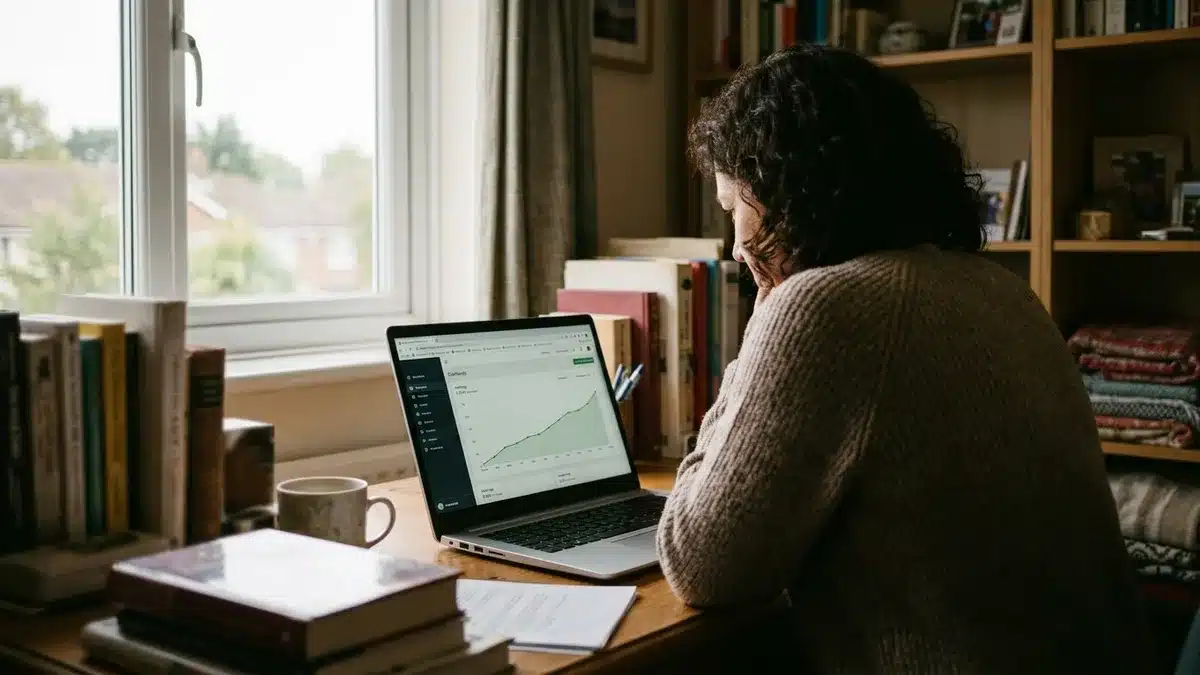
Measuring the incremental effect of a no-booking-fee direct path means tracking direct booking volume, conversion rate on the property page, and average booking value before and after you launch the comparison, then comparing those numbers against your OTA channel over the same period.
Specifically, you want three metrics tracked separately: direct site traffic that reaches the checkout page, the percentage of that traffic that completes a booking, and the percentage of total bookings across all channels that come direct versus OTA. Without isolating these, you can’t tell whether a lift in direct bookings came from your fee messaging or from something unrelated, like a seasonal demand spike.
A simple A/B approach works well here: run your property page with the fee comparison visible for a defined period, then without it, and compare conversion rates. Most hosts skip this step entirely and just assume the comparison is helping, which means they can’t defend the tactic to a co-host or property owner asking for proof.
This is precisely why a unified reporting dashboard matters more than people expect. Boostly Connect’s dashboard tracks direct booking revenue and conversion in one place, replacing the spreadsheet juggling most hosts fall back on when trying to prove a tactic is working. One host in our network went from 0% to 40% direct bookings after launching their site, including a single booking worth roughly $6,000 (converted from GBP), and being able to point to that number, not just a feeling, is what justified doubling down on the direct channel.
9. What Is Considered a Booking Fee Versus a Legitimate Add-On?
A legitimate add-on is a charge tied to a real, disclosed cost, like a cleaning fee or local occupancy tax, while a booking fee is a service charge that exists purely to compensate the platform facilitating the transaction. The distinction matters because guests are far more tolerant of the former than the latter.
For instance, a cleaning fee makes intuitive sense to guests: someone has to clean the property between stays, and that cost is visible and justifiable. A service fee that appears only because a third party processed the booking feels, to many guests, like paying for nothing tangible.
This distinction is exactly why your direct site should still show cleaning fees and taxes clearly. Removing every fee, including legitimate ones, and calling it “no fees at all” is misleading and will backfire the moment a guest notices a cleaning charge on their receipt. The honest claim is “no booking fee,” not “no fees whatsoever.”
Getting this messaging right matters more for non-luxury properties, where guests are shopping on price and will scrutinize every line item. Luxury travelers care less about a $15 fee difference; budget-conscious travelers will calculate it to the dollar. If your portfolio skews toward value-focused stays, lead with the exact dollar comparison rather than a vague percentage, since specific numbers close the deal faster with price-sensitive shoppers.
10. What Does the Broader Direct Booking Opportunity Look Like in 2026?
The direct booking opportunity in 2026 is shaped by a vacation rental market that multiple research firms estimate at somewhere between roughly $84 billion and $195 billion globally this year, depending on methodology and scope, according to figures from Grand View Research, Precedence Research, and Fortune Business Insights. Regardless of which estimate you trust most, the trend line points the same direction: steady growth, and a widening software layer built specifically to help hosts capture more of it directly.
Notably, the vacation rental management software segment is growing faster than the broader property management software market, with some estimates putting its growth rate well above 10% annually through the early 2030s, according to DataIntelo. That’s a signal that more hosts are actively investing in the infrastructure to compete on their own channel rather than staying fully dependent on OTA search rankings.
This is also where repeat guests become disproportionately valuable. Research on guest retention shows repeat booking rates commonly fall between 10% and 25% depending on market and property type, according to Hostex, and a share of that repeat revenue currently still flows back through OTAs paying standard commission, even for guests who’ve already stayed with you before. That’s pure margin left on the table.
Capturing that margin is the exact reason a guest CRM matters as much as the booking page itself. If a guest’s contact details live only inside an OTA’s messaging system, you can’t market to them again without paying commission on their return visit. That’s the repeat booking trap Boostly Connect was built to close, capturing every direct booker automatically into your own CRM so you own that relationship going forward. For a deeper look at protecting that data long-term, see our piece on how to own your guest data instead of leaving it with Airbnb.
Practical Guidance: How to Roll This Out Without Breaking Your Existing Bookings
Rolling out a no-booking-fee direct path should happen alongside your existing OTA listings, not instead of them, at least in the first several months. Cutting OTA visibility cold-turkey while your direct channel is still unproven is a common and costly mistake.
- Audit your current checkout math first. Know exactly what your OTA guests pay in fees versus what your direct total would be, so your comparison is accurate, not estimated.
- Build the direct booking page before you promote it. Live availability, secure payment, and mobile-friendly design have to work flawlessly before you send any traffic there.
- Add the fee comparison at the point of decision. Not on a separate “why book direct” page nobody visits, on the actual booking page itself.
- Target past guests first. They already trust you, and they’re the easiest conversion since they don’t need to be convinced you’re legitimate.
- Track conversion for at least one full booking cycle before drawing conclusions, since seasonality can distort short-term results.
- Avoid overselling the fee angle in email marketing. One clear mention per email outperforms three, since repetition starts to feel like a pitch instead of a fact.
Common mistakes we see repeatedly: hosts who bury the no-fee messaging in a footer no one scrolls to, hosts who let their direct site pricing drift out of sync with their PMS (which erodes trust instantly if a guest finds a discrepancy), and hosts who never follow up with past guests at all, leaving the entire opportunity on the table. If manual syncing and outdated pricing sound like your current setup, it’s worth reading our breakdown of how to reduce manual work in a vacation rental business before you build anything new.
Frequently Asked Questions
Why am I being charged a booking fee?
You’re charged a booking fee because an intermediary platform is covering its own transaction, support, and technology costs by adding a service charge on top of the nightly rate. Booking directly with the host removes that intermediary and its associated fee.
How do I waive the no-show fee when booking direct?
Since the host sets cancellation and no-show policy on a direct reservation, you simply ask the host directly. Many hosts will waive or adjust a fee for a reasonable circumstance since they aren’t bound by a platform-wide standardized policy.
Can I reserve a stay without paying a booking fee?
Yes. Booking directly through a host’s own website, rather than an OTA, typically means paying the nightly rate plus standard cleaning fees and taxes only, with no added service or booking fee layered on top.
What is considered a booking fee?
A booking fee is a service charge added by a third-party platform to cover its own operating costs, separate from legitimate charges like cleaning fees or occupancy taxes tied to the actual property and stay.
Will offering a no booking fee direct reservation hurt my OTA search ranking?
Running a direct booking channel alongside your OTA listings does not inherently damage your platform ranking, since ranking is driven primarily by response rate, reviews, and booking activity on that platform, not by external channels.
Do I need a developer to build a no-fee direct booking page?
No. Modern PMS-to-website integrations, including Boostly Connect’s setup, sync live availability and secure payment into a WordPress site without requiring coding knowledge or a developer.
How do I get past guests to use the direct path instead of rebooking on the OTA?
Capture their contact information into your own CRM at the time of their first stay, then follow up before their likely rebooking window with a direct reservation link that shows the no-fee savings clearly.
Conclusion
A no booking fee direct reservation wins the guest at the exact moment they’re deciding where to click “confirm,” and that moment lives on your booking page, not your homepage. The hosts who win this consistently are the ones who make the fee comparison visible, specific, and honest, rather than burying it or oversimplifying it into vague marketing language.
The math is straightforward once you build it: strip out the service fee, show the guest the real total, and let the savings speak for themselves. Combine that with a CRM that captures every direct booker so you can reach them again before their next trip, and you’ve built something closer to real infrastructure than a one-time website project.
If your current setup means manually checking OTA fees, updating your own pricing by hand, and hoping past guests remember to come back to you, that’s exactly the workflow Boostly Connect exists to replace.

See how fast your own no booking fee direct reservation page could be live and synced to your existing PMS. Book a demo with Boostly Connect and we’ll walk through connecting your calendar, pricing, and CRM in real time, no developer required.