

Getting repeat guests to book directly instead of going back to Airbnb takes three things: permission to contact them, a clear reason to book on your own site, and a checkout as easy as Airbnb’s. Collect their email during the stay, invite them back after checkout, and offer a perk Airbnb cannot.
Key Takeaways
- Repeat guests return to Airbnb by default because the platform holds the contact details and the booking path. You win them back by collecting consent-based emails during the stay and at checkout.
- A rebooking invitation works when it pairs a direct-only reason (a returning-guest perk, early calendar access, or a lower total) with a booking page that takes seconds to use.
- Airbnb’s terms restrict moving an existing reservation off the platform, so the safe window is after the stay, with guest opt-in. Confirm the current wording in Airbnb’s help center before you write any template.
- Every Airbnb rebooking costs you a commission of roughly 15 to 20 percent. A direct rebooking lets you keep that margin, minus payment processing and whatever incentive you offer.
- Track four numbers to prove it works: baseline repeat rate, direct repeat conversion, incentive cost, and net revenue per rebooking.
- Boostly Connect syncs your PMS to a WordPress direct booking site in under 20 minutes and captures every direct guest into your own CRM, so the repeat booking trap ends after the first direct stay.
If you manage a handful of listings and pay Airbnb 15 to 20 percent on every reservation, the most painful slice of that bill is the guest who already loves your place. They stayed, left five stars, and months later searched Airbnb, found you, and paid the commission again. You did the work of earning them. The platform collected the toll.
We see this pattern constantly at Boostly Connect. Our founder, Mark Simpson, recovered over $30,000 a year in platform fees by building his own booking channel, and returning guests are the easiest place to start because they already trust you and need the least persuasion.
This guide covers how to stay within Airbnb’s rules, how to collect guest emails, message templates you can copy, incentives with a worked net-savings example, trust barriers on your booking page, and a measurement plan. Timing matters in 2026: guests planning peak-season trips decide early, so the sequence below lands before they open the Airbnb app.
Why Do Repeat Guests Go Back to Airbnb Instead of Booking With You?
Repeat guests return to Airbnb because it is the only booking path they have. Airbnb holds the contact details, the saved wishlist, the stored payment method, and the search habit, while you hold the memory of a good stay. Without your own channel, loyalty to your property becomes revenue for the platform.
The pattern is lopsided. Across one dataset of short-term rental operators, repeat guests accounted for 1% to 26% of total booking value, with a median of 5%, and roughly three-quarters of repeat guest revenue still flowed through OTAs at standard commissions of 12% to 20%. The guest cost you nothing to win a second time, yet the commission arrived anyway.
What the repeat booking trap looks like day to day
A guest checks out happy. You have no email address, because the Airbnb message thread is the only record of the relationship. Months later they open the app, tap your place in their Airbnb wishlist, and rebook at full commission. Nothing in that flow needed you, and nothing in it pays you more.
Why most hosts never fix it
The fix sounds like marketing, so it gets postponed. You need a list, a reason to book direct, and a page that takes payment. Each piece is small. Together they become a project, and a solo host has a turnover to run first. That gap between “I should” and “I did” is where the commission keeps flowing, and it is the loop we built Boostly Connect to break: your PMS, website, and CRM connected, so the guest relationship starts on your side from the first direct booking. Our post on what Airbnb commission costs you per year puts a dollar figure on the leak.
Can Guests Book Directly With the Host After an Airbnb Stay?
Guests can book directly with you only outside Airbnb, through your own website, and the timing matters. Airbnb’s terms restrict taking an existing reservation or its payment off the platform, so the safe window is after the stay ends, with the guest’s opt-in. Confirm the current wording in Airbnb’s help center before writing any template.
We are operators, not lawyers, so treat the table below as a cautious starting point and verify it against Airbnb’s current terms and the messaging rules that apply where you and your guests live.
| Stage | Generally safe | Avoid |
|---|---|---|
| Before a guest books | Answer listing questions inside Airbnb and keep your listing accurate | Steering the guest to pay you off the platform |
| During the stay | Provide a memorable stay and leave branded welcome materials with your property name | Asking a guest to cancel or move an existing reservation |
| After checkout | Invite guests who opted in to hear about future dates on your own site | Emailing addresses collected without consent |
Airbnb also offers in-platform tools such as the Re-book button and Special Offers. They keep the booking on Airbnb, which means the commission stays too, so use them as a fallback rather than the plan.
Once a guest books through your Boostly Connect site, the question disappears. That guest is captured into your CRM automatically, so every stay after the first direct one belongs to you outright.
How Do You Collect Guest Emails Without Relying on Airbnb?
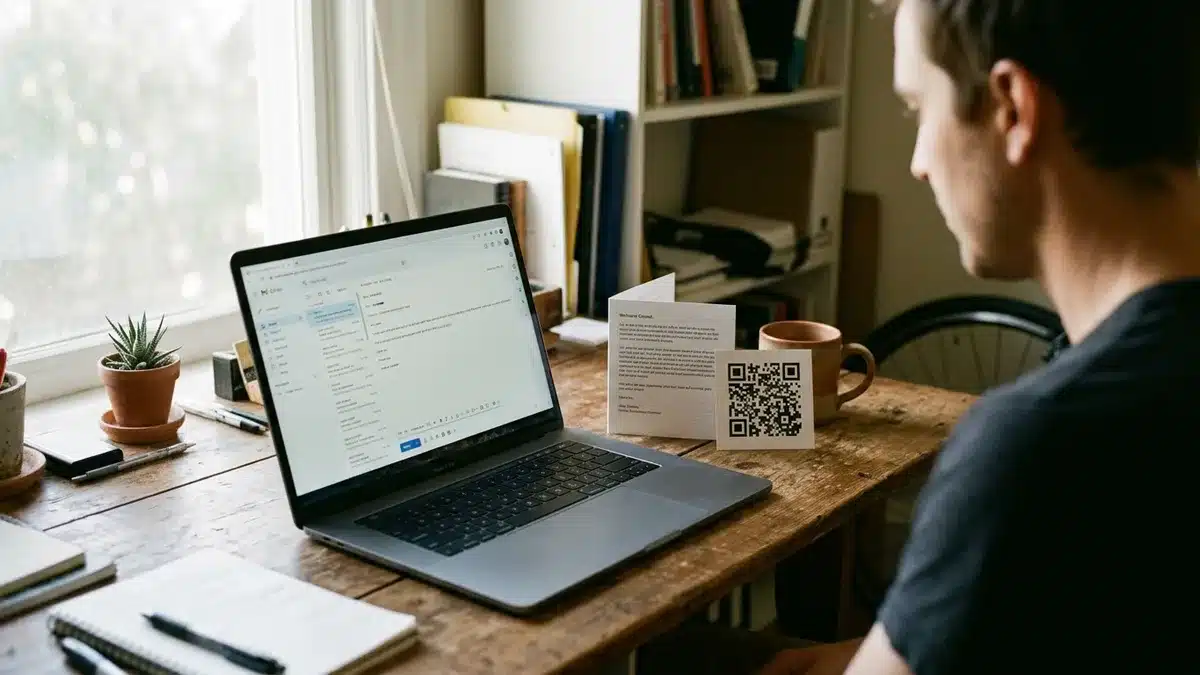
A guest CRM for short-term rentals is a system that stores each guest’s contact details, stay history, and preferences so you can message them yourself. Collecting emails works best when you ask in person or through your property materials, with a clear opt-in, instead of hoping guests reply inside a marketplace thread.
Four opt-in channels that work
- A QR code in your welcome materials that opens a short sign-up form for news about open dates.
- A digital guidebook that includes a “stay in touch” prompt next to the local tips guests already read.
- A Wi-Fi splash page that offers a returning-guest perk in exchange for an email.
- A checkout message sent when the stay is fresh in their mind. Ask at checkout, not at check-in, when guests are still unpacking and skeptical of another form.
State plainly what you will send and how often, and include an easy opt-out. Consent is what makes the list a durable asset. Our guide on how to own guest data from Airbnb goes deeper on the mechanics.
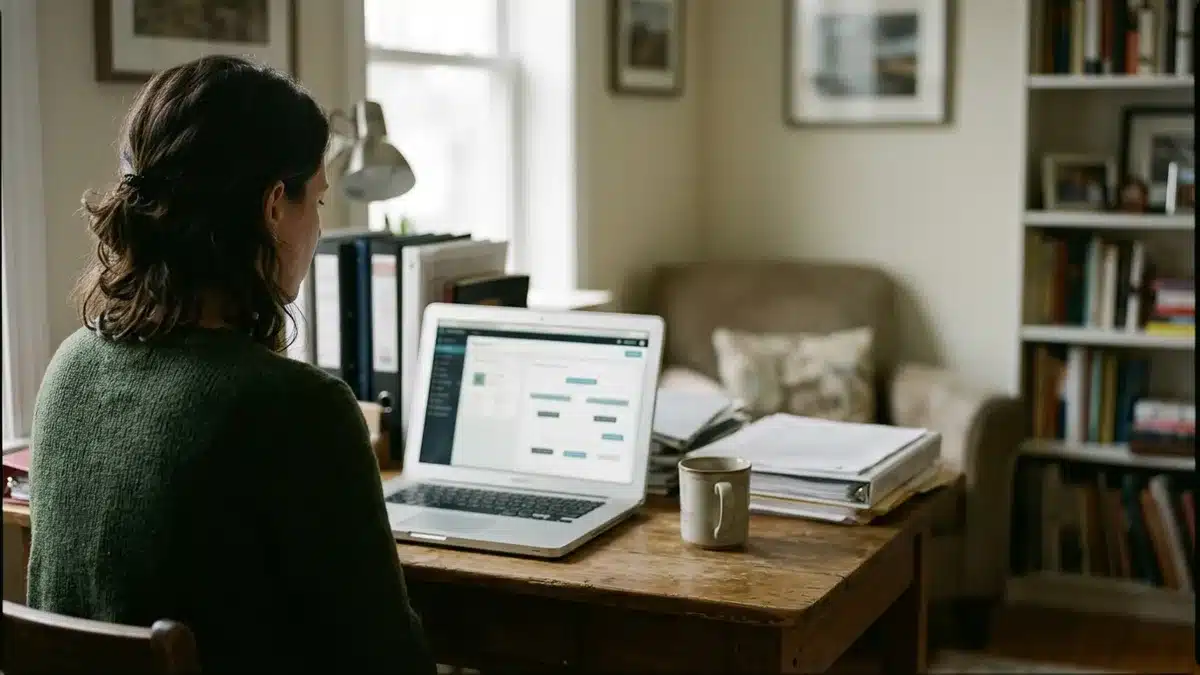
The manual version of this is a spreadsheet: paste in each email, tag it by property and stay date, then remember to write to it before peak season. Most hosts abandon it by the second month. Our CRM replaces that chore, because every guest who books direct is captured automatically with email and SMS automation attached, so nobody has to export a list. If you are comparing systems, we outlined what to look for in the best CRM for short-term rental hosts who own their guest list.
What Should Your Post-Stay Message Sequence Look Like in 2026?
A post-stay rebooking sequence is a short set of consent-based messages: a thank-you right after checkout, then seasonal offers timed before peak demand. Keep it to a few messages a year so each one reads like a personal note from the host rather than a campaign blast.
| Touchpoint | Timing | Purpose |
|---|---|---|
| Welcome materials | During the stay | Offer the opt-in and mention that you keep a short list for open dates |
| Thank-you message | Right after checkout | Thank them, ask for a review, and invite them to your list |
| Seasonal offer | About 60 days before your peak season | Announce dates with a returning-guest perk and a booking deadline |
| Deadline reminder | Three days before the deadline | Send one reminder, then stop |
| Light-touch check-in | Once or twice a year | Share news and keep your name familiar |
Copy-and-paste messages
Thank-you: Thanks for staying with us, [Name]. We loved hosting you. If you would like first word when we open dates for [season], reply YES or join our short list here: [link]. We email only a couple of times a year, and you can opt out anytime.
Seasonal offer: Hi [Name], dates for [season] at [Property] are open to past guests first. Book on our own site by [deadline] and enjoy [perk], with the full price shown up front: [link]. Not for you this year? No problem at all.
Reminder: A quick note that our returning-guest offer for [season] ends on [deadline]. Your dates are still available at the moment: [link].
Boostly Connect’s CRM runs these sequences for you: email and SMS automation for past guest nurture, review requests, and repeat-stay offers, all triggered from the guest record. For a deeper look at the follow-up cadence, see our post on how to re-engage past vacation rental guests in 2026.
What Reason Can You Give Guests to Book Direct That Airbnb Cannot Match?
The most effective reasons to book direct are a lower total price or a small perk with real value, such as late checkout. Choose an incentive that costs you less than the commission you avoid, because a discount larger than that commission turns a repeat booking into a loss.
Incentives worth testing
- A modest returning-guest discount. Keep it small; excessive discounting erodes the margin you are trying to protect.
- Early calendar access for holiday or event dates. You must hold those dates before publishing them widely.
- Late checkout or early check-in when your turnover schedule allows.
- A waived-fee message, which works for price-sensitive guests only when your direct total is truly comparable.
- A shareable code that returning guests can pass to friends.
A worked net-savings illustration
The table uses a round $1,000 booking and the 15 to 20 percent commission range. The $50 incentive is an example, not a recommendation, and both figures are placeholders you should replace with your own.
| Line item | Airbnb rebooking | Direct rebooking |
|---|---|---|
| Booking value | $1,000 | $1,000 |
| Commission | $150 to $200 | $0 |
| Incentive you choose | $0 | $50 (example) |
| Card processing and other costs | Confirm on your Airbnb payout statement | Varies by processor; check your rate |
| Margin before other costs | $800 to $850 | $950 |
Even after passing $50 back to the guest, you keep roughly $100 to $150 more per stay before processing costs. Run the same math with your own numbers before you promise anything. The direct booking sites we build include discount codes, gift vouchers, and direct-only offers, so the incentive is applied at checkout without manual invoicing. Running both channels is fine: our guide on how to balance OTA and direct bookings in 2026 shows how.
How Do You Make Booking Direct as Easy as Rebooking on Airbnb?
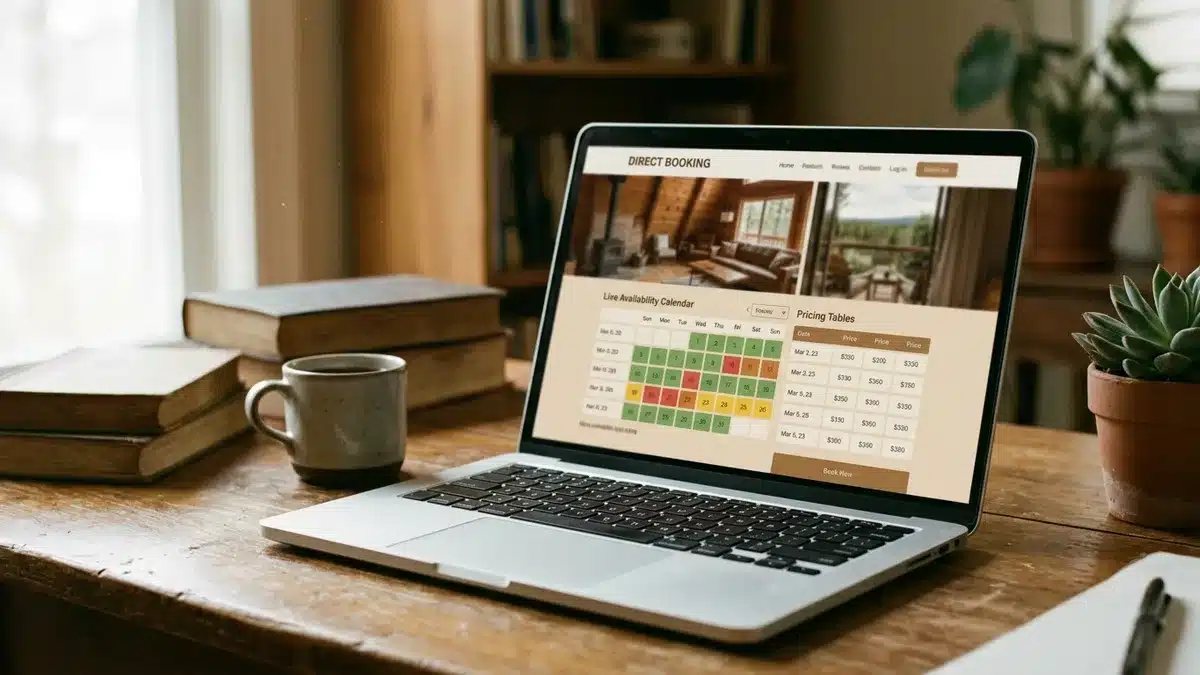
Booking direct feels as easy as Airbnb when your own website shows live availability, the full price, and a payment step guests recognize. A direct booking website for vacation rentals is a site connected to your property management system, so calendars and rates update automatically with no emailing back and forth for dates.
How do you handle trust barriers?
Guests know Airbnb’s checkout and guarantees. On your site, answer their hesitations before they ask. State the cancellation terms in plain language, explain how any damage deposit works, show the total price with every fee included, and confirm that payment runs through a compliant processor. Send a receipt immediately. A guest who has stayed with you already trusts the property; the site only has to avoid breaking that trust.
What should you look for in direct booking software?
Prioritize four things: deep PMS integration so availability and pricing never drift, real-time pricing on the page, a CRM that captures guests without exports, and setup that needs no developer. Boostly Connect supports 27 PMS integrations, including Hospitable, Guesty, and OwnerRez, and syncs your listings to a WordPress site in under 20 minutes. Setup carries no upfront cost for up to 10 listings.
Our direct booking website checklist for short-term rentals lists the features worth insisting on, and our page on real-time pricing for a vacation rental website explains why stale rates cost you bookings. The site also includes live chat and AI agents that turn lookers into bookers, so a returning guest with a quick question gets an answer at 10 p.m. instead of drifting back to the app.
How Common Are Repeat Guests in 2026, and Are Airbnb Bookings Declining?
Repeat guests are a modest but valuable share of most rental businesses, and published benchmarks vary widely with market, property type, and how deliberately a host pursues retention. As noted earlier, one operator dataset put the median share of booking value near 5%. Deliberate outreach clearly moves that number.
| Source | Finding | How to use it |
|---|---|---|
| Hostex (2026) | Many vacation rentals see repeat booking rates between 10% and 25%, depending on market, property type, and guest profile | A sensible target range once you run deliberate outreach |
| CUfinder (2026) | 2026 marketing benchmarks show an average repeat guest rate of 22% for direct bookings | One in five direct bookings can come from returning guests when hosts focus on retention |
| MagicBNB (2026) | An operator running 8 properties found that 12% of one-time guests rebooked within 12 months | Proof that a single visit can turn into a second stay |
Are Airbnb bookings declining?
Not in aggregate. Short-term rental demand in the U.S. is still growing, but growth has slowed while new listings keep arriving. More supply chasing slower demand growth means more competition for each new traveler. That makes a guest who already knows your property the cheapest booking you can earn, and operators working with us describe the same pattern.
Why Do Some Hosts Win Their Repeat Guests Back While Others Stall?
Hosts who win repeat guests back treat the stay as the first message of the rebooking campaign. A reliable arrival, a clean property, and a memorable name give guests something to remember, and the email then only confirms what they already want to do.
Friction and maintenance problems push guests to try another listing, so self check-in with a smart lock and a quick response to any issue protect your rebooking rate before a single email goes out. Branded welcome materials help too. When a guest remembers your property’s name instead of “that place on Airbnb,” they can find you outside the app.
In one case, a B&B run by a couple reached 90% direct bookings and 60% repeat guests after moving marketing onto its own website. Another host made a first £800 direct booking from a single tactic taught in a free challenge, which showed what was possible before scaling further. Our twice-weekly group coaching calls exist so hosts can test these tactics with practitioners rather than alone.
Do you need to beat the Airbnb algorithm?
No. Guests who arrive through your invitation skip Airbnb’s search results entirely. You still want a healthy listing, because Airbnb remains a strong source of first-time guests, but repeat business does not depend on ranking. Most hosts run both channels and redirect returning guests to their own site. Airbnb sets its own ranking factors, so we never promise ranking outcomes in either direction.

What Mistakes Cost Hosts Their Repeat Direct Bookings?
The most costly mistakes are pushing direct booking too early, discounting too deeply, and sending generic messages with a missing deadline. Each one either breaks platform rules, shrinks your margin, or gives guests no reason to act this week.
- Pitching direct inside a pre-booking chat. It risks an account problem and feels pushy. Wait until after the stay and get opt-in first.
- Discounting past the commission you save. Test small perks before cutting price.
- Mass emails with no personalization. Tag contacts by property and stay date so the message references their stay.
- No booking deadline. Without one, guests default to Airbnb whenever they get around to it.
- A site with stale availability. A guest who hits a sold-out date on your page will not email to ask; they will open the app. PMS sync fixes this by keeping calendar and pricing live.
- Skipping tracking. If you cannot see direct repeat conversion, you cannot tell whether a perk helps.
How Do You Measure Whether Direct Rebooking Is Paying Off?
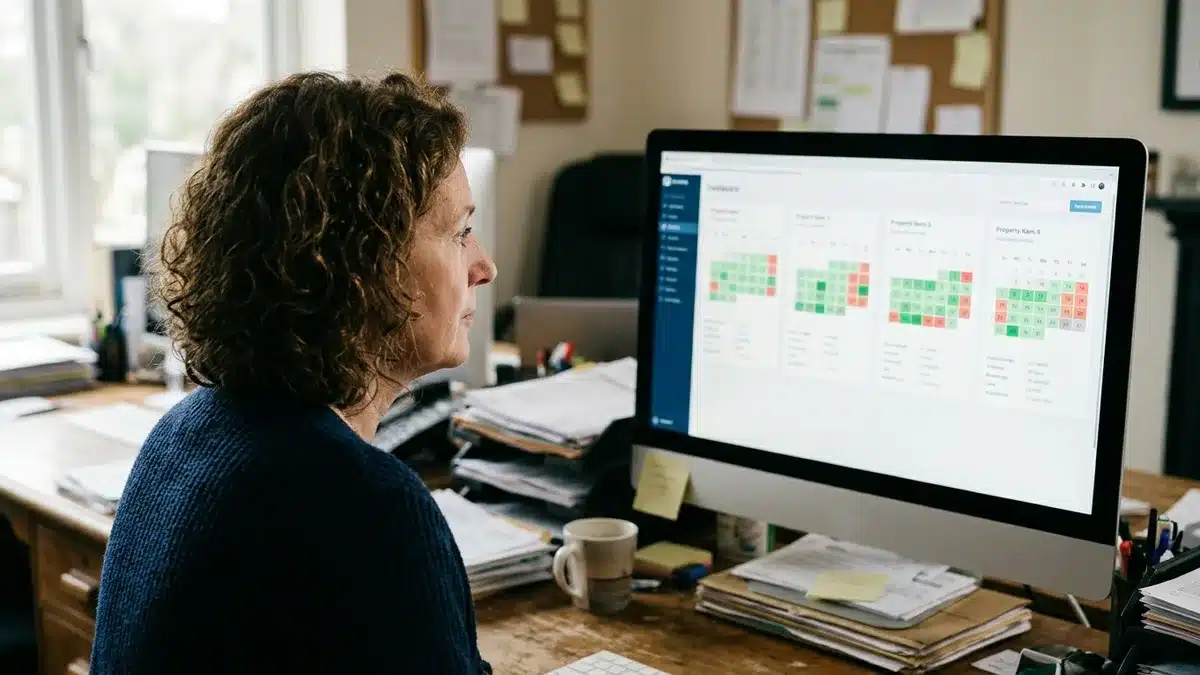
Measure direct rebooking with four numbers: your baseline repeat guest rate, direct repeat conversion, incentive cost, and net revenue per rebooking. Repeat guest rate is bookings from past guests divided by total bookings, multiplied by 100. Review the set monthly so a perk that does not lift profit gets dropped.
Direct repeat conversion is the share of invited guests who rebook on your site. Incentive cost is what you gave away per rebooking. Net revenue per rebooking is the booking value minus the incentive and processing costs. A small perk that lifts conversion is a win; a large discount that barely moves it is a leak.
Your step-by-step plan for this month
- Calculate your current repeat guest rate from the last 12 months of bookings.
- Add an opt-in QR code and a short sign-up form to your welcome materials.
- Connect your PMS to a direct booking site with live availability and clear cancellation terms.
- Write your checkout thank-you message and schedule it to send after every stay.
- Pick one incentive, set a booking deadline, and schedule your seasonal offer about 60 days before peak season.
- Review direct repeat conversion and net revenue monthly, then adjust the incentive.
Tracking this across a PMS, spreadsheet, and bank statement is slow and error-prone. Our reporting dashboard shows direct booking revenue and ROI in one place, so the monthly review takes minutes instead of an evening of reconciling numbers.
How Do You Get Repeat Guests to Book Directly Instead of Going Back to Airbnb?
You collect consent-based contact details during the stay, invite guests back after checkout with a reason that beats the marketplace, and give them a booking page that takes seconds. Every rebooking that lands there keeps the 15 to 20 percent commission that would otherwise go to Airbnb. With supply growing and demand growth cooling in 2026, the guests you already earned are your cheapest bookings.
We built Boostly Connect for exactly this. Your PMS syncs to a WordPress direct booking site in under 20 minutes with no developer, guests who book direct land in your own CRM, and our clients reach 65% direct bookings within 12 months or we work for free until they do. Book a demo with Boostly Connect to see it run on your own property data; your first 10 listings carry no upfront cost.
Frequently Asked Questions
How much commission does Airbnb take, and what percentage is it?
Airbnb’s cut typically works out to roughly 15 to 20 percent of each reservation, depending on how your account and fee structure are set up. The exact split changes over time, so check Airbnb’s current fee page. For a yearly dollar view, see our breakdown of what Airbnb commission costs you.
What CRM does Airbnb use?
Airbnb does not give hosts a CRM for marketing to past guests. Guest contact details generally stay inside its messaging system, which is why you need your own guest list. Boostly Connect includes a CRM that captures every guest who books direct automatically.
Can I send automated SMS to guests?
Yes, as long as guests have opted in and you follow the messaging and consent rules that apply where you operate. Verify the current requirements with the official source for your region. The Boostly Connect CRM includes email and SMS automation for past guest nurture, review requests, and repeat-stay sequences.
Can I book directly with the host on Airbnb?
Bookings made on Airbnb run through Airbnb’s platform and payment system. Booking directly with a host means using the host’s own website or contact channel outside Airbnb. Airbnb’s terms restrict moving an existing reservation off the platform, so invite guests to your site only after a stay and with their consent.
Will encouraging direct bookings hurt my Airbnb ranking?
Guests who rebook through your site simply skip Airbnb’s search, so your listing can stay active as a source of new guests. Most hosts run both channels together. Airbnb controls its own ranking factors, so we cannot promise a specific outcome.
How often should you email past guests?
Send a thank-you after checkout, a seasonal offer about 60 days before peak season with a booking deadline, one reminder three days before that deadline, and a light-touch check-in once or twice a year. Fewer, more relevant messages outperform frequent blasts, and every email should include an easy opt-out.
Do you need a developer to launch a direct booking website?
No. Boostly Connect syncs your existing PMS to a WordPress site in under 20 minutes with no coding, and it supports 27 PMS integrations. There is no upfront cost for up to 10 listings.