

Airbnb’s host-only service fee runs at approximately 15.5% of the booking subtotal for most hosts as of 2026, though some accounts still see rates in the 14 to 16% range depending on region and account type. On $50,000 in annual bookings, that works out to roughly $7,750 to $8,000 a year handed straight to Airbnb before you even factor in Vrbo or Booking.com fees on other channels.
Key Takeaways
- Airbnb’s current host-only fee structure sits at roughly 15.5% of the booking subtotal for most hosts, replacing the older split-fee model of a smaller host fee plus a separate guest fee.
- The fee is deducted automatically from your payout; it applies to the nightly rate and most host-added charges like cleaning fees, but not to taxes or Airbnb’s own guest-side service fee.
- On $30,000 in annual bookings at 15.5%, a host loses approximately $4,650 a year to commission alone, and that figure scales linearly with revenue.
- Some listings, including certain properties in Brazil and Mexico, are charged a 16% host-only fee rather than the more common rate, so the exact percentage varies by account and region.
- Hospitable’s documentation notes the host-only fee became mandatory for software-connected hosts on October 27, 2026, with a broader host migration timeline extending into 2026, so the fee you’re quoted today may differ from what you paid last year.
- Boostly Connect helps hosts reduce how much of their annual revenue actually flows through Airbnb’s fee structure by building a direct booking website synced to your existing PMS, so repeat guests and referrals can book without triggering that commission at all.
If you’re running the numbers on your rental business for 2026, the commission question is really an annual math problem in disguise. Every booking that clears through Airbnb quietly hands over a slice of revenue before it ever touches your bank account, and the total adds up faster than most hosts expect once you look at it across twelve months instead of one reservation at a time.
We wrote this because we get some version of “how much does Airbnb actually take from me per year” almost every week from hosts who’ve never sat down and done the arithmetic. At Boostly Connect, we built our entire platform around one observation: hosts who never total up their annual commission bill keep paying it indefinitely, while hosts who do the math usually start building a direct booking channel within weeks.
This guide breaks down the current fee structure, walks through annual dollar examples at different revenue levels, and covers the fan-out questions hosts are actually asking, including the 2026 rollout of the host-only model and what counts toward the fee base in the first place.
How Much Commission Does Airbnb Take From Hosts Per Booking?
Airbnb currently charges most hosts a host-only service fee of approximately 15.5% of the booking subtotal, deducted automatically before your payout is issued. This replaced the older split-fee structure, where hosts paid a smaller fee (generally around 3%) and guests separately paid a service fee typically in the 14.1% to 16.5% range.
Under the newer model, Airbnb folds the entire fee into one line item charged to the host, rather than splitting it visibly between host and guest. Some listings, notably certain properties in Brazil and Mexico, are charged a 16% rate under this same host-only structure, according to Airbnb’s own Help Center. That means the exact percentage you pay depends on your account, listing location, and which fee model your account has migrated to.
The percentage itself isn’t the whole story. Airbnb calculates the fee against the booking subtotal, which includes your nightly rate and most charges you add yourself, like cleaning fees or extra-guest fees. It typically excludes taxes collected on the guest’s behalf and Airbnb’s separate guest-facing charges. That distinction matters enormously once you start projecting annual totals, because a host who forgets to separate taxes from bookable revenue will overestimate or underestimate their real annual fee burden.
You can check your exact current rate under Payments and Payouts in your Airbnb account, or inside a specific reservation’s Earnings details. Rates have shifted for different host segments at different times, so don’t assume the number you paid last year still applies today.

What Does the 15.5% Host Fee on Airbnb Actually Mean?
The 15.5% host fee refers to the current host-only service fee model that consolidates what used to be two separate charges, a host fee and a guest fee, into one deduction taken entirely from the host’s side of the transaction. In practical terms, it means the price a guest sees on the listing page is closer to your actual nightly rate, while your payout is reduced by the full commission amount after the booking closes.
This structure change matters because it shifts psychological pricing. Under the old split-fee model, guests saw an inflated total price that included their own service fee, which sometimes discouraged bookings on price-sensitive searches. Under the host-only model, your listing appears more competitively priced to a browsing guest, but you personally absorb a larger percentage hit per booking.
Hospitable’s documentation states the host-only fee became mandatory for software-connected hosts (those using a property management system or channel manager) starting October 27, 2026, with additional host segments migrating on a rolling basis into 2026. If you’re managing multiple listings through a PMS, this is worth confirming directly in your dashboard, since the rollout wasn’t a single universal switch date for every host type.
What this doesn’t change is the fundamental math: whether the fee is split or host-only, it’s still coming out of revenue you generated. The only way to actually reduce the total dollar amount is to route more of your bookings away from the platform entirely, which is the exact gap Boostly Connect’s direct booking website is designed to close, since a guest who books through your own site never triggers this fee at all.
How Do You Calculate Your Annual Airbnb Commission Cost?
Calculating your annual Airbnb commission requires multiplying your total annual booking subtotal by your current host fee percentage, typically around 15.5%. The formula is straightforward: annual bookings revenue times fee percentage equals annual commission paid, but the tricky part is defining “annual bookings revenue” correctly, since taxes and certain guest-side charges don’t count toward the fee base.
Start with your gross booking subtotal for the year, meaning nightly rates plus any host-added charges like cleaning fees or pet fees, excluding occupancy taxes. Multiply that figure by your fee percentage. The result is your annual commission cost, not your total revenue loss, since you’ll also want to account for cleaning costs, supplies, and other operating expenses separately.
Here’s how that plays out at different revenue levels, based on a 15.5% host-only fee:
| Annual Booking Subtotal | Host Fee Rate | Estimated Annual Commission | Net Revenue Retained |
|---|---|---|---|
| $30,000 | 15.5% | $4,650 | $25,350 |
| $50,000 | 15.5% | $7,750 | $42,250 |
| $100,000 | 15.5% | $15,500 | $84,500 |
| $250,000 | 15.5% | $38,750 | $211,250 |
These figures assume every dollar of your bookings subtotal is charged the same rate, which won’t always be exact if you have listings in different regions or accounts still on an older fee schedule. Treat the table as a working estimate, and confirm your exact rate against your own Earnings dashboard before reporting these numbers to a business partner or lender.
Multi-property operators should run this calculation per listing rather than as a blended portfolio average, since fee rates can differ slightly by property location and account history. If you’re managing more than a handful of units, tracking this manually across spreadsheets each month becomes its own time cost. That’s part of why our guide to managing multiple vacation rentals without chaos walks through consolidating this kind of reporting into one dashboard instead of chasing numbers across separate platforms.
What Counts Toward the Fee Base and What Doesn’t?
The Airbnb host fee base includes the nightly rate and most charges a host adds directly to the listing, such as cleaning fees and extra-guest fees, but it excludes taxes collected on the guest’s behalf and Airbnb’s own guest-facing service charges. Getting this distinction wrong is the single most common reason hosts miscalculate their annual commission exposure.
For example, if you charge a $150 nightly rate plus a $75 cleaning fee, your fee base for that reservation is $225, not the full amount the guest sees on their confirmation screen, which may also include occupancy tax and Airbnb’s guest service fee layered on top. Airbnb deducts its host fee only against your $225 subtotal, not against the guest’s total charge.
This matters most for hosts who charge significant added fees. A property with a high cleaning fee relative to nightly rate will see a larger dollar commission per booking than a property with a low nightly rate and no add-ons, even at the identical percentage rate. If you’re trying to model your annual commission cost accurately, pull your bookings report and separate subtotal from tax lines before running any percentage calculation.
This is also where a lot of hosts get surprised at tax time, because the commission deducted from payouts doesn’t line up neatly with gross booking revenue reported elsewhere. Reconciling this by hand across a spreadsheet, a PMS export, and a bank statement each month is exactly the manual grind we built the Boostly Connect reporting dashboard to eliminate, since it tracks your direct booking revenue separately from OTA-sourced income in one place.
Is There a Way to Reduce What Airbnb Takes From Your Bookings?
The most direct way to reduce your Airbnb commission cost is to shift a portion of your annual bookings to a direct channel, since a guest who books through your own website never triggers Airbnb’s host fee at all. You can’t negotiate the percentage itself, but you can control what share of your total revenue passes through the platform.
Direct booking retention rates are the underused lever here. Industry benchmarks show hosts without a deliberate retention strategy see repeat guest rates around 5 to 8%, while hosts running a dedicated retention approach report repeat guest rates in the 15 to 25% range, according to a 2026 Lodgify study. Every one of those repeat stays that books direct instead of rebooking through Airbnb is revenue that skips the commission entirely.
Separately, vacation rental marketing benchmark data for 2026 puts the average repeat guest rate for direct bookings specifically at around 22%, meaning roughly one in five direct bookings already comes from returning guests when a host has any retention system in place. If you’re not capturing guest emails and following up after checkout, you’re leaving that repeat revenue sitting inside Airbnb’s ecosystem by default.
This is precisely the gap Boostly Connect was built to close. Every guest who books through your Boostly Connect website is automatically captured into your own CRM, so their contact details stay with you rather than staying locked inside Airbnb’s messaging system where you can’t remarket to them directly. We cover the mechanics of this in more depth in our piece on how to own guest data from Airbnb and why it matters, since guest data ownership is really the foundation the whole direct booking strategy sits on.
You don’t need to abandon Airbnb to make this work. Most hosts we work with run both channels simultaneously, using Airbnb for new guest discovery and their own site for repeat stays, referrals, and direct-only promotions.
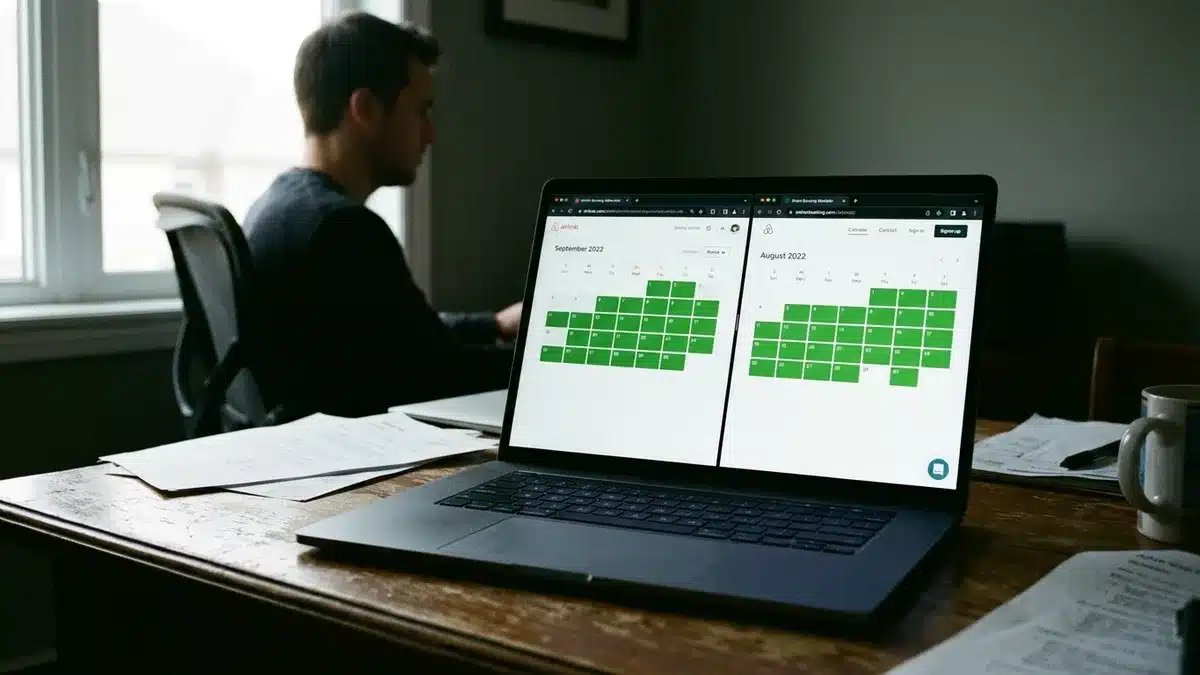
Are Airbnbs Still Profitable in 2026 After Commission Costs?
Most short-term rentals remain profitable in 2026 even after Airbnb’s host fee, but margins are tighter than they were several years ago as commission rates, cleaning costs, and competition from a growing supply of listings all rose together. U.S. short-term rental occupancy is forecast to average 57.4% in 2026, according to AirDNA data, while national RevPAR is projected to rise 2.9% for the year, meaning revenue per available listing is trending slightly upward even as the market gets more crowded.
The profitability question really comes down to how much of your revenue leaks out through commission versus how much you retain. A property generating $100,000 in annual bookings loses roughly $15,500 to Airbnb’s host fee alone at the 15.5% rate, before cleaning, maintenance, or other operating costs are even factored in. That’s a meaningful chunk of margin for any single-property host running on thin numbers.
U.S. short-term rental listing supply is projected to reach 1.77 million in 2026, up from 1.69 million in 2026, while demand growth is projected to moderate to 4.1% year over year, down from 4.7% growth the prior year. More listings competing for slightly slower demand growth means individual hosts need every retained dollar to count, which is exactly why the commission conversation matters more in 2026 than it did in a less competitive market.
Profitability in this environment depends less on raising your nightly rate and more on controlling which channel captures each booking. Hosts who build even a modest direct booking channel alongside Airbnb tend to weather rate competition better than hosts fully dependent on OTA search rankings, because they’re not solely at the mercy of algorithm changes or fee increases they can’t control.
What Is the 75-55 Rule and 80/20 Rule People Mention for Airbnb?
There is no verified, official Airbnb policy known as the “75-55 rule.” If you’ve seen this term referenced online, treat it as an informal shorthand some hosts use rather than an established industry standard, and don’t rely on it for financial planning.
The “80/20 rule” is sometimes used loosely by hosts to describe the general idea that a small share of listings or guests drive a large share of revenue, a pattern common across many small businesses, not a specific numeric standard set by Airbnb. Rather than anchoring your strategy to an unverified named rule, we’d recommend focusing on your own actual numbers: your repeat guest percentage, your commission cost per booking, and your direct booking conversion rate. Those are figures you can verify and act on, unlike an informal rule with no documented source.
If you’re trying to benchmark your business against something concrete, the fee percentage breakdown and annual cost table earlier in this guide give you a more reliable starting point than any named rule circulating in host forums.
What PMS and CRM Tools Help Hosts Manage Direct Booking Revenue?
A property management system, or PMS, is software that centralizes calendar syncing, guest messaging, and pricing across multiple booking channels, while a CRM stores guest contact and stay history so you can market to past guests directly. Together, these two tools are what make a direct booking strategy operationally sustainable rather than a one-off website that sits unused.
Most hosts already run some version of a PMS, whether that’s Hospitable, Guesty, Lodgify, Hostfully, or OwnerRez, to keep their Airbnb and Vrbo calendars synced and avoid double bookings. The gap most of these tools leave open is the direct booking website layer itself: a PMS keeps your channels synced, but it doesn’t necessarily build you a conversion-ready website or capture guest data into a usable CRM.
Boostly Connect was built specifically to plug that gap. It connects to your existing PMS in under five minutes across 27 supported integrations, then builds a WordPress-based direct booking website with live availability and real-time pricing pulled straight from your PMS, no developer required. Every direct booking captured through that site feeds automatically into the Boostly CRM, so you’re not manually exporting guest lists or bolting on a separate email tool just to follow up after checkout.
If you’re evaluating what a direct booking website actually needs to include before you commit to building one, our breakdown of what to look for in a direct booking website for short-term rentals covers the specific features worth prioritizing, and our guide to the best CRM for short-term rental hosts goes deeper into guest data ownership specifically.
Data and Evidence: Airbnb Commission Compared to Other Cost Structures
Airbnb’s host-only fee model sits within a broader shift across OTA platforms toward consolidated, host-side commission structures, replacing the older visible split between host and guest fees. Understanding where this fee fits relative to your total cost of doing business helps you see the real annual stakes.
The table below lays out how Airbnb’s current fee structure compares to the older split-fee model hosts may remember from prior years, based on the migration data referenced in Airbnb’s own policy updates and reporting on the U.S. transition.
| Fee Structure | Host-Side Charge | Guest-Side Charge | Who Sees the Full Price Upfront |
|---|---|---|---|
| Older split-fee model | Generally around 3% | Typically 14.1% to 16.5% | Guest, via inflated total at checkout |
| Current host-only model (2026) | Approximately 15.5% (16% in some regions) | None separately itemized | Host, via reduced payout |
Notably, the total commission dollars flowing to Airbnb are roughly comparable under either model since the platform is simply reallocating who visibly pays the fee. What changed is optics and listing competitiveness, not the underlying economics of the platform’s revenue model. As a host, your actual annual cost depends far more on your total booking volume than on which model your account happens to be running under.
For hosts using dynamic pricing tools to offset commission costs by optimizing nightly rates, third-party platforms like the one reviewed on Hotel Tech Report’s revenue management category or evaluated on G2’s vacation rental software reviews can help offset commission losses by improving ADR, though pricing tools alone don’t reduce the percentage Airbnb charges per booking. They simply help you earn more before the fee is applied.
Deep Dive: Why the Host-Only Fee Rollout Confused So Many Operators
The rollout of Airbnb’s host-only fee structure created confusion because the migration didn’t happen on a single universal date for every host. Hospitable’s own documentation notes the fee became mandatory for software-connected hosts, meaning those using a PMS or channel manager, starting October 27, 2026, while other host segments migrated on a separate rolling timeline extending into 2026.
This staggered rollout means two hosts with similar listings in the same city could be running under different fee percentages simultaneously, depending on when their specific account migrated and which tools they use to manage their calendar. If you compare notes with another host and your numbers don’t match, this migration timing is very likely the reason, not an error in either of your calculations.
Reporting from CNBC in August 2026 covered Airbnb’s announced transition in the U.S. market, and multiple sources describe hosts moving to the new fee structure with target dates that don’t always line up cleanly across different documentation sources. Our honest read: don’t trust a single blanket “everyone switched on this date” claim you see repeated online. Check your own account’s Payments and Payouts section directly, since that’s the only source that reflects your actual current rate.
What this migration confusion really highlights is a structural risk of building your entire business on a platform whose fee policy can change on a timeline you don’t control and don’t get advance notice of in a way that’s easy to track. That unpredictability is a large part of why we built Boostly Connect the way we did. Your direct booking website’s economics don’t shift because Airbnb quietly adjusts its host fee migration schedule. If you’d rather understand the tradeoffs of running both channels deliberately rather than reactively, our piece on how to balance OTA and direct bookings in 2026 walks through a practical split strategy.
Practical Guidance: How to Audit and Reduce Your Annual Commission Exposure
Auditing your annual Airbnb commission exposure means pulling your actual bookings data, confirming your current fee percentage, and comparing that dollar total against what a modest shift toward direct bookings could realistically save. Most hosts skip this exercise entirely and simply accept whatever number appears in their payout summary each month.
Follow these steps to get an accurate picture of your own numbers:
- Log into your Airbnb account and check Payments and Payouts, or open a recent reservation’s Earnings details, to confirm your exact current host fee percentage.
- Export or total your gross bookings subtotal for the past 12 months, excluding taxes and any guest-side charges that aren’t part of your fee base.
- Multiply that subtotal by your confirmed fee percentage to calculate your actual annual commission cost.
- Separately calculate your current repeat guest rate, since this is the segment most easily converted to a direct booking channel without any new marketing spend.
- Identify which PMS you’re currently using (Hospitable, Guesty, Lodgify, Hostfully, or OwnerRez are common choices) and confirm whether it supports a direct integration with a booking website builder.
- Set up guest email capture at minimum for every direct inquiry or repeat guest, even before building a full website, since this data has value regardless of your channel mix.
- Review your numbers again after 90 days to see whether your direct booking share has moved at all.
The most common mistake we see is hosts treating this as a one-time calculation rather than a recurring monthly check-in. Fee structures change, your booking volume changes seasonally, and your repeat guest base grows over time, so the math is worth revisiting quarterly rather than once and forgetting about it. If you want a broader framework for this beyond just the commission math, our guide on how to grow your vacation rental business without more OTA listings covers the strategic side of this shift in more depth, and for hosts specifically starting from zero direct bookings, growing your direct booking channel from zero lays out a no-ad-spend starting point.
Frequently Asked Questions
How much commission does Airbnb take?
Airbnb currently charges most hosts a host-only service fee of approximately 15.5% of the booking subtotal, though some regions and account types see rates closer to 16%. This fee is deducted automatically from your payout and replaced the older split-fee model where hosts and guests each paid a separate percentage.
How much of a cut does Airbnb take from a typical booking?
On a $200 booking subtotal, a 15.5% host fee works out to roughly $31 taken from your payout for that single reservation. The percentage stays consistent per booking, so the dollar amount scales directly with your nightly rate and any added charges like cleaning fees.
How much percentage does Airbnb take from hosts in 2026?
As of 2026, most hosts are on the host-only fee model at approximately 15.5%, with certain regions like Brazil and Mexico seeing a 16% rate. The exact figure depends on when your account migrated to the current fee structure, since the rollout happened on a staggered timeline rather than a single universal switch date.
How much money does Airbnb take per year from an average host?
The annual dollar amount depends entirely on your booking volume. At $50,000 in annual bookings and a 15.5% fee, a host pays roughly $7,750 a year in commission. At $100,000 in bookings, that figure rises to approximately $15,500, based on the same percentage.
What does the 15.5% host fee on Airbnb mean exactly?
The 15.5% host fee refers to Airbnb’s current host-only service fee, which consolidates what used to be a separate host fee and guest fee into a single charge deducted from the host’s payout. Guests see a more straightforward listing price, while hosts absorb the full commission on the back end.
Will switching to direct bookings hurt my Airbnb search ranking?
No. Running a direct booking website alongside your Airbnb listing does not affect your Airbnb search ranking, since the two channels operate independently. Most hosts using Boostly Connect keep their Airbnb listing fully active while directing repeat guests and referrals to their own site.
Which property management systems integrate with a direct booking website like Boostly Connect?
Boostly Connect supports 27 PMS integrations, including widely used platforms like Hospitable, Guesty, Lodgify, Hostfully, and OwnerRez. Connecting your existing PMS typically takes under five minutes and gives your new website live availability and real-time pricing immediately.
Do I need a developer to set up a direct booking website?
No. Boostly Connect’s direct booking website builds on WordPress and syncs to your existing PMS in under 20 minutes total, with no coding knowledge or developer required, and no upfront cost for up to 10 listings.
Conclusion: What the Annual Commission Number Really Tells You
Airbnb’s current host-only fee of approximately 15.5% translates into real annual dollars once you multiply it against your actual booking volume, whether that’s roughly $4,650 on $30,000 in bookings or $15,500 on $100,000. That number isn’t going away, and it isn’t negotiable per booking. What is within your control is how much of your total annual revenue passes through that fee structure in the first place.
2026 is shaping up as a year where listing supply keeps growing while demand growth moderates slightly, according to AirDNA’s outlook data, which means every retained dollar matters more than it did in a less competitive market. Hosts who build even a modest direct booking channel alongside Airbnb put a ceiling on how much commission exposure they’re carrying, rather than letting it scale unchecked with every booking increase.
If you’re ready to see what a direct booking website connected to your own PMS looks like with your actual property data, book a demo with Boostly Connect and we’ll walk through your specific numbers together.
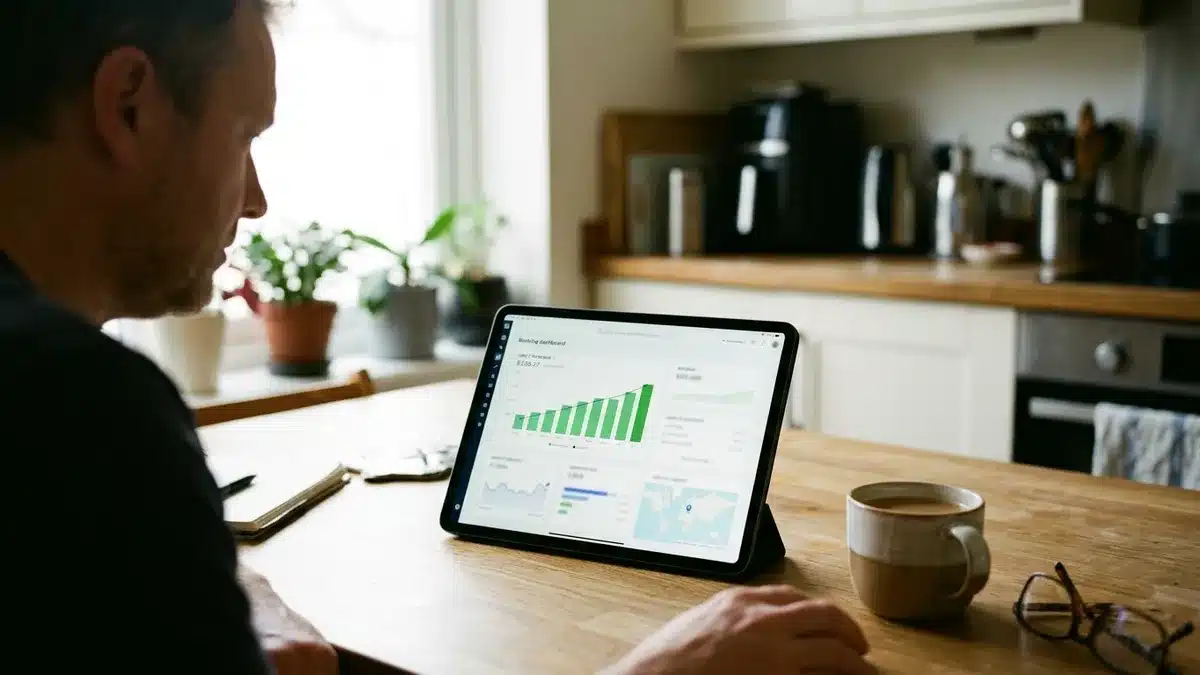
Seeing your own commission math laid out against a real direct booking dashboard tends to change the conversation fast. Once a host sees their actual annual Airbnb fee total next to their PMS-synced direct booking revenue growing month over month, the decision to build a direct channel usually stops feeling optional.