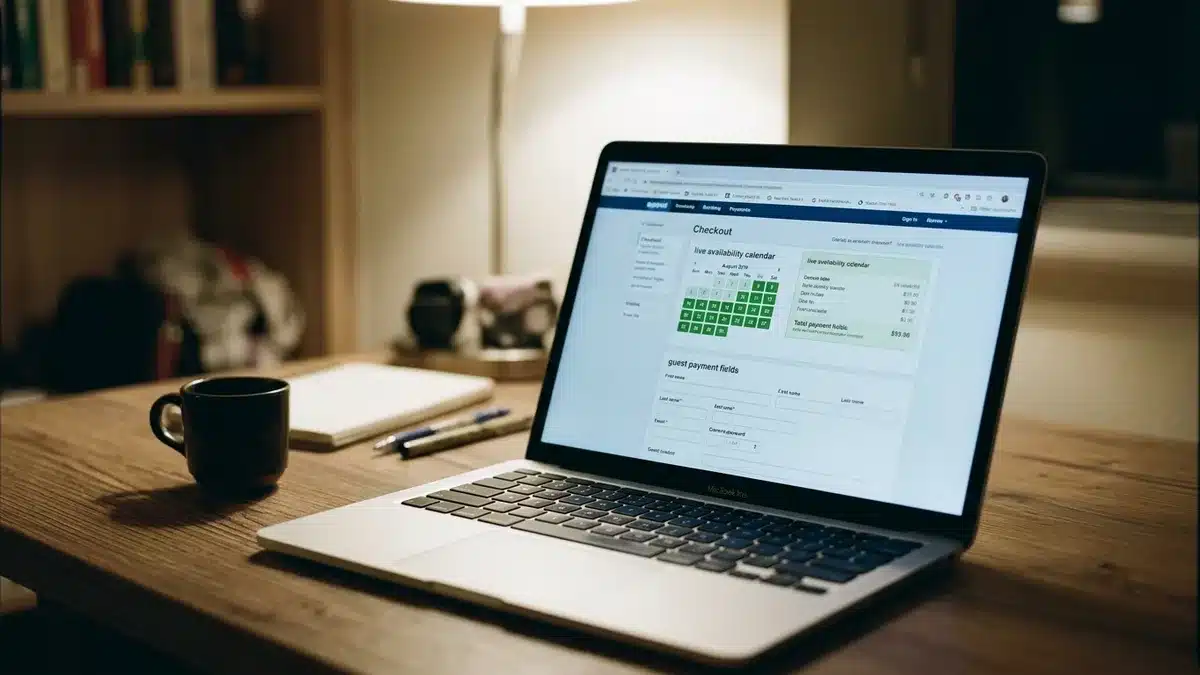

Airbnb keeps guest contact information after checkout because it must retain records for legal compliance, fraud prevention, safety, and dispute handling, and because the guest still holds an account. That is why Airbnb retains data in its own systems. It does not mean you, as the host, can keep using it for marketing.
Key Takeaways
- Airbnb retains guest data after checkout for ongoing account use, legal obligations, safety, fraud prevention, and dispute handling.
- Airbnb’s platform-level retention is separate from what a host can see or keep; hosts may use guest personal information only as needed to manage reservations, comply with laws, and deliver the stay.
- Where Airbnb provides a temporary relay phone number, it becomes active at confirmation and expires two days after checkout. That deadline applies to the relay number, not to all guest data.
- Retention does not authorize marketing. Adding an Airbnb guest to a mailing list or asking for contact details off-platform runs against Airbnb’s off-platform rules.
- Guests can request deletion, but legal duties, safety needs, claims, and backup copies can limit how fast everything disappears.
- Boostly Connect captures every direct booking guest into your own CRM, so contact data stays with your business instead of sitting inside a platform you do not control.
If you have ever asked why a platform you pay 15 to 20 percent per booking still holds the contact details of the people who stayed with you, you are asking the right question. The answer sits in three layers: what Airbnb retains, what you can see, and what you are allowed to do with it.
In 2026 this matters more than ever. Every Airbnb stay creates a guest relationship that, by default, belongs to the platform, and with millions of hosts competing for the same travelers, the hosts who own a channel to their past guests hold a real advantage. At Boostly Connect, we built our direct booking platform around exactly this gap.
Below we separate Airbnb’s own retention from your access as a host, explain how phone numbers behave after checkout, and show how to build a guest list you actually own. Where we describe Airbnb policy, check the current Help Center pages, since policies change.
Why Does Airbnb Hold Onto Guest Information After a Stay Ends?
Airbnb retains guest personal information after checkout because a completed reservation does not close the guest’s account, and because records may need to be kept for legal, safety, fraud, and dispute reasons. Retention happens in Airbnb’s systems, not in your reservation dashboard.
Airbnb’s privacy policy ties retention to purpose rather than a single countdown. Information may stay while the account is active, while a legal obligation applies, or while a claim or dispute could still arise. Airbnb gives anti-money-laundering transaction records as one example of data that may need to be kept for a period before deletion.
The practical reasons behind retention
First, the guest still has an account with a profile, payment methods, and trip history. Second, if a damage claim or payment dispute surfaces weeks later, support needs the original booking record. Third, fraud and safety teams look at patterns across reservations, which requires history. Imagine a guest who disputes a cleaning fee three weeks after leaving: without the stored booking, messages, and payment record, nobody at Airbnb could rule on the claim.
No single source we reviewed publishes one end-to-end timeline for every contact field after checkout. Concrete time limits attach to specific data types. Optional facial-recognition templates, for example, are kept for up to one year from enrollment, but that is a biometric example, not a rule for phone numbers.
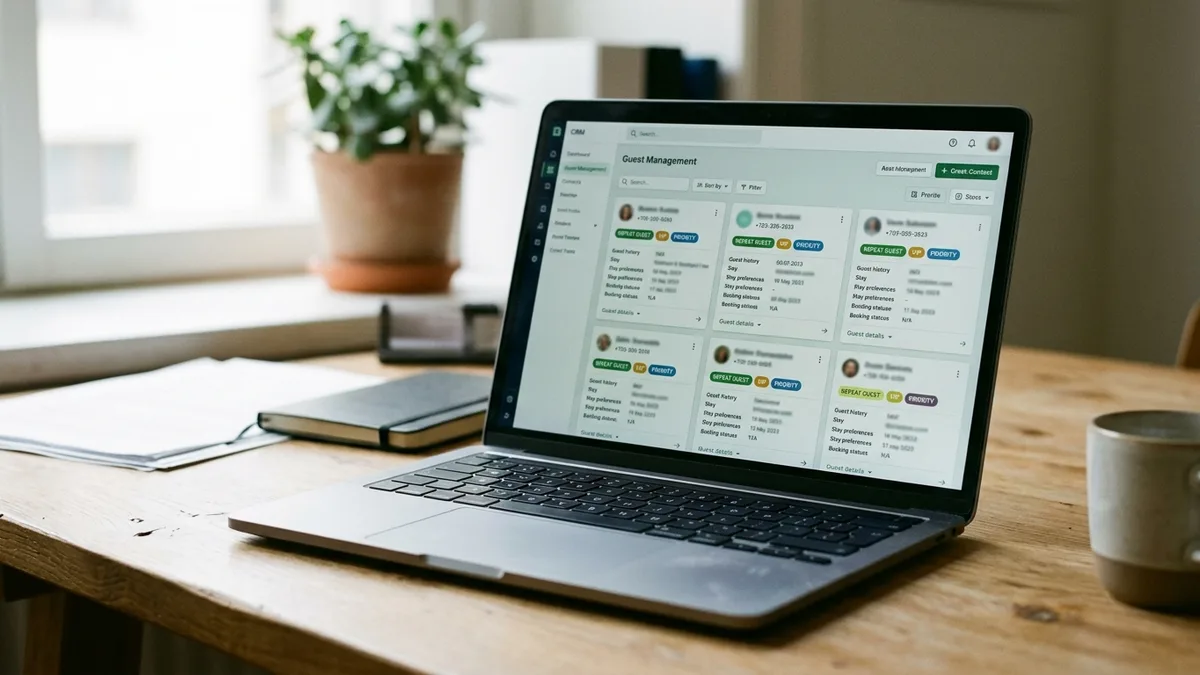
For you, the takeaway is blunt: this retention exists to serve Airbnb’s obligations, not your marketing. Our team built Boostly Connect so the guest data you need for repeat business lives in a CRM your business controls. Before, a host’s only record of a past guest was an old Airbnb thread that could vanish from view. After, each direct guest sits in a contact card with stay dates, notes, and consent status that you keep for as long as you choose.
What Information Can Airbnb Hosts See About Their Guests?
Airbnb hosts can see the information the platform transfers to manage a reservation: the guest’s full name, names of additional guests if entered, cancellation history, phone number, anything the guest chooses to share, and trip-coordination messages. You do not get the full account record Airbnb keeps.
Airbnb’s host privacy standards list those categories and limit use to what is necessary to manage reservations, comply with applicable laws, and deliver the hosting service. Your access is a subset of Airbnb’s data, purpose-limited by policy. In practice that means you can read a guest’s name and messages while the stay is live, but you cannot pull their payment history or full profile, and you cannot export a list for outreach.
When phone numbers appear and disappear
Phone visibility varies by location and booking state. In certain locations Airbnb may show a temporary phone number that becomes active at confirmation and expires two days after checkout. Airbnb also describes cancellation behavior in its phone-contact guidance, so a number you saw during a stay may not remain in your view afterward.
Airbnb says messaging should be the primary way to reach guests, since keeping conversations on the platform creates a record that support can use if an issue comes up. That is useful for disputes. It is also exactly why hosts end up with nothing portable when a stay ends.
If you manage your reservations through Hospitable, Guesty, Lodgify, OwnerRez, or Hostfully, your PMS may hold more reservation detail than Airbnb’s own host view. Boostly Connect supports 27 PMS integrations, and guests who book on the direct booking site your PMS powers flow straight into your CRM.

Does Airbnb Keeping a Phone Number Mean You Can Use It for Marketing?
No. Retention or continued visibility of a guest phone number does not authorize marketing, adding the guest to a mailing list, or any unrelated contact. Airbnb limits host use of guest information to managing reservations, complying with law, and delivering the stay.
This is the point most competing explanations skip. A number sitting in your reservation history can feel like permission. It is not. Airbnb’s off-platform policy restricts requests for guest contact information outside the platform and restricts marketing use of guest data gathered through Airbnb bookings.
Is it normal for a host to ask for a guest’s email address?
It depends on the reason. Airbnb allows hosts to require additional contact or identity information for legal or compliance reasons, such as local laws, HOA rules, or building security requirements, provided the requirement and the reason are disclosed in the listing. A host asking for an email to send a mailing list falls outside that.
As a host, you should treat this line seriously. Pulling guests off-platform to harvest contact data can put your listing at risk, and guests increasingly notice and distrust the tactic.
The legitimate route is to give past guests a reason to come to you voluntarily. Our guide to how to own guest data from Airbnb walks through that approach. A direct booking website with direct-only offers, discount codes, and gift vouchers gives guests that reason, and the booking itself creates a consented contact record.
How Is Airbnb’s Retention Different From What a Host Can Retain?
Airbnb’s platform-level retention covers the full account record in Airbnb’s own systems. A host’s retention covers only the guest information transferred for a reservation, and Airbnb’s host standards say the host decides how long to keep it, limited to what is necessary for reservations, legal compliance, and service delivery.
| Question | Airbnb (platform) | Host |
|---|---|---|
| What is held | Full account, booking, and payment records | Reservation details transferred for the stay |
| Why it is kept | Account use, legal duties, safety, fraud prevention, disputes | Managing reservations, compliance, delivering the service |
| Who sets the duration | Airbnb, by purpose and legal basis | The host, limited to what is necessary |
| Marketing use | Governed by Airbnb’s own policies | Not permitted for Airbnb-sourced guest data |
| Phone number after checkout | Retained in the account record | Relay numbers expire two days after checkout where used |
The second column carries a responsibility many hosts overlook. If you keep guest data in a spreadsheet, a notes app, or old text threads, you are the one holding it. Privacy laws such as GDPR and CCPA apply to businesses that store guest personal data, so confirm your obligations with a qualified advisor for your jurisdiction.
Boostly Connect handles this by keeping direct booking guest data inside one CRM tied to your PMS and website, instead of scattered across inboxes and exports. That gives you one place to apply your own retention choices, such as deleting a guest record a set number of months after their last stay, and one place to answer a guest who asks what you hold about them.
Can Guests Ask Airbnb to Delete Their Information?
Yes, guests can usually request deletion of their personal information, but Airbnb may decline or delay parts of it where legal obligations, safety needs, claims, or fraud prevention require retention. Residual copies may also persist in backup systems for a period.
Airbnb’s supplemental privacy pages describe deletion requests and the exceptions that go with them. This is why a guest who deletes their account may still appear in a historical reservation you handled. Your record of that stay is governed by your own retention practices, not by their request to Airbnb. If a guest emails you asking to be forgotten, you owe them a clear answer about your own records even though you cannot speak for Airbnb’s.
A practical checklist for a guest who asks you about it
- Point them to Airbnb’s privacy settings and Help Center privacy policy for platform-held data.
- Confirm what you hold from the reservation, such as name, phone, and trip messages.
- Delete anything you no longer need for reservation management or legal compliance.
- Do not add them to any marketing list unless they opted in directly with you.
- Explain that legal, safety, and claim requirements can limit immediate deletion on Airbnb’s side.
Having a clean process matters. Hosts who run a CRM that records consent at the point of direct booking can answer these requests quickly, because they know exactly what they hold and why.
What Should You Do If an Airbnb Guest Does Not Check Out?
If a guest does not check out on time, message them through Airbnb first, since platform messaging creates the record support relies on. If they do not respond, contact Airbnb support rather than escalating off-platform, and keep every message and timestamp.
This is the one situation where Airbnb’s emphasis on in-app messaging helps you directly. The conversation history is your evidence. Moving a conflict to personal texts or calls can weaken your position if you later need Airbnb to step in.
Phone contact also has a clock. Where Airbnb uses a temporary number, it expires two days after checkout, so any urgent post-stay contact should happen promptly and through the platform. Check current local rules, since eviction and overstay procedures vary by jurisdiction and we cannot give you a universal answer.
The longer-term fix is a system that captures reliable guest details from the start. With Boostly Connect’s CRM and live chat, guests who book on your own site give you verified contact data and a direct line of communication from day one.
How Do You Connect Airbnb Reservations to a Guest CRM?
You connect Airbnb reservations to a guest CRM by syncing your property management system to your CRM, so reservation details flow into one record. You can only use that data for managing the stay and legal compliance, not for marketing Airbnb-sourced guests.
Most operators already run a PMS that pulls Airbnb reservations in. The CRM layer sits on top. The honest limit is that Airbnb-originated guests arrive with restricted marketing permission, so the CRM earns its value mainly on guests who book through your own channel.
Choosing guest communication software
The best guest communication setup is the one that keeps pricing, availability, and messages in sync so answers stay accurate. We cover this in more depth in our piece on the best CRM for short term rental hosts who own their guest list.
Boostly Connect syncs your existing PMS to your WordPress site in under 20 minutes, with no developer and no upfront cost for up to 10 listings. The Boostly CRM then handles email, SMS automation, live chat, and AI agents for routine guest questions, so messaging does not eat your evenings.
What Is the Difference Between Airbnb’s Relay Number and a Guest’s Real Number?
Airbnb’s relay number is a temporary phone number that masks the guest’s real number, activates at reservation confirmation, and expires two days after checkout where it is used. A real number is one the guest supplied, and its retention follows different rules.
The two-day expiry applies to the relay number only. It is not a universal deletion deadline for all guest contact data, and the sources we reviewed do not state one for every contact field. Assuming it is a blanket rule is the most common misreading of this topic.
For hosts, the distinction affects what you can safely say. You can tell a guest that a temporary number protects their real one during the stay. You cannot promise them that every trace of their contact details vanishes after two days, because Airbnb’s own retention continues under its privacy policy.
This is also where Boostly Connect differs from Airbnb. Airbnb’s relay number is a privacy shield that Airbnb controls and switches off on its schedule. When a guest books through a direct booking site built with Boostly Connect, they hand you their real number and email with consent, and the Boostly CRM stores them under your rules rather than a platform’s expiry clock. You can text a guest about a return stay months later, because they chose to give you that contact detail.
Why Do Guests Rebook on Airbnb Instead of Booking Direct?
Guests rebook on Airbnb because the platform holds the relationship: it has their contact data, their wishlist, and their habit. Unless you own a channel to reach them, returning guests default to the app where they found you first.
We call this the repeat booking trap, and it is the reason Boostly Connect exists. One operator tracking eight properties over 18 months found that 12 percent of one-time guests rebooked within 12 months, according to MagicBNB in 2026. Every one of those rebookings through Airbnb carries a commission, and Airbnb typically charges guests around 14 percent in service fees, per ATLAS by AvantStay.
What the numbers look like in practice
Our founder Mark Simpson recovered over $30,000 a year in platform fees himself. Across our community, more than 2,000 hosts in 25 countries have generated over one billion dollars in direct bookings. In one case, a bed and breakfast reached 90 percent direct bookings and 60 percent repeat guests after taking control of its own marketing. Before, nearly every guest arrived through a platform that kept their details; after, most guests booked on the property’s own site and returned on their own terms.
You do not have to abandon Airbnb to get there. Most hosts run both, then redirect repeat guests to their own site. Our guide on how to re-engage past vacation rental guests covers the sequencing, and what Airbnb commission costs you per year shows what you are trading for the convenience.
Airbnb does offer tools such as the Re-book button and Special Offers, which let you nudge past guests without leaving the platform. They are useful, but the relationship still runs through Airbnb.
How Do You Build a Guest List You Actually Own?
You build a guest list you own by giving guests a reason to book on your own direct booking website, where their details are captured with consent into your CRM. Airbnb-sourced contact data cannot legitimately fill that list.
Here is the practical sequence we recommend:
- Connect your PMS (Hospitable, Guesty, Lodgify, OwnerRez, Hostfully, or another of the 27 we support) to a direct booking website.
- Publish live availability and real-time pricing so guests can book in one visit.
- Offer direct-only perks such as discount codes or gift vouchers.
- Let the CRM capture every direct guest automatically and run review requests and repeat-stay emails.
- Mention your own site in your welcome materials, without soliciting contact details on Airbnb.
Our guides on the direct booking website for short-term rentals and how to get more direct bookings expand on each step.
The goal is steady growth. Our clients reach 65 percent direct bookings within 12 months, or we work for free until they do. We also coach twice weekly, so you are not left to figure out traffic on your own.
Frequently Asked Questions
Why does Airbnb keep my guest contact information after checkout?
Airbnb keeps guest information for ongoing account use, legal obligations, safety, fraud prevention, and dispute handling. A finished stay does not close the guest’s account. That retention sits in Airbnb’s systems and does not give you the right to keep using the data for marketing.
What percentage does Airbnb take from hosts?
Airbnb’s fee structure varies by account type and region, so check the current fee page for your listing. Guests typically also pay a service fee of around 14 percent, according to ATLAS by AvantStay. Our article on Airbnb commission costs breaks down what this adds up to per year.
How much commission does Airbnb take, and why does it matter for guest data?
Commission and data ownership are linked. Each Airbnb booking costs you a fee and leaves the guest relationship with the platform, so repeat stays often return to Airbnb and trigger the fee again. Direct bookings keep both the revenue and the contact record.
What CRM does Airbnb use?
Airbnb does not publish the internal systems it uses, and it does not give hosts a CRM. Hosts get a reservation dashboard and messaging. If you want a CRM, you connect your PMS to one you own, such as the Boostly CRM, which captures guests who book direct.
How long does Airbnb retain guest personal information?
Airbnb ties retention to purpose rather than a single timeline, and the sources we reviewed give no universal deadline for all contact fields. Specific items have limits: relay phone numbers expire two days after checkout, and optional facial-recognition templates last up to one year. Check Airbnb’s privacy policy for current detail.
What does Airbnb do with guest phone numbers?
Airbnb uses them to manage reservations and, in certain locations, to provide a temporary relay number that expires two days after checkout. Hosts may see a phone number for managing the stay. They may not use it for unrelated marketing or request contact details off-platform.
What are Airbnb hosts allowed to do with guest data?
Hosts may use guest personal information only as necessary to manage reservations, comply with applicable laws, and deliver the stay. The host decides how long to retain it within those limits. Marketing, mailing lists, and unrelated contact fall outside the permitted uses.
What Should You Do Next?
Airbnb keeps guest contact information after checkout for legal, safety, fraud, and account reasons, while your own access is narrow and purpose-limited. Two days is the lifespan of a relay phone number, not of all guest data. Anything you want to market to must come through your own channel.
The sensible move in 2026 is to stop treating Airbnb’s guest list as yours and start building one that is. A direct booking website, a connected PMS, and a CRM that captures every direct guest turn one-time stays into repeat business without commission. If you are ready to see that built with your own listings, book a demo with Boostly Connect and ask us directly about your portfolio. Setup takes under 20 minutes, with no developer and no upfront cost for your first 10 listings.