

The fastest way to get more direct bookings for your vacation rental is to build a channel you own: a direct booking website connected to your property management system, a CRM that captures every guest’s contact details, and an email sequence that brings past guests back without going through Airbnb. Hosts who build all three consistently shift the majority of their revenue off OTAs within 12 months.
- Airbnb and similar OTAs charge 15 to 20 percent commission on every reservation. On a property earning $100,000 per year, that is $15,000 to $20,000 leaving your business annually.
- The single biggest reason guests rebook through Airbnb is that the host never captured the guest relationship. No email address means no direct path back.
- A direct booking website only converts if it has live availability, real-time pricing, and a frictionless checkout. Most host-built sites fail on at least one of those three.
- Guests do search for properties by name. Liam, one host who applied Boostly’s direct booking strategies, grew from zero to 55 percent direct bookings across 30-plus properties by being findable and trustworthy outside Airbnb.
- OTAs are useful discovery engines. The problem is treating them as your permanent booking infrastructure rather than your top-of-funnel traffic source.
- Boostly Connect syncs your existing PMS to a live WordPress booking website in under 20 minutes, captures every direct booker into a CRM you own, and runs automated email sequences that bring past guests back directly, with no developer required and a free plan for up to 3 listings on the Discover map.
In 2026, the vacation rental market is larger and more competitive than at any point in its history. The global short-term rental sector continues its multi-year growth trajectory, and that growth is attracting more professional operators, more OTA algorithm changes, and more commission pressure on independent hosts. If you are still treating Airbnb as your primary booking infrastructure rather than a discovery channel, the math gets worse every year, not better.
The good news: the hosts who are winning right now are not doing anything technically complicated. They own their website, their guest data, and their email list. They use OTAs to get found, then they convert repeat visitors directly. This guide walks through exactly how to build that system, what breaks for most hosts at each stage, and how to fix it.
We have worked with more than 2,000 hosts across 25 countries to build direct booking channels. The patterns we see in hosts who succeed, and in those who stall, are remarkably consistent. What follows is the clearest version of what actually works.
Why Does Airbnb Keep Filling Your Calendar While Your Own Site Sits Empty?
Airbnb fills your calendar faster than your direct website because it has existing guest trust, global traffic, and a search engine built specifically for vacation rentals. Your website has none of those things by default. But “by default” is the key phrase. The gap is not permanent. It is a structural problem with a structural solution.
Think about what Airbnb actually gives a guest: a trusted payment system, verified reviews, a familiar booking flow, and the confidence that if something goes wrong, a platform will intervene. Your website, if it was thrown together without a proper booking engine or live calendar, gives the guest none of that. So they go back to Airbnb, even when they loved your property and intended to book direct next time.
The fix is not to compete with Airbnb on traffic. You cannot out-advertise a billion-dollar platform. The fix is to make your direct website just as trustworthy and just as frictionless to book through, and then give guests a concrete reason to use it. That means live availability so they never see stale dates, real-time pricing so they know the rate is accurate, secure payment processing, and clear social proof in the form of reviews and photography.
Hosts who add those four elements to their direct website typically see immediate conversion improvements. The traffic challenge is separate, and we cover it below. But before you solve the traffic problem, fix the conversion problem. Sending guests to a broken booking experience just reinforces Airbnb’s advantage.
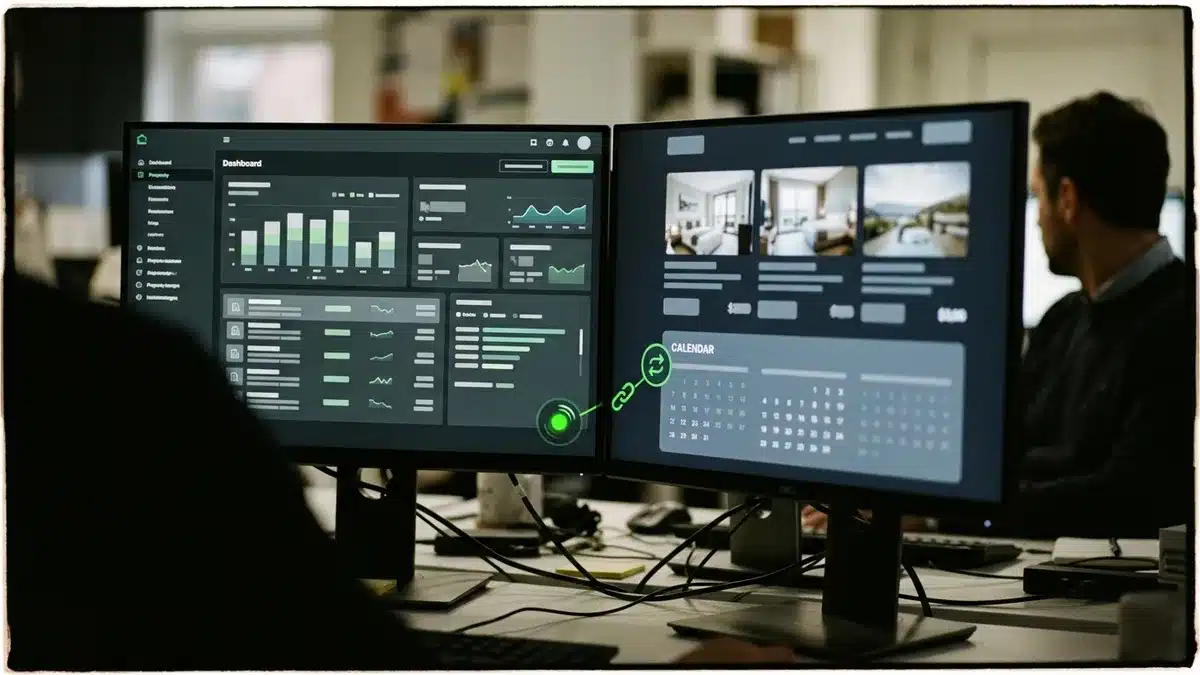
At Boostly Connect, we built our PMS-to-website sync specifically because we watched hosts build beautiful websites that showed static availability and lost every guest who tried to check dates. The sync pulls live data from your property management system so the calendar is always accurate, with no manual updates required.
What Is the Real Annual Cost of OTA Commissions for Vacation Rental Hosts?
OTA commission cost refers to the percentage of each reservation that Airbnb, Vrbo, or Booking.com retains as a platform fee, typically 15 to 20 percent of the total booking value. For most independent vacation rental hosts, this is the single largest controllable expense in their business, and most hosts have never calculated what it costs them annually.
Run the math on a single property. A vacation rental generating $80,000 in annual gross revenue pays between $12,000 and $16,000 in OTA commissions at standard rates. That is not a one-time setup cost. It recurs every year, on every booking, for as long as you rely on the platform. Over five years, a single mid-performing property can surrender $60,000 to $80,000 in commissions it never sees again.
The compounding effect is worse when you factor in repeat guests. A guest who stayed at your property and paid $1,800 for the week is exactly the person most likely to return. When they do, they go back to Airbnb because that is how they originally found you. You pay commission again on a guest you already earned. In our experience working with operators across 25 countries, this repeat-guest OTA drain is the most underestimated cost in short-term rental management.
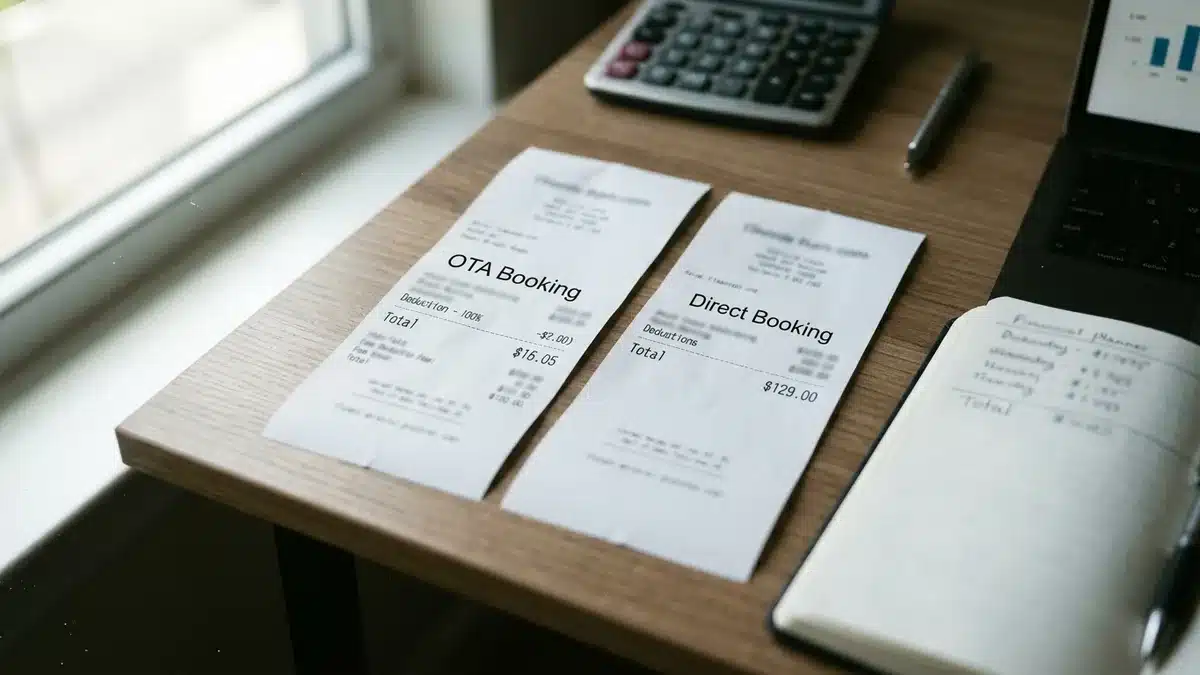
One host in our community, Liam, started with zero direct bookings across a handful of rental properties. After applying direct booking strategies consistently, he reached 55 percent direct bookings across a portfolio of 30-plus properties. The commission savings he redirected into his own business, combined with his growing reputation in his local landlord network, generated an additional £10,000 per year from a single additional property handed to him through referrals. That is the compounding upside of owning your booking channel.
For a more granular breakdown of exactly what Airbnb takes per booking and how that accumulates across a full year, our article on how much Airbnb commission costs you per year runs the full calculation for properties at different revenue levels.
How Do You Build a Direct Booking Website That Actually Converts?
A direct booking website converts guests when it delivers three things simultaneously: live availability that matches your actual calendar, a booking flow that feels as secure and simple as any OTA, and enough trust signals (verified reviews, professional photography, clear contact information) that a guest feels confident paying outside a familiar platform. Miss any one of those three and conversion rates drop sharply.
Most host-built direct booking sites fail at the first requirement. They display a calendar that is either static, manually updated, or syncing on a delay. A guest who sees dates that might be inaccurate will not book. They will go back to Airbnb, where the calendar updates in real time and the checkout is guaranteed. This is not a minor friction point. It is a trust-breaker that kills the entire booking attempt.
What Does a High-Converting Vacation Rental Website Need?
The minimum viable direct booking website includes five elements: live availability synced from your PMS, real-time pricing that reflects your current rates, a secure payment processor (Stripe is the industry standard for independent hosts), clear cancellation and house rule policies, and verifiable guest reviews either embedded or linked from a trusted platform.
Photography matters more than most hosts expect. Guests booking directly do not have the social proof of thousands of Airbnb reviews to fall back on. Your photos have to do that work instead. Professional images shot in good light, showing every key space, are the single highest-ROI investment a host can make before launching a direct booking site.
Beyond the basics, the detail that separates high-converting direct sites from low-converting ones is the booking flow itself. Guests should be able to check availability, see the total price with all fees included, and complete checkout in three steps or fewer. Every additional click or form field you add costs you a percentage of potential bookings. Keep it simple.
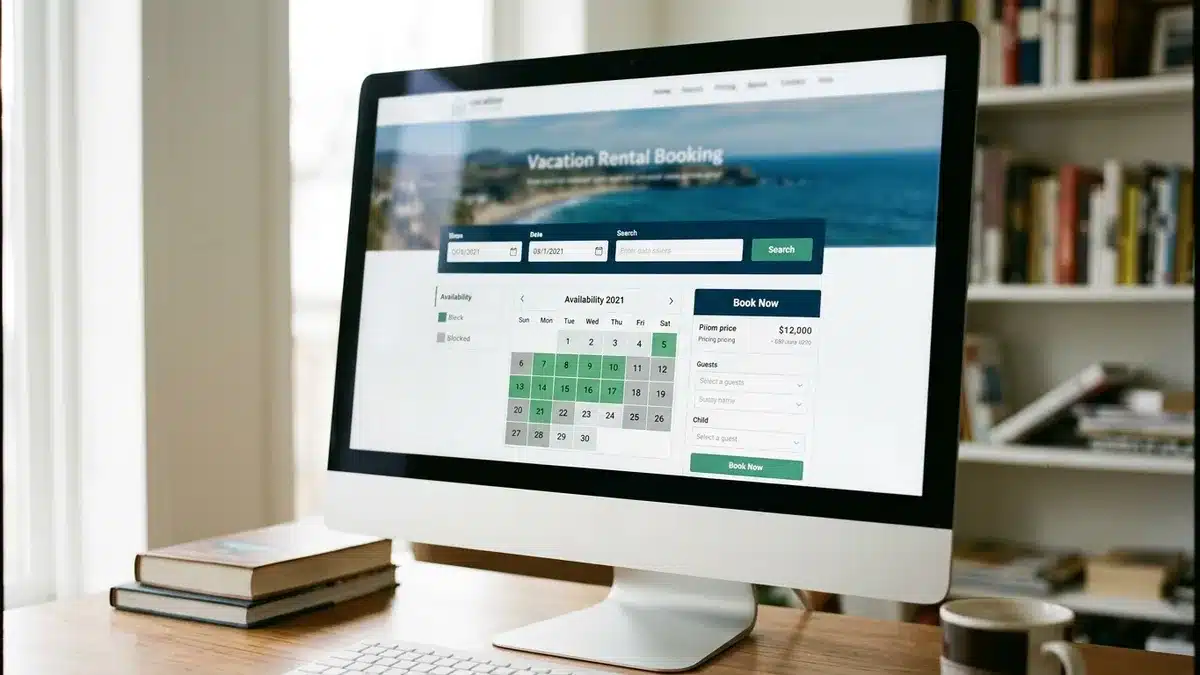
Our guide to what makes a direct booking website work for short-term rentals covers the specific design and technical elements that separate converting sites from ones that just look good.
How Do You Use OTAs as a Marketing Channel Instead of a Booking Trap?
Using OTAs as a marketing channel means treating Airbnb, Vrbo, and Booking.com as your discovery layer rather than your revenue infrastructure. Guests find you through the OTA. The moment they are interested, your job is to give them a reason and a path to complete the actual booking directly with you, now or on their next visit.
OTAs are not the enemy. They are extraordinary discovery engines with massive organic search reach and an established guest trust system that took billions of dollars to build. Abandoning them entirely, especially in your first year of direct booking growth, is a mistake. The hosts who win are not the ones who leave Airbnb. They are the ones who use Airbnb for new guest acquisition while converting those guests into permanent direct bookers.
What Incentives Actually Motivate Guests to Book Direct?
Incentive structure matters more than most hosts realize, and the tier you choose should reflect your margin, not just your desire to shift bookings. A 5 percent direct booking discount is almost invisible to most guests. It does not overcome the inertia of an established platform. A 10 to 15 percent direct discount, combined with a tangible perk like early check-in, a welcome gift, or a flexible cancellation policy, changes the calculation meaningfully.
The most effective incentives we see work in two tiers. First, a direct-only pricing advantage that is visible and clearly communicated on your website, so guests who land there know immediately they are getting a better deal than the OTA price. Second, a loyalty-style return incentive sent via email after checkout, giving past guests a specific offer to book their next stay direct. That second tier is where the real commission recovery happens, because it converts guests you already paid to acquire.
One important note on pricing: keep your OTA rates slightly above your direct rate so that guests who compare directly can see the difference. Some hosts achieve this by adjusting their OTA prices upward by the commission percentage, effectively making the direct booking the same net revenue for them while offering the guest a visible saving. This approach requires careful rate management but is entirely legitimate on most platforms.
Why Do Repeat Guests Keep Going Back to Airbnb Instead of Booking Direct?
Repeat guests return to Airbnb instead of booking directly because the host never gave them an alternative. No direct booking website link in the property, no follow-up email after checkout, no reason to remember that a direct option exists. Airbnb, by contrast, sends a re-engagement email sequence to every guest after their stay, promoting the platform and making it the easiest path back. Hosts who do nothing lose repeat guests by default.
This is the repeat booking trap, and it is the problem Boostly Connect was specifically designed to solve. Every guest who books through your direct website is automatically captured into a CRM you own. Their email address, booking history, and stay preferences stay in your database, not Airbnb’s. That data is the foundation of every repeat-stay campaign you will ever run.
How Should You Set Up a Post-Stay Email Sequence for Direct Bookings?
A post-stay email sequence for vacation rental hosts follows a simple three-message structure. The first email goes out within 24 hours of checkout, thanking the guest and requesting a review on your preferred platform. The second email goes out 30 to 45 days later, referencing their recent stay and offering a direct booking discount for their next visit. The third email is a seasonal campaign, sent 60 to 90 days before a peak season the guest enjoyed last time, with a direct booking link and availability.
That sequence does not require a copywriter or a marketing team. It requires a CRM that captures guest data automatically and an email tool that can schedule sequences based on checkout dates. Nikki, a host in our community who switched from property flipping to serviced accommodation, reached 40 percent direct bookings after launching her Boostly website and running exactly this kind of follow-up sequence, including one booking worth £6,000 that came directly through her own site.
For a deeper look at how the guest CRM layer works and why owning your contact list is the foundation of long-term direct booking growth, see our breakdown of the best CRM approach for short-term rental hosts who want to own their guest list.
How Do You Drive Traffic to a Vacation Rental Website Without Paid Ads?
Driving organic traffic to a vacation rental direct booking website relies on three non-paid channels: Google Vacation Rentals integration, local SEO content that targets destination-level search queries, and social proof distribution through review platforms and social media. Each channel builds compounding visibility over time. None requires an advertising budget.
Google Vacation Rentals is the highest-priority channel for most independent hosts in 2026. It places your property directly in Google search results alongside Airbnb and Vrbo listings, giving travelers a path to your booking page from the search results page itself. Hosts listed on Google Vacation Rentals compete for clicks with OTAs on a level that organic SEO alone cannot achieve. Getting your property listed there should be a first-week priority, not an afterthought.
Does Local SEO Actually Work for Vacation Rental Websites?
Local SEO works for vacation rental websites when the content targets the specific questions travelers ask before booking a destination, not just the property itself. Travelers searching “pet-friendly cabin near Asheville” or “lakefront rental with hot tub in the Smoky Mountains” are expressing specific intent. A property website with content that answers those queries will surface in results that an OTA listing page almost never ranks for, because OTA pages optimize for platform-level searches, not destination-level ones.
A blog section on your booking website, publishing destination guides, local event calendars, and seasonal travel tips, builds exactly this kind of organic visibility over time. It is a slow channel in the first 90 days, but it is the most durable traffic source you can build. Guests who find you through a destination search query rather than an OTA already have a warmer relationship with your property before they even look at the listing.
One practical starting point: use your Google Business Profile to establish your property’s local presence in search results. A fully completed profile with photos, a booking link, and review responses signals to Google that you are a legitimate, active business, not just a listing. Many hosts skip this step entirely, which is a missed visibility opportunity that costs nothing to fix.
What Does the Data Say About Direct Booking Performance Across the Industry?
Direct booking performance benchmarks for vacation rental hosts vary significantly by market, property type, and the maturity of the host’s marketing infrastructure. Rather than citing a single industry average, the more useful frame is understanding what is achievable for hosts who build the full system versus those who rely on a website alone.
| Booking Channel Strategy | Typical Direct Booking Share | Guest Data Ownership | Commission Exposure |
|---|---|---|---|
| OTA-only (no direct site) | 0% | None | 15-20% on all revenue |
| Direct site, no CRM or email | 5-15% | Partial (only direct bookers) | 15-20% on OTA portion |
| Direct site, CRM, email sequences | 30-55% | Full (all direct bookers) | 15-20% on OTA portion only |
| Full system (site, CRM, email, Google Vacation Rentals, social) | 55-90% | Full, compounding over time | Minimal, declining year over year |
The hosts in the Boostly Connect community illustrate this progression directly. Liam moved from 0 percent to 55 percent direct bookings across 30-plus properties by applying strategies consistently over time. Harro and his wife Lucy pushed their bed and breakfast to 90 percent direct bookings and 60 percent repeat guests through the same approach, specifically building their direct site, capturing guest data, and optimizing for return visits rather than relying on new OTA traffic to fill every gap.
These are not outlier results. They represent what the full system produces when a host commits to the infrastructure. The hosts who stay at 5 to 10 percent direct bookings are typically those who built a website but skipped the CRM and the email layer, which means they have no mechanism to convert past guests away from Airbnb.
How Do You Diagnose Why Your Direct Booking Website Is Not Converting?
Diagnosing a low-converting vacation rental website means systematically checking whether the problem is traffic, trust, or friction. Most hosts assume the problem is traffic because low bookings feel like an invisibility problem. But in many cases, guests are arriving at the site and leaving because of a specific conversion failure, not because the site lacks visitors.
Run through this checklist before investing in more traffic:
- Live availability: Is your calendar syncing in real time from your PMS, or is it manually updated? A guest who queries dates and sees incorrect availability will not book.
- Real-time pricing: Does the rate shown on your website match what you actually charge, including cleaning fees and taxes? Hidden fee surprises at checkout are the single most common direct booking abandonment trigger. Our article on real-time pricing for vacation rental websites covers how to get this right.
- Mobile experience: Most guests browse on a phone. If your checkout flow requires pinching, zooming, or filling out a desktop-optimized form on a small screen, you are losing bookings on mobile.
- Trust signals visible above the fold: Can a guest see at least one verifiable review, a professional photo, and a clear cancellation policy without scrolling? If not, the initial impression is not building enough confidence.
- Payment options: Is the payment method familiar and secure? Stripe-powered checkouts are recognized by most guests. An unfamiliar or manual payment process creates hesitation.
- Speed: Does the page load within three seconds on a mobile connection? Slow pages lose guests before they even see the booking calendar.
If your site passes all six checks and bookings are still low, the problem is traffic. That points back to Google Vacation Rentals, local SEO, and your social media presence as the channels to build. But fix conversion first. Traffic to a broken checkout is wasted.
How Do Guests Actually Search for Vacation Rentals Outside of Airbnb?
Guests search for vacation rentals outside Airbnb in three specific patterns, and understanding those patterns determines where your direct booking traffic will actually come from. First, they search by destination and property type: “3-bedroom cabin Lake Tahoe,” “beachfront cottage Outer Banks.” Second, they search by experience: “vacation rental with hot tub for families,” “dog-friendly mountain rental Colorado.” Third, and most relevant for repeat guests, they search by your property name directly once they remember it.
That third pattern is more common than most hosts assume. A guest who had a great stay and wants to rebook will often search “[Property Name] + booking” or “[Property Name] + [location]” to find a direct contact. If your property has no direct web presence under its own name, that search lands them back on Airbnb. If you have a website that ranks for your property name, they find you directly.
This is why naming your property deliberately and consistently across all channels matters. The same name on your website, your Google Business Profile, your social accounts, and any directory listings creates a findable brand. A generic “unit 4B” or “The Smith Rental” with no consistent branding is nearly impossible to find outside an OTA, even for guests actively trying to reach you.
Social media plays a role here that most hosts underestimate. A property Instagram account with consistent branding, real guest photos, and local destination content creates a second search surface for guests who want to reconnect with a property they loved. It also builds the kind of visual social proof that photographs well and reinforces direct booking confidence before a guest even arrives at your website.
Frequently Asked Questions About Getting More Direct Bookings
How long does it take to get meaningful direct booking traffic to a new website?
Most hosts see their first direct bookings within 30 to 60 days of launching a properly configured website with live availability, assuming they actively promote the site to past guests via email and update their OTA profiles with a mention of their direct booking option. Organic search traffic builds over 3 to 6 months as Google indexes property pages and destination content. Google Vacation Rentals integration, where available, can accelerate this timeline by placing the property in search results from day one.
Will building a direct booking website hurt my Airbnb ranking?
No. Running a direct booking website does not affect your Airbnb listing’s visibility or search ranking. Airbnb ranks listings based on factors within its own platform, including review score, response rate, acceptance rate, and pricing competitiveness. Your direct booking website operates as a completely separate channel. Many hosts maintain their full Airbnb performance while growing their direct channel simultaneously, which is the recommended approach during the transition period.
What is the best way to incentivize guests to book direct instead of through Airbnb?
The most effective incentives combine a price advantage with a tangible perk. A direct booking discount of 10 to 15 percent is large enough to be noticeable, combined with a benefit like flexible check-in or check-out, a welcome basket, or a more generous cancellation policy. A 5 percent discount alone rarely overcomes the trust inertia of a familiar OTA. The key is making the advantage visible before the guest commits to Airbnb, either through a clear message on your property website or a post-stay email sent within 24 hours of checkout.
How does a CRM help vacation rental hosts get more direct bookings?
A CRM helps vacation rental hosts get more direct bookings by storing every past guest’s contact information and booking history in a database the host owns permanently. With that data, hosts can send post-stay emails, seasonal offers, and return-visit incentives directly to people who already know and trust the property, without paying another commission to acquire them again through an OTA. Without a CRM, those contacts stay in Airbnb’s system, and the platform uses them to remarket your past guests to competing listings.
How many PMS integrations does Boostly Connect support?
Boostly Connect supports 8 PMS integrations, including Hospitable, Guesty, Hostfully, Lodgify, and OwnerRez. Hosts connect their existing property management system in under five minutes and immediately gain live availability and real-time pricing on their direct booking website, with no manual calendar management required. The setup requires no developer and no coding knowledge.
Is it worth investing in direct bookings if I only manage one or two properties?
Yes, and the math is particularly compelling for smaller portfolios because every commission dollar saved is proportionally more significant when margins are thin. A single property generating $60,000 per year pays $9,000 to $12,000 annually in OTA commissions. Redirecting even 40 percent of that to a direct channel represents $3,600 to $4,800 in recovered revenue per year. The platform cost to build and maintain a direct booking website is typically a fraction of that figure. Boostly Connect’s platform has a free plan for up to 3 listings on the Discover map, which removes the investment barrier for single-property hosts entirely.
What is the Boostly Connect 65 percent direct bookings guarantee?
Boostly Connect guarantees that clients who implement the full system, including the direct booking website, CRM automation, and email marketing sequences, will reach 65 percent direct bookings within 12 months. If that threshold is not met, the Boostly Connect team continues working with the host at no additional cost until it is. The guarantee applies specifically to clients who implement the complete platform, not to hosts using only a partial feature set.
How do you get guests to find your vacation rental website on Google?
Getting a vacation rental website found on Google requires three parallel efforts: listing the property on Google Vacation Rentals so it appears in travel search results alongside OTA listings, building destination-level content (local guides, event pages, area tips) that targets the specific queries travelers use before booking, and maintaining a fully optimized Google Business Profile with current photos, contact details, and a direct booking link. The combination of these three channels creates compounding organic visibility that grows without ongoing ad spend.
What Is the Fastest Path to Your First Direct Booking in 2026?
The fastest path to your first direct booking in 2026 is to connect your existing PMS to a live booking website, email every past guest a direct booking offer within the first week, and list your property on Google Vacation Rentals. That sequence costs less than a typical OTA commission on a single booking and can generate a direct reservation within days for hosts who already have a guest list to reach.
The hosts in our community who move fastest are the ones who stop waiting for a perfect website and start by doing the one thing that generates the most immediate return: contacting past guests directly. You already paid to acquire those guests. Their contact information may be locked in Airbnb’s system for historical bookings, but for any guest who gave you a personal email, you have a warm audience who already trusts you. Start there.
Every percentage point of OTA commission you redirect into your own booking channel compounds across every future booking, every returning guest, and every new property you add. The infrastructure to do this exists today, it sets up in under 20 minutes for most hosts, and it does not require a developer, a marketing agency, or a monthly ad budget to run.
More than 2,000 hosts across 25 countries have built this system through Boostly Connect, collectively generating over one billion dollars in direct bookings. The average client earns around $59,000 per year from their direct channel. If you are ready to stop paying Airbnb for guests you already earned, get started with Boostly Connect and see how the system works for your specific portfolio.
Book a demo at connectyourpms.com to see the live PMS sync in action and get a breakdown of how much commission recovery is realistic for your current revenue level.