

More travelers are skipping Airbnb in 2026 because total trip costs and checkout chore lists have narrowed the value gap between short-term rentals and hotels. For hosts, this means guests are pricing you against hotel amenities and OTA competitors at the same time, and the properties that win are the ones that control their own guest relationship instead of renting it from a platform.
Key Takeaways
- A majority of U.S. leisure travelers now say they prefer hotels over short-term rentals, largely due to cleaning fees and checkout chore requirements.
- A $120-per-night listing can climb to roughly $180 after fees, a gap large enough that guests notice and remember.
- U.S. short-term-rental occupancy is forecast to average 57.4% in 2026, meaning supply growth is outpacing demand growth in some markets.
- Guests still avoid Airbnb specifically over high cleaning costs and complicated checkout requirements.
- Families and monthly guests who need kitchens or laundry remain loyal to short-term rentals, so the shift is more of a segmentation story than a full exodus.
- Boostly Connect gives hosts a direct booking website synced to their existing PMS, so guests who book direct never touch OTA fees or get remarketed to a competitor.
If you manage a short-term rental in 2026, you’ve probably noticed something shifting in guest behavior. Bookings that used to convert instantly now sit longer in the funnel. Guests ask more questions about total cost before committing, and some of them quietly go book a hotel instead.
This isn’t a fringe anecdote. Traveler sentiment is shifting toward dissatisfaction with cleaning fees, checkout chores, and inconsistent listing quality on platforms like Airbnb. At the same time, the vacation-rental category isn’t shrinking overall: what’s shrinking is guest tolerance for the specific friction points that OTAs have let accumulate for years.
At Boostly Connect, we work with hosts navigating exactly this shift every day. This article breaks down why travelers are pulling back from Airbnb specifically, what it means for your revenue and guest strategy, and what you can control regardless of what the platform does next.
Why Is Airbnb Losing Popularity With Some Travelers?
Airbnb is losing favor with a portion of travelers because total trip costs have risen faster than perceived value, and checkout requirements now feel disproportionate to the fees guests already pay. A significant share of surveyed travelers say they’ve avoided booking Airbnb specifically because of high cleaning costs or complicated checkout requirements.
The math is simple, and travelers do it themselves now. A listing advertised at $120 a night can climb to roughly $180 once cleaning fees, service fees, and taxes stack on top. That’s a difference guests notice before they even check in, and it colors the entire stay.
Checkout instructions compound the frustration. Guests report being asked to strip beds, wash dishes, and run a full cleaning pass, despite paying a cleaning fee specifically to avoid that labor. For a guest comparing that experience to a hotel checkout that requires nothing more than dropping a key, the short-term rental starts to look like the harder option, not the more convenient one.
Fee transparency and guest communication matter on your own channel. When you own the booking relationship through a direct site, you set the cleaning policy, the price display, and the checkout expectations yourself instead of inheriting a platform-wide reputation problem you didn’t create.

Are Airbnbs Still Profitable in 2026?
Airbnb listings remain profitable for most well-run properties in 2026, but margins are tightening as occupancy growth slows and OTA commissions continue eating 15 to 20 percent off every booking. U.S. short-term-rental occupancy is forecast to average 57.4% in 2026, with RevPAR expected to rise only 2.9% for the year.
That’s a modest gain, and it comes as U.S. short-term-rental listings are projected to reach 1.77 million in 2026, up from 1.69 million. More supply is chasing demand that’s growing at only 4.1% year over year, down from 4.7%, which means individual listings are working harder to capture the same booking volume they had before.
Profitability in this environment depends less on whether you list on Airbnb and more on how much of your revenue you’re handing away in commission before it ever hits your account. A property earning strong occupancy but losing 18% of every booking to platform fees is quietly funding Airbnb’s growth instead of its own.
This is the exact problem Mark Simpson built Boostly Connect to solve after recovering over $30,000 a year in platform fees himself. Every dollar you redirect to a direct channel stays in your business rather than becoming someone else’s revenue line, and Boostly Connect’s PMS-synced website is built to capture that redirected demand without you managing a second reservation system by hand.
What Is the 80/20 Rule in Vacation Rental Bookings?
The 80/20 pattern that experienced operators reference informally describes how a small share of listings or guests tends to generate a disproportionate share of bookings and repeat revenue, a pattern common across many consumer marketplaces rather than a formal Airbnb policy. In short-term rentals, it typically shows up as a handful of top-performing properties or repeat guests driving the bulk of predictable income, while the long tail of one-time bookings contributes far less certainty.
Applied practically, this means the guests who already stayed with you and loved it are worth more attention than the next unknown lead. Our own case data backs this up directly: one B&B using Boostly’s direct booking strategy reached 60% repeat guests after shifting focus toward retention rather than constantly chasing new OTA traffic.
The mistake most hosts make is treating every guest interaction as a one-time transaction inside Airbnb’s messaging system, where the platform owns the follow-up relationship, not the host. Once a guest checks out, if you never captured their contact details independently, you have no way to invite them back without paying Airbnb another commission on the rebooking.
Guest data ownership matters more in 2026 than it did five years ago. Every guest who books through a Boostly Connect direct site is automatically captured into the host’s own CRM, so repeat-stay outreach becomes a system you run, not a favor the platform grants you. If you want a deeper look at retention tactics, our guide on how to re-engage past vacation rental guests in 2026 walks through the specific sequencing that works.
What Is Replacing Airbnb for Some Travelers?
No single platform is replacing Airbnb wholesale in 2026; instead, travelers are splitting their bookings across hotels and boutique operators’ own direct websites, depending on trip type. Hotels are winning back travelers who want predictable pricing and zero cleaning obligations, particularly for shorter, single-traveler, or business-adjacent stays.
Surveyed travelers cite amenities as the leading factor drawing them to hotels , 73% named it , while 52% cited easy booking and cancellation policies as a reason to prefer hotels over short-term rentals. Hotels don’t impose cleaning rules or cleaning fees, a factor cited by 62% of the same respondent group as a reason for their preference.
But short-term rentals haven’t lost their core audience. Families, larger groups, and remote workers booking monthly stays still need kitchens, laundry, and multiple bedrooms that hotels structurally can’t match at comparable prices. The travelers leaving aren’t abandoning the category; they’re often reallocating short solo trips to hotels while keeping group and extended-stay trips in vacation rentals.
For hosts, the practical response isn’t panic, it’s positioning. A property that leans into what hotels can’t replicate , full kitchens, multiple bedrooms, workspace for remote stays , and markets that directly to the right guest segment through its own channel captures demand that hotels simply can’t serve. Boostly Connect’s website templates are built to highlight exactly those differentiators on a page you control, rather than competing on Airbnb’s generic search grid where every listing looks the same.

What Does This Shift Actually Mean for Your Business?
This shift means hosts who rely entirely on Airbnb’s search algorithm for bookings are now competing against hotels for the same shrinking pool of price-sensitive travelers, while also absorbing 15 to 20 percent commission on every booking they do win. The businesses feeling the least pain are the ones who’ve already built a direct channel that doesn’t depend on any single platform’s guest sentiment.
Three business risks compound when 100% of your bookings run through one OTA. You have zero pricing control if the platform changes its fee structure or search ranking algorithm. You have no owned guest data, meaning every returning guest re-enters the funnel as a stranger and gets remarketed by Airbnb to your competitors. Your entire reputation rides on aggregate platform sentiment, so when travelers sour on “Airbnb” broadly, your individually well-run property gets lumped in anyway.
The operators we see thriving in 2026 run a dual-channel model: they keep their Airbnb listing active for discovery, but push repeat guests, referrals, and word-of-mouth traffic to their own site. This isn’t an all-or-nothing decision. Most hosts using Boostly Connect keep their OTA listings live while building direct bookings in parallel, exactly the approach detailed in our piece on how to balance OTA and direct bookings in 2026.
Multi-property operators feel this pressure most acutely because commission losses scale with portfolio size. If you’re managing a portfolio spread across markets, our guide on how to manage multiple vacation rentals without chaos covers the operational side of this transition in more depth.
How Much of the Cost Problem Is Actually Fixable by Hosts?
A meaningful share of the cost friction driving travelers toward hotels is directly controllable by individual hosts, since cleaning fee structure, checkout policy, and pricing transparency are host-level decisions, not platform-mandated requirements. Airbnb sets the marketplace rules, but you set your own fee schedule inside them.
Hosts who bundle cleaning costs into a transparent nightly rate rather than surfacing them as a large separate line item at checkout report less guest pushback, since the total cost feels less like a surprise. Dropping excessive checkout chore requirements, or clearly stating that the cleaning fee covers what it claims to cover, addresses the exact complaint driving guests toward hotels in the first place.
None of this requires leaving Airbnb. It requires auditing your own listing against the specific complaints travelers are voicing in 2026: fee transparency and checkout burden, and whether what’s advertised matches what’s delivered. Guests who feel a listing’s pricing is straightforward are far less likely to comparison-shop against a hotel mid-decision.
A direct booking site adds real leverage over the checkout experience itself. On a Boostly Connect site, you decide what pricing appears, in what order, and with what explanation, rather than being locked into Airbnb’s fee-disclosure format. That’s a small thing that compounds into meaningfully better guest sentiment over a full season.
Data Snapshot: Hotel vs Short-Term Rental Preference Drivers
The table below summarizes traveler preference data, showing why some guests are shifting toward hotels and where short-term rentals still hold structural advantages.
| Factor | Reported Traveler Sentiment | What It Means for Hosts |
|---|---|---|
| Hotel amenities | Cited by 73% as top hotel preference driver | Highlight kitchen, workspace, and multi-room advantages hotels can’t match |
| No cleaning fees/rules | Cited by 62% as a reason to prefer hotels | Audit your fee transparency and checkout chore list |
| Easy booking/cancellation | Cited by 52% of respondents | Match cancellation flexibility where feasible on your direct site |
| Avoided Airbnb over cleaning costs/checkout complexity | Cited by roughly 63% of respondents | Simplify checkout instructions and bundle fees clearly |
| Example fee inflation | $120/night listing rising to roughly $180 after fees | Show all-in pricing early to reduce comparison shopping |
| 2026 U.S. STR occupancy forecast | 57.4% average | Supply growth means differentiation matters more than ever |
What Are the Housing Supply Concerns Tied to Short-Term Rentals?
Short-term rentals face ongoing scrutiny in some markets over their effect on local housing supply, with critics pointing to reduced long-term rental inventory and higher rents in cities where short-term rental conversions are concentrated. Lisbon and Los Angeles are both cited as examples where converting residential units into tourist accommodation is linked to tighter housing markets.
This isn’t a universal pattern across every market, and it varies by local regulation and housing supply elasticity. But it shapes public sentiment toward short-term rentals broadly, and it occasionally spills into how travelers perceive the category, even when it has nothing to do with an individual host’s specific property.
For operators, the practical takeaway is regulatory awareness. Local permit requirements, occupancy limits, and zoning rules continue to evolve, and staying current with your specific municipality’s requirements protects your listing from disruption regardless of platform sentiment. Check current requirements with your local planning or licensing office rather than relying on generalized national guidance, since rules vary widely by city and county.
Hosts who diversify away from pure OTA dependency also insulate themselves somewhat from platform-level regulatory pressure. If a city tightens rules specifically targeting OTA-listed short-term rentals, you have more flexibility to adapt with an established direct booking channel and repeat guest base than if you depend entirely on Airbnb’s search visibility.
Which Guest Segments Still Prefer Short-Term Rentals Over Hotels?
Families, larger travel groups, extended-stay guests, and remote workers remain the strongest loyal segments for short-term rentals in 2026, since these travelers need functional kitchens, laundry access, and multiple bedrooms that hotels typically cannot provide at a comparable price point. This is the segment gap that most “Airbnb decline” narratives consistently underweight.
A family of five traveling for a week needs more than a single hotel room can offer, and stitching together multiple hotel rooms often costs more than a single rental home. A remote worker booking a month-long stay values a dedicated workspace and full kitchen far more than daily housekeeping, making short-term rentals the structurally better fit regardless of broader hotel-preference trends.
Recognizing which guest you’re actually serving changes your marketing entirely. If your property has three bedrooms and a full kitchen, you’re competing with the inconvenience of booking multiple hotel rooms and eating out for every meal, not with a boutique hotel room. That’s a different value proposition, and it deserves different messaging than a generic Airbnb listing description allows.
This is where a dedicated direct booking website earns its keep. Boostly Connect’s site templates let you build segment-specific landing pages , one for families, one for remote-work extended stays , each speaking directly to that guest’s actual decision criteria instead of the one-size-fits-all format Airbnb’s listing page forces on every host. If you’re building this out for the first time, our direct booking website guide for short-term rentals covers what to prioritize.

How Should You Respond If OTA Bookings Are Slowing Down?
If your OTA bookings are slowing, audit your own fee transparency and checkout requirements first, before assuming the platform itself is the problem, since guest complaints about cleaning fees and chore lists are largely host-controllable. Then build a parallel direct booking channel so you’re not solely dependent on one algorithm’s mood.
Practical steps worth prioritizing, in order:
- Audit your current cleaning fee and checkout instructions against what guests are actually complaining about in 2026, and simplify wherever the fee doesn’t match the labor asked of guests.
- Connect your existing PMS (Hospitable, Guesty, Lodgify, Hostfully, or others) to a direct booking website so returning guests have somewhere to book you outside of Airbnb.
- Capture every direct guest’s contact details into your own CRM immediately at booking, not after checkout, so you can run repeat-stay campaigns without paying commission on the rebooking.
- Segment your marketing by guest type rather than treating every lead the same way.
- Keep your OTA listings live for discovery while redirecting loyalty and referral traffic to your own channel.
Most self-managing hosts stall at step two because stitching together a website builder, a separate booking calendar, and an email tool becomes its own part-time job. That’s the fragmentation Boostly Connect was built to eliminate: connecting your PMS, your website, and your CRM into one system that syncs live availability and pricing automatically, with no developer and no ongoing manual syncing required. Setup typically takes under 20 minutes, and there’s no upfront cost for your first 10 listings.
For a deeper look at what a well-built site should include before you commit to one, our resource on how to get more direct bookings for your vacation rental is a useful next step, alongside our overview of how to grow your vacation rental business without more OTA listings.
Frequently Asked Questions
What percentage does Airbnb take from hosts?
Airbnb typically charges hosts a service fee that, combined with guest-side fees, commonly lands in the range of 15 to 20 percent of the total booking value depending on the host’s fee structure and cancellation policy. This is one of the largest recurring costs in a short-term rental business, and it applies to every booking indefinitely, including repeat guests who would otherwise book you directly for free.
Why is Airbnb losing popularity with some travelers in 2026?
Airbnb is losing favor with some travelers due to rising total trip costs from cleaning and service fees, combined with checkout chore requirements that feel disproportionate given the fees already charged. A majority of surveyed travelers now say they prefer hotels, citing amenities, fee transparency, and easier cancellation policies as the deciding factors.
Are Airbnbs still profitable in 2026?
Yes, Airbnb listings remain profitable for most well-managed properties in 2026, though margins are tighter as occupancy growth slows to an average of 57.4% nationally and listing supply continues to grow. Profitability increasingly depends on how much revenue you retain after commission rather than gross booking volume alone.
What is the 80/20 pattern hosts reference in vacation rental bookings?
It’s an informal way operators describe how a small share of properties or repeat guests tends to drive a disproportionate share of predictable revenue, rather than a formal Airbnb rule or policy. In practice, prioritizing repeat guest retention and guest data ownership typically pays off more than chasing a constant stream of brand-new one-time bookings.
What is replacing Airbnb for travelers who are switching?
No single platform is replacing Airbnb outright; travelers are splitting bookings between hotels for short or solo trips and boutique operators’ own direct websites for group and extended stays. Families, remote workers, and larger groups largely remain loyal to short-term rentals because hotels can’t match kitchen and multi-bedroom needs at a comparable price.
What CRM does Airbnb use, and can hosts access guest data through it?
Airbnb doesn’t give hosts access to a shareable CRM system; guest contact information stays inside Airbnb’s own messaging and remarketing infrastructure, meaning you can’t independently email or retarget past guests once a booking cycle ends. This is a core reason hosts increasingly adopt their own CRM, such as the one built into Boostly Connect, which automatically captures every direct booking guest’s details for the host’s own use.
Should I stop listing on Airbnb entirely because of these trends?
No, most operators benefit from keeping their Airbnb listing active for discovery while building a parallel direct booking channel rather than dropping the platform outright. The goal is reducing dependency so a single platform’s fee changes or algorithm shifts don’t control your entire revenue stream.
Conclusion
Travelers aren’t abandoning short-term rentals wholesale in 2026: they’re getting more selective about fee transparency and total trip cost, and hotels are winning the trips where those complaints matter most. For hosts, the fix isn’t leaving Airbnb, it’s controlling more of your own guest relationship so platform sentiment and commission structures affect less of your bottom line.
The hosts weathering this shift best audited their own fee transparency, kept their OTA presence for discovery, and built a direct channel to capture repeat guests without paying commission twice on the same relationship. That’s a solvable problem with the right infrastructure, not a reason to panic about Airbnb’s trajectory.
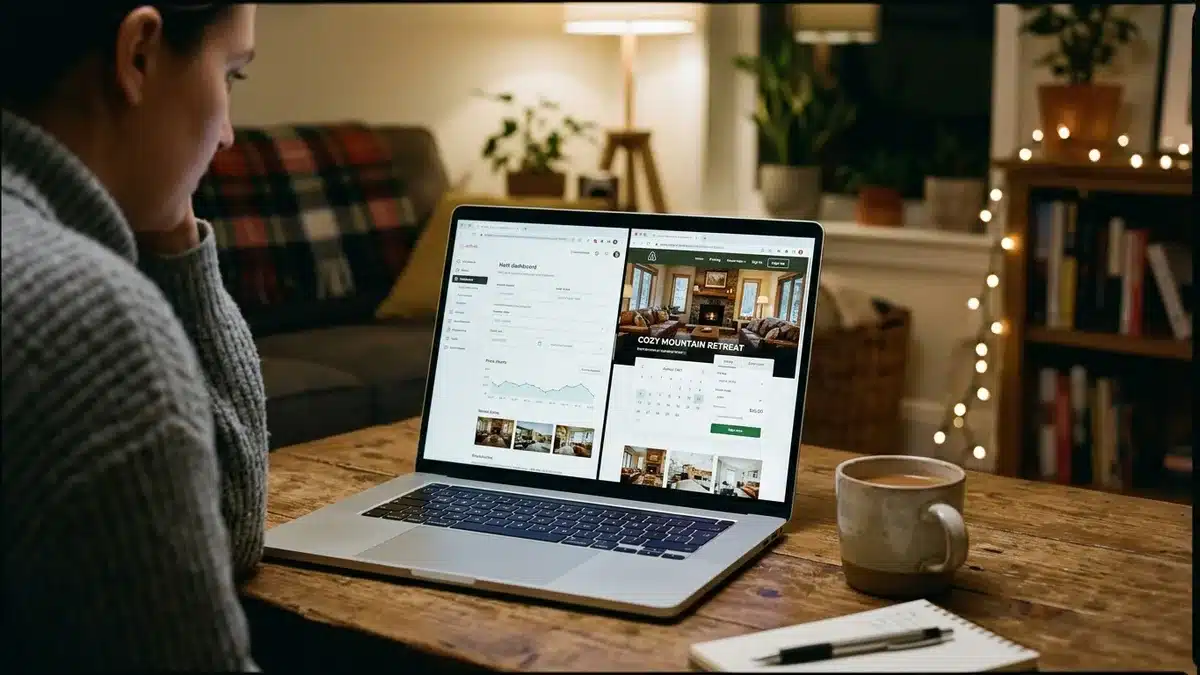
If you’re ready to see what a direct booking website connected to your own PMS actually looks like, with live availability, real-time pricing, and a CRM that captures every guest automatically, book a demo with Boostly Connect and see your own listings synced in under 20 minutes.