

A holiday let website builder is software that lets a short-term rental owner create their own booking website, complete with a live availability calendar, pricing display, and payment processing, without hiring a developer. The right one connects directly to your existing property management system (PMS) so guests can book you instead of Airbnb or Booking.com.
Key Takeaways
- A holiday let website builder gives you a booking-ready site synced to your PMS, cutting reliance on OTA commissions of roughly 15 to 20 percent per reservation.
- The global vacation-rental website market was estimated at $2.3 billion in 2026 and is projected to reach $7.3 billion by 2035, a 12.1% CAGR, according to Future Market Insights.
- Mobile devices generated 68.9% of organic clicks from just 48.3% of impressions across 223 vacation-rental websites studied in 2026, per BuildUp Bookings’ Search Console Study, so mobile speed matters more than desktop design.
- Websites ranking in positions 1 to 3 on Google saw a 7.90% click-through rate versus 1.57% for positions 4 to 10 in the same 2026 study.
- Basic builders like Wix or Squarespace work fine for a single property with no dynamic pricing needs, but multi-listing operators need native PMS integration and channel sync to avoid double bookings.
- Boostly Connect builds a done-for-you WordPress site synced to your existing PMS across 8 integrations, live in under 20 minutes with no developer required.
If you manage a holiday let and you’re still sending every booking through Airbnb or Vrbo, you’re paying a recurring tax on your own business. That commission, typically 15 to 20 percent per reservation, doesn’t disappear once you build loyalty with a guest. It resets every single time they rebook, because the platform, not you, owns that relationship.
In 2026, the case for a dedicated holiday let website builder is stronger than it’s ever been. The vacation-rental website market alone is growing faster than the broader travel industry, projected at a 12.1% CAGR through 2035 according to Future Market Insights, while overall vacation rental demand growth is moderating to around 4.1% year over year per AirDNA’s 2026 Midyear Outlook. Growth is shifting toward owned channels, not away from them.
At Boostly Connect, we’ve watched thousands of hosts make the exact same transition: from fully dependent on OTAs to running a direct booking channel that actually converts. This guide covers what a holiday let website builder actually needs to do, how to evaluate one against your property count and tech comfort, and where most owners waste money chasing features they’ll never use.
What Is a Holiday Let Website Builder?
A holiday let website builder is a software platform that lets property owners create a functioning booking website without writing code, typically combining a design template, an availability calendar, and payment processing into one system. Some builders are generic (built for any small business) while others are purpose-built for short-term rentals with PMS synchronization included.
The distinction matters more than most owners realize when they start shopping. A generic builder like a drag-and-drop small business platform gives you a pretty page but leaves you manually updating a calendar every time a booking comes in elsewhere. A purpose-built holiday let website builder, by contrast, pulls live availability and real-time pricing straight from your PMS, whether that’s Hospitable, Guesty, Lodgify, OwnerRez, or Hostfully.
That difference becomes critical the moment you have more than one property or more than one booking channel. Without automatic sync, you’re one missed calendar update away from a double booking, and double bookings are the fastest way to torch a guest relationship you spent months building. This is exactly why Boostly Connect was built to sync your PMS to your WordPress site in under 20 minutes rather than leaving that connection to manual updates or a plugin that breaks every few months.
What Is the Best Website Builder for Vacation Rentals?
The best website builder for vacation rentals is one that matches your property count, technical comfort, and reliance on repeat guests, not simply the one with the most features on a marketing page. A single-property owner with predictable seasonal pricing has very different needs from a boutique manager running 15 units across three PMS accounts.
For a lone holiday let with no dynamic pricing and low booking volume, a basic no-code builder can genuinely be enough. If you’re updating a calendar by hand once or twice a week anyway, the overhead of a full PMS-synced system may not pay for itself yet. We say this plainly because overselling infrastructure to someone who doesn’t need it yet is bad advice, even if it’s good for a sales pitch.
Once you’re running multiple listings, taking bookings across Airbnb, Vrbo, and Booking.com simultaneously, or trying to build a repeat-guest program, the calculation flips. You need live sync, not manual updates. You need a CRM that captures guest data automatically, not a spreadsheet someone forgets to update in December. This is the exact gap Boostly Connect fills: a WordPress site with native PMS integration across 8 systems, paired with a built-in CRM that captures every direct booking guest automatically, so contact data stays inside your business instead of vanishing back into Airbnb’s remarketing engine.
Notably, industry data shows mobile traffic now dominates vacation rental discovery, with 68.9% of organic clicks coming from mobile devices in a 2026 study of 223 vacation-rental websites by BuildUp Bookings. If the builder you choose renders poorly on a phone, you’re losing the majority of your traffic before they even see your calendar.
How Do You Build a Website for a Vacation Rental?
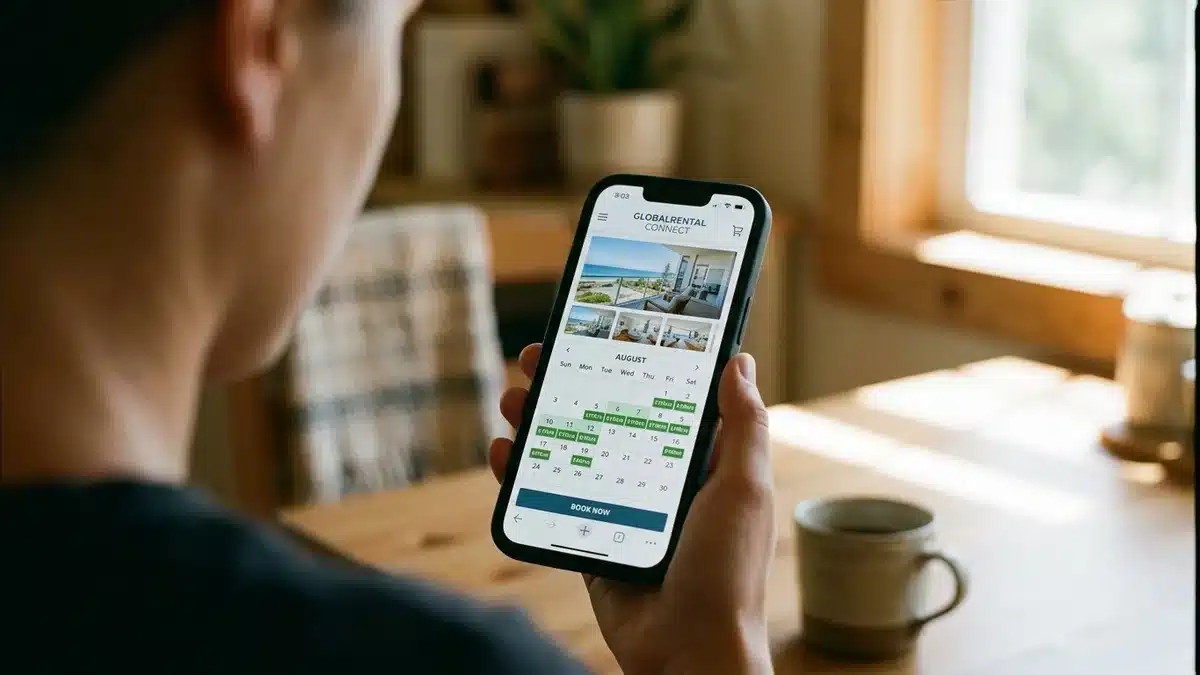
Building a vacation rental website typically follows a sequence: choose a template or platform, connect your PMS for live availability, set up payment processing, connect a custom domain, and then optimize for search before driving traffic. The exact steps vary by builder, but skipping any one of these creates a gap that costs you bookings later.
- Choose your platform. Decide between a generic website builder and a purpose-built holiday let website builder based on your property count and PMS needs.
- Connect your PMS. This is the step most builders get wrong. Native integration should update availability and pricing across every channel within seconds, not rely on a periodic iCal refresh that can lag by hours.
- Set up payment processing. Guests expect a secure, familiar checkout. Whatever platform you choose, confirm it supports the currencies and payment methods your typical guest uses.
- Add your content. House rules, cancellation terms, local-area guides, and accessibility details all belong on the site itself, not buried in a PDF you email after booking.
- Connect a custom domain and check mobile rendering. Given that mobile drives the majority of organic clicks, test every page on a phone before launch.
- Optimize for search and start driving traffic. A site with zero SEO foundation, no meta descriptions, no image alt text, no local content, will sit invisible on page two of Google indefinitely.
Most owners underestimate step two. Connecting a PMS sounds like a technical afterthought, but it’s the piece that determines whether your site is a static brochure or a live booking engine. We built Boostly Connect specifically so this step takes minutes, not weeks: plug in your existing PMS credentials, and live availability and real-time pricing populate the site automatically, no developer required.
If you want a fuller walkthrough of the setup sequence including domain and hosting decisions, our guide on how to build an STR website in 2026 goes step by step through the technical side.
What Is the 80/20 Rule for Airbnb?
The 80/20 principle, as applied informally by short-term rental owners, refers to the idea that a small share of your guests, often repeat bookers or referrals, generate a disproportionate share of your revenue and reviews over time. It’s not an official Airbnb policy or a documented statistic; it’s a rule of thumb operators use to prioritize where marketing effort pays off.
In practice, this shows up as returning guests booking again, or word-of-mouth referrals converting faster and cheaper than cold traffic. The problem is that Airbnb’s platform structure doesn’t let you capture or nurture that small, high-value group directly. Every returning guest still has to search, find your listing again, and book through the same commission structure as a first-time guest.
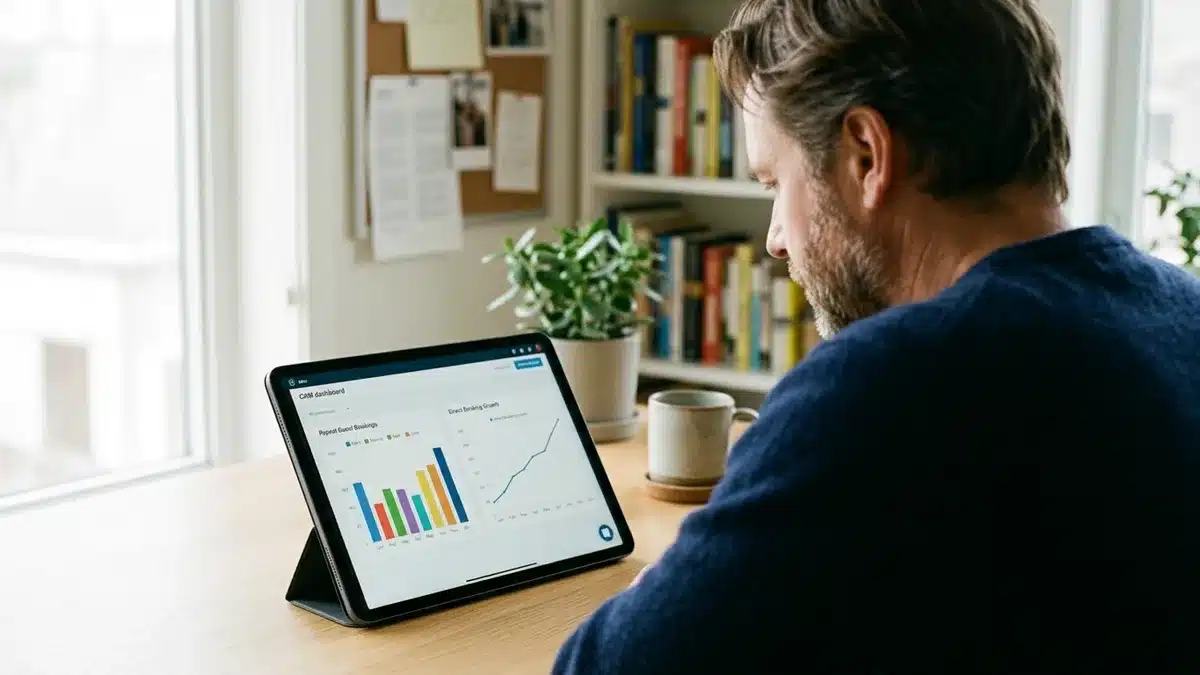
That’s the exact trap Boostly Connect was designed to close. Every guest who books direct through your Boostly Connect site is automatically captured into your own CRM, meaning you can email or message that high-value repeat segment without paying a platform fee every time they rebook. In our case work, a bed and breakfast operator using this approach reached 90% direct bookings and 60% repeat guests, a dramatic shift from relying on inconsistent third-party traffic. If you want to build that repeat-guest engine specifically, our piece on how to re-engage past vacation rental guests in 2026 covers the messaging cadence that works.
What Is the 10 Year Rule for Holiday Lets?
The “10 year rule” is not a standard, universally defined regulation in the short-term rental industry, and terminology around holiday-let planning and tax rules varies significantly by country, state, and local jurisdiction. If you’ve encountered this term in relation to your property, treat it as a signal to check with your local planning authority or tax office rather than a fixed national standard.
Rules governing holiday let usage, from planning permission thresholds to tax classification periods, change periodically and differ across regions, sometimes even between neighboring council areas or states. Rather than relying on a secondhand summary (including this one), confirm the current requirement directly with your local planning department or a qualified tax advisor before making decisions based on it.
What we can say with confidence: regardless of the regulatory environment you operate in, owning your booking channel and guest data gives you more control over your business model when rules shift. Hosts who depend entirely on OTA visibility have less flexibility to adapt if platform policies or local regulations change abruptly. A direct booking website you control isn’t subject to a third party’s terms of service.

What Should a Holiday Let Website Actually Include?
A functioning holiday let website needs more than photos and a contact form. Specifically, it needs a live availability calendar, transparent pricing, secure payment processing, clear cancellation terms, and enough local content to help a guest justify booking direct instead of through a familiar OTA interface.
Owners frequently underweight the trust-building elements. A first-time visitor to your site has no review history to lean on the way they would on Airbnb, so your cancellation policy, house rules, and accessibility information need to be visible and specific, not vague or buried in a footer link. For example, “flexible cancellation up to 48 hours before check-in” builds more confidence than a generic “see our policy” link.
Local-area content also matters more than most builders account for. A page describing nearby attractions, transit options, or dining recommendations gives search engines something to index and gives guests a reason to trust that you know the area, not just that you own a listing in it. This is the kind of content most competitor website builders leave entirely to the owner to write, while a done-for-you build should include the structure for it from day one.
| Website Element | Why It Matters | Common Owner Mistake |
|---|---|---|
| Live availability calendar | Prevents double bookings across channels | Relying on manual updates or delayed iCal sync |
| Transparent pricing display | Reduces guest hesitation before contacting you | Hiding rates behind an inquiry-only form |
| Cancellation terms | Builds trust without review history to lean on | Vague language or terms buried in a PDF |
| Mobile-first design | 68.9% of organic clicks came from mobile in 2026 (BuildUp Bookings) | Desktop-first templates that render poorly on phones |
| Local-area content | Supports SEO and builds guest confidence | Skipped entirely or left as a generic template page |
How Much Does a Holiday Let Website Builder Cost?
Pricing for holiday let website builders varies by feature depth, with basic no-code platforms charging a flat monthly fee and more specialized booking-engine builders sometimes adding a booking fee on top of the subscription. The total cost picture is rarely just the advertised subscription price.
Industry pricing structures published by comparison sites show tiered monthly subscriptions with add-on booking commissions on lower tiers, often dropping to zero percent commission at higher subscription levels. That structure means an owner comparing builders purely on the lowest advertised monthly price can end up paying more overall once booking volume increases, because the commission scales with revenue rather than staying flat.
The honest total-cost comparison needs to include the subscription fee, any booking commission, payment processing fees, domain costs, and the cost of your own time spent on manual PMS updates if the builder doesn’t sync natively. Boostly Connect’s model removes several of these variables by including PMS sync as core infrastructure rather than a paid add-on, with a free plan for up to 3 listings on the Discover map and no developer fees to get live. If you’re evaluating options, our breakdown of setting up a website for a vacation rental walks through what a realistic total cost model looks like across a 12-month period.
How Do You Keep Airbnb Visibility While Growing Direct Bookings?
You don’t have to choose between Airbnb and a direct booking website. Most hosts run both channels simultaneously, using Airbnb and other OTAs for new guest discovery while redirecting repeat guests and referrals toward their own site, where no commission applies.
This is the single most common fear we hear from OTA-dependent hosts: that building a direct booking channel means sacrificing Airbnb’s search ranking or guest volume. It doesn’t have to. Airbnb’s algorithm rewards responsiveness and booking activity on its own platform. Nothing about maintaining a separate website changes that, as long as you keep your Airbnb listing active and responsive.
Where the strategy shift actually happens is in how you treat returning guests. Instead of letting a guest who loved their stay simply search Airbnb again next year, you can email them directly (if they booked direct at least once and you captured their data) with a returning-guest offer. Boostly Connect’s built-in CRM automates exactly this segment, sending repeat-stay sequences and review requests without you manually exporting a guest list into a separate email tool. One host in our network, Nikki, launched a direct booking site for a serviced accommodation property and reached 40% direct bookings from a standing start, with a single booking generating £6,000 in revenue, all while keeping her OTA listings live in parallel.
Which PMS Integrations Actually Matter for a Holiday Let Website?
PMS integration quality determines whether your holiday let website is a live booking engine or a static page that requires manual babysitting. Native API integrations update availability across every connected channel within seconds, according to Guesty’s own product guidance, while older iCal-based syncs can lag by hours and create overlap risk.
If you’re already running Hospitable, Guesty, Lodgify, OwnerRez, or Hostfully, the priority when choosing a website builder is confirming it connects natively to that exact system, not a generic “import your calendar” workaround. A generic workaround might display availability correctly most of the time, but “most of the time” is precisely how double bookings happen during peak season.
Boostly Connect supports 8 PMS integrations specifically because most hosts don’t want to migrate their entire back-office system just to get a better website. You plug in your existing PMS, and live availability and real-time pricing populate your new site in under five minutes, without switching the system you already know how to use. That’s a meaningfully different approach from a website builder that expects you to manually re-enter your property data on a second platform.
Practical Guidance: Choosing the Right Holiday Let Website Builder
Choosing a holiday let website builder comes down to matching the tool to your property count, PMS setup, and how much manual work you’re willing to absorb. Here’s how we’d walk an owner through it.
Common Mistakes to Avoid
- Choosing based on template design alone. A beautiful site with no PMS sync still requires manual calendar updates, which is where the real time cost lives.
- Ignoring mobile performance. With 68.9% of organic clicks coming from mobile in 2026 per BuildUp Bookings’ study, a slow or poorly formatted mobile site loses the majority of your traffic before they see your calendar.
- Underestimating SEO setup. A site with no meta descriptions, no alt text, and no local content will rarely rank, regardless of how good the design looks. Our guide on SEO for your Airbnb listing covers the fundamentals that apply to owned websites too.
- Overbuying features you don’t need yet. A single-property owner with low volume doesn’t need multi-property dashboards or advanced channel management on day one.
Step-by-Step Evaluation Checklist
- Confirm native integration with your specific PMS, not a generic calendar import.
- Test the mobile rendering on your own phone before committing.
- Ask whether guest data from direct bookings is captured automatically into a CRM, or if you’ll need a separate tool.
- Get a clear total cost picture including subscription, booking commission, and payment processing.
- Check the actual setup time. If a builder requires a developer or weeks of back-and-forth, that’s lost revenue while your old site (or no site) keeps underperforming.
This is exactly where we built Boostly Connect to remove friction: no developer, no coding knowledge, and a free plan for up to 3 listings on the Discover map, with the entire PMS-to-website sync completed in under 20 minutes. If you’re comparing this against SEO gaps on an existing site, our piece on why a vacation rental website isn’t ranking covers the technical fixes that apply regardless of which builder you choose.
Frequently Asked Questions
Can you suggest a website builder for vacation rentals that supports dynamic pricing integration?
Yes. Look for a builder with native PMS integration rather than one that requires manual price updates. Boostly Connect connects to your existing PMS, including systems that support dynamic pricing tools, so real-time rate changes reflect on your website automatically without manual entry.
How do I increase direct bookings for a holiday let?
Start by capturing guest contact data from every direct booking into a CRM, then follow up with returning-guest offers and review requests rather than letting guests rediscover you through an OTA search. Pairing a PMS-synced website with automated email nurture is the combination that consistently moves the needle, as shown in cases like a B&B reaching 90% direct bookings using this approach.
What are the most scalable website builders for property managers wanting more direct reservations?
Scalable options need to handle multiple properties from one connected system, syncing pricing and availability across every listing without requiring a separate setup per unit. Boostly Connect supports multi-property management from a single PMS, website, and CRM connection, which matters once you move beyond a handful of listings.
Are there guides or tools to help set up a direct booking system on my website?
Yes, most modern holiday let website builders include a guided setup flow covering PMS connection, payment processing, and domain setup. Boostly Connect’s setup process is designed to take under 20 minutes with no developer, and includes ongoing group coaching calls to help you build out marketing once the site is live.
Will switching to direct bookings hurt my Airbnb search ranking?
No. Running a direct booking website alongside your Airbnb listing does not affect Airbnb’s internal ranking algorithm, which is driven by responsiveness and booking activity on that platform. Most hosts operate both channels at once, using Airbnb for new guest discovery and their own site for repeat and referral bookings.
Do I need a developer or coding experience to launch a holiday let website?
No. Modern holiday let website builders, including Boostly Connect, are built for no-code setup, where you connect your PMS and select a template rather than writing any code. Boostly Connect’s process typically takes under 20 minutes from PMS connection to a live site.
What happens to my guest data when someone books direct instead of through an OTA?
When a guest books through your own website, their contact information is captured directly into your CRM rather than staying inside the OTA’s system. Boostly Connect automatically feeds every direct booking guest into your own CRM, so that data remains yours for future marketing rather than being retained by a third-party platform.
Is a generic website builder like Wix good enough for a single holiday let?
It can be, if you have one property, low booking volume, and no dynamic pricing needs, since the overhead of manual updates stays manageable at that scale. Once you add a second property, multiple booking channels, or want automated repeat-guest marketing, a purpose-built holiday let website builder with native PMS sync becomes the better investment.
Conclusion: What to Do Next
A holiday let website builder isn’t just a design tool. It’s the infrastructure layer that determines whether direct bookings become a real revenue channel or stay a side project you never get around to. The math on OTA commissions doesn’t change: every booking that goes through Airbnb or Vrbo instead of your own site is money and guest data you don’t get back.
The good news, as we’ve covered throughout this guide, is that fixing this doesn’t require a developer, a new tech stack, or months of setup. It requires connecting the PMS you already use to a website built to convert, with the local content, trust signals, and mobile performance that 2026’s booking behavior demands. That’s the exact system Boostly Connect was built to deliver.
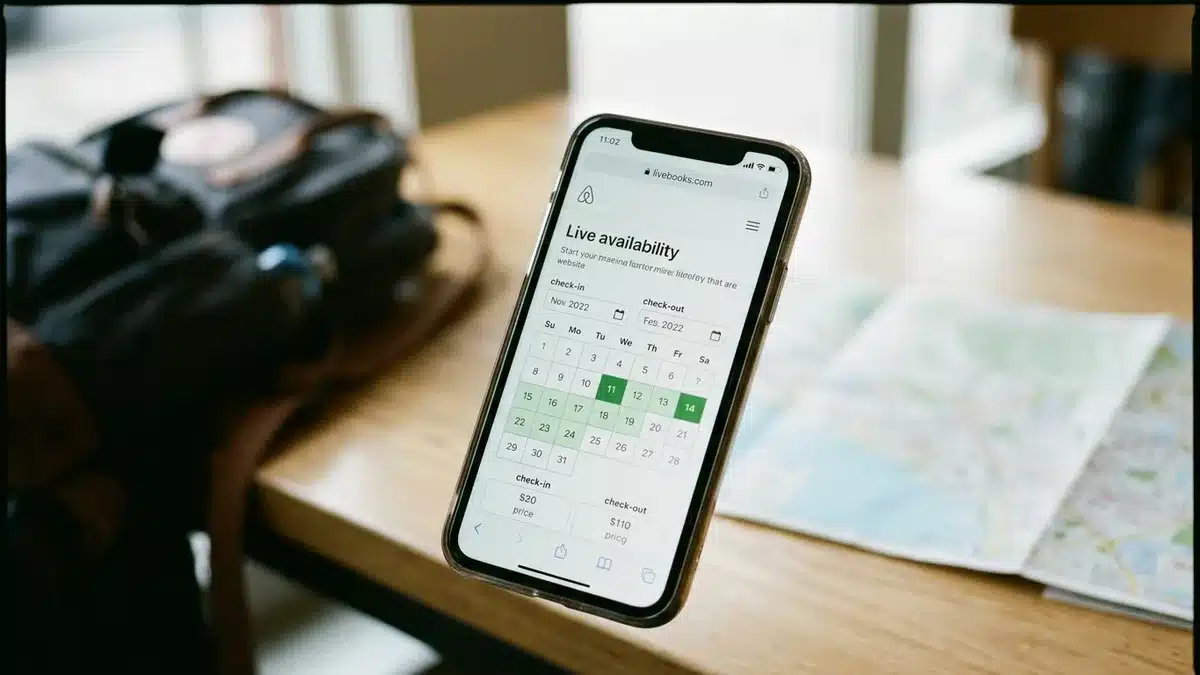
If you’re ready to see what a direct booking website connected to your own PMS looks like in practice, get started with Boostly Connect and book a demo. We’ll walk you through your listings syncing live and your site going up in under 20 minutes, using your own property data, not a generic template.