

An Airbnb website builder is a platform that lets a short-term rental host create their own branded booking website, separate from Airbnb, Vrbo, or Booking.com, so guests can reserve directly with the property owner instead of through a third-party marketplace. The best versions sync live availability and pricing from the host’s existing property management system, process payments directly, and capture guest contact data the host actually owns.
Key Takeaways
- An Airbnb website builder ranges from free drag-and-drop templates to fully PMS-synced direct booking platforms with built-in CRM and payment processing.
- Airbnb typically charges guests around 14 percent in service fees, according to ATLAS by AvantStay (June 2026), and hosts pay commission on top of that under most fee structures.
- More than 50 percent of vacation rental website traffic comes from mobile phones, according to CraftedStays (2026), which makes mobile-first design non-negotiable in 2026.
- Calendar sync frequency matters: some direct booking tools sync as often as hourly to block dates the moment a guest books elsewhere, reducing double-booking risk.
- Total cost of ownership includes more than the monthly subscription: booking fees, payment processing, per-property charges, and guest-facing surcharges all affect the real number.
- Boostly Connect syncs a host’s existing PMS to a WordPress direct booking site in under 20 minutes, with no developer and a free plan for up to 3 listings on the Discover map, connecting the website to a built-in CRM so guest data stays with the host.
If you’re reading this, you’ve probably already done the math on what Airbnb’s commission structure costs you over a year. Most hosts feel it every payout: money that could have stayed in the business instead goes to a marketplace fee. Building your own booking website is the standard fix, but the term “Airbnb website builder” covers a wide range of tools, from a free page generator that scrapes your listing photos, to a fully connected system that syncs your calendar, processes payments, and feeds every direct guest into a CRM you control.
We work with hosts and property managers across 25 countries at Boostly Connect, and the pattern we see repeatedly is that hosts pick a website builder based on price alone, then discover six months later that it can’t sync their PMS, can’t stop double bookings, or has no way to email a past guest. This guide walks through what these tools actually do, what separates a basic template from a true direct booking system, and where the real costs hide.
By the end, you’ll know how to evaluate a builder against your specific setup, whether you run one property or a growing portfolio, and what a working PMS-to-website-to-CRM connection looks like in 2026.
What Is an Airbnb Website Builder, Exactly?
An Airbnb website builder is software that generates a standalone booking website for a short-term rental property, independent of the Airbnb marketplace itself. Some tools import listing details directly from an existing Airbnb or Vrbo URL, pulling photos, amenities, and reviews to speed up setup.
The simplest versions are essentially page generators: pick a template, drop in photos, publish a static site with a “contact host” button. The more capable versions connect to your property management system so availability and nightly rates update automatically, and they include a real booking engine that processes payment on the spot.
That distinction, static page versus connected booking system, is the single biggest factor in whether a direct booking website actually converts. A page with outdated availability loses trust fast. For a deeper breakdown of what a fully functional setup includes, our guide on what an STR website actually means in 2026 covers the technical baseline every host should expect.
Boostly Connect falls into the second category: we built our platform specifically to sync live PMS data into a WordPress site rather than leave hosts with a static brochure page that needs manual updates every time a booking comes in.
Which Website Builder Is Best for Short-Term Rentals?
The best website builder for short-term rentals depends on whether you need a simple branded page or a full booking engine tied to your existing operations. A single-property host testing the waters has very different requirements than a boutique manager running 15 units across three PMS accounts.
For hosts with one or two properties and low booking volume, a free or low-cost template generator can be genuinely fine, we won’t pretend otherwise. If you’re not chasing repeat guests hard or automating guest communication yet, a simple page with a contact form does the job.
Once you’re managing multiple listings, need real-time pricing that matches your PMS, or want to convert past Airbnb guests into repeat direct bookers, generic website builders and basic template tools start to show their limits. They weren’t built for booking logic, calendar sync, or guest data ownership.
That’s the exact gap we designed Boostly Connect to close: a website builder built specifically for short-term rental operations, not a general-purpose site tool repurposed for bookings. It connects to 8 different PMS platforms, so your existing tech stack doesn’t need to change.
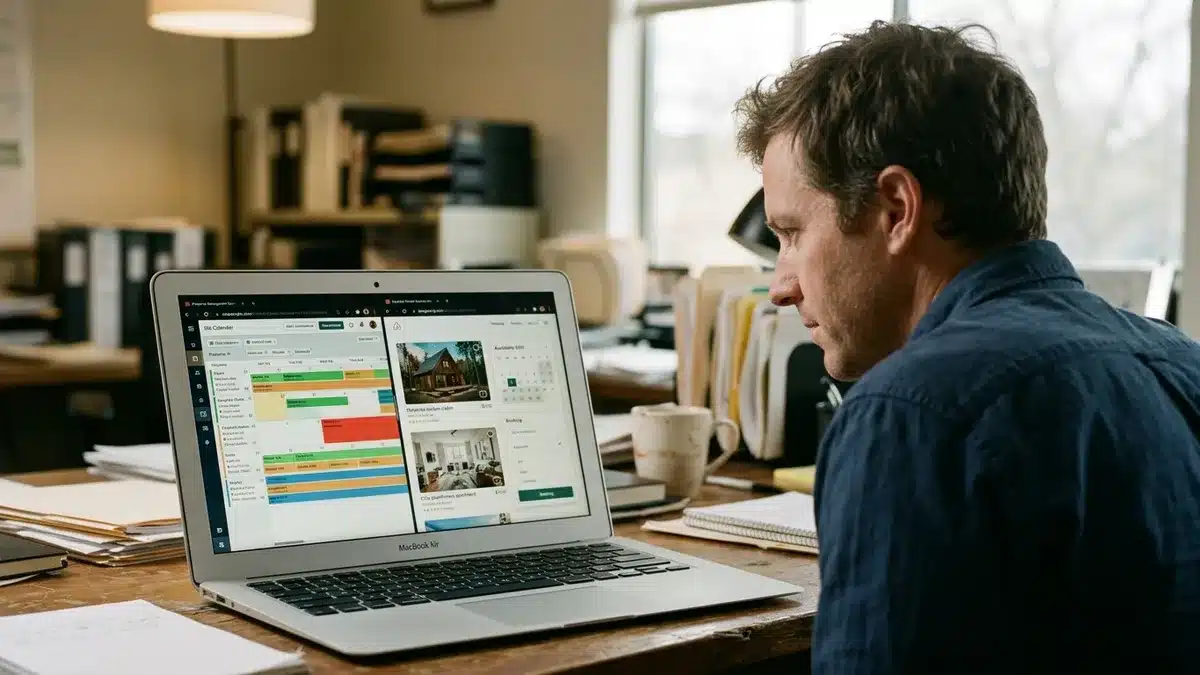
What Is the 80/20 Rule for Airbnb, and Does It Apply to Website Building?
The so-called 80/20 pattern some hosts reference informally describes the idea that a small share of a host’s guests, often past or repeat guests, generate a disproportionate share of future revenue if nurtured properly. There’s no official Airbnb rule by this name; it’s informal host shorthand, not a documented Airbnb policy.
What matters more for your website strategy is what happens after checkout. Airbnb retains the guest’s contact information for its own remarketing, meaning a guest who loved your property might see a competitor’s listing next time they search, not yours. Your direct booking website is the only place that relationship stays yours.
This is precisely the repeat booking trap we built Boostly Connect around. Every guest who books through your direct site gets automatically captured into your own CRM, with built-in email and SMS automation so a past guest gets a reason to rebook with you directly instead of searching Airbnb again. If you want a deeper look at building that nurture sequence, our piece on how to re-engage past vacation rental guests walks through the sequencing in detail.
Why Is Airbnb Facing More Host Skepticism in 2026?
Host skepticism toward Airbnb in 2026 stems primarily from commission costs and guest data control, not from any single platform failure. Airbnb reports it charges guests approximately 14 percent in service fees, according to ATLAS by AvantStay (June 2026), and most fee models add a host-side commission on top of that.
Airbnb remains enormous by scale, with StayFi (2026) reporting more than 9 million active listings, over 5 million hosts, and more than 2 billion guest arrivals worldwide. It isn’t going anywhere, and we tell every host we work with that direct bookings and Airbnb aren’t an either/or choice.
The frustration isn’t really about Airbnb’s existence. It’s about hosts having no fallback channel when Airbnb changes a policy, adjusts search ranking, or raises fees. A direct booking website gives you a second revenue stream you control completely, independent of any single platform’s algorithm changes.
We built Boostly Connect around that exact reassurance: you keep running your Airbnb listing as-is while your direct site grows in parallel. Most hosts we work with run both simultaneously and simply redirect repeat guests toward their own site over time.
Built-In Booking Engines and Payment Processing: What Should You Expect?
A built-in booking engine is the software layer that lets a guest check real-time availability, select dates, and pay for a stay directly on your website, without leaving the page or emailing the host to confirm. This is the feature that separates a functional direct booking site from a static brochure page.
Without a real booking engine, “direct booking” just means a guest fills out a contact form and waits for a reply, which is a conversion killer in 2026 when guests expect instant confirmation. Industry research shows most standalone booking website add-ons charge either a flat monthly fee, a per-reservation fee, or a combination of both, layered on top of the base website subscription.
Payment processing typically runs through a third-party processor like Stripe, integrated into the booking flow so funds settle directly to the host’s account rather than passing through an OTA’s payout schedule first.
Boostly Connect’s website integrates directly with the PMS you already use, so availability and pricing shown to a guest match what’s live in your existing system in real time, no manual double-entry, no stale calendar. That single sync point is where most breakable plugin setups fail hosts.
How Do You Avoid Double Bookings Across Airbnb, Vrbo, and Your Direct Site?
Double bookings happen when a reservation confirmed on one channel, such as Airbnb, doesn’t block the same dates fast enough on another channel, such as your direct website or Vrbo. This is the single most cited operational fear among hosts considering a direct booking site for the first time.
The fix is calendar synchronization frequency. Some direct booking tools sync only once or twice a day, which leaves a dangerous window where a date could get booked twice. Others sync as frequently as hourly, blocking dates on the direct site the moment a guest books through Airbnb or Vrbo, which meaningfully reduces the risk window.
Specifically, ask any website builder you evaluate exactly how often it pulls calendar data from your PMS and from connected OTAs. A vague answer like “real-time” without a defined interval is a red flag worth pushing on.
Because Boostly Connect connects directly to your PMS rather than routing through a separate iCal feed, availability updates reflect what’s already synced across your existing OTA connections, avoiding the extra sync hop that introduces delay in many bolt-on plugin setups.

No-Code Templates and AI Site Generation: How Fast Can You Actually Launch?
No-code website builders let a host launch a direct booking site without hiring a developer, using drag-and-drop editors or AI tools that generate a site by pulling data from an existing Airbnb or Vrbo listing link. Setup speed is one of the most competitive claims in this category, with several tools advertising launch times under an hour.
Some AI-driven builders can generate a free preview site in under 60 seconds by scraping listing photos and details, then offer a handful of design styles like minimalist, magazine, or luxury layouts to choose from. That speed is genuinely useful for testing whether a direct site is worth pursuing at all.
The trade-off: a site generated purely from scraped Airbnb content often inherits generic, thin descriptions that were written for a marketplace listing, not for search engine visibility or a first-time visitor unfamiliar with your brand. AI-generated copy from a scrape rarely reads as a distinct, trustworthy brand.
Boostly Connect takes a done-for-you approach instead: a WordPress site built and connected to your PMS in under 20 minutes, with no coding required and a free plan for up to 3 listings on the Discover map, but built with SEO-ready property pages rather than a raw content scrape.
What Does an Airbnb Website Builder Actually Cost?
The real cost of a direct booking website builder rarely matches the headline monthly price. Industry pricing research shows entry-level builders can start as low as roughly $15 to $19 per month, but meaningful cost differences show up in booking fees, per-reservation charges, and guest-facing surcharges layered on top.
Under Airbnb’s most common fee structures, most hosts pay a smaller host-side percentage while guests absorb a larger service fee, though a host-only model exists where the host absorbs a higher single percentage instead. Direct booking platforms use a similar range of models: some charge a flat host fee, others add a guest-facing fee, and some charge nothing beyond the base subscription for smaller portfolios.
Here’s a general framework for comparing total cost, not just the sticker price:
| Cost Category | What to Check | Why It Matters |
|---|---|---|
| Base subscription | Monthly or annual fee, per-property charges | Some tools charge per listing beyond a set threshold |
| Booking or host fee | Percentage or flat fee per reservation | Can quietly erase the savings versus OTA commission |
| Guest-facing fee | Whether guests see an added service fee at checkout | Affects conversion and guest trust at the payment step |
| Payment processing | Third-party processor fees, usually a small percentage | Standard across virtually every booking engine |
| Setup and onboarding | Whether a developer or paid setup is required | Determines real time-to-launch, not just advertised speed |
Boostly Connect has a free plan for up to 3 listings on the Discover map, and from Accelerator the platform includes the CRM, email and SMS automation, and PMS sync as part of one connected system rather than separate add-on charges for each piece.
What Belongs on a Direct Booking Website Beyond the Booking Engine?
A complete direct booking website needs more than a calendar and a payment button to actually compete with Airbnb’s polish and guest trust signals. Guests booking direct for the first time are evaluating whether your site feels as safe and professional as the marketplace they’re used to.
At minimum, a functioning setup needs: a domain with SSL security, clear cancellation and refund policies, a rental agreement or house rules page, and a way to collect any required local tax at checkout. Skipping these isn’t just a legal risk, it’s a trust signal guests notice immediately.
Mobile responsiveness deserves specific attention. CraftedStays (2026) reports that more than 50 percent of vacation rental website traffic comes from mobile phones, so a booking flow that’s clunky on a phone screen is losing bookings before a guest even reaches checkout.
SEO and discoverability also matter beyond the booking mechanics. A site with zero SEO foundation, no property page structure, no blog, no indexable content, sits invisible next to a well-optimized one. If you’re troubleshooting a site that isn’t gaining traction, our guide on why a vacation rental website isn’t ranking covers the most common fixes. Boostly Connect ships SEO-ready property pages and a blog structure from day one, alongside integration with Google Vacation Rentals for additional discovery beyond organic search, so hosts aren’t relying on a separate SEO contractor to get found.
How Do You Turn Website Visitors Into Actual Direct Bookings?
Traffic without conversion is the most common failure point we see among hosts who’ve already built a direct booking site. A visitor landing on your page and leaving without booking usually means the site lacks a clear reason to book direct instead of defaulting back to Airbnb.
Discount codes, gift vouchers, and direct-only rate advantages are proven levers here, giving guests a concrete incentive to skip the OTA. In one case we’ve seen across our client base, a serviced accommodation host generated a single £6,000 booking and reached 40 percent direct bookings after launching a connected booking website, with a goal of 60 percent going forward.
Email and SMS follow-up matter just as much as the site itself. A guest who browsed but didn’t book needs a nudge, and a past guest who stayed once needs an automated reason to come back. Manually tracking who fits into which bucket across a spreadsheet doesn’t scale past a handful of bookings a month.
Boostly Connect’s built-in CRM handles this segmentation automatically, including AI agents that field routine guest questions and upsells so lookers convert into bookers without you manually replying to every inquiry. For a broader playbook on driving that traffic in the first place, see our guide on how to get more direct bookings.
Choosing the Right Website Builder: A Practical Checklist
Choosing between website builders comes down to matching the tool’s depth to your actual operational complexity, not picking whichever has the flashiest homepage demo. Use this checklist before signing up for anything:
- Confirm your PMS integrates natively, not through a third-party workaround that adds another point of failure.
- Ask the exact calendar sync frequency, and get a specific number, not a vague “real-time” claim.
- Check whether guest data from a direct booking flows automatically into a CRM you own, or whether you’ll need to export it manually.
- Confirm whether the base price includes a booking engine and payment processing, or whether those are separate add-ons.
- Test the mobile checkout flow yourself on your own phone before committing.
- Review whether SEO structure (property pages, blog, metadata) comes built-in or requires a separate contractor.
- Ask what happens to your website and data if you ever want to switch tools, migration flexibility matters more than most hosts realize upfront.
Common mistakes we see: picking a builder based on price alone and discovering later it doesn’t support the PMS you already run, and assuming a scraped AI-generated site is “good enough” for SEO when it’s built from marketplace copy never intended to rank in search. Both mistakes cost hosts months of lost direct booking momentum. For managers running several PMS accounts across a portfolio, our piece on the rental booking website guide covers how to keep guest data ownership intact as you scale.
How Boostly Connect Handles the Full Website-to-CRM Connection
Boostly Connect connects three systems that usually operate separately for hosts: your PMS, your website, and your CRM. Instead of stitching together a website plugin, a separate email tool, and manual spreadsheet tracking, all three sync automatically once your PMS is connected.
The setup itself takes under 20 minutes, with no developer and no coding required, and supports 8 different PMS platforms. There’s a free plan for up to 3 listings on the Discover map.
Every guest who books direct is automatically captured into the Boostly CRM, which includes email and SMS automation, live chat, and AI agents that handle common guest questions and upsells. Hosts using this system also get access to twice-weekly group coaching calls led by industry practitioners, part of what makes Boostly the only accredited training provider in the short-term rental space with 80-plus hours of marketing training.
Across more than 2,000 hosts and property managers using the platform in 25 countries, clients working with Boostly Connect reach an average of 65 percent direct bookings within 12 months, or the team continues working with them at no additional cost until they hit that mark. That guarantee reflects real confidence in the model, not a marketing promise made without accountability.
Data & Evidence: Airbnb Website Builder Options at a Glance
The table below compares general categories of website builder based on verified capabilities, rather than naming individual products, since feature depth varies significantly even within the same price bracket.
| Builder Category | Best For | PMS Sync | CRM Included | Setup Effort |
|---|---|---|---|---|
| Generic site builder | Single property, low booking volume | Not native; requires third-party plugin | No, requires separate tool | DIY, self-managed |
| AI scrape-and-generate tool | Fast preview, testing the concept | Limited or none | No | Minutes, but generic content |
| Standalone booking engine add-on | Hosts who already have a website | Varies by provider | Rarely included natively | Moderate, integration-dependent |
| Boostly Connect (PMS-synced platform) | Hosts and managers scaling direct bookings | 8 native PMS integrations | Yes, with email, SMS, AI agents | Under 20 minutes, no developer |
The clearest gap in the market is CRM depth. Most website builders treat the site as the finish line. Boostly Connect treats the site as the entry point to an owned guest relationship, which is the piece that actually compounds into repeat direct bookings over time.
Frequently Asked Questions
What percentage does Airbnb take from hosts?
Airbnb’s fee structure varies by the model a host selects. Under the split-fee model, most hosts pay a smaller percentage while guests pay a larger service fee, reported at approximately 14 percent by ATLAS by AvantStay (June 2026). Under the host-only model, the host absorbs a single higher percentage instead. Check your specific Airbnb account settings to confirm which fee structure applies to your listings.
How much of a cut does Airbnb take compared to a direct booking website?
Airbnb’s cut depends on your selected fee model, but it applies to every single booking indefinitely. A direct booking website has upfront or ongoing subscription costs, but once a guest books directly, you keep the full reservation value minus payment processing, which is typically a much smaller percentage than an OTA commission.
Can you suggest a website builder for vacation rentals that supports dynamic pricing integration?
Look for a builder that syncs natively with your existing PMS, since dynamic pricing tools typically push rate updates through your PMS rather than directly to a website. Boostly Connect pulls live pricing from your connected PMS in real time, so any dynamic pricing adjustments made in your existing system reflect automatically on your direct booking site without manual updates.
Will switching to a direct booking website hurt my Airbnb search ranking?
No. Running a direct booking website alongside your existing Airbnb listing does not affect your Airbnb search ranking. Most hosts operate both channels simultaneously, keeping their Airbnb listing active while gradually redirecting repeat guests toward their own site for future stays.
Do I need a developer to build a direct booking website?
No. Modern no-code and done-for-you platforms let hosts launch a direct booking website without any coding knowledge. Boostly Connect’s setup process takes under 20 minutes and connects directly to your existing PMS without requiring a developer.
Which PMS platforms work with a direct booking website builder?
This depends on the specific builder, but widely used property management systems are commonly supported across the direct booking software market. Boostly Connect supports 8 PMS integrations in total, covering the majority of systems hosts and managers already use.
Is there an upfront cost to launch a direct booking website?
Costs vary significantly by provider, ranging from free basic templates to subscription-based platforms with per-property fees. Boostly Connect has a free plan for up to 3 listings on the Discover map, with your own website from Growth and the PMS sync, website, and CRM working as one connected system from Accelerator.
Conclusion: What to Do Next
An Airbnb website builder is only as valuable as its connection to the systems you already run. A static template might launch fast, but without live PMS sync, a real booking engine, and a CRM that captures guest data automatically, you’re left doing manually what a connected platform handles on its own. Commission costs on OTA bookings apply indefinitely, every single reservation, while a direct booking channel you own compounds in value the longer you run it.
As of 2026, the hosts making the fastest progress aren’t the ones who abandoned Airbnb. They’re the ones running both channels while systematically shifting repeat guests toward a site they control. That shift starts with picking a website builder built for short-term rental operations specifically, not a generic page tool retrofitted for bookings.
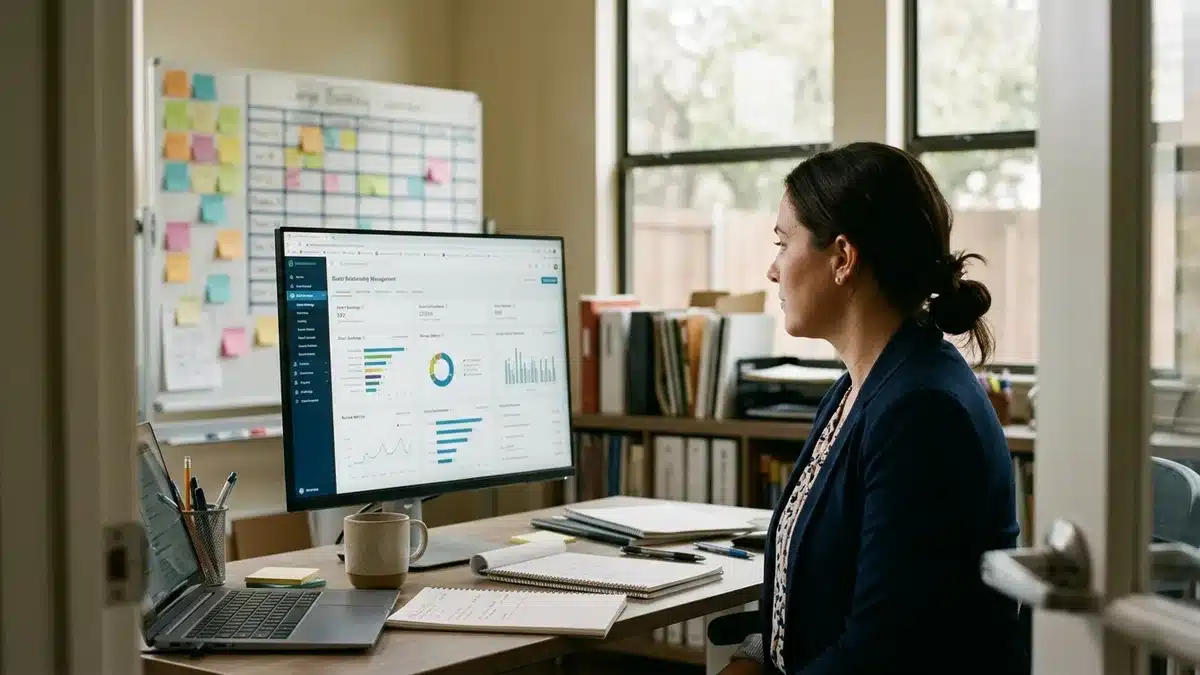
If you’re ready to see what a direct booking website connected to your own PMS actually looks like, book a demo with Boostly Connect and we’ll walk through your specific setup, PMS included, no developer needed, and a free plan for up to 3 listings on the Discover map.