Getting more direct bookings means building your own website with live pricing and availability, capturing every guest’s contact details into a CRM, and using email or SMS to bring past guests back without paying Airbnb or Vrbo a commission on the rebooking. It takes a synced website, a data capture system, and a repeat-guest follow-up sequence.
Key Takeaways
- A direct booking website only converts if it shows live availability and real-time pricing synced from your existing property management system, not a static contact form.
- Repeat guest rate for direct bookings averages around 22% industry-wide, meaning roughly one in five bookings can come from returning guests when hosts run a retention strategy.
- More than 55% of vacation rental managers now collect guest data, according to Enso Connect, but far fewer actually use that data to drive rebookings.
- Real hosts have taken direct bookings from 0% to 55% or higher within a year of launching a dedicated website and following up with past guests systematically.
- Short-term stays made up 61.75% of the vacation rental market in 2026, and offline or direct booking channels still held roughly half of total market share that same year, according to Mordor Intelligence.
- Boostly Connect solves this by syncing your PMS to a done-for-you website in under 20 minutes and automatically capturing every direct guest into a CRM built for follow-up, without touching a single Airbnb setting.
If you’re running one listing or twenty, the math around OTA commission is the same problem at different scales. Every booking that runs through Airbnb or Vrbo costs you a slice of revenue you’ll never see again, and it hands your guest’s contact details to a platform that will happily market that same guest to your competitor next trip. That’s not a hypothetical risk in 2026, it’s the default outcome of never owning the relationship in the first place.
This guide walks through exactly how to get more direct bookings without abandoning the OTAs that still drive your discovery traffic. We’ll cover the website mechanics, the pricing psychology, the email sequences that actually get opened, and the specific mistakes that keep most hosts stuck at single-digit direct booking percentages for years. At Boostly Connect, we’ve watched thousands of hosts make this exact transition, and the pattern repeats itself: the hosts who succeed treat direct bookings as infrastructure, not a side project.
We’ll reference real numbers throughout, including case data from hosts who’ve made this shift and verified market statistics from 2026. Nothing here is theoretical. It’s the same sequence we walk hosts through every week.
How Do You Boost Direct Bookings on Your Own Website?
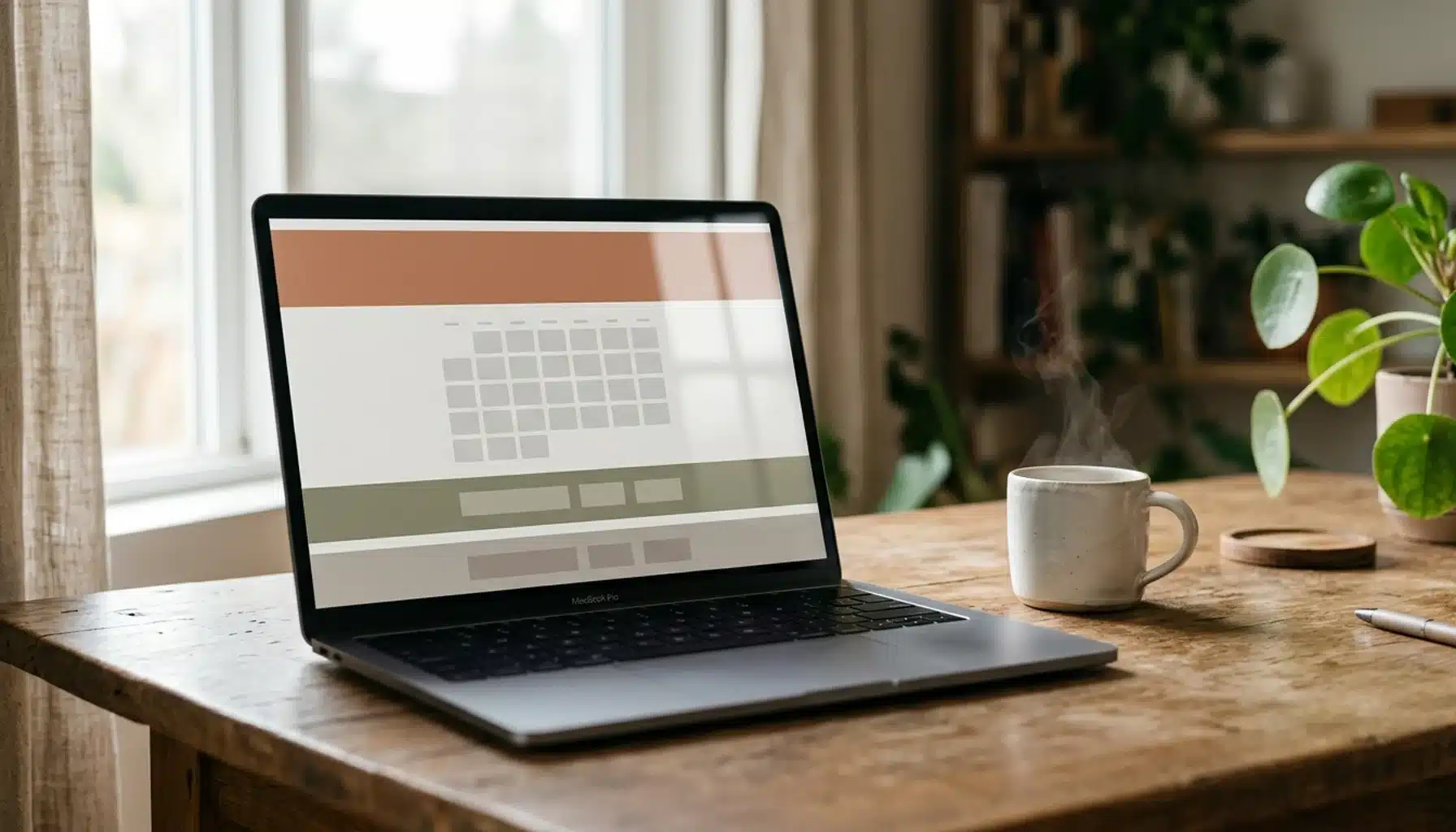
Boosting direct bookings on your own website starts with matching what guests already trust about OTAs: live availability, instant pricing, and a frictionless checkout. Specifically, your site needs a booking engine synced to your property management system so guests never hit a “contact us to check availability” wall, which kills conversion instantly.
Most hosts who try direct bookings first build a basic WordPress page with photos and a contact form. It looks fine. It converts almost nothing. Guests comparing your static page against Airbnb’s live calendar and instant-book button will bounce back to the OTA within seconds, because friction is the single biggest killer of direct conversion.
The fix is a booking engine that pulls real-time inventory from whatever PMS you already run, whether that’s Hospitable, Hostfully, Lodgify, or Guesty. As a result, a guest sees the same live calendar on your site that they’d see on Airbnb, minus the commission.
This is precisely why we built Boostly Connect around PMS-first syncing rather than a standalone booking widget. The platform connects to your existing system in under five minutes across 8 supported integrations, and your site inherits live pricing and availability automatically, with no manual calendar updates and no double-booking risk.

How Do You Increase Your Bookings Without Raising Your Marketing Budget?
Increasing your bookings without a bigger ad budget means converting the traffic and guests you already have more effectively, rather than chasing new eyeballs. Specifically, this means fixing your booking engine’s conversion rate, building an email list from every guest who’s ever stayed, and pricing direct bookings to feel like an obvious upgrade over the OTA.
Most hosts assume growing bookings requires more advertising spend. In practice, the highest-leverage move is usually retention, not acquisition. A repeat guest costs you nothing to reacquire beyond a well-timed email, and industry benchmarks put average repeat guest rates for direct bookings around 22%, according to CUfinder’s 2026 marketing data. That’s a meaningful chunk of revenue sitting in your past guest list right now.
Second, look at your pricing structure. A common tactic: raise your base rate slightly across all channels, then offer a modest discount code exclusively for direct bookers. This offsets what you’d otherwise lose to OTA commission while still giving direct guests a genuine reason to skip the platform. Pair that with a length-of-stay incentive, since guests booking three or more nights direct are more price-sensitive to a small percentage discount than a flat dollar amount.
Third, don’t neglect the guests you already converted once. This is where a CRM earns its keep. Every past direct guest should be segmented and emailed with seasonal availability, not lumped into one generic newsletter. We cover the technical side of this in our guide on how to grow your direct booking channel if you want the full sequence.
How Do You Attract More Bookings Without Relying on Airbnb’s Algorithm?
Attracting more bookings outside Airbnb’s algorithm requires building visibility you actually control: search engine optimization for your own site, a Google Business Profile with a direct booking link, and social channels that funnel followers to your website instead of your Airbnb listing. Airbnb’s search ranking can change overnight; your own SEO and email list can’t be deprioritized by a platform update.
Here’s the uncomfortable truth most hosts avoid: your Airbnb listing ranking is entirely out of your control. Algorithm changes, new host onboarding pushes, and increased competition in your market can quietly bury a listing that was performing well six months earlier. If Airbnb is your only channel, your business has a single point of failure.
Building parallel visibility means optimizing your own website for local search terms like “pet-friendly cabin in [region]” or “family apartment near [landmark],” writing neighborhood guides that establish topical authority, and making sure your Google Business Profile links to your direct booking page rather than an OTA listing. We go deeper on this exact approach in our piece on vacation rental SEO tips that actually rank in 2026.
Social media plays a supporting role here too. A booking link in your Instagram bio and periodic Stories showing real availability keeps your audience aware you exist outside Airbnb’s ecosystem. That’s a lighter lift than most hosts expect, and it compounds over time as your following grows. If managing that consistently feels like one more task on an already full plate, Boostly Connect’s social media management service is built to keep that content flowing without it eating your week.
What Is a Key Benefit of Increasing Direct Bookings?
The key benefit of increasing direct bookings is that you keep 100% of the guest payment and 100% of the guest’s contact information, instead of surrendering a 15 to 20% commission and handing that guest’s data to a platform that markets to them on your competitors’ behalf. That combination compounds every year you run the business.
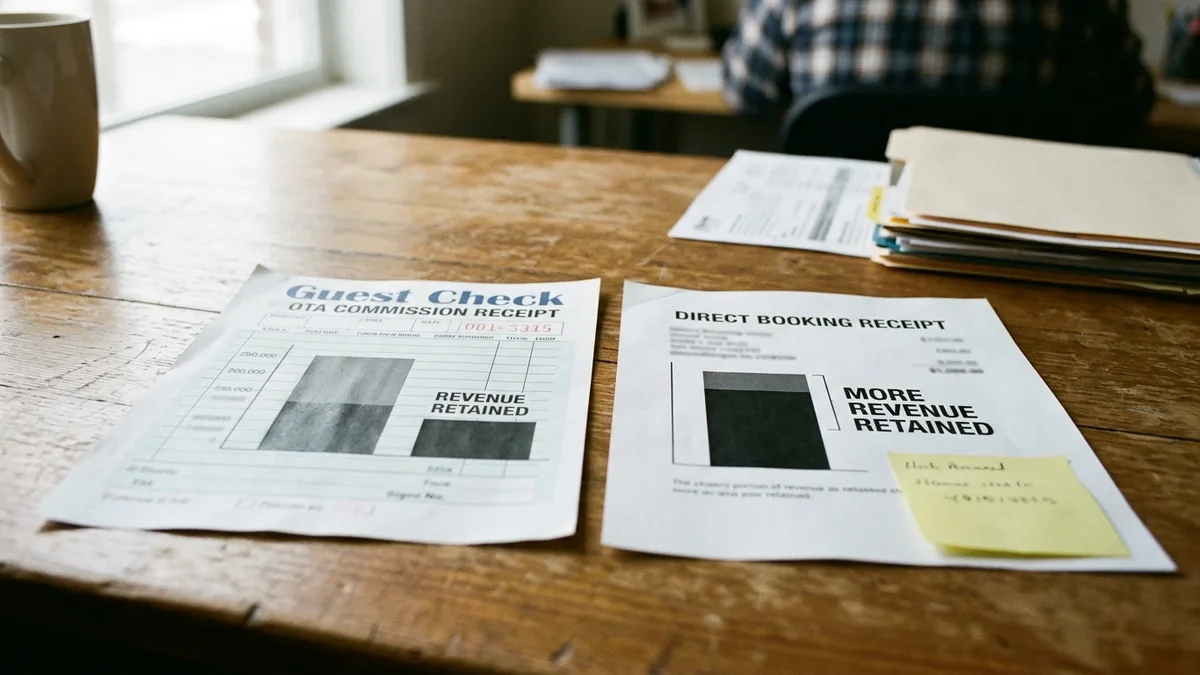
Commission math rarely gets the attention it deserves. On a $300 night, an 18% OTA commission costs you $54 before you’ve paid a cleaner or covered a utility bill. Multiply that across a full year of bookings on even a single listing, and you’re looking at a recurring five-figure loss for many operators managing more than one property. Mark Simpson, who founded Boostly Connect, personally recovered over $30,000 a year in platform fees once he made this exact shift, and that’s the founding reason the platform exists.
But the commission savings aren’t even the full story. When a guest books through Airbnb, Airbnb owns that contact record, not you. That guest’s next search happens inside Airbnb’s app, where your competitor’s listing is one scroll away. When a guest books direct, their email and phone number land in your own CRM, and you control every future touchpoint. That’s the difference between a guest relationship you own and one you’re renting from a third party.
This is the exact problem Boostly Connect was engineered around: every guest who books direct through your website is automatically captured into your own CRM, so that contact data stays with your business permanently instead of disappearing back into Airbnb’s remarketing engine.
What Does It Cost You Every Time a Repeat Guest Rebooks Through an OTA Instead of Direct?
Every time a returning guest rebooks through an OTA instead of your own site, you pay the same 15 to 20% commission you paid on their first stay, even though you already did the work of winning that guest once. This is the repeat booking trap, and it’s one of the most overlooked profit leaks in short-term rental operations.
Here’s how it plays out in practice. A guest stays with you, has a great experience, and six months later wants to come back. Instead of remembering your property name, they open the Airbnb app because that’s the muscle memory the platform trained into them. Airbnb happily rebooks them, and you pay commission on a guest you’d already converted once for free.
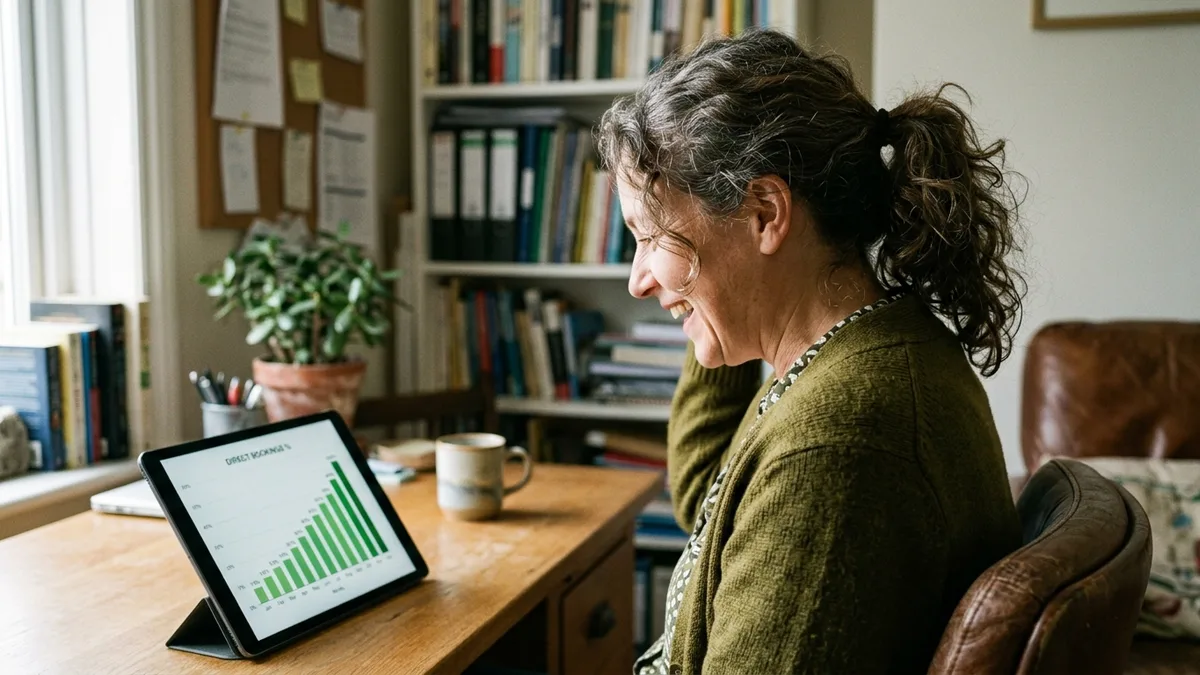
Real hosts have quantified this gap. One host managing rental properties applied a single direct booking tactic from a free challenge and generated an $800 first direct booking, immediately proving the concept worked. Over the following year, that host grew direct bookings from 0% to 8%, and eventually scaled to 55% direct bookings across a portfolio that grew to more than 30 properties. That kind of trajectory doesn’t happen by accident, it happens because the host stopped letting repeat guests default back to the OTA.
Preventing this leak requires a CRM that automatically flags returning guests and triggers a direct-booking offer before they think to open Airbnb. That’s exactly the gap Boostly Connect’s CRM closes, since every guest captured through your website gets segmented automatically for future email and SMS nurture without you manually exporting a spreadsheet after every checkout.
What Should Your Direct Booking Website Actually Include?
A direct booking website needs five core elements to convert: a live booking engine synced to your PMS, mobile-first design, high-quality photography with a virtual tour, visible guest reviews, and a clear, low-friction checkout process. Missing any one of these creates a drop-off point where guests bounce back to a familiar OTA.
Over 60% of travel searches happen on mobile devices, which means a desktop-only site is quietly losing the majority of your traffic before a guest even sees your calendar. Your site needs to load fast on a phone, display rates clearly, and let a guest complete checkout in three steps or fewer.
| Website Element | Why It Matters | Common Mistake |
|---|---|---|
| Live booking engine | Matches OTA-level trust and removes “contact to check availability” friction | Static contact form instead of real-time calendar |
| Mobile-first layout | Over 60% of travel searches happen on mobile | Desktop-designed site that breaks on phones |
| Professional photography | Builds trust and matches OTA listing quality | Reusing low-resolution Airbnb photos |
| Visible reviews | Guests want social proof before booking off-platform | No reviews displayed, or reviews buried on a separate page |
| Fast, few-step checkout | Every extra form field increases abandonment | Long forms requiring unnecessary information upfront |
Notice what’s missing from most hosts’ first attempt at a direct booking site: none of it requires a developer if you’re using the right infrastructure. Boostly Connect builds this entire structure on WordPress, syncing pricing and availability from your PMS with no coding involved, so you’re not stitching together a booking plugin, a separate CRM tool, and a theme that breaks every time WordPress updates.
If you want the full build-out sequence, our guide on how to build a direct booking website without hiring a developer walks through it step by step.
How Do You Rank Your Direct Booking Website on Google?
Ranking a direct booking website on Google requires the same fundamentals as any local business site: fast page speed, location-specific content, a complete Google Business Profile, and consistent backlinks from relevant local sources. This is a slower channel than paid ads, but it compounds and never disappears when an algorithm shifts.
Location-specific landing pages targeting phrases like “vacation rental in [neighborhood]” outperform a single generic homepage because they match how travelers actually search. Neighborhood guides covering local restaurants, transportation, and hidden gems, typically around 1,500 words, tend to rank well because they demonstrate genuine local authority rather than thin, generic content.
Your Google Business Profile matters as much as your website. Upload at least 20 photos, including geotagged interior and neighborhood shots, respond to every review, and make sure your booking link points to your own direct booking page, not an Airbnb listing. That last detail sounds minor but it’s a mistake we see constantly: hosts drive Google Business traffic straight back to the platform they’re trying to reduce dependence on.
Local backlinks from tour operators, nearby restaurants, and activity providers add both SEO value and cross-promotion opportunity. This is slow-build authority, not a quick win, which is exactly why Boostly Connect ships every website SEO-ready from day one instead of leaving hosts to hire a separate SEO contractor after the fact. For a deeper technical breakdown, see our post on why your vacation rental website isn’t ranking.
How Do You Convert Past Guests Into Repeat Direct Bookers?
Converting past guests into repeat direct bookers requires a structured email and SMS sequence that segments guests by recency and value, not a single generic newsletter blast. Specifically, recent guests, lapsed guests, and high-value repeat guests each need different messaging and timing.
Most hosts either never email past guests at all, or send one seasonal blast to everyone at once with the same generic subject line. Neither approach works well. Segmentation matters: a guest who stayed last month needs a thank-you and review request, while a guest who stayed two years ago needs a reintroduction to what’s changed since their visit.
A structured sequence typically includes a post-stay thank-you within a few days of checkout, a review request, a seasonal availability email tied to their previous travel dates, and an exclusive direct-booking discount code that doesn’t appear anywhere on your OTA listings. Automating review requests specifically matters here, since we’ve written a full breakdown in our guide to automating review requests for your vacation rental.
Manually managing this across a spreadsheet becomes unworkable past a handful of properties, and it’s the exact reason repeat guest emails fall off most hosts’ priority list entirely. Boostly Connect’s CRM automates this segmentation natively, tagging every guest who books direct and triggering the right sequence at the right interval without you touching an export file. For more context on why guest data ownership matters this much, our article on how to own guest data on Airbnb covers the mechanics in depth.
What’s the Real ROI of Switching Focus to Direct Bookings?
The real ROI of a direct booking focus shows up as retained commission dollars plus compounding repeat guest revenue, and it typically becomes visible within 6 to 12 months of launching a proper website and CRM system. Real hosts have recovered a course investment of £3,000 within less than six months once their direct booking system started converting.
One case worth breaking down: a bed and breakfast operator who started with nothing, handling cooking, cleaning, and bookkeeping personally, reached 90% direct bookings and 60% repeat guests after focusing deliberately on direct booking optimization rather than third-party listing sites. That level of direct booking share is unusual for a single-property operation, but it illustrates the ceiling when a host commits fully to the strategy rather than treating it as an afterthought.
Another operator transformed a damp, unprofitable property into a serviced accommodation business, generating a single £6,000 booking through their new direct booking website and reaching 40% direct bookings with a goal of 60%. Neither of these results happened from a single tactic. They happened from a synced website, consistent guest data capture, and follow-up sequences running continuously in the background.
Instead of guessing at your direct booking ROI across a spreadsheet, a bank statement, and a separate PMS export, Boostly Connect’s reporting dashboard tracks direct booking revenue in one place, so you can see the number moving in real time rather than reconstructing it manually each quarter.
How Do You Keep Your Airbnb Bookings While Growing Direct Bookings?
Keeping your Airbnb bookings while growing direct bookings means using Airbnb as a discovery channel for first-time guests, then redirecting repeat stays to your own site through post-stay communication, without violating Airbnb’s messaging policies. You don’t need to choose one channel over the other.
This is the fear that stops most hosts from ever starting: “If I push direct bookings, will my Airbnb ranking suffer?” In practice, most successful operators run both channels simultaneously. Airbnb remains valuable for first-stay discovery, since new guests searching a destination haven’t heard of your property yet. Your own site becomes the channel where that same guest returns for stay number two.
Airbnb even offers built-in tools that support this exact behavior, including the Airbnb Re-book feature for guests who want to quickly rebook the same property, and Airbnb Special Offers for sending personalized discounts to past guests within the platform. Use these where appropriate, but recognize they still route the booking, and the commission, through Airbnb rather than your own channel. A guest who’s saved your listing using Airbnb Wishlists is a guest worth reaching directly with a follow-up email the next time they’re planning travel.
Our guide on balancing OTA and direct bookings goes deeper into the exact sequencing we recommend, but the short version is this: never remove your Airbnb listing, just stop letting it be the only door back into your business.
How Do You Set This Up Without a Developer or Coding Experience?
Setting up a direct booking system without a developer requires a platform that connects directly to your existing property management system and generates a website automatically, rather than requiring you to build a booking engine, CRM, and site from separate tools. This is achievable in a single sitting, not a multi-week project.
Here’s the step-by-step process most tech-averse hosts can follow:
- Connect your PMS. Whether you run Hospitable, Hostfully, Lodgify, or Guesty, sync your existing system rather than migrating your data anywhere new.
- Review your synced listings. Confirm pricing and availability pulled through correctly before your site goes live publicly.
- Customize your site’s branding. Add your photos, your property descriptions, and your own domain, keeping the design mobile-first from the start.
- Set your direct-booking incentive. Decide on a discount code or perk exclusive to direct bookers, distinct from anything visible on your OTA listings.
- Turn on guest data capture. Confirm every direct booking feeds into your CRM automatically so no guest record gets lost to a spreadsheet you forget to update.
Boostly Connect was purpose-built around this exact five-step flow. The PMS-to-website sync typically completes in under 20 minutes, with a free plan for up to 3 listings on the Discover map and zero developer involvement required at any stage. That’s a meaningfully different starting point than stitching together a page builder, a separate booking plugin, and a bolt-on email tool that all need to be maintained independently. If reducing that ongoing manual maintenance is your bigger concern, our piece on reducing manual work in your vacation rental business covers the broader automation picture.
Practical Guidance: What Should You Prioritize First?
If you’re starting from zero direct bookings, prioritize your booking engine and PMS sync before anything else. A beautiful website with no live availability converts worse than an ugly one that lets guests book instantly. Get the mechanics right first, then layer in content and marketing.
Common mistakes we see repeatedly:
- Building a static site with no live sync. Guests bounce the moment they hit a “contact us for availability” wall.
- Undercutting your own margin. Offering too steep a direct discount erases the commission savings you were trying to capture.
- Ignoring mobile design entirely. With most travel searches happening on mobile, a desktop-only layout quietly loses the majority of visitors.
- Never emailing past guests. The highest-converting audience you have is guests who already stayed with you once.
- Removing Airbnb entirely. Discovery still matters. Redirect repeat stays, don’t abandon your first-stay channel.
Trade-offs worth understanding: a fully custom-built site gives you maximum design control but requires ongoing developer maintenance every time your PMS updates its API. A synced, done-for-you platform trades some customization for speed and reliability. For most independent owners and boutique managers, that trade-off favors speed, since the manual maintenance burden of a custom build rarely pays for itself at typical portfolio sizes.
Frequently Asked Questions
How long does it take to set up a direct booking website with Boostly Connect?
Most hosts can sync their PMS and have a live direct booking website in under 20 minutes, with no developer or coding experience required. The process connects your existing property management system directly to a WordPress site that inherits your live pricing and availability automatically.
Will switching to direct bookings hurt my Airbnb search ranking?
Most hosts run Airbnb and their own direct booking site simultaneously without any ranking impact, since Airbnb ranks listings based on guest engagement and performance on its own platform, not your external marketing activity. The safest approach is using Airbnb for first-stay discovery and redirecting repeat guests to your own channel after checkout.
Which property management systems integrate with a direct booking platform like this?
Boostly Connect supports 8 PMS integrations, including widely used systems like Hospitable, Hostfully, Lodgify, and Guesty. Connecting an existing PMS typically takes under five minutes and immediately pulls live availability and pricing onto your own website.
Do I need a developer to launch my direct booking site?
No. A synced direct booking platform is designed specifically so hosts with no coding background can launch a site without hiring outside help. The PMS connection generates your booking engine automatically, removing the need for custom development work.
What happens to my guest data when someone books direct instead of through an OTA?
When a guest books through your own website, their contact information is captured directly into your own CRM rather than being retained by the OTA. That means you own the relationship for future marketing, review requests, and rebooking offers, instead of relying on the platform to remarket that guest on your behalf.
How much can I realistically save by reducing OTA commission dependency?
Savings scale directly with your booking volume and commission rate, since OTAs typically charge in the 15 to 20% range per reservation. Founder Mark Simpson personally recovered over $30,000 a year in platform fees after shifting his own properties toward direct bookings, which illustrates the scale of savings possible even for a modest portfolio.
Can this system handle multiple properties, or just a single listing?
Yes. A synced PMS-to-website-to-CRM system is built to scale from a single listing to a large multi-property portfolio, keeping pricing, availability, and guest data unified across every unit rather than requiring separate tools per property. This matters most for boutique managers and portfolio operators managing more than a handful of listings.
Is there an upfront cost to get started?
Boostly Connect offers a free plan for up to 3 listings on the Discover map, making it accessible for independent owners testing direct bookings for the first time as well as boutique managers ready to migrate an existing portfolio.
Conclusion: What’s the Fastest Path to More Direct Bookings in 2026?
The fastest path to more direct bookings in 2026 is connecting the systems you already run, your PMS, your website, and your guest communication, into one synced structure rather than treating direct bookings as a side project you’ll get to eventually. The math on OTA commission rarely lies: every booking that runs through Airbnb or Vrbo instead of your own site is revenue and guest data you never get back.
Real hosts have taken this from 0% to over 50% direct bookings within a year, not through a single trick, but through a synced website, consistent guest data capture, and a follow-up sequence that runs without manual intervention. That’s the difference between hoping guests remember your property name and building a system that brings them back automatically.
Fixing this doesn’t require a developer, a new tech stack, or months of setup. It requires connecting the tools you already use to a website built to convert, which is exactly what Boostly Connect does in under 20 minutes. If OTA commissions are eating into your margin every month, book a demo to see exactly how your PMS, website, and CRM can work together starting today.
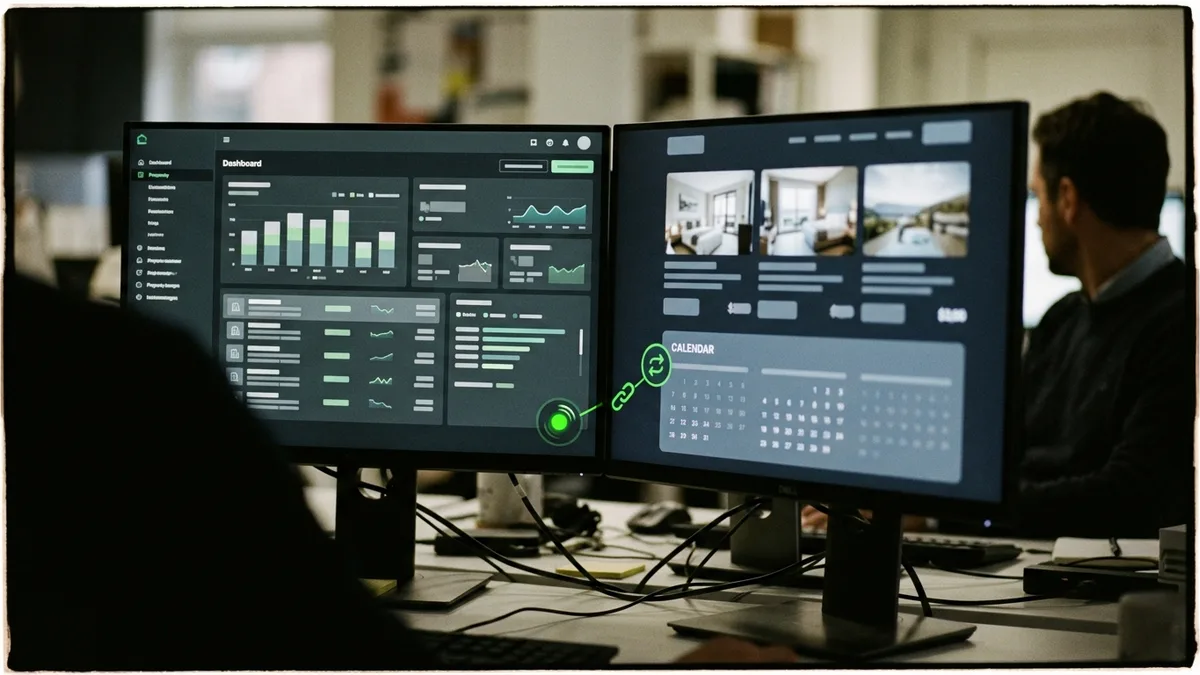
If you’re ready to see what a direct booking website connected to your own PMS looks like with your actual property data, book a demo with Boostly Connect and watch your listings sync in real time.