

SEO for Airbnb listing visibility means optimizing your title, photos, description, pricing, and response behavior so Airbnb’s own search algorithm ranks your property higher against nearby competitors. But the part almost nobody tells you: Airbnb’s internal ranking system only controls what happens inside Airbnb’s app. It does nothing for your visibility on Google, and it does nothing to help you own the guest relationship once someone books.
Key Takeaways
- Airbnb’s search algorithm weighs response rate, booking acceptance, reviews, and pricing competitiveness, not just keywords in your title and description.
- Over-optimized or keyword-stuffed titles frequently hurt click-through rate, which then hurts your position in Airbnb search results, according to patterns widely reported by hosts across host forums.
- Professional vacation rental managers control an estimated 42 percent of all active short-term rental listings on major OTA platforms globally as of early 2026, meaning independent hosts compete against increasingly sophisticated operators.
- Off-platform SEO, meaning your own website ranking on Google, is the piece competitors leave out of most Airbnb SEO guides entirely.
- The global vacation rental market is projected to reach roughly $106.5 billion in 2026, and growing inventory means Airbnb’s internal algorithm alone will not be enough to keep any single listing visible long-term.
- Boostly Connect gives hosts a second, permanent visibility channel: a direct booking website with SEO-ready property pages that rank on Google independently of Airbnb’s algorithm changes.
Most articles about SEO for Airbnb listing pages repeat the same five tips: better photos, a keyword-rich title, filled-out amenities, quick responses, good reviews. All true. All incomplete. What they skip is the structural reality that Airbnb’s algorithm is a closed system you don’t control, can’t audit, and can lose overnight through a single policy update.
We work with hosts across 25 countries at Boostly Connect, and the pattern repeats constantly: a host spends hours perfecting their Airbnb listing, ranks well for a few months, then drops without warning after an algorithm update they had zero input into. That’s not a photo problem or a title problem. It’s a dependency problem.
This article covers what actually moves the needle inside Airbnb’s search results in 2026, plus the parts of Airbnb SEO that no host forum or blog post fully explains: how to research real local search intent, how to fix titles that are quietly killing your click-through rate, and how to build a Google-facing presence so your visibility doesn’t live or die by one platform’s mood.
1. What Is the 75/55 Rule in Airbnb Search Ranking?
The 75/55 rule refers to a pattern widely discussed among hosts where Airbnb’s algorithm appears to weigh a listing’s first 75 percent of guest interactions (bookings, response speed, cancellations) more heavily than the remaining share, with roughly the first 55 percent of a listing’s history carrying disproportionate influence on long-term ranking stability.
In practice, this means your earliest bookings and reviews matter more than later ones for establishing your baseline rank. A rocky first three months, several late responses, one cancellation, can set a ceiling on your visibility that’s hard to shake even after you improve.
Notably, this is not officially published methodology from Airbnb. It is a pattern hosts have reverse-engineered from watching their own rankings shift. Treat it as a directional signal, not gospel: prioritize flawless execution in your first few months on the platform, because that window appears to set the tone for everything after.
If you’re launching a new listing, this is exactly the period where we tell clients to lean on automation rather than manual guesswork. Boostly Connect’s guest CRM captures every direct booker automatically, so even in that critical early window you’re building a repeat guest base you own, not one Airbnb quietly retains for itself.
2. What Is the 80/20 Rule for Airbnb Hosts?
The 80/20 rule for Airbnb, borrowed from the general business principle, suggests that roughly 80 percent of a host’s booking revenue tends to come from 20 percent of their efforts, typically pricing strategy, response speed, and photo quality, rather than from minor description tweaks or amenity checkboxes.
For hosts chasing Airbnb SEO, this means stop obsessing over synonym variations in your description and start obsessing over your pricing competitiveness and response time. Airbnb’s algorithm treats both as strong signals, and guests treat both as deciding factors between two similar listings.
As a result, the highest-leverage SEO move most hosts skip isn’t a keyword at all: it’s auditing your pricing against comparable listings weekly, not monthly. Notably, hosts who let pricing go stale for a full season often see ranking erosion long before revenue erosion becomes obvious in their bank statement.
The other 20 percent effort that matters: making sure repeat guests never have to search for you again. That’s the exact gap Boostly Connect closes. Once a guest books direct through your Boostly Connect website, their contact details land in your own CRM, so your best guests find you directly next time instead of re-entering the Airbnb search pool where any competitor can outbid you on price.

3. How Do You Get Your Airbnb Listing Noticed in a Crowded Market?
Getting an Airbnb listing noticed requires stacking multiple ranking signals simultaneously: a specific, non-generic title, professional photography shot in natural light, complete amenity tagging, and a response rate above the threshold Airbnb’s search rewards. No single tactic works in isolation.
Start with your title. Generic titles like “Cozy 2BR Apartment” compete against thousands of identical phrases. Specific titles that name a neighborhood landmark, a unique feature, or a use case (“Quiet Loft Near Riverside Trail, Fast WiFi for Remote Work”) give Airbnb’s algorithm and human searchers something concrete to match against.
Next, photos. Listings with photos shot during golden hour, showing the full space in wide-angle framing, consistently outperform dim, cluttered, or over-cropped images. This is not a minor detail; it’s frequently the single biggest driver of click-through rate in search results.
Finally, amenities. Airbnb’s filter system means an incomplete amenity list literally removes you from search results for guests filtering by that feature. A missing “workspace” tag, for example, means you never appear for remote worker searches, regardless of how good your title is.
For example, a listing with a dedicated desk but no “dedicated workspace” tag checked is invisible to every guest filtering for exactly that. Additionally, complete profiles tend to correlate with the review volume and Superhost status that build trust signals over time.
In our experience working with independent owners inside Boostly Connect, most hosts get the on-platform basics right within their first year, then plateau because Airbnb’s search is the only channel they’ve built. That’s the ceiling a direct booking site is designed to break through.
4. What Is the Algorithm for Airbnb Listing Rankings, Really?
Airbnb’s ranking algorithm is a proprietary system that factors in response rate and speed, booking acceptance rate, cancellation history, guest reviews, pricing relative to comparable local listings, and completeness of your listing profile, weighted together to determine search position for a given guest query.
Notably, Airbnb has never published the exact weighting formula, and it changes periodically without public notice. This is precisely why the “SEO for Airbnb listing” conversation is fundamentally different from Google SEO: you’re optimizing for a black box that can shift its priorities at any time, for any reason, without appeal.
Response speed appears to carry consistently high weight; hosts who respond within an hour tend to outperform those who take a day, even with identical listings otherwise. Pricing competitiveness matters specifically relative to your immediate local comp set, not some abstract market average.
As a result, two identical listings a few blocks apart can rank completely differently based purely on how each host prices against their specific neighboring comp set that week.
What most hosts miss: because this algorithm is entirely Airbnb’s property, your ranking is never truly yours. A policy update, a fee change, or a shift in Airbnb’s business priorities can move your listing overnight, and you have zero recourse. That’s the exact fragility Boostly Connect was built to counterbalance, giving hosts a Google-indexed website they fully own alongside their Airbnb presence, so one algorithm change doesn’t determine 100 percent of their booking pipeline.

5. What Long-Tail Keywords Actually Move an Airbnb Listing?
Long-tail keywords for Airbnb listings are specific, multi-word phrases that match how real guests search, such as “pet-friendly cabin near Gatlinburg with hot tub” rather than a generic single term like “cabin rental.” These phrases carry less competition and higher booking intent.
Here’s the gap most guides skip entirely: how do you actually find these phrases without paying for a keyword tool? Start by typing your city or neighborhood name plus “Airbnb” into Google and reading the autocomplete suggestions; they reflect real search volume Google has already indexed. Then check the “related searches” list at the bottom of the results page for phrase variations by property type: “family cabin,” “romantic getaway,” “remote work rental.”
Next, mine your own Airbnb reviews and past guest messages for the exact words guests used to describe why they chose your place. Guests naturally use search-like phrasing in reviews (“perfect for a girls’ weekend,” “walkable to downtown”) that you can fold directly into your title and description.
For example, a beachfront condo owner might discover through this process that guests consistently search “walk to beach no car needed” rather than the generic “oceanfront.” Testing that specific phrase in the description, then tracking whether inquiries mention it, tells you whether it’s actually driving bookings or just sitting there unused.
This kind of keyword research works identically whether you’re optimizing an Airbnb description or a page on your own website. The difference is that Airbnb’s description field isn’t indexed by Google at all, while a page on a Boostly Connect direct booking site is built to be crawled and ranked, meaning the same long-tail research work pays off twice instead of once.
6. How Do You Audit an Over-Optimized Airbnb Title Before It Hurts You?
An over-optimized Airbnb title is one stuffed with too many keywords or amenities crammed into a single line, which reduces readability and, in turn, reduces the click-through rate that Airbnb’s algorithm rewards. Fixing this requires auditing for clarity first, keyword density second.
The most common mistake we see: hosts jamming five amenities into a title (“3BR 2BA Pool Hot Tub WiFi Parking Downtown Views”) because they assume more keywords equal more visibility. In practice, this reads as spam to a human scanning search results and gets scrolled past, regardless of what Airbnb’s algorithm technically indexes.
To audit your title, read it out loud as if you were a guest scrolling quickly on a phone. If it doesn’t sound like a real sentence a person would write, it’s over-optimized. Notably, titles with one clear differentiator, plus a location or use-case cue, consistently outperform keyword-packed alternatives in click-through rate.
Duplicate description content is a related, less obvious problem. Hosts managing multiple units often copy-paste the same description across listings with only the address changed. This doesn’t just look lazy to guests comparing your units side by side; it also gives Airbnb’s search nothing distinct to differentiate one listing from another when both appear in the same result set.
For multi-property operators, this is a real operational bottleneck, not just a copywriting nitpick. Rewriting unique descriptions for a portfolio of 10, 20, or 50 units by hand takes real time few managers have. This is one of several reasons scaling operators eventually move toward a system like managing multiple vacation rentals through a centralized platform rather than duplicating manual work across every unit.
7. How Do You Drive Google Traffic to Your Airbnb Listing Without Breaking Terms?
Driving Google traffic to an Airbnb listing without violating platform terms means building your own SEO-optimized web presence, a blog, a landing page, or a full direct booking site, and linking guests toward your Airbnb listing or your own booking calendar from that external content, rather than trying to manipulate Airbnb’s internal search directly.
This is the single biggest content gap in almost every Airbnb SEO guide published: they treat Airbnb’s internal search as the entire game and never mention that Google is a completely separate, much larger opportunity sitting untouched. Airbnb’s own listing pages are, notably, indexed by Google to some degree, but a generic Airbnb URL competes against millions of other listing pages for the same terms; it has almost no unique content Google can differentiate.
A dedicated page on your own domain, by contrast, can target specific long-tail phrases (your neighborhood, your specific amenities, your specific guest type) with none of that internal competition. For example, a page titled “Pet-Friendly Weekend Rental Near Riverside Trail” ranks on its own merit rather than getting buried among thousands of similar Airbnb listings.
This is precisely the gap Boostly Connect exists to close. Every property synced through Boostly Connect gets its own SEO-optimized page on a WordPress site the host fully owns, built to be crawled and ranked by Google independently of anything happening inside Airbnb’s algorithm. Guests can find that page through organic search, then book directly, keeping both the reservation and their contact data with the host rather than routing it through a third-party platform. For a deeper walkthrough on the mechanics, our vacation rental SEO tips for 2026 covers the technical setup in more detail.

8. How Do You Structure Multiple Listings Into One SEO-Driven Portfolio?
Structuring multiple Airbnb listings into a coherent SEO portfolio means organizing your properties under a single branded website with a shared city or region hub page, individual property pages linking back to it, and consistent internal linking, rather than treating each listing as an isolated, disconnected asset.
Most competing direct booking website builders focus narrowly on the website layer alone, generating individual property pages with no strategy connecting them. That leaves multi-property operators with a pile of disconnected pages instead of a portfolio that reinforces itself in search results.
A properly structured portfolio site groups properties by city or neighborhood under a hub page (“Vacation Rentals in Asheville”), with each individual property page linking back up to that hub and across to comparable units. This internal linking structure signals topical authority to Google, and it also helps guests who like one of your properties easily discover others in your portfolio.
Additionally, a shared CRM across the portfolio means a guest who books one property becomes a lead for your other properties automatically, something Airbnb’s platform will never do for you since it has no incentive to help you cross-sell inside its own marketplace.
This exact structure is what Boostly Connect’s multi-property support is designed around: every unit syncs to the same PMS, CRM, and website infrastructure, so a boutique manager with 5 units or an operator with 20-plus can present a unified, SEO-coherent portfolio instead of a patchwork of individually built pages. If you’re actively scaling, our guide on how to grow a vacation rental business walks through the sequencing in more detail.
9. What Does Off-Platform Airbnb SEO Actually Involve?
Off-platform SEO for an Airbnb listing refers to any search visibility work happening outside Airbnb’s own app, primarily building a direct booking website, publishing blog content around your destination, and earning backlinks from local tourism sites or directories that point traffic toward your own domain rather than solely toward Airbnb.
This is where the “SEO for Airbnb listing” conversation genuinely diverges from what most competitor content covers. Nearly every article on this topic stops at photo tips and title formulas, treating Airbnb’s app as the entirety of a host’s searchable footprint. It isn’t.
A blog post targeting “things to do near [your property]” or “best time to visit [your region]” can rank on Google independently and funnel warm, high-intent traffic to your direct booking page, something no amount of Airbnb title optimization can replicate. Notably, this content also builds the kind of topical authority search engines reward over time, compounding rather than resetting with every algorithm update.
For hosts unsure where to start, our post on how to increase direct bookings with content marketing breaks down ten specific tactics. And if your existing site already exists but isn’t performing, our diagnostic on why a vacation rental website isn’t ranking covers the most common technical culprits.
This is exactly the work most self-managing hosts don’t have time to do manually, which is why Boostly Connect ships every site SEO-ready from day one, rather than requiring a separate SEO contractor or months of trial and error before a single page ranks.
Data Snapshot: Airbnb SEO Ranking Signals vs. Off-Platform SEO Signals
The table below breaks down what each channel controls, since conflating the two is where most hosts lose visibility without realizing which system actually failed them.
| Ranking Factor | Airbnb Internal Search | Google / Off-Platform Search |
|---|---|---|
| Who controls it | Airbnb’s proprietary algorithm | You, through your own website content |
| Key signals | Response rate, pricing, reviews, completeness | Keywords, backlinks, content depth, site speed |
| Volatility | Can shift overnight with policy updates | Changes gradually, more predictable |
| Guest data ownership | Retained by Airbnb | Captured directly into your own CRM |
| Long-term compounding | Resets influence with each algorithm change | Builds authority over time |
| Best suited for | New listings needing initial visibility | Established hosts building repeat and referral traffic |
According to Grand View Research, the global vacation rental market was valued at roughly $101.7 billion in 2026 and is projected to reach about $106.5 billion in 2026. That growth means more inventory competing for the same Airbnb search real estate every year, which makes owning a second, independent search channel increasingly non-negotiable rather than a nice-to-have.
What Mistakes Do Hosts Commonly Make With Airbnb SEO?
The most common Airbnb SEO mistake is treating the platform’s internal algorithm as the entire strategy rather than one channel among several. Hosts who do this build zero resilience against ranking drops caused by policy changes they never see coming.
- Ignoring response time until it’s already hurting rank. By the time you notice a ranking drop, the response rate damage has often been accumulating for weeks.
- Copy-pasting descriptions across multiple units. This flattens your portfolio’s differentiation in search results and reads as low-effort to guests comparing listings.
- Letting pricing go stale against local comps. Weekly pricing reviews, not monthly, are what keep a listing competitive in Airbnb’s search weighting.
- Never building anything outside Airbnb. No website, no blog, no owned guest list means one algorithm change can zero out your entire pipeline overnight.
- Fearing that direct bookings will hurt Airbnb ranking. Most hosts run both channels simultaneously without penalty; Airbnb ranks based on performance within its own app, not on your external activity.
That last fear deserves a direct answer, because it stops more hosts from diversifying than any other single concern. Running a direct booking channel without losing occupancy on Airbnb is a well-documented, achievable path, and it’s the exact transition Boostly Connect is built to support without asking hosts to abandon Airbnb entirely.
How Do You Prioritize Airbnb SEO Work When You Have Limited Time?
Prioritizing Airbnb SEO with limited time means tackling the highest-leverage items first: pricing competitiveness, response speed, and photo quality, before spending hours rewriting description copy or chasing minor keyword variations that move the needle far less.
- Audit your response rate and speed this week; fix any process gap causing delayed replies, including setting up automated first-response messaging.
- Check your pricing against three to five comparable local listings and adjust if you’ve fallen more than a few dollars out of line.
- Replace your worst three photos with wide-angle, natural-light shots; this is usually a same-day fix with a smartphone and a sunny window.
- Rewrite your title once, focused on one clear differentiator instead of five stacked amenities.
- Set aside time monthly, not daily, to build one piece of off-platform content, a blog post, a landing page, or a portfolio update, that compounds independently of Airbnb’s algorithm.
Notably, step five is the one hosts skip most often, simply because it doesn’t feel urgent the way a ranking drop does. But it’s the step that eventually protects you from needing to react to Airbnb’s algorithm at all. If manual guest messaging is what’s eating the time you’d otherwise spend on this, our piece on how to automate guest messaging without sounding like a bot is a good next read; Boostly Connect’s CRM includes AI agents that handle exactly this kind of repetitive messaging automatically.
Frequently Asked Questions
Does SEO for an Airbnb listing actually mean the same thing as Google SEO?
No. SEO for an Airbnb listing refers specifically to optimizing for Airbnb’s internal search algorithm, which weighs response rate, pricing, and reviews. Google SEO is a separate discipline that applies to your own website, not to content inside Airbnb’s app.
Will building a direct booking website hurt my Airbnb search ranking?
No. Airbnb’s algorithm ranks listings based on performance within its own platform, response rate, pricing, reviews, and completeness, not based on external activity like your own website’s traffic. Most hosts run both channels simultaneously without any ranking penalty.
How often should I update my Airbnb title and description for SEO?
Review your title and description quarterly at minimum, and immediately after any noticeable ranking or inquiry drop. Frequent minor tweaks aren’t necessary; the goal is catching over-optimization or staleness before it compounds.
What is the biggest content gap in most Airbnb SEO advice?
Most guides stop at on-platform tactics, titles, photos, amenities, and never address building an owned website that ranks on Google independently. That off-platform layer is where long-term, algorithm-proof visibility actually gets built.
Can a new Airbnb listing with zero reviews still rank well?
Yes, though it takes deliberate early effort. New listings can rank by nailing response rate, pricing, and photo quality immediately, since Airbnb’s algorithm appears to weigh early performance heavily in establishing a listing’s baseline trajectory.
Does keyword stuffing my Airbnb title improve visibility?
No, and it often backfires. Titles crammed with amenities and keywords tend to lower click-through rate, which then hurts your algorithm-driven ranking even if the keywords themselves are technically relevant.
How do multi-property managers handle SEO across an entire portfolio?
Effective multi-property SEO groups listings under a shared branded website with a regional hub page and unique, non-duplicated descriptions per property. A centralized platform connecting your PMS, website, and CRM makes this far easier than managing each listing’s SEO in isolation.
Conclusion: SEO for Airbnb Listing Success Means Owning a Second Channel
The core truth this article opened with still holds: SEO for Airbnb listing visibility depends on response rate, pricing, photos, and reviews inside Airbnb’s algorithm, but that algorithm is a closed system you don’t control and can lose access to overnight. Real, durable visibility in 2026 comes from combining solid on-platform execution with an owned website that ranks on Google independently.
With the global vacation rental market projected to keep growing toward $106.5 billion this year alone, competition for Airbnb’s internal search real estate will only intensify. Hosts who build a second channel now are the ones who won’t need to react every time Airbnb changes its weighting.
The math is simple once you see it laid out: every guest who only ever finds you through Airbnb search is a guest Airbnb can just as easily route to a competitor next time. Fixing that doesn’t require abandoning Airbnb or hiring a developer. It requires connecting the PMS you already use to a website built to rank and convert on its own, which is exactly what Boostly Connect does in under 20 minutes.
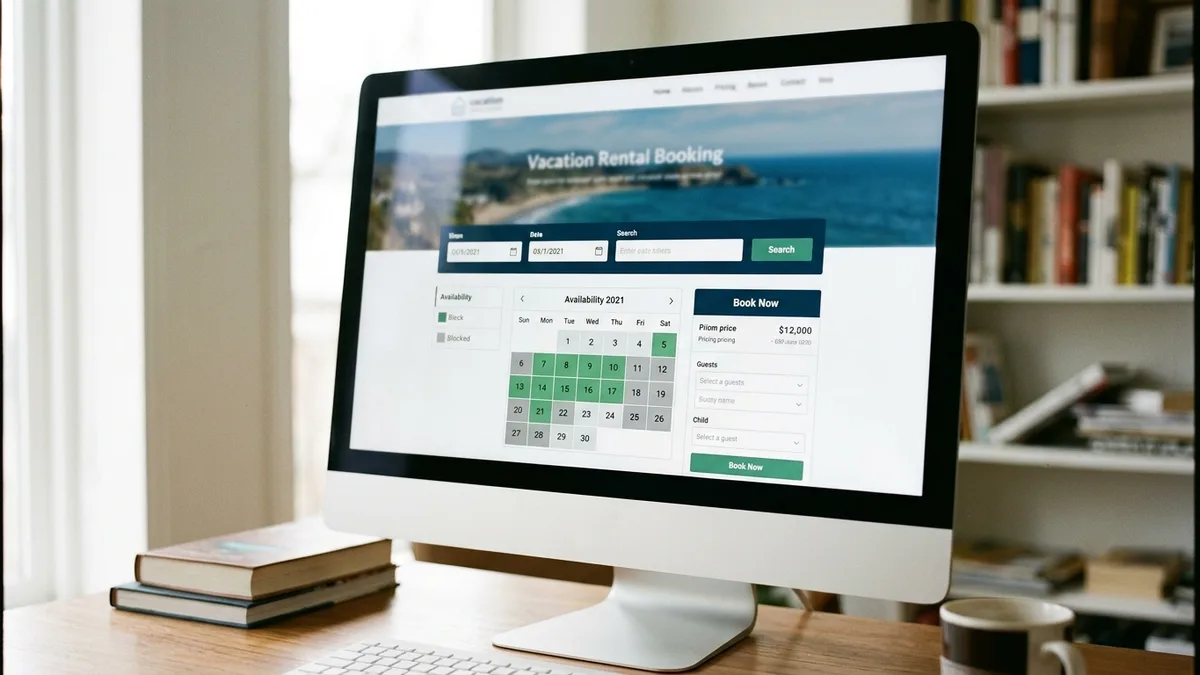
If you’re ready to stop relying on Airbnb’s algorithm as your only visibility channel, book a demo of Boostly Connect and see your own SEO-ready direct booking website built out with your existing property data.