
Ranking a website on Google means aligning three things at once: technical crawlability, content that fully answers a searcher’s intent, and enough external trust signals (backlinks and engagement) to beat competing pages. There is no single trick. It is a repeatable process, and most short-term rental sites fail at the intent and technical layers before backlinks even matter.
Key Takeaways
- Ranking on Google in 2026 requires three layers working together: technical health (crawlability, speed, mobile usability), content that matches search intent, and off-page trust signals like backlinks.
- Google’s ranking systems process hundreds of billions of webpages and weigh expertise, authoritativeness, and trustworthiness signals alongside backlinks from reputable sites.
- Google’s own language and intent-matching systems took over five years to build and reportedly improve results in more than 30 percent of searches across languages.
- Deeply focused, specialist websites gained rankings in Google’s December 2026 core update, while broad generalist sites lost visibility, according to independent SEO analysis of that update.
- Structured data and schema markup can materially improve click-through rate by earning rich results; one Google Search Central case study showed a publisher tripling organic traffic after adding video structured data.
- For short-term rental hosts, Boostly Connect ships direct booking websites with SEO-ready structure and Google Vacation Rentals integration built in, so you’re not hiring a separate SEO contractor just to get a functioning site foundation.
If you’re a short-term rental host asking how to rank a website on Google, you’re probably staring at a homepage that took real money to build and gets almost no organic traffic. That’s a common starting point. Most independent operators launch a site, wait, and watch Airbnb keep every booking instead.
At Boostly Connect, we’ve watched thousands of hosts make this exact transition, from Airbnb-only visibility to owning a direct booking channel that actually shows up in search. The pattern is consistent: hosts who treat their website as an afterthought rank nowhere, while hosts who treat it as a real business asset, with proper technical structure and content depth, start pulling in direct traffic within months, not years.
This guide walks through exactly how ranking works in 2026, what’s changed since Google’s most recent core update, and where most vacation rental websites quietly sabotage themselves. We’ll also cover the parts most SEO guides skip entirely: a realistic starting checklist, how AI Overviews are reshaping what “ranking” even means, and the backlink tactics nobody explains in concrete terms.
How Do I Get a Website to Rank on Google?
Getting a website to rank on Google requires fixing technical foundations first, then building content that fully satisfies a specific search intent, then earning links and engagement that signal trust. Skipping any one of these three layers caps how high you can rank, no matter how much effort you put into the others.
Start with technical health. Google’s crawlers need to reach every important page, render it correctly, and load it fast, especially on mobile, since most vacation rental site traffic now arrives on a phone. Next comes content: a page has to fully answer what someone typed, not just mention the topic. Finally, backlinks and user engagement tell Google that other sites and other humans vouch for your page.
For a vacation rental site specifically, this means your property pages need live availability data, fast load times, and content that answers questions like “is this property pet-friendly” or “how far is it from downtown” directly, not buried in a PDF. That’s exactly why Boostly Connect builds direct booking websites with SEO-optimized property pages from the start, rather than leaving hosts to bolt on structure after the fact. If you want a deeper walkthrough of what actually determines a site’s visibility, our vacation rental SEO tips guide covers property-page specific tactics.
The Three Layers, Broken Down
Technical SEO covers crawlability, site speed, mobile usability, sitemaps, and structured data. Content quality covers depth, intent match, and expertise signals. Off-page authority covers backlinks from other reputable sites and engagement signals like people not immediately bouncing back to the search results. Neglect any one layer and your ceiling drops, regardless of how strong the other two are.
How Do I Find My Website’s Ranking on Google?
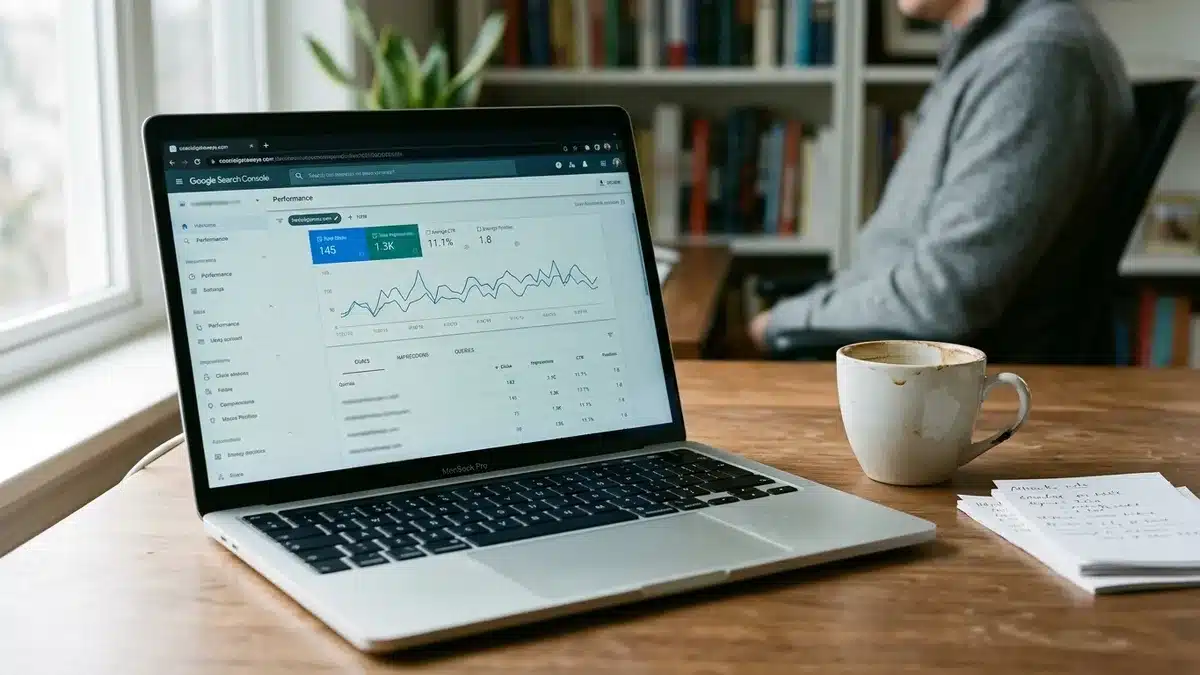
Finding your website’s current Google ranking means checking Google Search Console, which shows the exact position your pages hold for specific search queries, including impressions, clicks, and average position over time. This is a free tool Google provides directly and it’s the single most reliable source for your actual ranking data.
Search Console shows you which queries triggered impressions for your site, what position you averaged for each one, and your click-through rate. If your direct booking page shows up for “cabin rental near [destination]” at position 14 with a low click-through rate, that’s a specific, fixable problem, not a vague “improve SEO” task.
Google Analytics complements this by showing what happens after someone lands: how long they stay, which pages they view next, whether they convert into an inquiry or booking. Together, these two free tools replace the guesswork most self-managing hosts default to, which is manually searching their own property name and assuming that reflects real visibility.
Manually checking rankings by searching your own site is unreliable, since personalized search results and location can skew what you see. Search Console pulls from Google’s actual index data. If you’re managing multiple properties across different PMS accounts and trying to track this by spreadsheet, that manual reconciliation work is exactly the kind of task that breaks down as you scale, which is why Boostly Connect’s reporting dashboard tracks direct booking performance in one connected view instead of forcing you to stitch together data from separate tools.
Can I Pay Google to Rank My Website Higher?
No, you cannot pay Google to improve your organic (unpaid) search ranking. Paid ads through Google Ads appear in clearly labeled “Sponsored” sections above or beside organic results, but they occupy a completely separate ranking system and have zero influence on where your page lands in the regular, unpaid results list.
This distinction matters enormously for short-term rental hosts on tight marketing budgets. You can run a Google Ads campaign to appear at the top of search results for “vacation rental in [location],” and that traffic disappears the moment you stop paying. Organic ranking, by contrast, compounds. A well-optimized property page can keep generating direct bookings for years without a recurring ad spend.
Google states plainly that no one can buy a better position in organic search results, and the company has published independent research, including studies from Stanford and The Economist, showing no political bias in how Search or News results are ranked. The ranking systems evaluate relevance and quality signals uniformly.
For hosts weighing whether to spend on ads versus SEO, the honest answer is both have a role, but they solve different problems. Ads buy immediate visibility for a launch or a slow season. Organic ranking builds a durable asset that reduces your long-term dependence on any single paid channel, including Airbnb’s own search algorithm. That’s the entire philosophy behind building a real direct booking website instead of just running ads to an Airbnb listing you don’t control.
Do Google Sites and Free Website Builders Rank Well?
Free and basic website builders, including Google Sites, generally rank poorly for competitive commercial queries because they offer limited control over technical SEO elements like structured data, URL structure, page speed optimization, and mobile rendering. They can work for a simple informational page, but they struggle against dedicated, purpose-built sites for anything transactional, like booking a vacation rental.
The core issue is control. A generic site builder wasn’t designed for the specific job of ranking a vacation rental property page, so it lacks the schema markup options, the fast-loading image handling, and the URL flexibility that a purpose-built platform provides. Google’s ranking systems reward pages that load fast and render cleanly on mobile, and generic builders often fall short on both.
This is a real trade-off worth naming honestly. If you own a single property and get very low search volume for your specific market, a simple site might genuinely be fine while you test demand. But the moment you’re serious about competing for direct bookings against OTA listings and other local rentals, a generic builder becomes a ceiling, not a foundation.
Boostly Connect builds direct booking sites on WordPress specifically because WordPress gives full control over the technical and structural elements that free builders restrict, while still requiring no developer and no coding knowledge to set up. The sync from your existing PMS to your new site typically completes in under 20 minutes, which means you’re not trading ranking potential for setup simplicity. You get both.
How Does Google Determine Ranking Results?
Google determines ranking results by matching a page’s content to the searcher’s intent, then weighing quality signals including expertise, authoritativeness, and trustworthiness, alongside backlinks from prominent websites. Google’s own systems process hundreds of billions of webpages to return results in a fraction of a second, according to Google’s published “How Search Works” documentation.
Intent matching has become far more sophisticated. Google’s language and intent system reportedly took over five years to develop and improves results in more than 30 percent of searches across languages, per Google’s own account. In practice, this means the algorithm increasingly parses what a person actually wants, not just which keywords appear on a page.
Notably, Google’s search algorithm now pulls relevant passages from within pages and compiles them into AI Overviews, snippets, and carousels, rather than simply ranking whole pages top to bottom. This shift is why structuring content into clear, self-contained, question-answering sections (exactly what this article does) matters more in 2026 than it did five years ago.
SEO consultant Aleyda Solís analyzed Google’s December 2026 core update and found that deeply focused, specialist sites gained rankings, while broad, generalist sites lost visibility. For a vacation rental host, that finding has a direct implication: a site focused specifically on your property, market, and guest experience will likely outperform a scattered blog trying to cover every travel topic under the sun.
What Are the Most Common Technical SEO Mistakes Hosts Make?
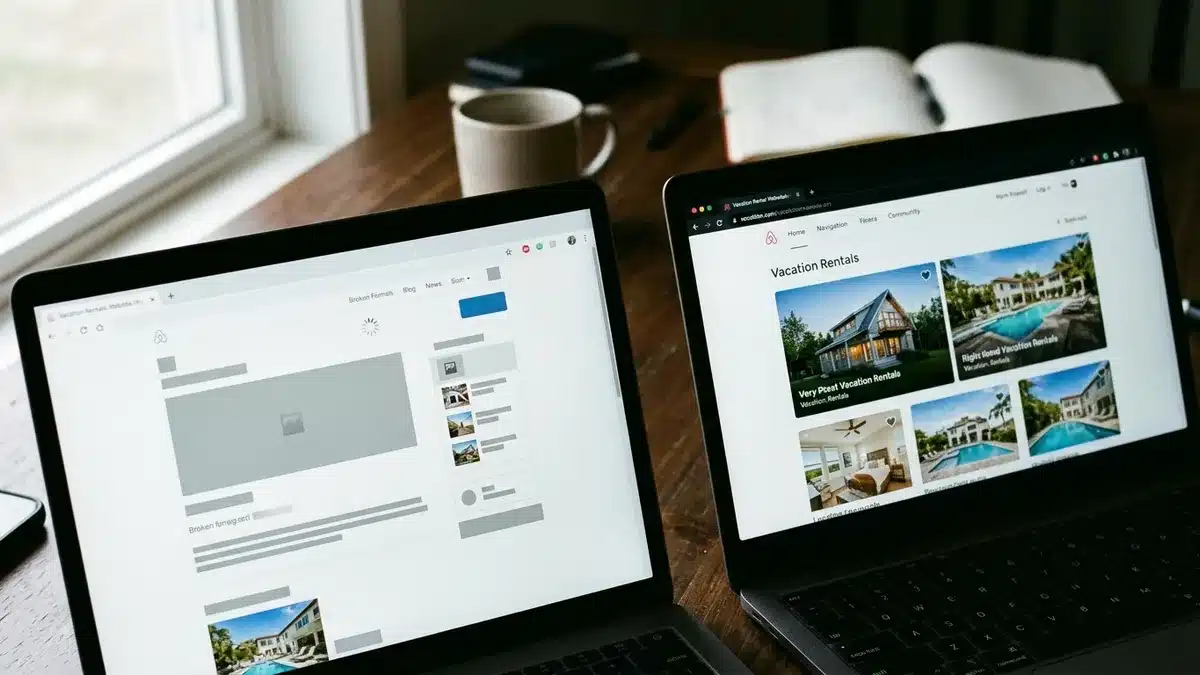
The most common technical SEO mistakes for vacation rental sites are slow-loading image galleries, duplicate content across multiple listing pages, broken or missing sitemaps, and JavaScript rendering issues that hide content from Google’s crawlers. These problems often go unnoticed because the site looks fine to a human visitor while quietly blocking search engines.
Duplicate content is especially common among hosts who list the same property description across their own site, a PMS-generated page, and an OTA listing. Google needs a clear canonical signal telling it which version is the authoritative one, or it may split ranking signals across near-identical pages, weakening all of them.
Another overlooked issue: hosts with properties in multiple countries or targeting international guests sometimes skip hreflang tags entirely, meaning Google shows the wrong language or regional version to travelers searching from abroad. This rarely gets mentioned in generic SEO advice, but it directly affects multi-market operators trying to capture international direct bookings.
A Practical Fix Checklist
- Run your site through a mobile-friendliness check, since more than half of vacation rental site visits happen on mobile devices.
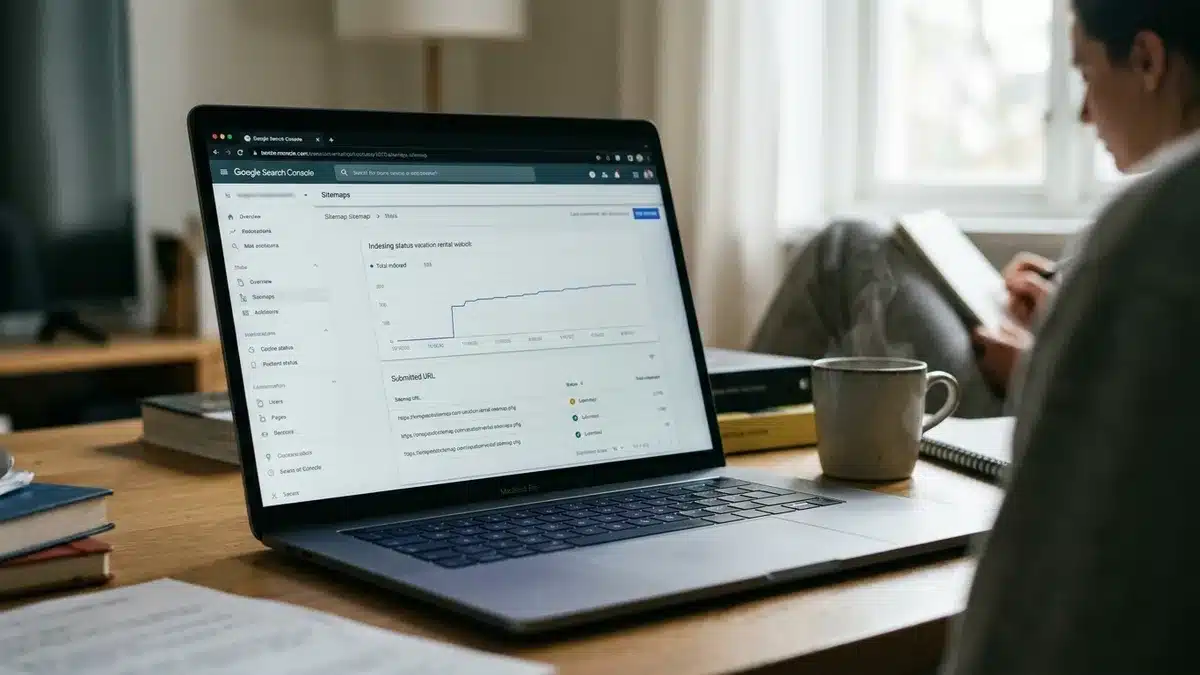
- Confirm your XML sitemap is submitted in Google Search Console and updates automatically when you add or remove properties.
- Check for duplicate title tags and meta descriptions across property pages, a frequent issue when pages are auto-generated from a PMS feed.
- Verify your images compress properly, since heavy, unoptimized photo galleries are the single biggest page speed killer on rental sites.
- Add schema markup for lodging, reviews, and FAQ content where relevant, since structured data increases eligibility for rich results.
This is precisely the manual audit work that eats an entire weekend for a self-managing host, and it’s exactly what disappears when your PMS, website, and CRM run through one connected system instead of duct-taped plugins. If technical debt is currently the reason your site underperforms, our piece on why a vacation rental website isn’t ranking digs into diagnosis in more depth.
A Realistic Week-by-Week Starting Plan (What Most Guides Skip)
A realistic starting plan for ranking a new or underperforming vacation rental site follows a sequence: technical audit first, content buildout second, and link and engagement building third, spread across roughly the first two to three months. Trying to do all three simultaneously from zero usually produces mediocre results across the board instead of solid progress in any one area.
Weeks 1 to 2, technical audit and fixes: Confirm crawlability, fix duplicate content, submit your sitemap, compress images, and add core schema markup. Nothing else matters until Google can properly crawl and understand your pages.
Weeks 3 to 6, content buildout: Build out property pages with full intent-matching detail (amenities, nearby attractions, house rules, pricing transparency) and publish supporting content, like neighborhood guides or FAQ pages, that answers the actual questions travelers search before booking.
Weeks 7 to 12, links and engagement: Begin outreach for backlinks, encourage guest reviews that reference your site, and monitor Search Console weekly to see which pages are gaining impressions so you can double down on what’s working.
This sequencing matters because content built on a broken technical foundation won’t get indexed properly, and links pointed at a slow, poorly structured site waste their value. Most generic SEO advice treats these as parallel tasks. In our experience helping hosts stand up direct booking sites, sequencing them saves months of wasted effort.
How Do You Rank for AI Overviews and ChatGPT Citations, Not Just Blue Links?
Ranking for AI Overviews and LLM citations (from tools like ChatGPT, Perplexity, and Google’s AI Overviews) requires structuring content as clear, self-contained question-and-answer blocks rather than long, unstructured prose. AI systems extract specific passages, not whole pages, so each section needs to answer one question completely on its own.
The practical technique is straightforward: open each section with a direct, quotable answer in the first sentence or two, using the exact phrasing a person might type or ask aloud. Follow with supporting detail. Avoid vague pronouns like “this” or “it” when a specific noun would remove ambiguity for an AI system scanning the passage in isolation.
Schema markup plays a role here too. FAQ schema, HowTo schema, and structured data around reviews or lodging details give AI systems and traditional search features a machine-readable way to understand your content’s structure, increasing the odds your page gets pulled into a rich result or cited directly in a conversational AI answer.
For vacation rental hosts, this means your “frequently asked questions about staying at [property]” page isn’t just customer service content anymore. It’s a direct citation opportunity when a traveler asks an AI assistant “is this cabin pet-friendly” or “what’s the cancellation policy.” Structuring that content properly is a genuinely new SEO skill most competing advice hasn’t caught up to yet.
Data & Evidence: What Actually Moves the Needle
The table below summarizes the ranking factors that carry the most documented weight in 2026, based on Google’s own published guidance and independent analysis of recent core updates.
| Ranking Factor | What It Means for STR Sites | Evidence |
|---|---|---|
| Topical focus | Specialist property/market sites outrank generalist travel blogs | Aleyda Solís’s analysis of Google’s December 2026 core update |
| Structured data | Schema markup increases rich result eligibility and click-through rate | Google Search Central case studies, including one publisher tripling organic traffic after adding video schema |
| Mobile experience | Slow, unoptimized mobile pages lose ranking and bookings | Over half of vacation rental site traffic arrives via mobile devices (CraftedStays, 2026) |
| Backlinks and trust | Links from reputable sites remain a core trust signal | Google’s “How Search Works” documentation |
| Intent matching | Content must fully answer the specific query, not just mention the topic | Google’s language/intent system reportedly improves 30%+ of searches |
Notice that none of these factors are about gaming an algorithm. They’re about building a genuinely useful, fast, well-structured site, which is the same standard we hold our own must-have tools for short-term rental managers to when we evaluate what belongs in a host’s tech stack.
What Backlink Strategies Actually Work for Vacation Rental Sites?
Backlinks are links from other websites pointing to yours, and they remain one of Google’s core trust signals because they function as a third party vouching for your content’s value. For vacation rental hosts, the most realistic backlink sources are local tourism boards, guest blogs on travel sites, local business directories, and press mentions tied to your specific market.
Generic advice to “build a natural backlink profile” isn’t actionable. Concrete tactics that work for STR sites include reaching out to local chambers of commerce for a directory listing, partnering with nearby attractions or restaurants for reciprocal mentions, and pitching a local journalist a story angle tied to your property (a renovation, a unique local partnership, a seasonal event you host).
Guest posting on established travel or lifestyle blogs in your niche also works, provided the content genuinely adds value rather than reading as thin promotional filler. A single link from a well-regarded regional tourism site typically carries more weight than a dozen low-quality directory submissions.
Reviews matter here too, though indirectly. Encouraging guests to reference your direct booking site in their reviews, or linking to it from your own social channels, builds the kind of engagement signal that supports your broader authority profile even when it isn’t a traditional backlink. If review generation feels like a manual chore you keep putting off, that’s the exact gap our guide on how to automate review requests for a vacation rental is built to close.
What Should You Prioritize First If You’re Starting From Zero?
If your vacation rental site currently has no meaningful organic traffic, prioritize technical health first, since content and links built on a broken foundation waste their potential impact. Confirm Google can crawl and index your site properly before investing heavily in content depth or outreach.
Common mistakes at this stage include obsessing over keyword density instead of intent match, publishing thin property pages that read like a checklist instead of a genuine answer to a traveler’s questions, and ignoring page speed because the site “looks fine” on a fast office internet connection.
A trade-off worth understanding: pursuing SEO is a medium-to-long-term investment. It typically takes months, not days, to see meaningful ranking movement, particularly for a brand-new domain with no existing authority. Hosts expecting immediate results often abandon the effort right before it starts compounding.
This is where a done-for-you approach changes the math. Instead of hiring a separate SEO agency to fix technical debt on top of an existing OTA-dependent website, Boostly Connect’s direct booking sites are built SEO-ready from day one, with the property page structure, mobile optimization, and Google Vacation Rentals integration already in place. You’re not starting from zero on the technical layer, which means your first few months of effort can go straight into content and outreach instead of undoing structural mistakes.

Frequently Asked Questions
How long does it take to rank a website on Google?
Meaningful ranking movement for a new or newly optimized vacation rental site typically takes several months rather than days, especially for a domain without existing authority. Technical fixes can show impact within weeks, but competing for commercial terms against established OTA listings usually requires sustained content and link-building effort over a longer horizon.
Do I need a blog to rank my vacation rental website?
A blog is not strictly required, but supporting content that answers traveler questions (neighborhood guides, FAQ pages, seasonal event roundups) helps your site rank for a wider range of search terms beyond your property pages alone. It also gives you more opportunities to earn backlinks and demonstrate topical depth.
Does switching focus to Google rankings hurt my Airbnb search ranking?
No. Building out your own direct booking website and improving its Google ranking has no bearing on your listing’s visibility within Airbnb’s separate internal search algorithm. Most hosts run both channels simultaneously, using their own site to capture repeat guests and reduce commission exposure while keeping their Airbnb listing active for new guest discovery.
Is Google Search Console free to use?
Yes, Google Search Console is a free tool provided directly by Google that shows your site’s actual search performance, including which queries trigger impressions, your average position, and click-through rate. It’s the most reliable way to verify your real ranking data rather than relying on manual searches.
What’s the difference between SEO and paid Google Ads?
SEO refers to earning organic, unpaid ranking positions through technical health, content quality, and backlinks, while Google Ads is a separate paid system where you bid for placement in clearly labeled sponsored slots. No amount of ad spend improves your organic ranking position, and the two systems operate independently.
Why did my website’s ranking suddenly drop after a Google update?
Ranking drops after a core update often reflect Google reassessing topical focus and content depth rather than penalizing a specific technical error. Independent analysis of the December 2026 core update found that broad, generalist sites lost visibility while deeply focused, specialist sites gained ground, suggesting narrowing your site’s topical scope can help recover lost rankings.
Can a multi-property portfolio site rank as well as a single-property site?
Yes, provided each property gets its own fully-developed, non-duplicate page with unique content, proper schema markup, and clear navigation. The risk for multi-property operators is templated pages that read as near-duplicates of each other, which dilutes ranking signals across the portfolio instead of building strength for any single listing.
Conclusion: The Straight Answer on Ranking a Website on Google
Ranking a website on Google in 2026 comes down to the same three layers we opened with: technical health, intent-matching content, and earned trust signals like backlinks. There’s no shortcut around any of them, and no amount of ad spend substitutes for organic authority built over time. The hosts who treat their site as a real business asset, not an afterthought next to their Airbnb listing, are the ones who eventually see their own domain outperform a rented spot on someone else’s platform.
The math rarely lies here either: every booking still funneled through an OTA is a guest relationship and a chunk of margin you never fully recover. Fixing your website’s ranking foundation doesn’t require hiring a developer or a separate SEO agency to patch structural problems, because a direct booking site built correctly from the start skips that entire remediation phase.
If you’re ready to stop guessing at what’s blocking your site from ranking, book a demo of Boostly Connect and see a direct booking website built with SEO-ready structure and live PMS-synced availability set up in under 20 minutes, no developer required.