
A strong rental listing description leads with a specific differentiator, states the exact specs, then answers the practical questions a guest or tenant has before they’ll commit to booking. The best rental listing description examples run 150 to 250 words, follow a repeatable structure, and swap vague adjectives for facts a reader can verify: distance to a landmark, whether utilities are included, what the cancellation or lease terms actually are.
Key Takeaways
- Industry guidance recommends 150 to 250 words for a full rental listing description, with most effective examples landing at 4 to 6 sentences and rarely exceeding 8.
- The most reliable formula follows: Differentiator, Specs, Top Features, Neighborhood, Practical Details, Terms, Call to Action, in that order.
- Short-form versions for platforms like Facebook Marketplace or Craigslist need to fit roughly 300 characters, which means cutting the formula down to differentiator plus specs plus one CTA line.
- Vague phrases like “perfect location” or “best area” perform worse than factual anchors, such as specific walking distances to transit or a named grocery store nearby.
- Short-term rental descriptions on platforms like Airbnb and Vrbo need different framing than long-term lease listings, since guests are booking an experience, not signing a 12-month commitment.
- Boostly Connect gives short-term rental hosts a direct booking website where these description formulas actually convert traffic into bookings, instead of sitting on a page nobody finds.
We’ve reviewed hundreds of listing descriptions across long-term rental sites and short-term rental platforms while building direct booking websites for hosts at Boostly Connect, and the pattern holds steady: the descriptions that book fastest are the ones that read like they were written by someone who has actually stood in the property. Generic copy gets skipped in favor of a search result that names an actual neighborhood landmark or a specific amenity.
This guide walks through real formula-based examples for apartments, houses, townhomes, furnished units, and short-term vacation rentals, plus the platform-specific length rules that trip up most hosts in 2026. We’ll also cover a gap most guides skip entirely: how to write fair-housing-compliant descriptions, and how to repurpose one core description into multiple headline variants without rewriting from scratch every time.
Whether you’re filling a long-term lease or trying to get more direct bookings on a short-term rental, the underlying discipline is the same. Specificity sells. Filler doesn’t.
What Is a Property Description Sample and What Should It Include?
A property description sample is a template that shows the structural elements a rental listing needs, typically organized as differentiator, specs, features, neighborhood context, practical details, lease or booking terms, and a call to action. Most guides recommend covering rent or nightly rate, security deposit or cleaning fee, pet policy, parking type, and laundry setup as the non-negotiable practical details.
Here’s a sample structure for a 2BR/2BA townhome, adapted from a common industry template:
“Bright corner townhome with private patio and in-unit washer/dryer. This 950 square foot 2BR/2BA features hardwood flooring throughout, granite countertops, new stainless appliances, and a gas fireplace in the living room. Located in Buckhead, 3 minutes from the neighborhood grocery store and 6 minutes from the nearest transit station. Water and trash included, tenant pays electric. $1,200/month, 12-month lease, first and last month plus security deposit due at signing. Pet-friendly with breed restrictions. Message us with your desired move-in date and preferred showing time.”
Notice what’s missing: no “must see” or “won’t last long.” Every sentence carries a fact. That discipline is what separates a description that gets read from one that gets skimmed past. For short-term rentals specifically, we recommend pairing this kind of factual density with the tactics covered in our guide on SEO for Airbnb listings, since search visibility and description quality work together, not separately.

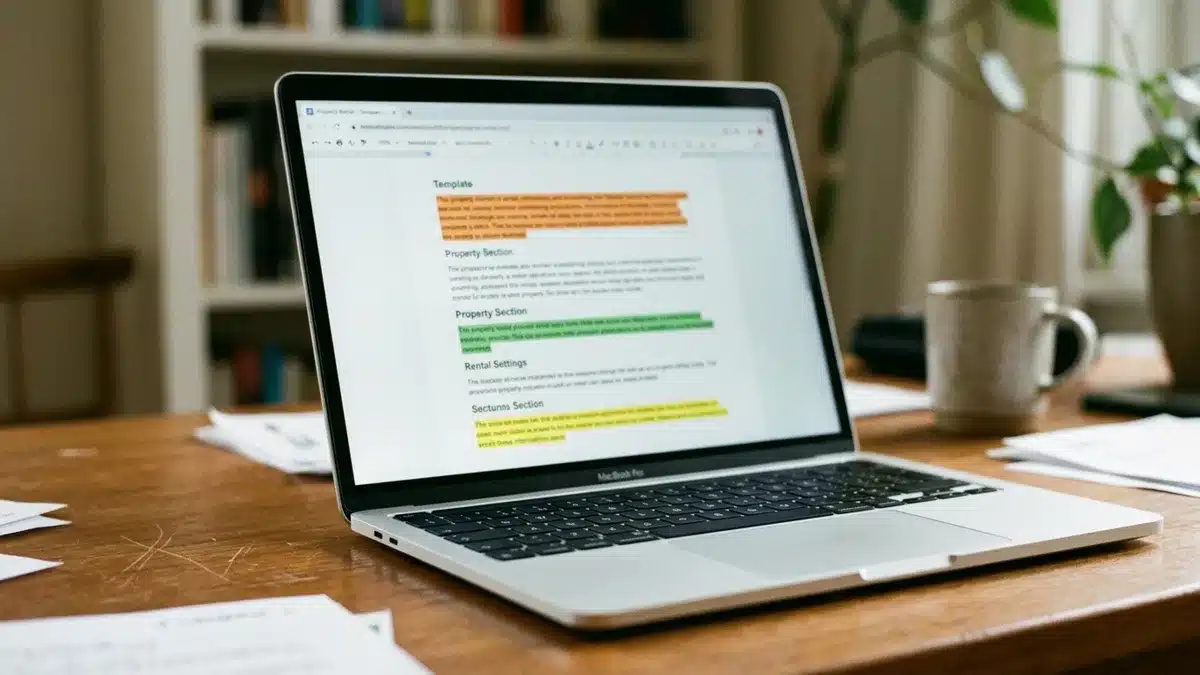
A laptop screen showing a well-formatted rental listing description template with highlighted sections for specs, neighborhood Can You Provide Some Examples of Airbnb Descriptions?
Airbnb descriptions differ from long-term lease listings because guests are booking an experience for a few nights, not a home for a year. A strong Airbnb description leads with atmosphere and a specific standout feature, then moves into logistics: distance to key attractions, check-in process, and what makes the space work for the traveler’s specific trip.
One common example structure for a vacation-style property: “Wake up 20 meters from the sea in this sunlit two-bedroom retreat. Just 35 minutes from the airport and 50 minutes from the city center, this home is set up for guests who want beach mornings and easy access to downtown dining. Full kitchen, private outdoor shower, and dedicated parking for two vehicles. Self check-in with a smart lock, flexible cancellation, and a host who responds within the hour.”
That example works because it names distances instead of saying “close to the beach.” Specificity is what a traveler scanning ten listings actually stops on. In our experience running direct booking sites for hosts at Boostly Connect, the properties with the strongest descriptions consistently pull higher engagement on the direct site itself, not just on the OTA. That’s exactly why we built the platform’s property pages to sync live availability and real-time pricing directly from a host’s existing PMS, so the description doing the selling work on Airbnb can do the same job, word for word, on the host’s own website without a rewrite.
A second example for a family-oriented short-term rental: “Spacious four-bedroom home ten minutes from the theme park entrance, built for groups who want space to spread out after a long day. Private pool, game room with a pool table, and a full chef’s kitchen stocked with the basics. Free parking for three cars, pack-and-play and high chair available on request.”
Airbnb is changing (you’re not ready for what’s next) What Is the 2% Rule for Rentals?
The 2% rule is a quick investment screening metric some rental property investors use, checking whether the monthly rent equals roughly 2% of the property’s purchase price. It’s an investor filtering tool, not a listing description tactic, and it has no bearing on how you actually write copy that gets a unit rented.
Where the 2% rule does connect to listing descriptions is pricing transparency. If a property clears the 2% threshold and cash flows well, that often means the owner has room to compete on rate rather than overselling amenities the unit doesn’t have. Underpriced-for-the-market units still need honest descriptions; investors who chase the 2% rule without matching it to accurate, factual copy tend to see longer vacancy periods regardless of how the numbers pencil out on paper.
For short-term rental operators specifically, the more useful comparison isn’t a purchase-price ratio at all, it’s your direct booking percentage against total revenue. Hosts using Boostly Connect track that split directly through the dashboard, since knowing what share of bookings comes through your own site versus an OTA matters more day to day than a purchase-price formula ever will.
How Long Should a Rental Listing Description Be?
Most rental listing descriptions perform best between 150 and 250 words, structured across 4 to 6 sentences, with 8 sentences as a practical ceiling. Descriptions longer than that tend to bury the key selling points a reader is scanning for, while descriptions shorter than 150 words often skip practical details that trigger unnecessary follow-up questions.
Platform format matters as much as total length. A Facebook Marketplace or Craigslist post typically needs to fit around 300 characters for the primary teaser, forcing you to compress the formula down to differentiator, specs, and a single CTA line. A listing on Zillow, Apartments.com, or an MLS feed can run the full 150 to 250 word version since those platforms display the complete description upfront.
Platform Type Recommended Length What to Prioritize Craigslist / Facebook Marketplace Approx. 300 characters Differentiator, price, one CTA line Zillow / Apartments.com / MLS 150 to 250 words, 4 to 6 sentences Full formula: differentiator through CTA Airbnb / Vrbo 150 to 250 words, experience-first Atmosphere, distances, logistics, cancellation terms Direct booking website 150 to 250 words, expandable with photos Same core copy, reinforced with live pricing and availability That last row matters more than most hosts realize. A description written once for Airbnb rarely gets repurposed onto a host’s own site, mostly because there isn’t an easy way to sync it. That’s one of the exact gaps Boostly Connect closes: once your PMS is connected, the same listing content and imagery you’ve already written flows straight onto your direct booking website, so you’re not maintaining two separate copies of the same property story.
How Do You Write Different Description Formats for Different Platforms?
Repurposing one core rental description into multiple platform-specific variants means keeping the same factual foundation, specs, and differentiator, while adjusting length, tone, and CTA phrasing to match each channel’s audience and character limits. Few guides address this directly, and it’s one of the most common mistakes we see hosts make: writing a single, generic description and pasting it everywhere.
Start with your full 150 to 250 word core description, the version built for Zillow, Apartments.com, or your own direct booking site. From there:
- Craigslist/Facebook version: Trim to the differentiator sentence plus specs and price, then close with a short CTA like “Message with your move-in date and preferred showing time.”
- MLS/syndicated version: Keep the full formula but front-load lease terms and square footage, since MLS readers filter on hard numbers first.
- Airbnb/Vrbo version: Rewrite the opening line for atmosphere and trip type (“built for a family reunion” vs. “built for remote work”), then keep specs and logistics identical.
- Direct booking website version: Same as the Airbnb version, but you can afford a longer neighborhood section since there’s no character-count pressure and no OTA algorithm competing for attention on the page.
The reason this matters for revenue, not just tidiness: a guest who finds your Airbnb listing and later searches your property name directly should land on a website that reads consistently, not like a different property. Boostly Connect’s website builder pulls your synced listing data so the specs and photos stay identical across channels, while giving you room to adjust the opening hook for a direct-booking audience specifically, guests who are already halfway convinced and just need a reason to book with you instead of through the platform they found you on.
A split screen showing the same property description reformatted for a short character-limit post versus a longer full listing page How Do You Tailor Descriptions for Remote Workers, Students, or Retirees?
Tailoring a rental listing description for a specific tenant persona means leading with the amenity that persona cares about most, then building the rest of the description around that use case instead of a generic feature list. A description built for a remote worker looks different from one built for a student or a retiree, even if it’s describing the exact same unit.
For a remote worker: “Dedicated home office nook with a built-in desk and fiber internet already installed. Quiet building on a low-traffic street, five minutes from two coffee shops with reliable wifi as backup. In-unit washer/dryer, one covered parking spot included.” The differentiator here is connectivity and quiet, not square footage.
For a student: “Furnished studio eight minutes from campus by bike, with a bus stop directly outside the building. Includes bed, desk, and basic kitchen setup. Utilities and internet included in rent, month-to-month lease available after the first semester.” Students prioritize proximity and all-in pricing over finishes.
For a retiree or corporate housing tenant: “Single-level, move-in ready two-bedroom with zero-step entry and an updated kitchen. Minimal maintenance chores, since the HOA handles lawn care and exterior upkeep. Assigned elementary school for the district isn’t relevant here, but the quiet cul-de-sac and short drive to the medical center often is.” Accessibility and low-maintenance framing matter more than nightlife or transit here.
Matching your description to persona doesn’t mean writing three separate listings. It means choosing which two or three facts to lead with. Short-term rental hosts targeting longer stays for remote workers can layer this same persona logic into their direct booking strategy, since the guests worth converting to repeat direct bookings are often exactly these longer-stay personas.
How Do You Keep Rental Descriptions Fair-Housing Compliant?
A fair-housing-compliant rental description describes the property and its amenities factually, without language that expresses a preference, limitation, or discrimination based on protected characteristics. This is one of the most under-covered topics in rental listing guides, and it’s a real legal exposure, not a stylistic nitpick.
The safest approach: describe the unit, the building, and the neighborhood’s physical features, never the type of person you imagine living there. “Great for a young professional” or “perfect for a small family” both cross into describing tenant type rather than property features, and both should be avoided. Instead, describe what the space physically offers: “one bedroom, ideal for a home office setup” or “open floor plan suited to entertaining.”
Similarly, avoid describing a neighborhood in terms that reference the demographics of who lives there, and stick to verifiable, physical, or civic facts: distance to transit, named amenities, school district assignment as a factual detail rather than a quality judgment. Because fair housing rules and their enforcement vary by state and locality, and can change, confirm your specific description language against the current guidance from your state’s housing authority or a qualified attorney before publishing, rather than relying on a generic template alone.
Data & Evidence: Comparing Description Approaches by Property Type
The formula stays constant across property types: differentiator, specs, features, neighborhood, practical details, terms, call to action. What changes is which element gets the most word count. A studio apartment description should spend fewer words on room count and more on layout efficiency; a single-family home description can afford more neighborhood and school detail since those factors weigh heavier on that buyer.
Property Type Leading Element Example Differentiator Studio apartment Layout efficiency “Smart layout with a separated sleeping nook and full-size kitchen” 2BR/2BA townhome Specs and finishes “Bright corner unit with in-unit laundry and a private balcony” Single-family house Neighborhood and schools “Move-in ready with an assigned elementary school two blocks away” Furnished corporate unit Move-in readiness “Fully furnished with linens, cookware, and utilities confirmed before applying” Short-term vacation rental Experience and distance “20 meters from the sea, 35 minutes from the airport” One pattern we consistently see across every property type: descriptions that name a specific walking or driving time outperform ones that use a subjective distance word like “nearby” or “close.” A guest or tenant scanning multiple listings treats a number as trustworthy and a vague adjective as filler, whether they consciously register it or not.
Practical Guidance: How to Write Your Own Listing Description Step by Step
Writing a rental listing description that books faster follows a repeatable process, regardless of property type or platform. Here’s the sequence we recommend to hosts building out their direct booking website through Boostly Connect, adapted for any listing platform:
- Write your differentiator sentence first. Name one specific feature no other nearby listing has, phrased as a fact, not a superlative.
- List hard specs immediately after. Bedrooms, bathrooms, square footage, key finishes. Skip adjectives here entirely.
- Name two or three top features. In-unit laundry, private outdoor space, updated kitchen, whatever actually applies.
- Anchor the neighborhood with named places. A specific grocery store, transit line, or landmark, with a walking or driving time attached.
- Cover practical details plainly. Utilities included, parking type, pet policy with any restrictions.
- State terms clearly. Rent or nightly rate, deposit or cleaning fee, lease length or minimum stay, cancellation policy if applicable.
- Close with one direct CTA. “Message with your move-in date” or “Check availability” beats “Contact us for more information.”
Common mistakes we see repeatedly: leading with the address instead of the differentiator, stacking three adjectives in a row instead of one fact, and forgetting practical details that generate the most repetitive follow-up questions, like whether parking is included or what breed restrictions apply. Each of those omissions costs you time answering the same question by message that the listing should have answered upfront. That repetitive messaging burden is exactly why we built AI agents into the Boostly CRM. Once your listing description already answers the common questions, the AI agent catches the ones it doesn’t and responds instantly, instead of a guest bouncing to a competing listing while waiting on a reply.
For short-term rental hosts specifically, pairing a strong description with visibility tactics matters just as much as the copy itself. Our post on getting more Airbnb bookings without ads covers how listing quality and search placement interact, and our guide to re-engaging past vacation rental guests shows how a well-written description on your own site helps returning guests rebook direct instead of searching Airbnb again out of habit.
Frequently Asked Questions
What is a property description sample?
A property description sample is a template showing the structural elements a rental listing should include: a differentiator, hard specs, top features, neighborhood context, practical details like utilities and parking, lease or booking terms, and a call to action. Most samples run 150 to 250 words across 4 to 6 sentences.
How many sentences should a rental listing description have?
Most industry guidance recommends 4 to 6 sentences, with 8 sentences as a practical maximum. Beyond that length, readers tend to skim past key details instead of reading the full description.
Do Airbnb descriptions need to be written differently than long-term rental listings?
Yes. Airbnb and Vrbo descriptions should lead with atmosphere and trip-specific value, since guests are booking a short experience rather than signing a lease. Long-term rental descriptions should lead with hard specs and lease terms, since tenants are evaluating a longer commitment.
Should I use the same description on every platform?
No. Keep the same core facts and differentiator, but adjust length and CTA phrasing per platform. Craigslist and Facebook Marketplace need a compressed version around 300 characters, while Zillow, Apartments.com, and your own direct booking website can run the full 150 to 250 word version.
What phrases should I avoid in a rental listing description?
Avoid vague, subjective phrases like “perfect location,” “best area,” or language describing a preferred tenant type, since these read as unhelpful filler and can raise fair-housing compliance concerns. Replace them with factual anchors: a specific walking time to transit, a named grocery store, or an exact square footage.
Can a listing description alone help fair housing compliance?
A well-written description helps by focusing entirely on the property and its features rather than the type of tenant you picture. But fair housing rules vary by state and change over time, so confirm your specific wording against current guidance from your state’s housing authority or a qualified attorney before publishing.
How does a direct booking website change the value of a good listing description?
A direct booking website lets a strong description work twice: once on the OTA where guests discover you, and again on your own site where returning or referred guests can book without a platform commission. Boostly Connect syncs your existing listing content and live pricing directly from your PMS, so the description you’ve already refined carries over without extra rewriting.
Conclusion: Write the Description Once, Make It Work Everywhere
The strongest rental listing description examples share the same bones: a specific differentiator, honest specs, and practical details that eliminate repetitive questions before they’re asked. Whether you’re filling a long-term lease or trying to convert more Airbnb searchers into direct bookings, 150 to 250 words structured around that formula consistently outperforms longer, adjective-heavy copy.
In 2026, the hosts pulling ahead aren’t the ones with the fanciest photography. They’re the ones whose descriptions answer the guest’s real questions before check-in, and whose website reflects the same accurate, synced information their OTA listing already shows. That consistency is what turns a one-time booking into a returning direct guest.
If you’ve already written a description that converts on Airbnb or Vrbo, don’t let it stop working once a guest leaves the platform. Book a demo with Boostly Connect to see how your existing listing content, live PMS pricing, and availability sync onto a direct booking website built to convert that same guest again, without a rewrite and without the commission.

A direct booking page pulls its own weight — no ad spend required. A direct booking page built around the same description that already converts on Airbnb pulls its own weight once it’s live, no ad spend required to get a returning guest to find it again.