

The best site for rentals by owner in 2026 is not any single listing marketplace. It is your own direct booking website, connected to the property management system (PMS) you already use, backed up by placement on two or three high-traffic owner-listing sites for extra visibility. Relying on one third-party marketplace alone leaves you exposed to fee changes, algorithm shifts, and zero ownership of your own guest data.
Key Takeaways
- No single “rentals by owner” site captures every buyer segment, so the strongest owners combine a direct booking website with listings on one or two owner-focused marketplaces.
- Vacation rental demand in the U.S. is projected to grow 4.1% year over year in 2026, according to AirDNA’s 2026 Outlook Report, meaning more competition for visibility, not less.
- Owner-listing platforms typically charge either a flat monthly subscription (commonly in the tens of dollars per month range) or a per-lease/per-booking fee, so compare total annual cost, not just the headline price.
- More than 50% of vacation rental website traffic comes from mobile phones, according to CraftedStays (2026), which makes mobile-optimized direct booking pages a requirement, not a nice-to-have.
- Scam prevention matters on any owner-to-renter platform. Verify identity, ownership documents, and never accept payment requests routed outside a platform’s secure system.
- Boostly Connect builds a direct booking website synced to your existing PMS in under 20 minutes, so the site you own becomes your strongest owner-rental channel instead of a side project you never finish.
If you’re an independent rental owner searching for the best site for rentals by owner, you’re probably tired of one of two things: paying steep commissions to a marketplace, or watching your own listing get buried under hundreds of others. Both problems are solvable, but not with a single silver-bullet platform.
In 2026, the landscape for owner-direct rentals spans long-term rental-by-owner marketplaces, vacation rental listing sites, and increasingly, owner-built direct booking websites. Each serves a different purpose. A long-term rental-by-owner site helps you find a tenant. A vacation rental marketplace helps a traveler discover your cabin or condo. A direct booking website is the one channel you fully control, where you set the rules, keep the guest data, and never split revenue with a third party on a repeat stay.
This guide breaks down what each type of site actually offers, what they cost, where they fall short, and how to combine them so your rental business isn’t dependent on any one algorithm. We’ll also flag the scam-prevention and pricing-transparency gaps that most “best of” roundups skip entirely.
What Is the Best Way to Find Private Landlords or List as One?
Finding private landlords, or listing your own property as one, means using platforms built specifically for owner-to-renter transactions rather than agency-managed listings. These sites strip out the property management company middleman and let owners post directly, which usually means better response times and more negotiating room on price for renters.
For owners, the tradeoff is visibility. A property posted directly by an owner has to compete against thousands of agency-managed units on the same site, often with a smaller marketing budget behind it. That’s why the strongest owner-direct strategy pairs a listing on a reputable owner-only marketplace with a standalone website you control. Search traffic increasingly rewards properties that show up in multiple places, including a dedicated direct booking website that Google can index on its own terms.
Notably, private-landlord platforms differ in how they screen listings. Some verify ownership documents before a listing goes live; others accept postings with minimal checks. As a renter or a competing owner evaluating the market, that verification gap is worth researching before you commit a subscription fee.
What Is the 2% Rule for Rental Property, and Does It Still Apply in 2026?
The 2% rule is an informal rental-property screening guideline some investors use, suggesting a property’s monthly rent should equal roughly 2% of its purchase price to generate strong cash flow. It’s a quick gut-check, not a guarantee, and most markets in 2026 make hitting that ratio difficult without significant leverage or a below-market purchase.
We’re not going to hand you a precise percentage as gospel because market conditions vary wildly by city, property type, and financing structure. What we will say, based on what we see across short-term rental operators: the 2% rule matters less for vacation rentals than for traditional long-term leases, because short-term rental revenue is a function of occupancy and average daily rate (ADR), not a flat monthly lease number.
For short-term rentals specifically, annual revenue potential is more commonly modeled as ADR multiplied by occupancy rate and 365 nights, before platform fees and operating expenses. U.S. short-term rental occupancy is forecast at 57.4% in 2026, compared with a 57.0% pre-pandemic average, according to AirDNA’s 2026 Midyear Outlook. That’s a more relevant math exercise for a vacation rental owner than a rule built for buy-and-hold landlords.
If you’re evaluating whether a property, or a listing strategy, pencils out, run the ADR-times-occupancy math first. Then subtract whatever commission your current booking channel takes. That gap is exactly what a direct booking channel is designed to close.
Where Is the Cheapest Place to Private Rent in 2026?
The cheapest markets to rent privately in 2026 tend to be mid-sized metros and secondary cities where supply has kept pace with or outpaced demand, rather than coastal gateway cities where short-term and long-term rental demand both compete for the same housing stock. Exact affordability rankings shift by quarter, so we won’t hand you a specific city list here since accurate current data requires checking a live market source rather than relying on training data that goes stale fast.
What we can tell you with confidence: U.S. available short-term rental listings are projected to increase from 1.69 million in 2026 to 1.77 million in 2026. More supply generally pressures nightly rates downward in oversaturated markets, which is good news for renters and a competitive warning sign for owners in those same areas.
If you’re an owner in a market getting more crowded, the answer isn’t necessarily to drop your rate to compete on price. It’s to build a channel where guests choose you specifically, rather than picking whichever listing ranks highest that week. That’s the entire logic behind owning your own booking site instead of renting algorithm placement from a marketplace you don’t control.
Is There Another Site Besides Vrbo and Airbnb for Rentals by Owner?
Yes. Beyond the two dominant vacation rental marketplaces, owners can list on independent owner-listing platforms, regional booking sites, and metasearch aggregators, or bypass third-party marketplaces entirely with a self-owned direct booking website. Each option carries a different cost structure and a different level of control over guest data.
Owner-only marketplace platforms typically position themselves around one differentiator: no service fee charged to renters, direct owner-to-guest communication, or specialty inventory like farm stays and long-term furnished rentals. These sites can supplement your visibility, but none of them replace owning your guest list. When a guest books through a third-party marketplace, that guest’s contact information usually stays with the platform, not with you, which means you can’t easily invite them back for a direct repeat stay.
That’s the exact gap Boostly Connect was built to close. Every guest who books through your Boostly Connect website gets captured automatically in your own CRM, so their contact details, stay history, and preferences belong to your business permanently, not to whichever marketplace happened to process the transaction. In 2026, that ownership is the real differentiator between a business you control and one you’re renting space inside.
What Should You Compare When Choosing a Rental-by-Owner Platform?
Choosing a rental-by-owner platform means comparing total cost, audience reach, and how much control you keep over guest relationships, not just the sticker price of a listing fee. Most owner-listing platforms fall into one of two pricing models: a flat monthly subscription or a per-lease, per-booking charge.
| Factor | Owner-Listing Marketplace | Direct Booking Website |
|---|---|---|
| Typical cost structure | Flat monthly subscription or per-booking/per-lease fee | One-time or subscription-based site cost, no per-booking commission |
| Guest data ownership | Retained by the platform | Captured directly into your own CRM |
| Audience reach | Built-in search traffic from the marketplace’s existing users | Requires your own marketing, SEO, and repeat-guest outreach |
| Repeat booking control | Guest often rebooks through the platform, not you | You control the repeat-booking offer and timing |
| PMS integration | Varies by platform, often manual calendar syncing | Live availability and pricing synced from your existing PMS |
Industry comparisons of owner-listing platforms show a wide range of pricing approaches. Some sites offer a short free trial period before converting to a paid monthly plan, while others charge a small per-unit monthly fee tied to added management features like online leases or rent collection. A handful still offer free lifetime listings with paid upgrades for premium placement. There’s no universal “cheapest” answer here; the right pick depends on whether you value volume of leads or depth of tools like screening and lease management.
For vacation rental owners specifically, the calculation is different again. You’re not paying a per-lease fee; you’re paying a percentage commission on every single booking, often in the 15 to 20 percent range on major OTAs. That recurring cost is precisely why a growing number of independent owners are shifting toward getting more direct bookings through their own site instead of accepting commission bleed indefinitely.
How Do Long-Term, Vacation, Furnished, and Student Rentals Differ by Platform?
Rental property types split into distinct categories, long-term leases, short-term vacation stays, furnished corporate housing, student housing, and room rentals, and each performs best on a different type of platform. Treating all four the same way is one of the most common mistakes independent owners make when choosing where to list.
Long-term rental-by-owner platforms are built around lease-signing workflows: applications, screening, and monthly rent collection. Vacation rental marketplaces are built around calendar availability, nightly pricing, and instant booking. Furnished and corporate housing sits somewhere in between, often requiring minimum-stay flexibility that traditional lease platforms don’t support well. Student housing follows its own seasonal rhythm, with the strongest listing timing typically running from March through August ahead of the fall academic year.
If you manage a mixed portfolio, no single site handles all four well. A property manager running both a long-term duplex and a short-term vacation cabin needs separate strategies for each, which is exactly where a dedicated website for vacation rental properties earns its keep. It lets you run booking logic specific to nightly stays while your long-term units stay on a lease-focused platform.
For multi-property operators juggling different rental types across a growing portfolio, this is also where operational strain tends to show up first. Boostly Connect supports multi-property management from a single connected system, so pricing, availability, and guest data for your short-term units stay unified even as you expand into other rental categories.
How Do You Avoid Scams When Renting or Listing by Owner?
Avoiding scams on owner-to-renter platforms starts with verifying identity and ownership before any money changes hands, and never routing payment outside a platform’s secure processing system. This applies equally whether you’re a renter evaluating a listing or an owner vetting an inquiry.
For owners listing a property, the biggest risk is a fraudulent applicant using a stolen identity or a fake employment history to secure a lease or booking. Ask for verifiable documentation, and be cautious of anyone who insists on wiring a deposit before seeing the property in person or on a live video call.
For renters, the classic scam pattern involves a listing copied from a legitimate site and reposted at a below-market price, with a “landlord” who claims to be out of the country and demands a deposit via wire transfer or gift card. If a private landlord refuses a video call or an in-person viewing, treat that as a serious red flag.
As a specific and often-overlooked protection step: if you’re an owner running a direct booking website, always process payments through a secure, integrated checkout tied to your PMS rather than accepting off-platform payment requests, even from guests who claim they prefer it. It protects both parties and keeps a clean transaction record.

Should You Use a Broad Portal or a Local Niche Site?
Broad rental portals work best when you need volume and fast visibility across a large renter pool, while local or niche platforms work better when your property has a specific audience, like university housing, farm stays, or a tight-knit vacation destination. The right choice depends on how quickly you need to fill the unit and how specialized your target renter is.
A broad portal’s biggest advantage is built-in traffic. You’re tapping into a search audience that already exists. The tradeoff is competition; your listing sits alongside hundreds or thousands of others, and ranking well inside that portal often requires paying for premium placement.
A local or specialty channel, by contrast, might send fewer total leads but a higher percentage of qualified ones. A university housing board reaches students specifically. A regional vacation rental group reaches travelers already committed to that destination.
Most experienced owners run both simultaneously: a listing on one or two broad portals for reach, plus a direct booking website that captures and nurtures every guest who finds you through either channel. Since 50% or more of vacation rental website traffic arrives on mobile, according to CraftedStays (2026), that direct site needs to load fast and book cleanly on a phone screen, not just a desktop browser.
What Does a Rental-by-Owner Cost Comparison Actually Look Like?
A full cost comparison for owner-direct rentals has to include more than the advertised listing price. It should account for premium placement upgrades, screening or background check fees, payment processing charges, and any per-lease or per-booking commission stacked on top of the base subscription.
| Cost Type | What It Covers | Where It Shows Up |
|---|---|---|
| Base listing fee | Monthly subscription or flat listing charge | Long-term rental-by-owner platforms |
| Premium placement | Boosted search ranking within the platform | Most major listing marketplaces |
| Screening/background checks | Tenant verification for long-term leases | Long-term rental platforms with management add-ons |
| OTA commission | Percentage taken per booking, commonly 15 to 20 percent | Major vacation rental OTAs |
| Payment processing | Transaction fee on deposits and rent collection | Both long-term and short-term platforms |
Notice what’s missing from a well-built direct booking website: the recurring per-booking commission. You still pay for the website itself and, potentially, payment processing, but you’re not handing over 15 to 20 percent of every transaction indefinitely. Over a full year of bookings, that difference compounds fast, especially for owners with strong repeat-guest rates.
Vacation rental owners consistently see repeat booking rates between 10% and 25%, depending on market, property type, and guest profile, according to Hostex (2026). Every one of those repeat stays that runs through your own site instead of an OTA is commission you keep. That’s precisely the calculation Boostly Connect’s dashboard is designed to make visible, tracking direct booking revenue in one place instead of forcing you to reconcile numbers across a PMS, a spreadsheet, and a bank statement manually.
How Should You Actually Choose the Right Rental-by-Owner Strategy?
Choosing the right strategy means matching your property type and goals to the platform combination that fits them, rather than picking whichever site ranks first in a generic search. Follow this sequence to build a setup that actually works for your specific rental business.
- Identify your property type first. Long-term lease, vacation rental, furnished corporate housing, or student housing each need a different primary platform.
- Pick one or two broad marketplaces for reach. Don’t spread yourself across five different owner-listing sites paying five separate subscriptions.
- Build a direct booking website you control. This becomes your permanent asset regardless of which marketplaces change their fee structure or algorithm over time.
- Connect your PMS to that website. Manual calendar updates across multiple platforms are the single most common cause of double bookings we hear about from independent owners.
- Capture every guest into a CRM. Without this step, repeat guests default back to whichever marketplace they originally booked through.
- Set up automated guest communication. Answering the same check-in and Wi-Fi questions manually across dozens of bookings a month eats hours you don’t have.
The mistake most independent owners make is stopping after step 2. They list well but never build the asset that actually compounds in value: their own booking channel. That’s the gap Boostly Connect closes by connecting your PMS, your website, and your CRM into one system that runs without you manually updating three separate tools every time a booking comes in.
If you’re deciding between building this yourself and using a done-for-you platform, our comparison of the best website builder for short term rentals walks through what to prioritize in more depth. And if your current site exists but isn’t generating leads, our guide on why your website isn’t ranking well covers the most common technical fixes.
Frequently Asked Questions
Can you suggest a website builder for vacation rentals that supports dynamic pricing integration?
Yes. Look for a website builder that syncs directly with your existing PMS so pricing updates automatically rather than requiring manual entry on two separate systems. Boostly Connect connects to your PMS in under 20 minutes and pulls live availability and pricing straight onto your website, so dynamic rate changes made in your pricing tool reflect on your booking site without any extra work.
Which payment setup is best for deposits, refunds, chargebacks, and payout control in direct bookings?
The safest setup routes all deposits and payments through a secure checkout integrated with your PMS, rather than accepting off-platform transfers. This gives you a clean audit trail for refunds and chargeback disputes and keeps payout timing under your control instead of dependent on a third-party marketplace’s payment schedule.
How can I advertise my vacation rentals to boost direct bookings?
Combine SEO-optimized property pages on your own website with email marketing to past guests and consistent social media presence, since repeat guests are one of the highest-converting audiences you have. Vacation rentals earn a Net Promoter Score of 50.9 compared to 41.8 for hotels, according to a 2026 Alchemer study, which signals strong guest loyalty worth capitalizing on through direct outreach rather than letting that goodwill benefit an OTA instead.
What platform can I use to manage my rentals and generate more direct guest bookings?
A platform that connects your property management system, your website, and a guest CRM in one place removes the manual work of updating three separate tools. Boostly Connect does exactly this, syncing 8 PMS integrations to a direct booking website while automatically capturing every guest into your CRM for future outreach.
How do I drive direct bookings for vacation rentals?
Start by building a fast, mobile-optimized booking website, since more than half of vacation rental site traffic comes from mobile devices. Then automate email outreach to past guests, since repeat booking rates commonly run between 10% and 25% depending on your market and property type, according to Hostex (2026).
Will switching to direct bookings hurt my Airbnb search ranking?
No. Most hosts run their Airbnb listing and a direct booking website simultaneously, using the direct site specifically for repeat guests and word-of-mouth referrals rather than replacing OTA traffic entirely. Your Airbnb ranking is driven by response rate, reviews, and booking activity on that platform, not by whether you also operate an independent website.
Is there an upfront cost to get started with a direct booking website?
It depends on the provider. Boostly Connect has a free plan for up to 3 listings on the Discover map, and syncs your existing PMS to a live website without requiring a developer or any coding knowledge.
Conclusion
There’s no single best site for rentals by owner that solves every part of this equation. The strongest setup in 2026 combines a listing or two on a reputable owner-focused marketplace with a direct booking website you fully own, connected to the PMS you already use for pricing and availability. That combination gives you both the discovery traffic marketplaces provide and the guest-data ownership they never will.
The real cost of skipping the direct-website piece isn’t abstract. It’s every repeat guest who rebooks through a 15 to 20 percent commission channel instead of coming straight to you, and every guest contact you never got to keep. Building that asset doesn’t require a developer or months of setup anymore, just a connection between the tools you already have.
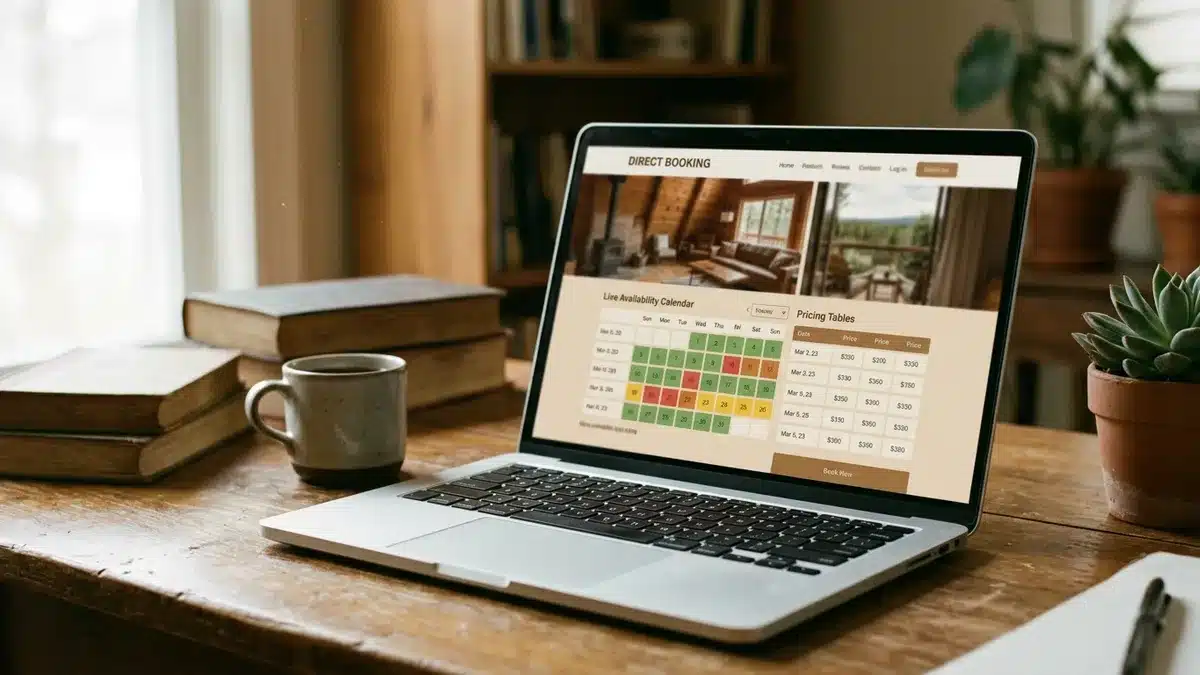
If you’re ready to see what a direct booking website connected to your own PMS looks like in practice, book a demo with Boostly Connect and see your listings synced and your site live in under 20 minutes, with your own property data.