
A direct booking website is a website you own that lets guests check live availability, see real-time pricing, and pay you directly for a short-term rental stay, without an OTA like Airbnb or Booking.com sitting between you and the guest. It connects to your property management system so listings, calendars, and rates update automatically, and every booking captures the guest’s contact information into your own database instead of a platform’s.
Key Takeaways
- A direct booking website syncs with your property management system to show live availability and pricing, so guests can book without going through an OTA at all.
- OTAs like Airbnb and Booking.com typically charge commissions in the 15 to 20 percent range on every reservation, a cost that disappears entirely on a direct channel.
- Boostly Connect syncs an existing PMS to a WordPress-based direct booking site in under 20 minutes, with no developer and a free plan for up to 3 listings on the Discover map.
- Guests who book direct get automatically captured into a host’s own CRM, keeping contact data with the property owner instead of the OTA.
- Boostly Connect supports 8 PMS integrations and is used by more than 2,000 hosts across 25 countries, collectively generating over one billion dollars in direct bookings.
- Boostly Connect builds the site, connects your PMS, and layers on CRM automation and coaching so the direct channel actually converts, not just exists.
If you’re reading this in 2026 and still routing every reservation through Airbnb or Vrbo, you already know the math isn’t in your favor. Every booking hands over a chunk of revenue and, just as costly, hands over the guest relationship. You never get their email. You never get to remind them to rebook. Airbnb does that instead, often steering them to a competing listing next time they search.
That’s the exact problem a direct booking website is built to fix. At Boostly Connect, we’ve watched thousands of hosts make this transition, and the pattern rarely changes: the host who owns their booking channel keeps more margin and more repeat guests than the host who doesn’t. This guide walks through what a direct booking website actually does, how it differs from what most hosts assume, and what building one looks like in practice.
What Is a Direct Booking Website?
A direct booking website is a property-specific site where guests can search dates, see accurate pricing, and complete a reservation without leaving your domain. Unlike a listing page on Airbnb or Vrbo, you control the design, the guest data, and the payment processing entirely.
The technical backbone is the PMS integration. Your direct booking site pulls live availability and rate data straight from platforms like Hospitable, Hostfully, Lodgify, or Guesty, so a date that’s blocked on your calendar shows as blocked on your website within minutes, not hours. Without that sync, you get double bookings, which is the fastest way to torch a guest relationship before it starts.
Manual reservations count too. Phone calls, WhatsApp inquiries, walk-ins, and repeat-guest requests are all direct bookings once they’re entered into your PMS without an OTA touchpoint, and a good direct booking site gives you a place to route those inquiries into a proper checkout flow instead of an email thread. Boostly Connect handles the PMS side of this specifically, syncing across 8 supported systems so your direct site never shows stale inventory.
What Is Everyone Using Instead of Airbnb?
Most hosts aren’t abandoning Airbnb outright in 2026, they’re running a hybrid model: keeping OTA listings active for discovery while building a direct booking website as a second, commission-free channel for repeat guests and warm leads. The shift isn’t away from Airbnb, it’s toward owning a parallel path guests can use once they already know your property.
Google Vacation Rentals has become a common addition to this hybrid stack. It’s a commission-free distribution channel that syncs listing inventory automatically, giving properties another discovery surface beyond organic search or OTA algorithms, without taking a cut of the booking. Pairing a direct site with this kind of channel gives hosts multiple non-OTA paths to the same guest.
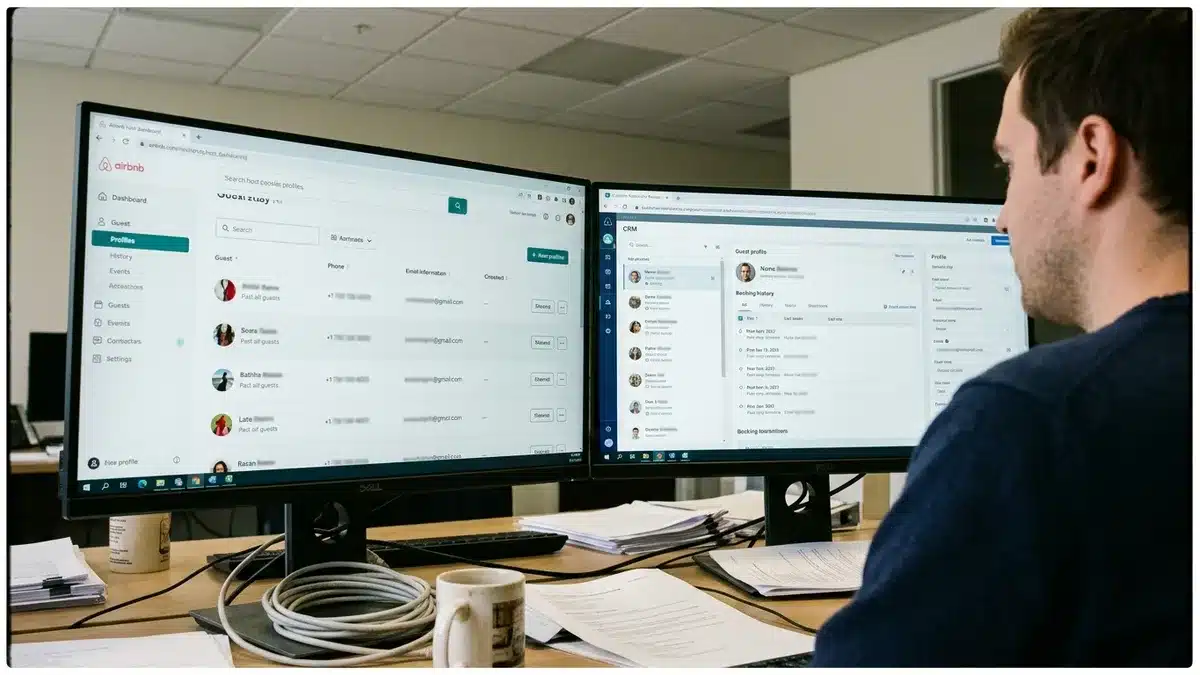
The other common substitute is the guest CRM. Instead of relying on Airbnb’s messaging inbox, hosts are moving guest data into their own email and SMS system so past guests get a rebooking nudge that doesn’t route back through the platform. This is precisely why Boostly Connect pairs its website builder with a built-in CRM: capturing the guest is only half the win if you have no way to reach them again. If you want a deeper walkthrough of the setup process itself, our post on building a direct booking website without hiring a developer covers the mechanics step by step.
What Is the Best Direct Booking Website Setup for a Short-Term Rental?
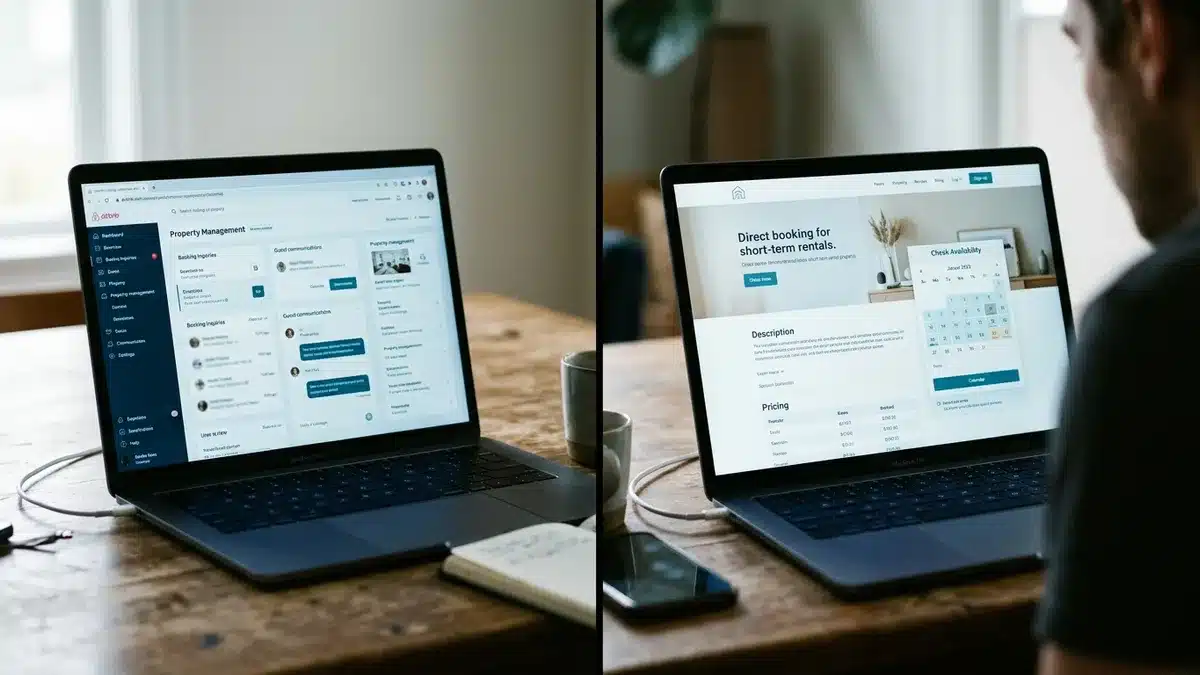
The best direct booking website setup pairs three things: a mobile-first site built on a platform you actually control, a live PMS connection so availability never lags, and a CRM that captures every guest automatically. Missing any one of those pieces creates a weak point, usually availability drift or a guest list that never gets used.
For a single-property host, the priority is speed to launch. A site that takes weeks to build and requires a developer for every price change is a bad fit, since most single-unit owners don’t have marketing bandwidth to spare. For a boutique property manager running 5 to 20 units, the priority shifts toward brand consistency and templated pages that scale across listings without rebuilding the site each time a new property is added.
Multi-property portfolio operators need something different again: a single connected system where pricing, availability, and guest records stay unified across every unit instead of living in separate spreadsheets per property. This is the exact gap Boostly Connect was built to close. It’s a done-for-you WordPress site synced to your existing PMS in under 20 minutes, with no developer and no coding required, and it scales from one listing to a full portfolio without switching tools.
How to Create Your Own Direct Booking Website
Creating a direct booking website starts with connecting your existing PMS to a website platform that can display live rates and availability, then layering in a payment processor and guest capture system. The process breaks into a handful of concrete steps rather than one big technical project.
- Connect your PMS. Link your existing system (Hospitable, Guesty, Lodgify, Hostfully, or another supported platform) so your site pulls real availability instead of a manually updated calendar.
- Choose a domain and hosting setup. This is where most DIY builds stall, since domain registration, SSL certificates, and hosting configuration require some technical comfort if you’re doing it without a platform that handles it for you.
- Build out property pages. Each listing needs its own page with photos, amenities, and a booking widget tied to your live calendar.
- Set up payment processing. You’ll need a payment gateway that supports deposits and balance payments, plus PCI compliance handled at the processor level.
- Add guest capture to your CRM. Every completed booking should push contact details into a database you control, not just a confirmation email you’ll lose track of.
- Layer in discount or repeat-guest offers. A direct-only discount code gives guests a concrete reason to book on your site instead of defaulting back to the OTA app on their phone.
Doing all of this manually with disconnected plugins is where most hosts get stuck, sync errors between the PMS and the site are the number one complaint we hear from hosts who tried a patchwork build before switching. Boostly Connect compresses that entire sequence, from PMS sync to a live, mobile-first site with built-in discount codes and CRM capture, into a setup that’s done in under 20 minutes with no code and a free plan for up to 3 listings on the Discover map.
What Does OTA Commission Actually Cost You Compared to a Direct Booking Channel?
OTA commissions on platforms like Airbnb and Booking.com typically run in the 15 to 20 percent range per reservation, a fee that applies to every single booking regardless of how many times that same guest returns. A direct booking website removes that per-transaction cost entirely, since guests pay you directly through your own payment processor.
The math compounds with volume. Property managers running five or more short-term rentals see that saving stack up across a full calendar year rather than showing up as a one-off difference, since every unit funnels reservations through the same fee structure. A five-unit portfolio paying commission on every booking is losing a meaningfully larger dollar amount annually than a single-property host, purely from scale.
| Booking Channel | Typical Commission | Guest Data Ownership | Repeat Booking Path |
|---|---|---|---|
| Airbnb / Booking.com | 15 to 20 percent per reservation | Retained by the platform | Guest rebooks through the OTA app |
| Direct booking website | Payment processing fee only | Captured into host’s own CRM | Guest rebooks directly with the host |
Our own case data backs this up in real terms. One bed and breakfast operator using Boostly Connect’s approach to direct bookings reached 90 percent direct bookings with 60 percent of stays coming from repeat guests, a level of retention that simply isn’t possible when the OTA owns the guest relationship. Another host, working from a single property he was renting out on the side, made his first £800 direct booking after applying just one tactic from a free challenge, before scaling to a portfolio of 30-plus properties at 55 percent direct bookings. These aren’t projections, they’re documented outcomes from hosts who made the switch.
What SEO and Marketing Does a Direct Booking Website Need to Actually Get Traffic?
A direct booking website only generates revenue if guests can find it, which means SEO and marketing aren’t optional add-ons, they’re the difference between a site that sits dormant and one that converts. Building the site is step one; getting it in front of past and prospective guests is the harder, ongoing part most hosts underestimate.
SEO-optimized property pages matter more than most hosts realize, since a site with no keyword structure, no blog content, and no local search targeting simply won’t surface in Google results no matter how nice the design looks. If your site currently gets built traffic but no organic visitors, our piece on why a vacation rental website isn’t ranking walks through the most common causes.
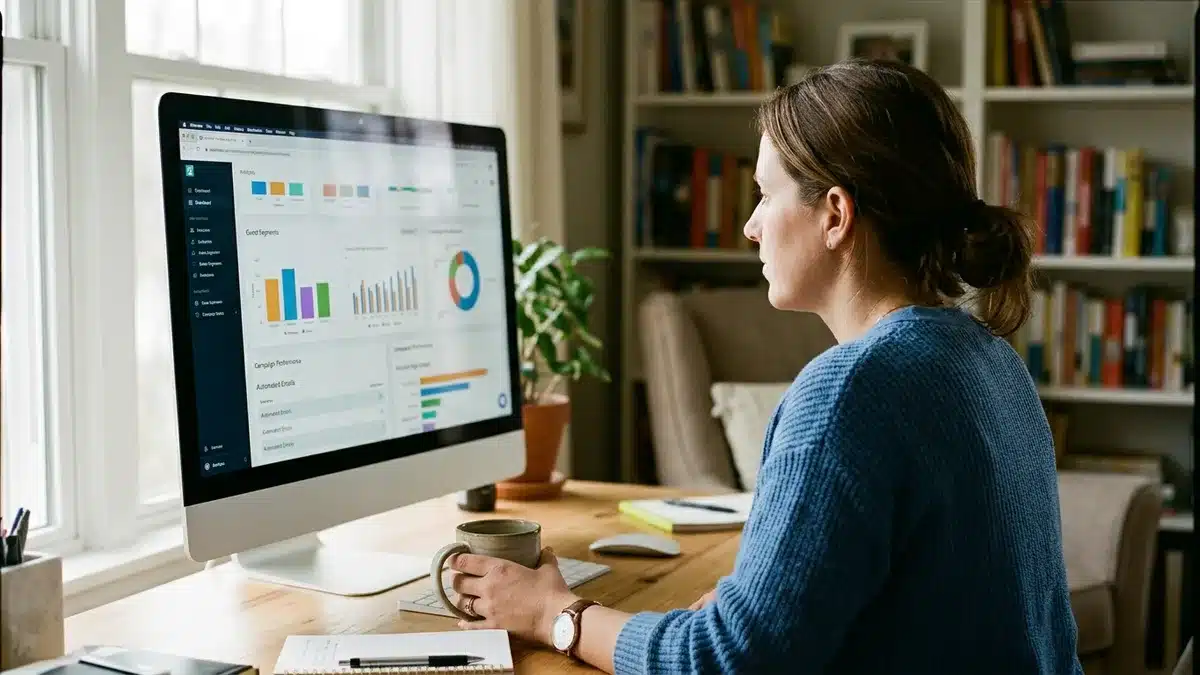
Email marketing to past guests is the highest-leverage tactic most hosts skip entirely. Manually exporting guest lists from a PMS and building campaigns in a separate email tool is tedious enough that most hosts just never do it, which means repeat guests default back to searching Airbnb instead of getting a direct rebooking prompt. Boostly Connect’s CRM automates this by segmenting and emailing returning guests automatically once they’ve booked direct once, no manual list-building required. For a broader marketing playbook beyond email alone, see our guide on STR digital marketing tactics that actually drive bookings.
Social media and retargeting round out the mix. A guest who visited your site but didn’t book can be brought back through retargeting ads or an organic social presence, both of which work better when your CRM already knows who that guest is. Our vacation rental social media strategy guide covers the specific tactics that translate into bookings rather than just likes.
What Legal and Technical Details Do Hosts Overlook When Building a Direct Booking Site?
Building a direct booking website involves technical requirements beyond design, specifically SSL certificates, PCI-compliant payment processing, and a clear rental agreement guests accept before checkout. Skipping any of these creates real liability, not just a clunky user experience.
On the legal side, short-term rental regulations vary significantly by city and state as of 2026, with many municipalities implementing licensing schemes, occupancy taxes, or zoning restrictions that affect how you can operate and market a rental. Requirements differ enough by jurisdiction that you should confirm current rules with your local permitting or planning office rather than relying on generic advice, including your own.
On the technical side, PCI compliance for payment processing is usually handled at the gateway level if you’re using a reputable processor, but hosts building a DIY site from scratch often don’t realize they’re responsible for confirming that compliance rather than assuming it’s automatic. A rental agreement, covering cancellation terms, damage policy, and occupancy limits, should be presented and accepted during checkout, not emailed after the fact. This is one of the areas where a platform built specifically for STR direct bookings has an advantage over a generic website builder retrofitted for the purpose, since the checkout flow, deposit scheduling, and compliance pieces are already accounted for rather than bolted on. If you’re working through payment logistics specifically, our guide on accepting payments for direct bookings the right way goes deeper on deposit structures and gateway options.
What Mistakes Do Hosts Commonly Make With a Direct Booking Website?
The most common mistake is building the site and stopping there, treating it as a one-time project instead of an ongoing channel that needs traffic and guest nurture to actually produce bookings. A site with zero marketing behind it functions as a digital business card, not a revenue channel.
- Assuming the site will rank on its own. Without SEO-structured pages and regular content, a new domain competes poorly against established OTA search authority.
- Skipping PMS integration and updating availability by hand. Manual calendar updates lead to double bookings, which cost more in refunds and guest trust than the OTA commission ever would.
- Never following up with past guests. Repeat guest rate for direct bookings averages around 22 percent industry-wide when hosts actively pursue retention marketing, according to 2026 vacation rental marketing benchmarks, a number that drops close to zero if there’s no CRM nudging guests to rebook.
- Pulling listings off OTAs too early. You don’t need to abandon Airbnb to build a direct channel. Most hosts run both simultaneously and simply redirect repeat guests toward their own site over time.
- Underpricing the checkout experience. A slow, multi-step booking form loses guests who’d rather just open the Airbnb app instead. Speed and simplicity at checkout matter as much as the marketing that drives traffic there.
If your current process for reaching past guests is a spreadsheet you update every few months, our post on how to re-engage past vacation rental guests in 2026 is worth reading alongside this one, since guest retention is where most of the long-term ROI on a direct booking site actually shows up.
Frequently Asked Questions
How long does it take to set up a direct booking website with Boostly Connect?
Boostly Connect connects your existing PMS to a live WordPress site in under 20 minutes, with no developer or coding knowledge required. Setup includes syncing availability and pricing, so the site is functional from the moment it’s connected rather than requiring a separate build phase.
Will switching to direct bookings hurt my Airbnb search ranking?
Running a direct booking website alongside your Airbnb listing doesn’t hurt your OTA ranking, since most hosts keep both channels active rather than choosing one over the other. You continue accepting Airbnb bookings while redirecting repeat guests and warm leads to your own site over time.
Which property management systems integrate with Boostly Connect?
Boostly Connect supports 8 PMS integrations, including widely used platforms like Hospitable, Hostfully, Lodgify, and Guesty. Connecting your existing system typically takes a few minutes, and once linked, your direct booking site pulls live availability and pricing automatically.
Do I need a developer or coding experience to launch my direct booking site?
No. Boostly Connect is built specifically so hosts can launch a direct booking website without writing code or hiring a developer, with the entire PMS-to-website sync completed in under 20 minutes through a guided setup process.
What happens to my guest data when someone books direct instead of through an OTA?
When a guest books through your direct booking website, their contact information is automatically captured into your own CRM rather than staying locked inside a platform like Airbnb. That means you own the relationship and can market to that guest again without relying on the OTA’s inbox.
How much can I realistically save by reducing OTA commission dependency?
OTA commissions typically run 15 to 20 percent per booking, so every reservation moved to a direct channel keeps that full percentage as margin instead of paying it out per transaction. Savings compound with portfolio size, since a five-unit operator sees that gap multiply across every booking, every year.
Is there an upfront cost to get started with Boostly Connect?
Boostly Connect has a free plan for up to 3 listings on the Discover map, making it accessible for independent owners and small property managers who want to test a direct channel without a large initial investment.
Conclusion
A direct booking website works because it removes the OTA from the transaction entirely, keeping the commission you’d otherwise hand over on every single reservation and putting the guest relationship back in your hands. That’s the core value, and it holds whether you own one property or a portfolio of thirty.
The setup itself doesn’t need to be a multi-week technical project. Connecting your PMS, launching a mobile-first site, and capturing guests into a CRM you control is something that can happen in a single afternoon rather than a quarter-long build. As short-term rental competition intensifies through 2026, the hosts who own their booking channel and their guest data are the ones building a business that compounds, not one that resets every time an OTA changes its algorithm or fee structure.
If you’re ready to see what a direct booking website connected to your own PMS looks like in practice, without the sync errors and breakable plugins that come from stitching tools together yourself, book a demo with Boostly Connect. We’ll show you your listings synced, your site live, and your guest CRM capturing data automatically, all in under 20 minutes with your own property information.