

A holiday rental website builder is a platform that lets short-term rental hosts create their own branded booking site, complete with live availability, real-time pricing, and a direct payment path that bypasses OTA commission fees. The right builder connects to your existing property management system (PMS) so guests see accurate calendars without you touching a spreadsheet, and it captures guest contact data into a CRM you actually own.
Key Takeaways
- A holiday rental website builder should sync live with your PMS (Hospitable, Hostfully, Lodgify, or Guesty are common examples) rather than requiring manual calendar updates.
- Most industry pricing models fall into a monthly subscription tied to property count, with some providers layering booking fees on top of the base price.
- According to CraftedStays, more than half of vacation rental website traffic now comes from mobile phones, so mobile-first design is not optional in 2026.
- Google’s own vacation rental search results pull from connected booking platforms rather than standalone listings, so integration matters more than a pretty homepage.
- Hosts who never had a direct booking channel typically have zero guest data ownership after checkout, since OTAs retain that relationship by default.
- Boostly Connect builds a done-for-you direct booking website synced to your existing PMS in under 20 minutes, with a CRM included from Accelerator so guest data stays in your business.
If you’re managing even a single property, you’ve probably felt the sting of watching a returning guest rebook through Airbnb instead of coming straight to you. That’s not bad luck. It’s the predictable result of never having a website built to capture that guest in the first place. As of 2026, the vacation rental market in the United States is projected to reach roughly $76.46 billion, up from $72.00 billion in 2026, according to a StayFi summary of Grand View Research data. Growth like that means more competition for the same guests, and OTAs aren’t going to hand you a bigger slice voluntarily.
We built Boostly Connect because we watched the same pattern play out across thousands of host accounts: a property owner sets up an Airbnb listing, gets a few bookings, then never builds a system to keep any of those guests for themselves. The commission bleed compounds every year. This guide walks through what a holiday rental website builder actually needs to do, what separates a functional one from a decorative one, and how to launch a site that converts lookers into direct bookers without hiring a developer.
You’ll come away knowing which features matter for your property count, what a realistic setup process looks like, and where most hosts waste money chasing features they don’t need yet.
What Is the Best Website Builder for Vacation Rentals?
The best website builder for vacation rentals is the one that syncs live availability and pricing directly from your existing PMS, without requiring manual double-entry. A generic website template with a static contact form is not a booking engine. It’s a brochure, and brochures don’t convert guests who expect instant confirmation.
Most hosts evaluating options in 2026 fall into two camps. The first camp wants a lightweight, do-it-yourself builder for a single property with low booking volume. The second camp, which includes most independent owners and boutique property managers, needs something that scales without breaking every time a new listing gets added.
For the second camp, integration depth matters more than design flexibility. A builder that connects to Hospitable, Hostfully, Lodgify, or Guesty in minutes saves you from the sync errors that plague hosts running separate calendars for their website and their PMS. That’s specifically the gap Boostly Connect was built to close, with support for 8 PMS integrations and a live sync that takes under five minutes once your PMS credentials are entered.
If you’re still deciding whether a website is worth the investment at all, our piece on how to get more direct bookings breaks down the traffic-generation side that a builder alone can’t solve.

How Do You Build a Website for a Vacation Rental?
Building a website for a vacation rental generally follows five steps: connect your PMS, choose a template, populate property pages, set up payment processing, and publish with basic SEO in place. Skipping the PMS connection step is the single most common mistake we see, because it forces manual calendar updates that eventually cause double bookings.
- Connect your PMS first. Before touching design, link your booking system so availability and rates flow automatically. This is the step most generic builders skip or bolt on as an afterthought.
- Choose a mobile-first template. With over half of vacation rental traffic arriving from phones (CraftedStays, 2026), a desktop-only layout costs you bookings before a guest even sees your rates.
- Write property pages with specific details. Generic descriptions (“cozy getaway”) don’t rank and don’t convert. Specific amenities, neighborhood context, and photos do the work.
- Set up a payment path. Guests need a checkout process that feels as fast as an OTA’s, or they’ll abandon the site and book elsewhere out of habit.
- Add SEO basics before launch. Title tags, meta descriptions, and a blog structure give search engines something to index beyond a single homepage.
Once live, most hosts underestimate how long it takes for a new site to start ranking. If you want a realistic timeline expectation, our guide on how long a new listing takes to show up applies a similar logic to search visibility timing.
With Boostly Connect, steps one through four happen in a single guided setup, typically completed in under 20 minutes with no developer and no coding required, because the PMS sync, template, and payment processor are pre-integrated rather than assembled from separate plugins.
What Is the Best Website for Vacation Rentals to Model Your Own On?
There is no single “best” vacation rental website to copy wholesale, because the right structure depends on your property count and guest type. But the highest-converting direct booking sites share three traits: a visible, real-time booking calendar above the fold, property-specific SEO pages instead of one generic listing page, and a clear reason for guests to book direct instead of through Airbnb or Vrbo.
That third trait is where most hosts fall short. A discount code, gift voucher, or direct-only perk gives guests a concrete reason to skip the OTA app they already have installed. Without that incentive, guests default to habit, even if they found your site first.
We’ve watched this play out directly. One bed and breakfast owner using Boostly’s platform reached 90% direct bookings and 60% repeat guests after shifting focus from a generic website to one built specifically to convert lookers into bookers. That’s not a fluke of good branding. It’s what happens when a site is engineered around booking incentives rather than just aesthetics.
If your current site has traffic but no bookings, the fix usually isn’t a redesign. It’s usually missing incentive structure, missing PMS sync, or missing mobile optimization. We cover this in more depth in our guide to vacation rental websites that aren’t ranking.
Does Google Have a Vacation Rental Website Feature?
Google does surface vacation rental listings through its own travel search interface, pulling data from connected platforms and metasearch partners rather than hosting a standalone Google-branded booking site. This means your property can appear in Google’s vacation rental results if your website or PMS feeds the right structured data, even without a dedicated Google listing page.
This is different from a Google Business Profile, which is a local listing tool, not a booking engine. Confusing the two is common among self-managing hosts who assume a free Google listing replaces the need for an owned website.
For a property to show up in Google’s travel search results, your site needs proper schema markup and, in many cases, an integration with a metasearch feed. This is a technical layer most DIY builders don’t handle out of the box. Boostly Connect’s websites are built with SEO structure in place from launch, rather than requiring you to hire a separate contractor to retrofit it later. For the mechanics of getting discovered this way, see our guide on how to get listed on Google Vacation Rentals.
Ranking well on Google generally takes sustained content and technical SEO work, not a one-time setup. If you’re weighing whether a blog is worth the effort, our piece on vacation rental SEO tips that actually rank in 2026 addresses that directly.
Do You Need a Blog to Improve Your Holiday Rental Website’s SEO?
A blog is not strictly required for a holiday rental website to rank, but it significantly increases the number of indexable pages that can capture long-tail search traffic beyond your core property pages. Without one, your site typically has only as many pages as you have listings, which limits how many search queries you can realistically compete for.
A blog also gives you a natural place to build the kind of content that answers specific guest questions: local attraction guides, seasonal booking tips, or amenity deep-dives. Each of those becomes a separate entry point for search traffic that a static property page can’t capture on its own.
Boostly Connect ships with a built-in blog structure as part of the website build, so hosts aren’t stuck choosing between a plain booking page and a full content strategy. If you want to see how a content calendar translates into actual direct bookings, our article on increasing direct bookings with content marketing lays out the specific tactics that work.

Which Tools Are Essential for Someone New to the Vacation Rental Business?
The essential tools for a new vacation rental business are a PMS to manage bookings and pricing, a direct booking website to capture guest data, and a CRM to nurture repeat guests without manual list-building. Trying to launch without at least these three typically means duplicated work across spreadsheets and disconnected apps within the first few months.
A common early mistake is buying tools in the wrong order: a website first, then a PMS, then scrambling to find a CRM that talks to both. Each new tool that doesn’t integrate with the others adds a manual sync task that eventually gets skipped, which is when double bookings and missed guest follow-ups start happening.
Boostly Connect was designed to remove that sequencing problem entirely. It connects your PMS, website, and CRM as one system from day one, so a new host isn’t stitching together breakable plugins while also trying to answer guest messages and manage turnovers. For a broader rundown of what belongs in a new host’s toolkit, see our list of must-have tools for short-term rental managers.
If you’re evaluating dynamic pricing as part of that stack, tools like Beyond Pricing’s free listing analysis tool or the reviews for PriceLabs on Capterra are worth checking before committing to a specific pricing engine, since pricing and website builder decisions often get made separately but need to work together.
Can You Suggest a Website Builder for Vacation Rentals That Supports Dynamic Pricing Integration?
A vacation rental website builder supports dynamic pricing integration when it pulls real-time rates directly from your PMS or a connected pricing engine, rather than displaying static nightly rates that require manual updates. Dynamic pricing automatically adjusts nightly rates based on real-time demand data, according to Guesty’s 2026 product documentation, and a website that doesn’t reflect those adjustments in real time undersells or oversells your inventory.
This matters most during shoulder seasons. Off-peak months can see demand drop 15 to 20 percent or more compared to peak season, according to ATLAS by AvantStay’s June 2026 data, and a website showing outdated peak-season rates during that dip will lose bookings to competitors displaying accurate, lower prices.
Boostly Connect syncs pricing directly from your existing PMS, which means whatever pricing engine you already use, whether that’s a built-in PMS feature or a standalone tool, flows through to your website automatically. You don’t maintain two separate rate sheets. For a market-level view of how demand data should inform pricing decisions, AirDNA’s guide on real-time travel demand pricing is a solid technical reference.
How to Increase Direct Bookings for a Holiday Let
Increasing direct bookings for a holiday let requires three things working together: a website built to convert rather than just inform, a CRM that captures and nurtures every guest who visits, and a reason for guests to choose your site over an OTA app they already trust. Missing any one of these caps how high your direct booking percentage can climb.
The CRM piece is where most self-managed hosts fall furthest behind. Without one, guest emails sit scattered across booking confirmations and personal inboxes, which means no one ever gets a repeat-stay offer or a review request unless you remember to send it manually.
Boostly Connect automatically captures every guest who books direct into its built-in CRM, then runs automated review requests and repeat-stay email sequences without you touching a spreadsheet. In one documented case, a rental property owner went from 0% direct bookings to 55% over a period of growth that also took his portfolio from a handful of units to more than 30 properties, driven by consistent application of direct booking tactics rather than a single big change.
Another host applying just one tactic from a direct booking strategy generated an £800 booking almost immediately after learning it, which shows how much upside sits untapped in most hosts’ current setup. For a full playbook, read our guide on how to get more direct bookings, and if past guests specifically are your gap, our piece on how to re-engage past vacation rental guests in 2026 goes deeper on that segment.
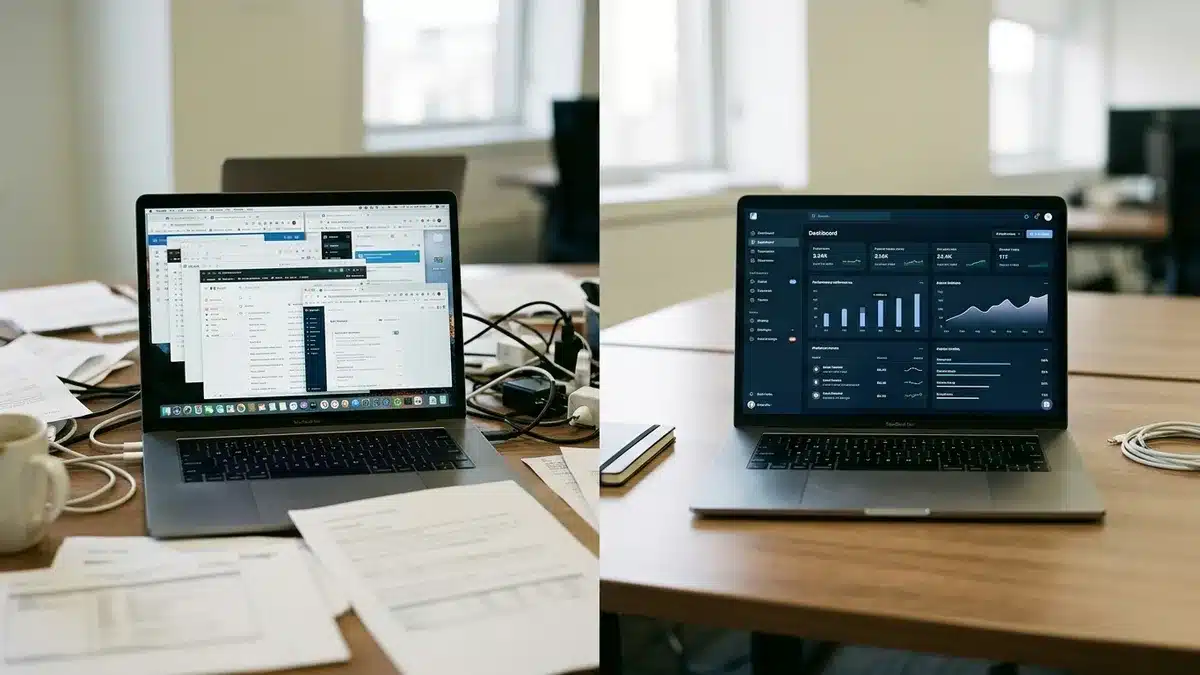
Holiday Rental Website Builder Comparison: What Actually Differs Between Options
The table below compares the general categories of holiday rental website builders available in 2026, based on how they handle PMS integration, CRM inclusion, and ongoing support, three factors that determine whether a site keeps working after launch or starts breaking within months.
| Category | PMS Integration | CRM Included | Ongoing Support Model | Best Fit |
|---|---|---|---|---|
| Basic DIY website builders | Limited or plugin-dependent | Not typically included | Self-service help center | Single property, very low booking volume |
| Booking-engine-only platforms | Varies by provider | Rarely included natively | Ticket-based support | Hosts who already have a separate CRM |
| Portfolio-focused PMS website tools | Native, built into the PMS | Sometimes, varies by plan | Account management for larger portfolios | Managers with 5+ units on one PMS |
| Boostly Connect | Native, 8 PMS integrations, synced in under 5 minutes | Yes, all-in-one CRM with AI agents | Twice-weekly group coaching calls | Independent owners through multi-property operators wanting one connected system |
Notice that most categories force a trade-off: either you get PMS integration or a CRM, rarely both natively. That gap is exactly why so many hosts end up running three or four disconnected tools that each need separate logins and separate manual updates.
How Do You Choose the Right Builder for Your Property Count?
Choosing the right holiday rental website builder depends primarily on how many properties you manage and how much manual work you’re willing to absorb as you scale. A single-property owner with low booking volume can often get by with a basic template site, but that setup starts breaking down the moment a second or third listing enters the mix.
Here’s what to prioritize as your portfolio grows:
- 1 to 2 properties: Prioritize ease of setup and mobile responsiveness over advanced automation. You can likely manage guest communication manually at this scale, but a CRM still prevents lost repeat bookings.
- 3 to 10 properties: PMS integration becomes non-negotiable. Manual calendar updates across multiple listings is where sync errors and double bookings start happening.
- 10+ properties: You need automated guest messaging and centralized reporting, or you’ll be forced to hire additional staff just to keep up with routine questions and upsells.
Boostly Connect scales across all three tiers on the same connected system, with a free plan for up to 3 listings on the Discover map, so a growing portfolio doesn’t require migrating to a different tool as you add properties. That continuity matters more than most hosts realize until they’ve lived through a painful platform migration.
Common mistakes to avoid: don’t choose a builder based on template design alone, don’t assume a free plan will scale past a handful of bookings, and don’t underestimate how much time manual PMS-to-website syncing costs once you’re managing more than two calendars.
How Long Does It Take to See Results From Holiday Rental SEO?
Holiday rental SEO typically takes several months of consistent content and technical optimization before meaningful organic traffic growth appears, since search engines need time to crawl, index, and build trust in a new or updated site. Hosts expecting first-page rankings within weeks are usually disappointed, not because the strategy failed, but because SEO timelines don’t compress just because a booking season is approaching.
What speeds this up is a site built with SEO fundamentals from launch, rather than one retrofitted later. Property pages with unique, specific content, proper schema markup, and a blog publishing regularly all shorten the runway compared to a static, template-only site.
Boostly Connect’s websites launch with SEO-optimized property pages and blog infrastructure built in, which means the technical foundation is already in place before you publish your first piece of content, rather than requiring a separate SEO audit and rebuild months later. If you’re troubleshooting a site that’s been live for a while without traction, our guide on why your website isn’t ranking well covers the eight most common causes.
What Does GDPR and Data Ownership Mean for a Holiday Rental Website Builder?
Guest data ownership on a holiday rental website builder refers to whether the contact information, booking history, and preferences a guest provides stay accessible to the host, or whether they’re retained exclusively by a third-party platform. This distinction matters most for hosts operating in regions with data portability requirements, and it matters practically for every host regardless of location, since it determines who can actually market to a repeat guest later.
Several European jurisdictions require hosts to register short-term rental properties with local authorities, and data handling practices are increasingly scrutinized as part of broader digital-services reporting rules. Specific requirements vary significantly by country and city, so verify current obligations with your local licensing authority rather than relying on general guidance.
What we can say confidently about the website layer: when a guest books through Boostly Connect’s direct booking system, their contact data flows into your own CRM, not into a third-party database you don’t control. That’s a meaningful difference from booking through an OTA, where the platform retains the relationship and can remarket that same guest to a competing property down the line.
Practical Guidance: What to Prioritize Before You Launch
Before launching a holiday rental website, confirm these five things are in place. Skipping any of them tends to create problems that surface weeks or months after launch, when they’re harder to fix.
- PMS sync is tested, not assumed. Book a test reservation and confirm your website calendar updates within minutes, not hours.
- Mobile layout is checked on an actual phone. Desktop previews hide layout issues that show up on smaller screens, and mobile traffic makes up the majority of visits.
- A direct booking incentive exists. Whether it’s a discount code or a loyalty perk, guests need a specific reason to skip the OTA app on their home screen.
- CRM capture is active from the first booking. Don’t wait until you have “enough” guests to start building a list. Every direct booking should feed your CRM automatically.
- You have a plan to keep both channels running. Adopting a direct booking site doesn’t mean abandoning Airbnb or Vrbo. Most hosts run both simultaneously and redirect repeat guests toward the direct channel over time.
The trade-off worth understanding up front: a fully custom-built website from a freelance developer gives you more design control but leaves you responsible for every PMS integration and CRM connection yourself. A done-for-you platform trades some design flexibility for a system that’s already connected and tested.
Frequently Asked Questions
How long does it take to set up a direct booking website with Boostly Connect?
Most hosts complete the full setup, including PMS sync, in under 20 minutes with no developer or coding experience required. The process connects your existing property system, populates your property pages, and activates live availability automatically.
Will switching to direct bookings hurt my Airbnb search ranking?
No. Adding a direct booking website doesn’t require removing your Airbnb listings, and most hosts run both channels at the same time. The goal is to redirect repeat guests and new inquiries toward your own site over time, not to abandon OTA visibility entirely.
Which property management systems integrate with Boostly Connect?
Boostly Connect supports 8 PMS integrations, including Hospitable, Hostfully, Lodgify, and Guesty. Once connected, live availability and real-time pricing sync automatically to your website without manual calendar updates.
Do I need a developer or coding experience to launch my direct booking site?
No. Boostly Connect’s setup is built for hosts with no technical background, and the platform is designed so a property owner can go from PMS connection to a live website without writing any code.
What happens to my guest data when someone books direct instead of through an OTA?
Guest contact data from a direct booking is automatically captured into your own CRM rather than staying inside a third-party platform’s database. That means you control follow-up communication, review requests, and repeat-stay offers instead of relying on the OTA to remarket for you.
What tools are essential for someone new to the vacation rental business?
A new host needs a PMS to handle bookings and pricing, a direct booking website to capture traffic and guest data, and a CRM to manage guest communication and repeat-stay outreach. Buying these separately without integration usually means manual syncing work that becomes unsustainable as bookings grow.
Can Boostly Connect handle multiple properties or just a single listing?
Boostly Connect supports both single-property owners and multi-property operators from the same connected system, with a free plan for up to 3 listings on the Discover map. Pricing and availability stay unified across every property as your portfolio grows, without requiring a migration to a different tool.
Conclusion: What a Holiday Rental Website Builder Needs to Actually Do in 2026
The core answer hasn’t changed even as the market has grown to a projected $76.46 billion in the U.S. alone this year: a holiday rental website builder only earns its place in your business if it syncs live with your PMS, captures guest data into a CRM you own, and gives guests a real reason to book direct instead of defaulting to an OTA app out of habit. A pretty template with none of those three does not move your direct booking percentage.
Fixing this doesn’t require a developer, a new tech stack, or months of setup. It requires connecting the systems you already use to a website built to convert, which is exactly what Boostly Connect does in under 20 minutes. If you’re ready to see what your properties look like on a direct booking site connected to your own PMS, book a demo and bring your real property data to the call.
If OTA commissions are quietly eating into your margin every month, the fastest way to see the alternative in action is to connect your own PMS data to a live preview. Get started with Boostly Connect and see your direct booking website built out with your actual listings, not a generic demo.