
A direct stay is a reservation a guest books straight through a host’s own website or booking channel, bypassing Airbnb, Vrbo, or Booking.com entirely. No commission goes to a third-party marketplace, and the host keeps the guest’s contact information instead of losing it to a platform’s remarketing engine. For short-term rental operators, building a direct stay channel is the single biggest lever for protecting margin as OTA fees keep climbing.
Key Takeaways
- A direct stay bypasses OTA commission structures entirely, meaning the full nightly rate stays with the host instead of 15 to 20 percent going to a third-party marketplace.
- Direct bookings tend to run longer: Lodgify’s analysis of 1.6 million bookings found direct reservations had 45.2 percent longer stays and 51.3 percent longer booking windows than OTA bookings.
- Direct booking ADR is already competitive with OTA rates; Lodgify reported 2026 direct-booking ADR of $351.31 versus $348.47 for third-party bookings.
- Among hosts using direct-booking software, 2026 bookings split roughly 47.2 percent Airbnb, 31.6 percent direct-booking sites, and 21.2 percent other channels, showing direct channels already capture a meaningful share when built correctly.
- Hospitable reported direct-booking revenue of $53.7 million in 2026, a 91 percent year-over-year increase, and $6.9 million in avoided OTA fees, evidence that the direct channel is scaling fast industry-wide.
- Boostly Connect syncs a host’s existing PMS to a done-for-you WordPress website in under 20 minutes, turning “direct stay” from a buzzword into a working booking channel with live availability and a built-in guest CRM.
In 2026, the term “direct stay” has become shorthand for an entire movement inside the short-term rental industry: hosts pulling their booking volume away from Airbnb and Booking.com and back onto channels they own. The global vacation-rental market is projected at $106.5 billion in 2026 according to Grand View Research, and a growing share of that volume is shifting toward owned booking channels rather than pure OTA distribution.
If you’re reading this because you’re tired of watching 15 to 20 percent of every reservation disappear into a platform fee line item, you’re not alone. Most hosts we talk to at Boostly Connect started exactly where you are: fully dependent on Airbnb search, unsure how to introduce a direct booking option without losing the visibility they’ve already built.
This guide walks through what a direct stay actually requires operationally, what the data says about how direct bookings perform compared to OTA reservations, and where most hosts get the transition wrong. We’ll also cover the practical setup steps, because knowing the concept matters less than having a working direct stay page guests actually use.
What Exactly Is a Direct Stay Booking?
A direct stay booking is any reservation made through a channel the host controls directly, typically their own website, rather than through a third-party marketplace like Airbnb or Booking.com. The defining feature is ownership: the host owns the guest’s contact data, the payment processing relationship, and the pricing display, instead of a marketplace intermediating all three.
This differs from a standard OTA listing in three specific ways. First, there’s no per-booking commission taken by a marketplace. Second, the guest relationship (email, phone, stay history) stays inside the host’s own guest CRM rather than being retained by Airbnb for its own remarketing purposes. Third, the host controls cancellation policy, pricing rules, and promotional offers without needing marketplace approval.
A direct stay doesn’t require abandoning Airbnb or Vrbo. Most operators we work with run both simultaneously: OTAs for new guest discovery, and a direct channel specifically to capture repeat guests and word-of-mouth traffic that would otherwise route back through a platform out of habit. That’s a distinction competitors in this space rarely spell out clearly, and it’s the one that matters most for a host deciding whether to make the switch.

How Does Direct Stay Compare to Booking Through Airbnb or Booking.com?
The core difference between a direct stay and an OTA booking is commission structure and data ownership. Airbnb and similar platforms typically charge hosts a percentage of every reservation, plus guest-side service fees, while a direct stay channel eliminates that marketplace commission entirely.
Beyond fees, guest behavior differs measurably between the two channels. Lodgify’s 2026 data found direct bookings run 45.2 percent longer on average and are booked 51.3 percent further in advance than OTA bookings, which gives hosts more predictable cash flow and less last-minute scrambling on staffing and turnovers.
Pricing itself is comparable rather than dramatically different. Lodgify reported 2026 direct-booking ADR of $351.31 against $348.47 for third-party bookings, meaning hosts aren’t sacrificing rate to attract direct guests. The savings come almost entirely from the commission line disappearing, not from discounting.
| Factor | OTA Booking (Airbnb, Booking.com) | Direct Stay Booking |
|---|---|---|
| Commission structure | Marketplace commission taken on each reservation | No marketplace commission |
| Guest contact data | Retained primarily by the platform | Captured into the host’s own CRM |
| Average stay length (Lodgify, 2026) | Baseline | 45.2% longer |
| Booking window (Lodgify, 2026) | Baseline | 51.3% longer |
| ADR (Lodgify, 2026) | $348.47 | $351.31 |
| Discovery and new guest reach | Strong, built-in search traffic | Requires owned marketing and SEO |
That last row is where most DIY attempts at a direct stay page stall out. A standalone website with no marketing behind it just sits there. That’s precisely why we built Boostly Connect around SEO-ready property pages and a built-in blog structure, so a direct booking site isn’t relying on guests already knowing your domain name to find it.
Why Do Most Hosts Struggle to Build a Working Direct Stay Channel?
Most hosts struggle with direct stay adoption because building a booking site is only step one; driving qualified traffic to it and converting that traffic into a reservation is the harder, ongoing part. A website with no search visibility, no email list, and no CRM behind it functions as a digital brochure, not a booking engine.
The typical failure pattern looks like this: a host builds a basic site, maybe through a free template builder, lists their property, and waits. Without SEO structure, the page never surfaces in Google. Without a CRM, past guests who did book direct once are never followed up with. Without live PMS sync, availability calendars go stale and guests bounce to Airbnb instead, where the calendar is always accurate.
We hear this constantly from independent owners in the how to get more direct bookings conversation: they tried a direct site once, it generated almost nothing, and they wrote off direct booking as not worth the effort. In our experience, the site itself was rarely the actual problem, it was the missing plumbing behind it: no live sync, no SEO foundation, no guest nurture sequence.
That gap is exactly what Boostly Connect was built to close. The platform connects an existing PMS, whether that’s Hospitable, Guesty, Lodgify, OwnerRez, or Hostfully, directly to a WordPress site with live availability and real-time pricing, so the calendar guests see is never out of date.
What Does a Direct Stay Setup Actually Require?
Setting up a working direct stay channel requires three connected components: a booking-ready website, a synced property management system, and a system to capture and follow up with guest contact data. Skipping any one of the three usually explains why a previous attempt at direct bookings underperformed.
1. A conversion-focused website, not just a listing page
A direct stay page needs live availability, real pricing (not “contact for rates”), and a clear path to checkout. Generic template builders can technically publish a page, but few are built specifically to convert a browsing visitor into a completed reservation.
2. Live PMS synchronization
If your calendar isn’t synced in real time, you’ll either double-book or show stale availability that costs you the reservation. Boostly Connect supports 8 PMS integrations, letting a host plug in their existing system in under five minutes and get live pricing on their own domain immediately.
3. A guest CRM that captures every direct booker
Every guest who books direct should land automatically in a CRM, not a spreadsheet you update manually once a quarter. Without this, repeat guests default back to Airbnb next time simply because that’s the only place their booking history lives.
According to industry benchmark data for 2026, well-optimized vacation rental sites see direct booking conversion rates of 2 to 5 percent, compared to a broader average range of 0.5 to 1.5 percent for underoptimized pages. That gap is almost entirely explained by whether these three components are wired together correctly.

How Do You Grow Direct Bookings Without a Big Marketing Budget?
You can grow direct bookings without a large ad budget by focusing on channels you already own: email to past guests, organic social content, and search visibility for your own domain. Paid advertising accelerates results, but it isn’t a requirement to start capturing direct stay reservations.
Start with your existing guest list. If you’ve hosted even a handful of guests through Airbnb, you likely have names and dates, even if you don’t have full contact permission yet. Once a guest books direct even once, the goal is capturing their email and stay preferences so a follow-up sequence for their next trip runs automatically instead of manually.
Social channels matter here too, particularly Instagram and Facebook, where past guests already follow properties they’ve stayed at. A consistent posting cadence that links back to your own booking page, rather than an Airbnb listing, redirects that audience toward the direct channel over time. Our guide on vacation rental social media strategy covers the specific content types that convert followers into direct bookers, and our vacation hashtags that actually drive direct bookings post breaks down which tags reach travel intent audiences instead of just other hosts.
Search visibility for your own website matters just as much as social reach. A 2026 vacation rental marketing benchmark reports Google Ads CPC in the $1.00 to $2.50 range with search click-through rates of 5 to 8 percent, meaning paid search can work, but organic ranking for your own domain compounds for free every month after it’s set up. That’s the reasoning behind our vacation rental SEO tips post, and it’s also why every Boostly Connect website ships SEO-ready from day one rather than requiring a separate SEO contractor after launch.
What Happens to Repeat Guests Once You Have a Direct Stay Channel?
Repeat guests are the fastest-growing part of a direct stay strategy because they already trust the property and don’t need to be convinced twice. Vacation rental marketing benchmarks for 2026 show an average repeat guest rate of 22 percent for direct bookings, meaning roughly one in five direct reservations already comes from a returning guest when hosts focus on retention.
One Denver operator running eight properties tracked repeat booking rate over 18 months and found that 12 percent of one-time guests rebooked a second stay within 12 months, according to data reported by MagicBNB in 2026. That’s a meaningful pool of guests who, without a direct channel and CRM in place, would simply search Airbnb again out of habit rather than come back to the host directly.
This is the exact trap we built Boostly Connect to stop: the repeat booking trap, where a host never owned the guest relationship in the first place, so returning guests default back to the OTA that “found” them the first time. Every guest who books direct through a Boostly Connect site is automatically captured into the CRM, with built-in email and SMS automation handling review requests and repeat-stay offers without any manual list-building.
For a deeper walkthrough of the specific outreach sequences that bring past guests back, our post on how to re-engage past vacation rental guests in 2026 covers timing, messaging, and offer structure in more detail than we can fit here. Our automate review requests for your vacation rental guide is a useful companion piece if reviews are currently a manual afterthought in your operation.
What Should You Prioritize First When Building a Direct Stay Strategy?
Prioritize live PMS sync and a captured guest CRM before investing heavily in paid traffic or a full brand redesign. A beautiful website with a stale calendar or no guest data pipeline behind it will underperform a plain page that’s technically wired correctly.
- Connect your PMS first. Whether you run Hospitable, Guesty, Lodgify, OwnerRez, or Hostfully, get live availability syncing before anything else. A guest who sees an inaccurate calendar leaves immediately and rarely comes back to check again.
- Capture every direct booker into a CRM. Don’t let a single direct reservation happen without the guest’s data landing somewhere you can follow up automatically.
- Fix your SEO foundation before running ads. A site with zero SEO structure will need to pay for every single visitor indefinitely. One with a built-in blog and optimized property pages compounds traffic over time. Our vacation rental website not ranking post walks through the most common technical reasons a new site stays invisible.
- Automate guest messaging before scaling further. Answering the same availability and check-in questions manually across dozens of guests eats hours you don’t get back. AI agents built into a guest CRM can field routine questions and upsells without a human typing every reply.
- Track direct booking ROI in one dashboard. Reconciling numbers manually across a PMS, a spreadsheet, and a bank statement is where most hosts lose confidence in whether direct bookings are actually working.
Common mistakes to avoid
The most common mistake is launching a direct stay website and expecting Airbnb-level traffic without doing any of the SEO or CRM work behind it. The second most common mistake is treating direct bookings as an either/or decision against OTAs, when most successful hosts run both channels in parallel. A related mistake worth flagging directly: worrying that promoting a direct stay option will hurt your Airbnb search ranking. In practice, Airbnb ranks listings based on response rate, reviews, and booking performance on its own platform, not based on whether a host also markets a direct site elsewhere.
What Are the Trust and Fraud Concerns With Booking Direct?
Trust is the biggest objection guests raise about booking direct instead of through Airbnb or Booking.com, because those platforms provide built-in payment protection, dispute resolution, and review systems that a standalone host website doesn’t automatically replicate. Addressing this directly, rather than ignoring it, is what separates a credible direct stay page from one guests bounce off of.
Practically, this means a direct booking site needs a secure payment processor, clearly published cancellation terms, and visible proof of legitimacy, whether that’s guest reviews imported from OTA history, verified host credentials, or clear property photos and address transparency. Guests who’ve never booked outside Airbnb need to see the same level of professionalism they associate with a marketplace, just delivered on the host’s own domain.
Our trust booking guide covers the specific trust signals that convert a first-time direct booker, including how to display reviews, structure a cancellation policy, and reassure guests the payment process is secure. This is one of the areas where competitors in this space provide the least practical guidance, and it’s often the deciding factor between a guest completing a direct reservation or defaulting back to Airbnb out of caution.
Frequently Asked Questions
How can I advertise my vacation rental to boost direct bookings?
Advertise primarily through channels you already own: email to past guests, organic Instagram and Facebook content linking to your own booking page, and search-optimized property pages on your own website. Paid ads can accelerate results once your direct stay site converts well, but organic channels are the lowest-cost starting point.
How do I get more direct bookings from Instagram and Facebook?
Post consistent, specific content (guest experiences, seasonal availability, local recommendations) and always link back to your own booking page rather than an Airbnb listing. Guests who already follow your property on social media are your warmest audience for direct conversion, since they’ve chosen to stay connected beyond a single stay.
How do I get more direct bookings without spending a fortune on marketing?
Focus first on guests you’ve already hosted. A CRM that automatically emails past guests with repeat-stay offers costs far less than acquiring a brand-new guest through paid search or OTA visibility, and repeat guests already convert at a higher rate since trust is established.
How do I get more direct bookings overall?
Get more direct bookings by combining three things: a website with live PMS-synced availability, a CRM that captures every guest automatically, and consistent SEO or social content driving traffic to your own domain instead of an OTA listing. Our direct bookings playbook for 2026 breaks this down step by step.
Are there proven booking platforms designed for direct channel growth?
Yes. Platforms built specifically for direct channel growth sync a host’s existing property management system to a booking-ready website and pair it with a guest CRM, rather than requiring separate tools stitched together manually. Boostly Connect is one example, connecting 8 PMS platforms to a WordPress site with live availability in under 20 minutes.
Will switching my focus to direct bookings hurt my Airbnb search ranking?
No. Airbnb ranks listings based on factors like response rate, review scores, and booking activity on its own platform. Promoting a separate direct booking channel on your own website doesn’t factor into that ranking calculation, so most hosts run both channels simultaneously without any ranking penalty.
Do I need a developer to build a direct stay website?
No. Modern direct booking platforms are built specifically so hosts can launch without coding experience or hiring a developer. Boostly Connect, for example, syncs an existing PMS to a WordPress site in under 20 minutes with no developer involvement and a free plan for up to 3 listings on the Discover map.
Conclusion: Direct Stay Is a Channel You Build, Not a Switch You Flip
A direct stay isn’t a single feature or a one-time website launch, it’s an ongoing channel built from live PMS sync, a captured guest CRM, and consistent marketing pointed at your own domain instead of Airbnb’s. The data backs the effort: Lodgify’s 2026 numbers show direct bookings running 45.2 percent longer with comparable ADR to OTA reservations, and direct-booking revenue industry-wide grew 91 percent year over year according to Hospitable’s 2026 reporting.
As of 2026, the hosts pulling ahead aren’t the ones who abandoned Airbnb, they’re the ones who built a second channel alongside it and stopped losing repeat guests back to a marketplace that never gave them ownership of that relationship in the first place. That’s the specific gap Boostly Connect exists to close.
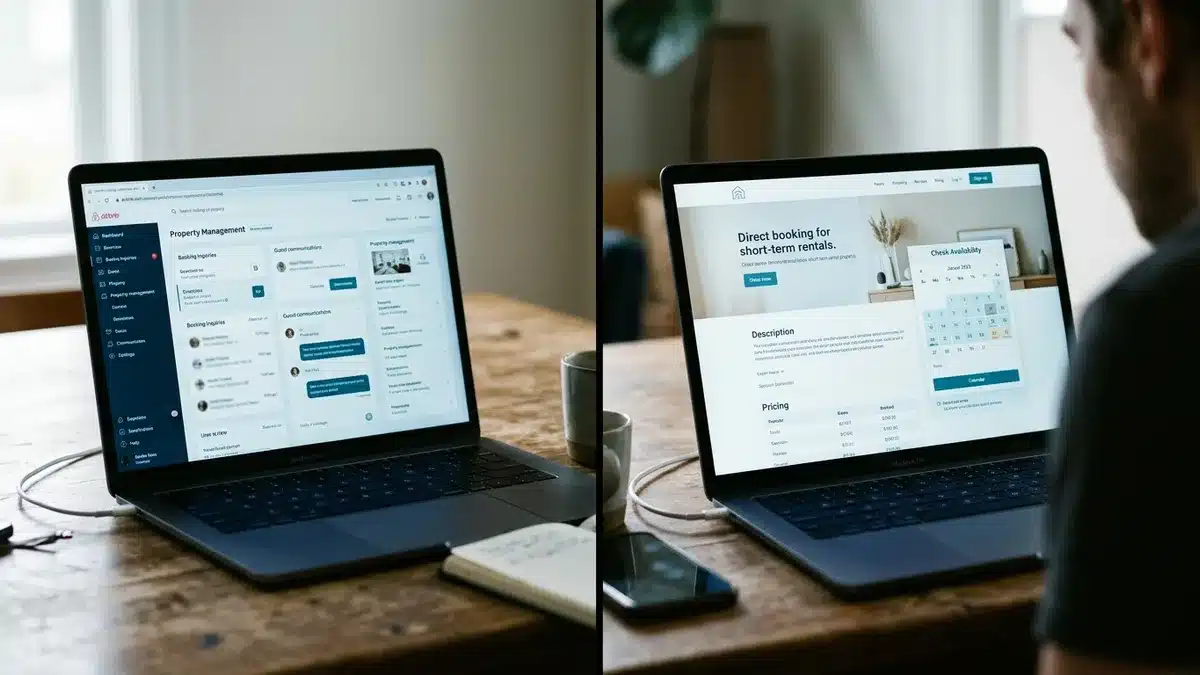
If you’re ready to see what a direct stay channel connected to your own PMS looks like in practice, with live availability, a built-in guest CRM, and no developer required, book a demo with Boostly Connect and get your first direct booking site live in under 20 minutes.