
Direct booking tools are software systems that let short-term rental hosts sell reservations from their own website instead of routing every guest through Airbnb, Vrbo, or Booking.com. They connect your property management system (PMS), a booking-ready website, and a guest CRM so availability, pricing, and payment happen without a third-party commission attached. At Boostly Connect, this is the exact infrastructure layer we build for hosts every day.
Key Takeaways
- Direct booking tools sync your existing PMS (Hospitable, Hostfully, Lodgify, or Guesty, among 8 supported integrations for Boostly Connect) to a live, bookable website in under 20 minutes.
- The global vacation rental market was estimated at $106.5 billion in 2026, with the direct-booking-tools segment growing far faster than the broader industry, according to available market forecasts.
- Industry benchmarks put direct booking acquisition cost at roughly 2 to 12 percent of booking value, compared with the 15 to 20 percent commission most OTAs charge on every reservation.
- Returning visitors convert at meaningfully higher rates than new visitors on direct booking sites, per available benchmark data, which is why guest CRM ownership matters more than website design alone.
- Hosts don’t need to abandon Airbnb to adopt direct booking tools. Most run both channels simultaneously and redirect repeat guests to their own site over time.
- Boostly Connect combines PMS sync, a WordPress direct booking website, and an all-in-one CRM with AI agents, built specifically so hosts reach 65 percent direct bookings within 12 months or the team works free until they do.
If you manage even a handful of listings, you already know the math on OTA commissions rarely improves on its own. Every booking that flows through Airbnb or Booking.com hands over 15 to 20 percent of the reservation value, and the guest’s contact details usually stay locked inside the platform, not in your hands. That’s the exact problem direct booking tools are built to solve, and it’s the reason Mark Simpson founded Boostly Connect after personally recovering more than $30,000 a year in platform fees on his own portfolio.
In 2026, the category has matured well past a simple “book now” button bolted onto a listing page. Direct booking tools now span PMS integration, real-time pricing sync, conversion-focused website templates, guest CRM, and automated marketing. This guide walks through what the category actually includes, how to evaluate the options, and the setup steps we use with hosts inside Boostly Connect, so you can decide what fits your portfolio size and technical comfort level.
We’ll cover the mechanics of PMS integration, what the real cost comparison looks like against OTA commissions, and the mistakes we see most often when hosts try to build this themselves with disconnected plugins. Expect specific numbers where they’re verifiable, and honest qualitative language where they’re not.
What Is a Direct Booking Platform?
A direct booking platform is software that gives short-term rental hosts their own booking channel, independent of OTA marketplaces, by connecting a PMS to a website that displays live availability and processes payment directly. Specifically, it removes the middleman step where a guest has to search Airbnb or Vrbo to find your property.
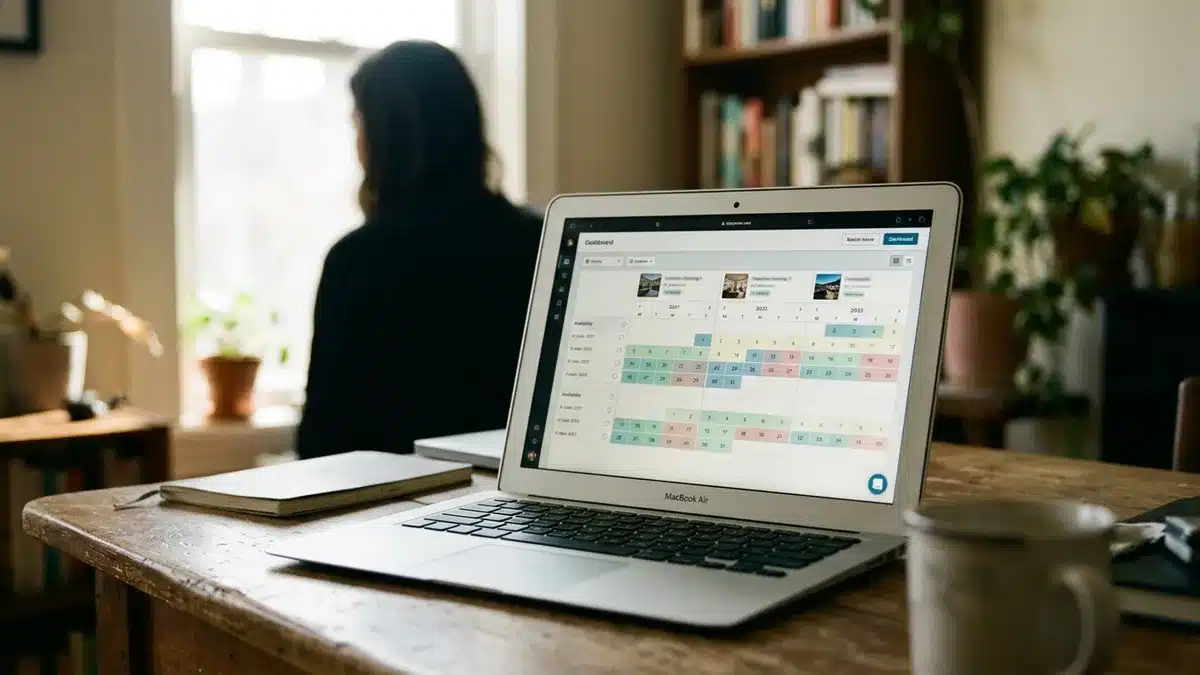
The core mechanism is real-time synchronization. Your PMS holds the source of truth for calendar and pricing, and the direct booking platform pulls that data onto your own domain, updating automatically as bookings come in elsewhere. Without this sync, hosts either update two calendars manually or risk double bookings, which is exactly the failure mode Boostly Connect’s PMS integration was designed to prevent.
As of 2026, most platforms in this category fall into three groups: PMS-native booking widgets with minimal marketing support, marketing-led ecosystems that pair a website with CRM and coaching, and high-investment custom-built platforms aimed at large portfolios. Boostly Connect sits in the second group, connecting PMS, website, and CRM as one system rather than three separate purchases.
Is It Better to Book Through Airbnb or Direct?
Booking direct is financially better for hosts because it eliminates the 15 to 20 percent OTA commission and gives you ownership of the guest’s contact information for future marketing. For guests, direct booking often means lower total price and more flexibility on communication, since there’s no platform fee layered on top.
Airbnb and other OTAs still deliver real value: discovery for new hosts, built-in trust signals, and dispute resolution. That’s why we tell hosts at Boostly Connect not to abandon Airbnb entirely, especially in year one. Instead, treat Airbnb as your top-of-funnel acquisition channel and your direct website as the channel where repeat guests land the second time.
The repeat-guest math is where this argument gets concrete. Vacation rental marketing benchmarks for 2026 show an average repeat guest rate of around 22 percent for direct bookings, meaning roughly one in five bookings comes from a returning guest when hosts actively market for retention, according to CUfinder’s 2026 benchmark data. If that guest rebooks through Airbnb instead of your own site, you pay full commission on a relationship you already earned once for free.
In our experience running re-engagement campaigns for past vacation rental guests, hosts who never captured guest emails during their Airbnb stay have no way to run that second booking outside the platform. Boostly Connect automatically captures every direct booker into your own CRM specifically so that relationship stays yours, not Airbnb’s, going forward.
What Is the Best Software to Manage Vacation Rentals for Direct Bookings?
The best software for managing direct bookings connects three layers: a PMS for calendar and operations, a booking-ready website for guest-facing sales, and a CRM for guest retention marketing. Evaluating software in isolation, such as a website builder with no PMS sync, typically creates more manual work than it saves.
Here’s what to look for, based on what consistently works across the properties we support at Boostly Connect:
- Native PMS integration, not iCal syncing. iCal feeds update on a delay, sometimes hours, which creates double-booking risk. Direct API integrations update in real time when a reservation lands, which is how Boostly Connect’s 8 PMS integrations, including Hospitable, Hostfully, Lodgify, and Guesty, are built.
- Guest data ownership. If the software doesn’t feed guest contact details into a CRM you control, you’re rebuilding your OTA problem on a new platform.
- Conversion-focused website templates. A generic WordPress theme with a calendar plugin converts differently than a template built specifically to move a browser toward checkout.
- Payment processing that’s actually secure. Most platforms in this category route payment through a processor charging a standard transaction fee on top of the subscription, so factor that into your total cost picture rather than comparing subscription price alone.
- Ongoing support, not just a one-time build. A website that launches and gets abandoned rarely keeps converting. Boostly Connect includes twice-weekly group coaching calls led by industry experts specifically because the marketing behind the website matters as much as the build.
How Do You Build a Direct Booking Website Without a Developer?
Building a direct booking website without a developer means using a platform that pre-connects your PMS to a ready-made template, so you configure settings rather than write code. This process typically takes minutes rather than weeks when the PMS integration is native.
Here’s the process we walk hosts through at Boostly Connect, step by step:
- Connect your PMS. Enter your Hospitable, Hostfully, Lodgify, Guesty, or other supported credentials. Boostly Connect completes this sync in under five minutes, pulling live availability and real-time pricing directly from your existing system.
- Review your synced listings. Confirm photos, descriptions, and pricing rules transferred correctly from your PMS to the website builder.
- Choose your website template. Select a conversion-focused layout built on WordPress rather than a generic drag-and-drop theme with no booking logic baked in.
- Set direct-only incentives. Add discount codes or a direct-booking rate advantage so returning guests have a clear reason to skip the OTA next time.
- Connect your CRM. Make sure every guest who books direct is captured automatically, with no manual export from a spreadsheet required.
- Go live. Publish the site and confirm the booking calendar reflects real-time availability from your PMS.
For hosts with no coding background, this entire sequence runs in under 20 minutes with no developer and a free plan for up to 3 listings on the Discover map. Compare that against a custom-built platform approach, where setup investment and monthly cost run substantially higher and typically require a separate marketing hire to actually drive traffic to the finished site.
What Does a Total Cost Comparison Actually Look Like?
A total cost comparison for direct booking tools has to include more than the sticker price of a subscription. It needs to weigh subscription fees, payment processing, and OTA commission losses across your actual booking volume, not just the headline monthly rate.
Industry benchmarks put direct booking acquisition cost at roughly 2 to 12 percent of booking value across various platforms, compared with the 15 to 20 percent OTA commission most hosts are paying today. The gap is the entire business case for switching. Most platforms in this space also route payment through a processor that adds a standard transaction fee, typically a small percentage plus a flat fee per transaction, on top of whatever the platform itself charges.
| Cost Factor | Typical OTA Path | Direct Booking Tool Path |
|---|---|---|
| Commission per booking | 15% to 20% | Not charged as commission; platform fee instead |
| Guest data ownership | Retained by the OTA | Captured into host’s own CRM |
| Payment processing | Built into OTA fee | Standard processor fee, separate from platform cost |
| Repeat guest marketing | Requires re-searching the OTA | Direct email/SMS outreach possible via CRM |
| Setup effort | Already listed, minimal setup | Varies by provider; Boostly Connect: under 20 minutes, no developer |
One detail hosts consistently underestimate: the real cost of an OTA isn’t just the commission line item. It’s every repeat guest who rebooks through the platform because you never captured their email the first time. That repeat-booking trap is precisely what Boostly Connect was engineered to close, by automatically pulling every direct booker into your CRM the moment they check out.
How Do You Get More Direct Bookings From Instagram and Facebook?
Getting direct bookings from Instagram and Facebook requires linking your social profiles to your own booking website, not just your OTA listing, so followers land on a page where you keep the entire reservation value. A bio link, story highlight, or post caption should point to your direct site, never to your Airbnb listing alone.
Social platforms drive awareness, but conversion happens on your website, which is why the two need to work together rather than in isolation. Posting a beautiful photo without a direct booking link behind it sends interested followers straight into an OTA search results page where a similar property, sometimes a competitor’s, sits one click away.
We handle this at Boostly Connect through Boostly Connect’s social media management service, which coordinates posting cadence and link placement so social traffic actually lands on your live, PMS-synced booking page instead of dead-ending on a generic contact form. If you want a deeper breakdown of tactics, our guide on vacation rental social media strategy that drives bookings covers platform-specific posting patterns in more depth, and our piece on vacation hashtags that actually drive direct bookings is worth a look if hashtag strategy is where you’re stuck.
How Do You Keep Airbnb Visibility While Growing Direct Bookings?
Keeping Airbnb visibility while growing direct bookings means running both channels in parallel rather than pulling your listing down. Airbnb’s search algorithm rewards response rate, booking frequency, and review volume, none of which are affected by also operating your own website.
In practice, this looks like using Airbnb for first-time guest acquisition and steering only repeat guests toward your direct site. A guest who already stayed with you once has already built trust in your property; they don’t need Airbnb’s review system to vouch for you a second time.
Some hosts also use Airbnb’s own tools to soften this transition, such as sending a special offer to a past guest to reward loyalty within the platform, while simultaneously building the direct relationship in the background. As a result, you’re not choosing one channel over the other so much as sequencing which channel earns which type of guest. This is a strategy Boostly Connect implements for clients specifically because abandoning Airbnb cold turkey is rarely the right move for hosts still building brand recognition.
What Mistakes Do Hosts Commonly Make When Adopting Direct Booking Tools?
The most common mistake hosts make with direct booking tools is launching a website with no traffic plan behind it, then concluding direct bookings “don’t work” when nobody visits the page. A website alone is not a marketing strategy.
- Skipping SEO from day one. A site with zero search optimization sitting behind a domain nobody’s heard of won’t rank, and won’t get found. If your site has been live for a while with no traction, our piece on why a vacation rental website isn’t ranking walks through the eight most common causes.
- Treating the CRM as optional. Skipping guest data capture means every repeat guest defaults back to searching Airbnb, recreating the exact commission bleed you were trying to escape.
- Stitching together disconnected plugins. A calendar plugin from one vendor, an email tool from another, and a payment processor from a third creates sync errors that surface as double bookings, which is exactly the fragility Boostly Connect’s connected PMS-website-CRM system was built to eliminate.
- Ignoring mobile conversion. Mobile traffic often makes up the majority of sessions on a direct booking site but converts at a meaningfully lower rate than desktop in benchmark data, so a slow or clunky mobile checkout costs real bookings.
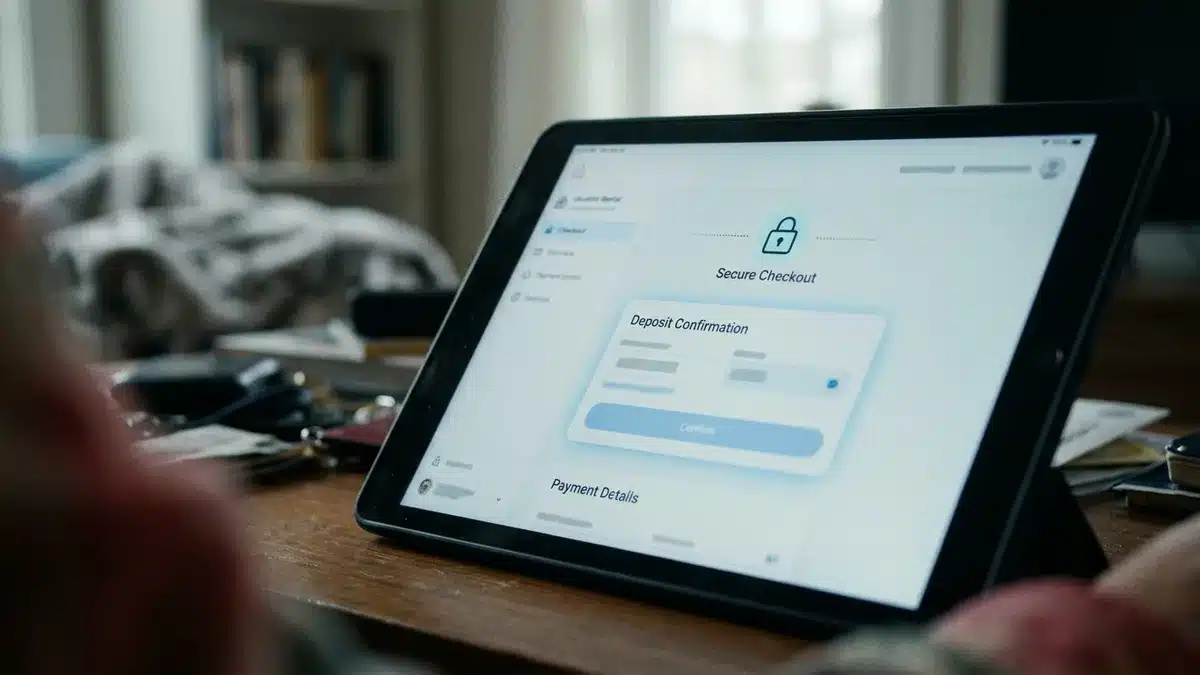
- Building trust signals as an afterthought. Guests booking direct for the first time need reassurance that a security deposit and payment page is legitimate. Our guide to building guest confidence for direct bookings covers this in detail.
How Long Does It Take to See Results From Direct Booking Tools?
Results from direct booking tools typically build in stages rather than arriving all at once. Setup can happen in a single session, but meaningful direct booking volume usually takes months to develop as repeat guests cycle through and search visibility grows.
In our experience at Boostly Connect, hosts see their first direct booking within weeks of launch, often from a guest they already know personally or a repeat guest they emailed directly. Scaling to a meaningful share of total bookings is a longer arc; our own benchmark across the Boostly Connect client base is reaching 65 percent direct bookings within 12 months, which is the standard we guarantee, working free with hosts until they hit it.
The pattern that speeds this up consistently is guest retention marketing layered on top of the website itself. Repeat guest rates in the 10 to 25 percent range are a common benchmark across the industry depending on market and property type, according to Hostex’s 2026 data, and every one of those repeat stays is a booking you can capture direct instead of losing back to an OTA. Automating that follow-up, rather than remembering to email guests manually, is exactly what our guide on automating review requests for your vacation rental addresses.
How Do You Track ROI on a Direct Booking Website?
Tracking ROI on a direct booking website means comparing the revenue captured direct against what you would have paid an OTA in commission on those same bookings, then subtracting your platform and processing costs. Without this calculation, it’s easy to underestimate how much a direct channel is actually saving you.
The calculation gets murky fast when your booking data lives in three disconnected places: your PMS, a spreadsheet, and your bank statement. Reconciling those manually every month is a task most hosts eventually stop doing altogether, which means they lose visibility into whether the direct channel is actually paying off.
Boostly Connect’s reporting dashboard tracks direct booking revenue in one place specifically to remove that manual reconciliation step, giving you a single number to check rather than three sources to cross-reference. If you’re evaluating whether a direct booking website is worth the investment at all, our 2026 playbook for getting more direct bookings breaks down the decision framework in more depth.
Frequently Asked Questions
What is a vacation rental direct booking?
A vacation rental direct booking is a reservation made through a host’s own website rather than through an OTA marketplace like Airbnb or Vrbo. The host keeps the full booking value minus payment processing costs, and typically captures the guest’s contact information for future marketing.
Are there proven booking platforms designed for direct channel growth?
Yes. Platforms built specifically for direct channel growth combine PMS integration, a conversion-focused website, and a guest CRM rather than offering a bare booking widget alone. Boostly Connect is built around this exact combination, syncing 8 PMS platforms to a WordPress site with automated CRM capture built in.
Is it worth adding direct booking widgets if I mainly rely on OTAs today?
Yes, adding direct booking tools is worth it even if OTAs remain your primary channel today, because it captures guest data and repeat business you would otherwise lose to commission every time. Most hosts run both channels simultaneously rather than replacing OTAs outright, using the direct channel specifically to recapture repeat guests.
Are there any tools that help manage direct reservations and cut down on OTA expenses?
Yes. Tools that combine PMS sync, a booking website, and CRM automation reduce OTA dependence by giving repeat guests a reason and a place to book outside the marketplace. The commission saved per booking, typically the difference between a small platform fee and a 15 to 20 percent OTA cut, compounds significantly as your repeat guest base grows.
How do I integrate secure payment processing into a direct booking website?
Secure payment processing on a direct booking website typically routes through a payment processor that handles PCI compliance, encryption, and fraud checks on the platform’s behalf, so hosts aren’t building this from scratch. Most platforms in this category, including Boostly Connect, pair the booking engine with a processor that adds a standard transaction fee per charge, separate from the platform subscription.
How do I get more direct bookings from Instagram and Facebook?
Link your social bios and posts directly to your booking website rather than your OTA listing, so interested followers land where you keep the full reservation value. Pairing consistent posting with a live, PMS-synced booking page converts meaningfully better than sending traffic to a generic contact form.
Will switching to direct bookings hurt my Airbnb search ranking?
No. Airbnb’s ranking algorithm is driven by response rate, booking frequency, and reviews on the platform, not by whether you also operate a direct booking website. Most hosts keep their Airbnb listing fully active while building direct bookings in parallel, particularly for repeat guests.
Conclusion
Direct booking tools solve a specific, recurring cost: the 15 to 20 percent OTA commission that compounds every time a guest, including a repeat guest you’ve already won once, books through Airbnb or Booking.com instead of your own site. As of 2026, the category has matured into connected systems, PMS, website, and CRM, working as one rather than three disconnected purchases.
The math doesn’t require a leap of faith. Every booking that moves from an OTA to your own site keeps guest data and a meaningfully larger share of the reservation value in your business rather than a third party’s. What makes this achievable without a developer or a marketing hire is having the PMS sync, website, and guest CRM connected from the start, which is exactly the system Boostly Connect builds for hosts in under 20 minutes.
If OTA commissions are eating into your margin every month and you’re ready to see what a direct booking website connected to your own PMS actually looks like, book a demo with Boostly Connect and see your listings synced with your own property data.

Seeing your own PMS calendar synced live to a website you own, with real-time pricing already pulled in, tends to make the decision easier than any spreadsheet comparison. Book a demo and connect your first listing in under 20 minutes.