

A direct booking strategy for holiday rentals is a system that combines a branded booking website, guest data capture, and repeat-guest marketing to reduce reliance on OTAs like Airbnb, Vrbo, and Booking.com. It works by pairing a synced, mobile-first website with automated email and CRM follow-up so guests rebook with you directly instead of returning to the platform that charges you commission every time.
Key Takeaways
- Industry data shows direct-booking sites accounted for nearly 34% of vacation-rental bookings in 2026, compared with 46% for Airbnb, according to Lodgify’s industry reporting.
- A 2026 industry dataset found 70% of operators already have a direct-booking website, yet 62% still generate less than 25% of bookings through that channel, and 18% get none at all.
- Direct bookings produce 45.2% longer average stays and 51.3% longer booking windows than OTA bookings, based on an analysis of 1.6 million bookings cited in Lodgify’s 2026 U.S. State of the Industry Report.
- Repeat guest rates vary widely: a 2026 Lodgify-cited study found average hosts convert just 5 to 8% of guests into repeat bookings, while hosts with a deliberate retention strategy hit 15 to 25%.
- Single-property direct booking websites typically convert between 0.9% (bottom quartile) and 3.2% (top quartile) of visitors, with a 1.9% median, per industry benchmark data.
- Boostly Connect syncs your existing PMS to a done-for-you WordPress booking site and captures every direct guest into your own CRM automatically, closing the gap between having a website and actually filling it.
If you manage even one holiday rental in 2026, you already know the math on OTA commission is brutal. Every reservation that routes through a third-party platform hands over 15 to 20 percent of the booking value before you’ve paid for cleaning, linens, or a single guest message. Multiply that across a year of bookings and it’s usually the single largest line item in your business you never chose to spend.
The frustrating part isn’t the fee itself. It’s that most hosts already own the fix and don’t use it. Research shows 70% of operators have built a direct-booking website, but the majority still pull less than a quarter of their revenue through it. A website with no traffic, no email list, and no repeat-guest system isn’t a booking channel. It’s a brochure.
At Boostly Connect, we’ve watched thousands of hosts try to close this gap with disconnected plugins, one-off email blasts, and manual spreadsheets tracking who stayed last summer. It rarely holds up past a handful of properties. This article walks through what an actual direct booking strategy looks like in 2026: the website mechanics, the guest data systems, the incentives that work, and the mistakes that quietly cap most hosts at single-digit direct booking share.
What Is a Vacation Rental Direct Booking?
A vacation rental direct booking is a reservation made through a channel you control, such as your own website, a phone call, a repeat-guest email, or a walk-up inquiry, rather than through an OTA like Airbnb or Booking.com. The distinction matters because direct bookings skip the commission and hand you the guest’s contact details.
Specifically, when a guest books through Airbnb or Vrbo, the platform owns that relationship. It controls the messaging, retains the email address, and can remarket that same guest to a competing property down the street next time they search. When a guest books direct, the contact record, the payment, and the future relationship all belong to you.
This is exactly the repeat-booking trap Boostly Connect was built to close. Every guest who books through a Boostly Connect website gets automatically captured into your own CRM, so the next time they’re ready to travel, you’re the one emailing them, not the OTA that already took its cut once.
How Do You Build a Direct Booking Website That Stays Synced With Your PMS?
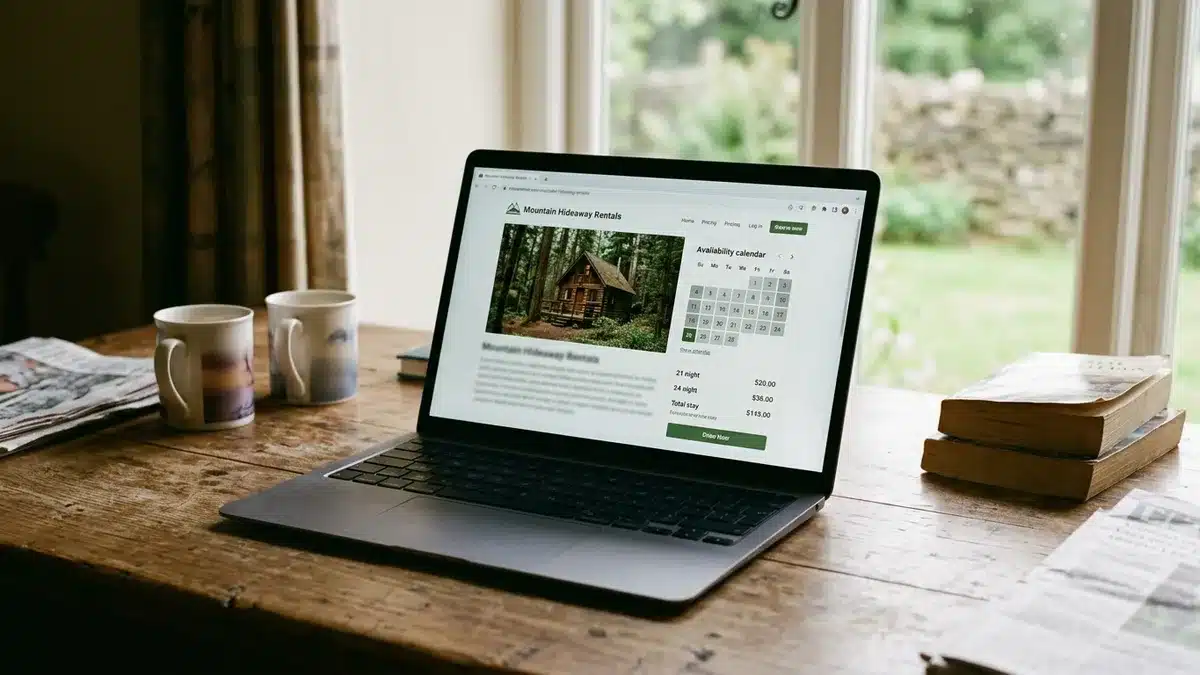
Building a synced direct booking website means connecting your property management system’s live calendar and rates directly to your public-facing site, so availability and pricing update automatically without manual entry. Without this sync, you risk double bookings and stale pricing, which is the fastest way to lose guest trust.
Most hosts who try to DIY this stitch together a booking plugin, a separate calendar tool, and manual rate updates across two or three tabs. It works for a week. Then a guest books a date that was actually blocked on Airbnb, and you’re issuing a refund and an apology.
Boostly Connect solves this by connecting directly to your existing PMS, including Hospitable, Hostfully, Lodgify, and Guesty, and syncing live availability and real-time pricing to a WordPress site built specifically for conversion. The setup runs in under 20 minutes, with no developer and no coding required, and there’s a free plan for up to 3 listings on the Discover map.
Industry guidance consistently recommends a mobile-first, three-tap booking flow: large date selectors, visible pricing before checkout, and a handful of clicks to complete payment. Given that most travel searches now happen on phones, a site that makes guests pinch and zoom to book is losing reservations it should never have lost. If you want a deeper breakdown of what to look for in a booking platform, our guide to short-term rental website builders covers the specific features worth prioritizing in 2026.
What Is a Good Direct Booking Website for Short-Term Rentals?
A good direct booking website for short-term rentals combines live PMS-synced availability, secure payment processing, mobile-responsive design, and built-in guest data capture, so every booking both converts a guest and builds your future marketing list. It should function as infrastructure, not a static brochure page.
Concretely, that means professional photography, amenity-focused property descriptions, a visible cancellation policy, and trust signals above the fold: an SSL padlock, real guest reviews, and a persistent “Check availability” button that never disappears as the visitor scrolls.
Where most independent builders fall short is guest data. They’ll process the booking and stop there. Boostly Connect pairs the website layer with an all-in-one CRM that includes email, social, and live chat, plus AI agents that handle routine questions and upsells so returning guests don’t fall through the cracks between bookings. That combination, website plus CRM plus PMS sync, is the difference between a site that takes bookings and a system that compounds them over time. For more on what separates a converting site from a static one, see our piece on the best website builder for short-term rentals in 2026.
What Is a Good Marketing Strategy for Vacation Rental Property?
A good marketing strategy for vacation rental property layers acquisition, conversion, and retention: driving traffic through SEO and social channels, converting visitors with a fast mobile booking flow, and retaining past guests through email and SMS remarketing. Skipping any one layer caps your direct booking growth.
First, on acquisition: dedicated landing pages for each property, hyperlocal content covering nearby attractions and travel logistics, and vacation-rental schema markup so Google can surface pricing and availability directly in search results all matter more than most hosts assume. We cover the mechanics of this in our vacation rentals SEO guide.
Second, on conversion: your booking flow needs to work in three taps or fewer, with pricing visible before the guest commits to entering payment details.
Third, and most overlooked: retention. Email and repeat-guest channels reportedly convert far higher than general website traffic, with email conversion rates around 6.2% compared to roughly 1.0% for non-branded paid search, according to industry benchmark data. That’s exactly why Boostly Connect’s CRM automates review requests and repeat-stay email sequences rather than leaving it to a host’s memory of who stayed last spring. Our guide on getting more direct bookings walks through the full acquisition-to-retention sequence in more detail.
How Do You Keep Airbnb Bookings While Growing Direct Bookings?
You keep Airbnb bookings while growing direct bookings by treating the OTA as a discovery channel and your own website as the retention channel, rather than trying to abandon Airbnb outright. Most successful hosts run both simultaneously and simply redirect returning guests to book direct on their next stay.
The fear of losing Airbnb search ranking by shifting focus is common but usually overstated. Airbnb ranks listings on responsiveness, review quality, and booking activity within its own platform, not on whether you also happen to run a separate website. Maintaining your Airbnb listing while building your direct channel in parallel doesn’t cost you visibility there.
What it does is put you in control the moment a guest checks out. A branded business card left at the property with a direct URL and QR code, a post-stay email with a modest returning-guest discount (industry sources commonly cite 5 to 10 percent off as an effective incentive), and a CRM that remembers preferences all nudge that next booking away from the OTA without ever touching your Airbnb listing itself.
This is the exact transition pattern we see across our own community at Boostly Connect: hosts don’t quit OTAs cold. They build a parallel, owned channel and let the mix shift naturally as repeat guests and referrals grow. In one case within our network, a bed and breakfast owner shifted to 90% direct bookings over time while maintaining a 60% repeat guest rate, proving the shift can happen gradually without abandoning existing channels overnight.
What Should Your Direct Booking Incentives Actually Look Like?
Direct booking incentives are the specific perks, discounts, or flexible terms you offer exclusively to guests who book through your own website instead of an OTA. Effective incentives are visible before the guest starts comparing prices, not buried in a confirmation email after the fact.
Common approaches include a best-price guarantee messaging that your site never charges more than Airbnb for the same dates, flexible cancellation windows the OTA doesn’t offer, complimentary early check-in, or a modest percentage discount for booking direct. Partnerships with local restaurants or tour operators for bundled perks also work well for destination properties with repeat leisure travel.
Time-sensitive offers matter more than most hosts realize given current booking patterns. Roughly 72% of bookings in a recent U.S. vacation-rental dataset were for one-to-three-night trips, and close to a third were made within seven days of check-in. That means your incentive messaging needs to work fast, not sit in a monthly newsletter guests won’t see before they book elsewhere.
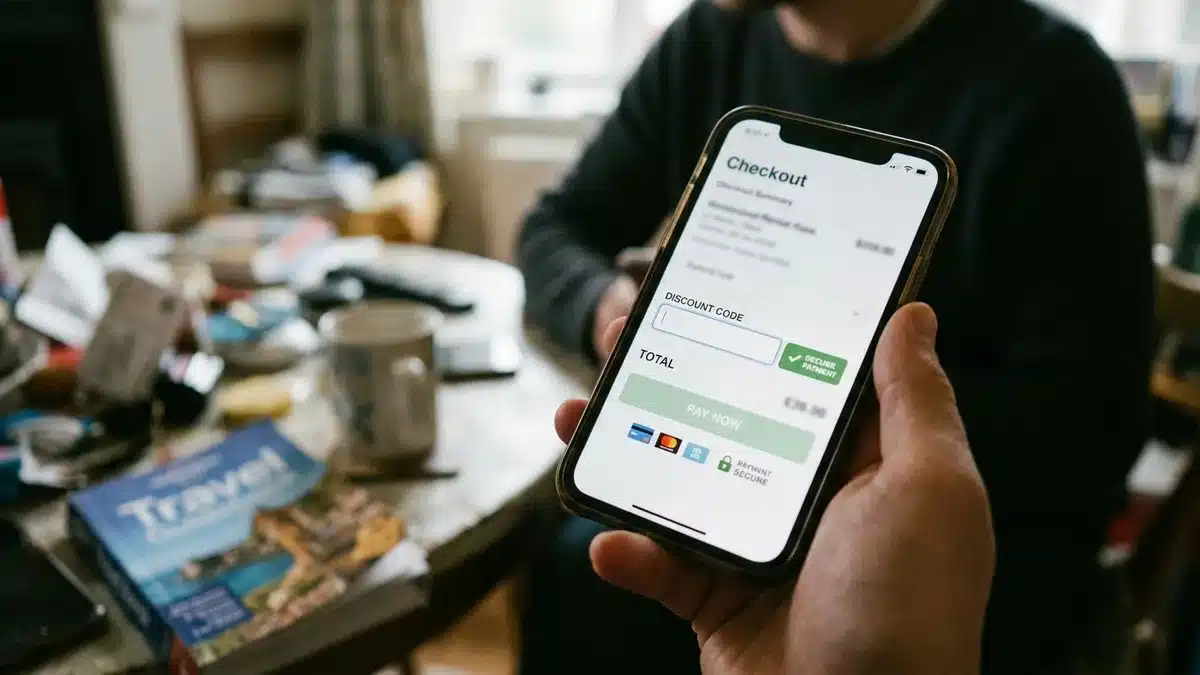
Boostly Connect’s website templates build in support for discount codes and direct-only offers at the point of booking, so the incentive is visible during checkout rather than something you have to manually apply after a guest emails asking for a deal.
How Do You Capture and Use Guest Data From Past Stays?
Capturing guest data means collecting email addresses, contact preferences, and stay history at every touchpoint, including booking, pre-arrival messaging, and checkout, then using that data to automate repeat-stay marketing. Without a CRM, this data sits scattered across OTA inboxes you don’t fully own.
Most independent hosts manage guest contacts through whatever inbox or spreadsheet is easiest at the time. It works for the first dozen bookings. Past that, tracking who stayed, when, what they booked, and whether they’ve been sent a post-stay offer becomes a part-time job nobody has time for.
Repeat guest rates make the case for fixing this. Median repeat-guest revenue across operators sits around 5%, but hosts with a deliberate retention strategy report rates in the 15 to 25% range, according to industry data cited by Lodgify and StayStrat. Notably, roughly three-quarters of repeat guest revenue still flows back through OTAs with standard commissions, meaning even loyal guests are quietly paying the platform tax unless you’ve built a system to intercept them.
That interception is precisely what the Boostly CRM does. Every direct booking auto-populates a guest profile, and automated email and SMS sequences trigger post-stay review requests and repeat-stay offers without you touching a spreadsheet. If you’re rebuilding a dormant guest list from scratch, our guide on how to re-engage past vacation rental guests walks through the sequencing in detail, and our piece on automating review requests covers the mechanics of turning stays into public trust signals automatically.
What Does the Economics of a Direct Booking Strategy Actually Look Like?
The economics of a direct booking strategy compare what you currently lose to OTA commission against the cost of running your own booking channel, including website hosting, payment processing, and marketing tools. Most hosts have never actually run this comparison line by line.
OTA commissions typically run 15 to 20 percent per booking. That’s a recurring cost with no cap and no volume discount. A direct booking channel replaces that recurring percentage with a fixed or usage-based cost structure for your website, CRM, and payment processing, which tends to shrink as a share of revenue the more bookings you drive through it.
The table below breaks down the structural differences hosts should weigh when comparing channels.
| Factor | OTA-Only Booking | Direct Booking via Boostly Connect |
|---|---|---|
| Commission per booking | Typically 15 to 20 percent, charged by the platform | No OTA commission on bookings made through your own site |
| Guest data ownership | Retained by the OTA; not portable to your own CRM | Every direct guest auto-captured into your own CRM |
| Setup requirement | Immediate, but locked into platform rules | Under 20 minutes to sync PMS to website, no developer needed |
| Repeat guest marketing | Limited to what the OTA allows, e.g. rebook or special offer tools | Automated email/SMS sequences via built-in CRM |
| Upfront cost | None, but ongoing commission on every booking | A free plan for up to 3 listings on the Discover map |
| PMS integrations supported | Native to whichever OTA you’re listed on | 8 PMS integrations, including Hospitable, Hostfully, Lodgify, and Guesty |
Some OTAs do offer their own retention tools, like Airbnb’s Re-book button or the platform’s Special Offers feature for sending discounts to past guests. These are useful supplements, but they still operate inside Airbnb’s ecosystem and commission structure. A guest who rebooks through Re-book still generates a commission; a guest who rebooks through your own CRM does not.
What Are the Common Mistakes That Cap Direct Booking Growth?
The most common mistake hosts make is building a direct booking website and then treating it as finished, with no ongoing traffic strategy or guest retention system layered on top. A website alone does not generate demand; it only converts demand you’ve already driven to it.
Here are the mistakes we see most often across the Boostly Connect community, and what fixes each one:
- No email capture at booking. If you’re not collecting guest emails and consent at the point of reservation, you have no retention channel to activate later. Fix this by building capture into your checkout flow from day one.
- Treating the website as a one-time project. Sites without fresh property content or seasonal offers stagnate in search rankings. Regular blog and landing page updates keep the site discoverable.
- No incentive visible at checkout. Guests comparing your site to Airbnb need a reason to book direct in that moment, not in a follow-up email.
- Manually syncing calendars across tools. This is where double bookings happen. A PMS-synced site eliminates the manual step entirely.
- Ignoring mobile checkout speed. With the majority of travel searches happening on phones, a slow or clunky mobile flow quietly bleeds bookings you’ll never know you lost.
- No measurement framework. Most hosts don’t track direct booking share, conversion rate, or repeat-guest rate as ongoing metrics, so they can’t tell if their strategy is actually working.
On that last point, this is a gap in most direct booking advice generally. Tracking direct booking share against total revenue, conversion rate against visitor traffic, and repeat-guest rate against total bookings gives you the numbers to know whether your strategy is compounding or stalling. Boostly Connect’s reporting dashboard tracks direct booking revenue in one place, so you’re not manually reconciling numbers across your PMS, spreadsheet, and bank statement every month.

How Long Does It Take to See Results From a Direct Booking Strategy?
Most hosts see their first direct booking within weeks of launching a synced website with visible incentives, but meaningful share shift, moving from single-digit to 30 percent or more of total bookings, typically develops over 6 to 12 months as repeat guests and referral traffic build.
This timeline lines up with what we see across our own client base. Boostly Connect clients reach an average of 65 percent direct bookings within 12 months, and if that outcome isn’t reached, we continue working with the host at no additional cost until it is. That guarantee exists because the strategy genuinely does compound. It just doesn’t happen in week one.
Growth tends to follow a pattern: an initial trickle of bookings from search and referral traffic, a jump once repeat guests from prior OTA stays start returning direct, and then a longer compounding curve as your email list and reviews build authority. Rushing this by skipping the retention layer is the single most common reason hosts give up on direct bookings after a slow first quarter.
Practical Guidance: How Do You Prioritize Your First 90 Days?
Prioritizing your first 90 days of a direct booking strategy means sequencing website setup, guest data capture, and incentive launch in that order, rather than trying to run every tactic simultaneously with limited time and budget.
Here’s the sequence we recommend to hosts starting from zero:
- Days 1 to 20: Sync your PMS to a booking website. This is the technical foundation everything else depends on, and with Boostly Connect it typically takes under 20 minutes for the initial connection.
- Days 20 to 40: Build guest data capture into every touchpoint, booking confirmation, pre-arrival message, and checkout, and confirm your payment processor and cancellation policy are clearly stated.
- Days 40 to 60: Launch a direct-only incentive, whether that’s a discount, flexible cancellation, or a bundled local perk, and make it visible at checkout, not buried in email.
- Days 60 to 90: Start your first automated post-stay email sequence targeting guests from the prior 12 months of OTA bookings, inviting them to rebook direct next time.
Before launching, run a small test booking through your own checkout flow to confirm payment processing, confirmation emails, and calendar blocking all work correctly. Catching a broken checkout step before a real guest hits it saves you a much worse conversation later.
On the compliance side, make sure your booking terms address cancellation policy, any applicable local short-term rental registration or tax requirements, and privacy consent language for email capture. Requirements vary by state and municipality, so confirm the current rules with your local regulatory office rather than relying on generic online guidance.
Frequently Asked Questions
How do I integrate secure payment processing into a direct booking website?
Most direct booking websites integrate a payment processor at the checkout step, handling card details, deposits, and refunds without the host manually processing payments. Boostly Connect’s booking flow includes secure checkout built into the synced website, so payment processing runs alongside your PMS-connected calendar rather than as a separate bolted-on tool.
How can I advertise my vacation rental to boost direct bookings?
Advertise through a mix of organic search content on your own site, local SEO targeting your property’s destination, social media showcasing the property and guest experience, and email campaigns to past guests. Paid social and retargeting can supplement this once your organic foundation and email list are established.
How do I increase direct bookings for a holiday let?
Increase direct bookings by combining a fast, mobile-first booking website with visible direct-only incentives and an automated email sequence targeting past guests. The combination matters: a website alone converts existing traffic, but incentives and retention marketing are what actually grow the traffic and repeat-booking volume over time.
What are the top-rated websites for comparing and booking vacation rentals?
Travelers typically compare rentals across major OTAs like Airbnb, Vrbo, and Booking.com, alongside individual host or property manager websites. As a host, your own branded site competes directly with these platforms once a guest already knows your property, particularly for repeat guests who no longer need to browse the OTA marketplace.
How do I build a direct booking website that stays synced with my PMS availability and rates?
Building a synced website requires connecting your property management system’s API or integration to your site’s booking calendar, so availability and pricing update automatically in both directions. Boostly Connect handles this natively across 8 PMS integrations, including Hospitable, Hostfully, Lodgify, and Guesty, with no developer required to set it up.
What is a vacation rental direct booking?
A vacation rental direct booking is any reservation made through a channel the host controls, such as their own website or a repeat-guest email, rather than through a third-party OTA. Direct bookings avoid platform commission and give the host ownership of the guest’s contact data for future marketing.
Will switching focus to direct bookings hurt my Airbnb search ranking?
No. Airbnb ranks listings based on responsiveness, review quality, and in-platform booking activity, not on whether a host also operates a separate direct booking website. Most hosts run both channels simultaneously without any ranking penalty on Airbnb.
Conclusion
The gap between having a direct booking website and actually generating revenue through it comes down to three things: a site that stays synced with live availability, a system that captures and reactivates guest data automatically, and incentives visible at the moment a guest decides where to book. Skip any one of those and you’re left with a brochure, not a channel.
As of 2026, the tools to fix this no longer require a developer or a stitched-together stack of plugins. A direct booking strategy for holiday rentals built on a synced PMS, an owned website, and automated guest retention is achievable within a single quarter, with meaningful share shift developing over the following months.
If you’re ready to see what that looks like connected to your own property data, book a demo with Boostly Connect and we’ll walk through your PMS sync, website build, and CRM setup together.

Curious what 65 percent direct bookings within 12 months actually looks like for a business your size? Book a demo with Boostly Connect and ask us directly, no developer, a free plan for up to 3 listings on the Discover map, and your site synced with your existing PMS in under 20 minutes.