

Good examples of property descriptions share five traits: a specific hook in the first sentence, concrete details instead of vague adjectives, a clearly named ideal guest, honest proximity and access information, and a call to action that points toward booking direct rather than through a marketplace. Most hosts get two or three of these right and lose bookings on the rest.
Key Takeaways
- Industry guidance recommends listing descriptions run roughly 150-250 words, while vacation rental specialists suggest 250-500 words is enough to cover the space, guest fit, location, and practical details without losing mobile readers.
- A strong description opens with the property’s single strongest differentiator in the first sentence, since mobile previews often truncate before the second line.
- Specific proximity language such as “10 minutes to the beach” or “two blocks from the metro” consistently outperforms vague phrases like “close to everything.”
- Reframing a drawback honestly, such as turning a staircase into “the path to the loft bedroom with the best view in the flat,” builds trust instead of triggering a mismatch review later.
- Property descriptions written for a marketplace listing rarely translate directly to a direct booking website, because they’re built around a platform’s fixed fields instead of your own conversion goals.
- Boostly Connect builds SEO-ready property pages that let you rewrite these descriptions once, for your own site, so every word works toward a direct reservation instead of an OTA commission.
If you’ve ever copied your Airbnb description straight onto your own website, you already know it falls flat. A listing written for a marketplace search algorithm reads differently than one written to convert a guest who landed directly on your page. In our experience working with short-term rental hosts, the gap between an “adequate” description and a high-converting one usually comes down to specificity, not creativity.
This guide breaks down 10 property description examples, organized by the situation they solve rather than by property type, since the same structural lessons apply whether you run a downtown studio or a 30-property portfolio. Each example shows a concrete before-and-after pattern you can copy today, in 2026, whether you’re writing for a new listing or rewriting an old one that has stopped converting.
At Boostly Connect, we’ve watched hundreds of hosts rebuild their property pages after moving off OTA-only distribution, and the pattern is consistent: descriptions that name a specific guest, a specific number, and a specific place always outperform generic lifestyle copy. We’ll walk through what that looks like in practice, then show you how to apply it to your own direct booking site.
What Makes a Property Description Convert Instead of Just Inform?
A high-converting property description is one that answers a guest’s unspoken question, “is this the right place for me,” within the first two sentences, using specific, verifiable details rather than generic praise. Conversion-focused copy differs from purely informational copy because it’s built around a decision, not a description.
For example, “spacious and comfortable apartment near downtown” is informational but forgettable. “A top-floor loft with bay views, two blocks from the best breakfast spot in the Old Town” gives the reader a mental picture and a location anchor in one sentence. That second version does the job a direct booking page needs it to do: it stops the scroll.
Notably, the strongest descriptions we see across our own client base combine sensory language with a verifiable fact, such as internet speed, walking time, or bedroom count. As a result, the reader trusts the emotional pitch because it’s backed by something concrete. This is the exact principle behind the property pages we build inside Boostly Connect, where every template is structured to pair a lifestyle hook with a factual detail pulled straight from your synced PMS listing.

Example 1: The Specific Hook Instead of the Generic Adjective
The single strongest lever in any property description is the opening sentence, and most hosts waste it on words like “cozy,” “charming,” or “beautiful” that could describe literally any listing. A specific hook names the one thing this property has that a competing listing three streets over does not.
Weak: “Beautiful cozy home in a great location.”
Strong: “A converted carriage house with a private courtyard, one block from the farmers market that runs every Saturday.”
Notice the second version doesn’t use a single adjective for emotional effect. It relies entirely on nouns: carriage house, courtyard, farmers market, Saturday. Specificity does the emotional work that adjectives usually fail at.
We built the direct booking playbook around this exact principle: a direct booking website only converts when the first line does something an OTA search result cannot, which is speak directly to one guest’s specific need rather than optimizing for a search algorithm.
Example 2: Naming the Ideal Guest Instead of Writing for Everyone
Naming your ideal guest means describing the property in terms of who it’s built for, rather than trying to appeal to every possible traveler at once. Vacation rental copy specialists recommend naming the use case directly, such as “couples on a romantic weekend” or “remote workers who need fast Wi-Fi and a quiet desk,” rather than leaving the reader to guess if the space fits their trip.
Weak: “Great for families, couples, business travelers, or groups.”
Strong: “Built for remote workers: a dedicated desk with a second monitor, 300 Mbps fiber, and a coffee shop within walking distance for your midday break.”
The strong version sacrifices broad appeal for conversion strength. A remote worker searching for a month-long stay will book this over a generic listing every time, because it proves the host understands their specific trip.
This is precisely why generic template sites underperform for boutique property managers. When you’re managing five to twenty units under one brand, each property page needs its own guest profile, not a copy-paste template. It’s one of the reasons boutique operators lean on a short term rental website builder that supports individual property pages rather than one generic template repeated across every listing.
What Does a Legal Description of a Property Look Like?
A legal description of a property is a formal, surveyor-verified identification of a specific parcel of land, used in deeds, titles, and tax records, and it looks nothing like the marketing copy on your booking page. Legal descriptions typically reference metes and bounds, lot and block numbers, or a recorded subdivision plat, not amenities or guest experience.
For example, a legal description might read: “Lot 14, Block 3, Sunset Ridge Subdivision, as recorded in the official plat records of the county.” Compare that to a marketing description: “A ridge-top three-bedroom with a wraparound deck, sunset views over the valley, and a five-minute drive to the trailhead.”
Hosts occasionally confuse the two because both technically “describe the property,” but they serve entirely different functions. If you need the legal description for a title transfer, insurance policy, or permit application, it comes from your deed, title company, or county assessor’s records, never from your marketing copy. Never copy a legal parcel description into a guest-facing listing; it adds zero conversion value and reads as confusing or unprofessional to a traveler evaluating your property.
Example 3: Room-by-Room Walkthrough in Guest-Use Order
A room-by-room walkthrough describes the property in the order a guest would actually experience it, arrival to departure, rather than in a random or alphabetical order. This structure mirrors how the reader mentally moves through a stay, which makes the description easier to visualize and remember.
Weak listing order: bathroom, then kitchen, then bedroom, then living room, with no logic connecting them.
Strong listing order: “Step through the private entrance into an open living area with a gas fireplace. The kitchen is fully stocked for cooking a real dinner, not just reheating takeout. Down the hall, the primary bedroom has a king bed and blackout curtains for late sleepers.”
Notice how each sentence hands off to the next room, almost like a guest is being led through the space in person. This technique works for a two-bedroom cottage and a 30-property portfolio alike, though multi-property operators often need to standardize the pattern across dozens of listings without losing the individual character of each one.
That’s a specific operational challenge we hear constantly from portfolio operators scaling past ten units: keeping every property page consistent in structure while still sounding unique per listing. Boostly Connect’s synced property pages pull room counts, amenities, and photos directly from your PMS so you’re not rebuilding this structure by hand across every unit.
Example 4: Proximity Proof Points Instead of Vague Location Claims
A proximity proof point is a specific, measurable distance or travel time that replaces vague phrases like “close to everything” or “great location.” Industry guidance on vacation rental copy specifically calls out phrases such as “10 minutes to the beach” or “two blocks from the metro” as the standard for trustworthy location claims.
Weak: “Steps from all the best attractions.”
Strong: “A 10-minute walk from the city center, with the metro stop two blocks away and the closest grocery store a five-minute walk.”
Guests weighing a direct booking against a familiar OTA listing are looking for reassurance, and precise distances provide it. Airbnb’s own hosting guidance recommends disclosing exact walk times, such as noting a property is a 10-minute walk from downtown, rather than leaving guests to estimate.
Searchable amenity phrases matter here too. Terms like “near Tube,” “pet-friendly,” “fast Wi-Fi,” “EV charger,” or “walk to beach” aren’t just descriptive, they’re the phrases travelers actually type into search boxes. If your vacation rental SEO strategy doesn’t include this exact language on your direct booking site, you’re leaving organic search traffic on the table that your OTA listing would otherwise capture and keep for itself.
Example 5: Turning a Drawback Into an Honest Feature
Reframing a drawback means disclosing a real limitation of the property, such as a staircase or lack of elevator, in language that’s honest but still frames it as part of the experience rather than a hidden flaw. This differs from hiding the limitation, which almost always results in a negative review after check-in.
Weak (hiding it): No mention of the two flights of stairs to the bedroom.
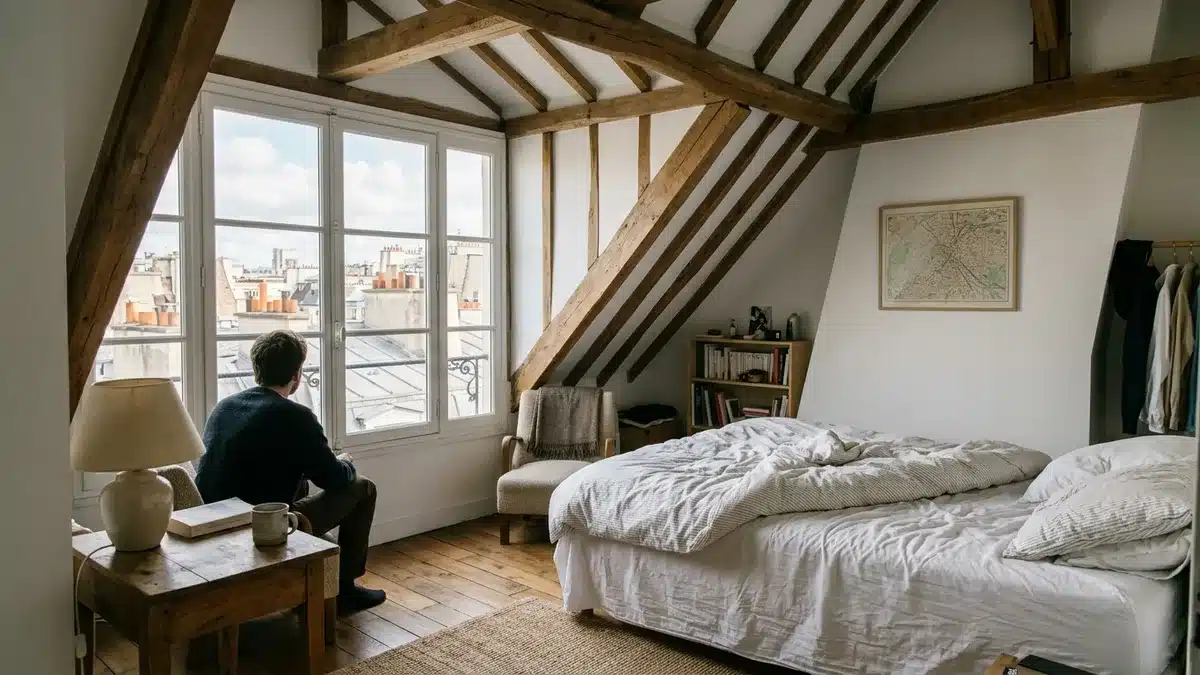
Strong (reframing it): “Two flights of stairs lead up to the loft bedroom, which has the best view in the flat: rooftops all the way to the harbor.”
This single technique prevents the single most common cause of a mismatch review: a guest who didn’t know what they were getting into. It costs you nothing to disclose it upfront, and it often turns a neutral fact into a selling point.
We flag this constantly for first-time direct booking adopters, because unlike an OTA listing with a fixed accessibility field, your own website gives you the freedom to explain a quirk in your own words. That freedom is wasted if you copy your old OTA description verbatim instead of rewriting it for your own site.
Can You Provide Some Examples of Rental Listing Descriptions?
Rental listing descriptions vary by property type, but the strongest examples all follow the same underlying pattern: hook, guest fit, key features, location, and a direct call to action. Below are three condensed examples across different property types, each built for a direct booking page rather than a marketplace listing.
| Property Type | Sample Opening Line | Why It Works |
|---|---|---|
| Downtown apartment | “A modest but sunlit apartment two blocks from downtown, the perfect base for exploring the city on foot.” | Sets a realistic expectation while still positioning location as the selling point. |
| Treehouse-style rental | “Surrounded by mature oak trees, this top-floor unit feels less like an apartment and more like a treehouse.” | Uses a single vivid comparison instead of a list of adjectives. |
| Family-sized house | “A single-story ranch with a fenced yard, five minutes from the trailhead and built for families who want space to spread out.” | Names the guest (families) and the practical benefit (fenced yard, single story) in one sentence. |
Each of these examples runs under 30 words for the opening line, which matters because mobile browsers often truncate listing previews before a longer sentence finishes. Save the supporting detail, like exact square footage or the full amenity list, for the paragraphs that follow.
What Are Some Adjectives I Can Use to Describe a Property?
The most effective adjectives for a property description are sensory and specific, such as “sunlit,” “quiet,” or “hand-built,” rather than generic marketing words like “amazing,” “stunning,” or “luxurious” that carry no verifiable meaning. Sensory adjectives work because they describe something a guest can actually perceive, not a subjective judgment about quality.
Useful, specific adjectives include: sunlit, quiet, wraparound, hand-built, weathered, restored, sun-facing, tree-lined, and walkable. Each of these ties to a concrete sensory experience rather than an unverifiable claim.
Overused, low-value adjectives to avoid or minimize: amazing, stunning, luxurious, cozy, charming, beautiful, and perfect. None of these are inherently wrong, but when they appear without a supporting detail, they add length without adding trust. If you use “cozy,” pair it with why: “cozy, with a wood-burning stove that heats the whole cabin in under 20 minutes.”
Our copy guidance for the operators we work with is simple: every adjective needs a supporting noun within the same sentence, or it gets cut. That discipline alone tends to shorten a bloated description by 30 to 40 percent while making it more persuasive, not less.
What Is the 3-3-3 Rule in Real Estate?
The 3-3-3 approach some real estate agents reference typically relates to pricing and offer strategy timing rather than property description writing, and its specific definition varies by agent, market, and brokerage. Because there’s no single standardized version of this guideline used consistently across the industry, we won’t assign it a fixed meaning here.
What matters more for a short-term rental host writing a property description is a different, verifiable framework: a real-estate description template that opens with the property’s single strongest selling point, followed by specific facts such as bedrooms, bathrooms, square footage, finishes, and recent upgrades. That structure, hook first, proof points second, is directly transferable to a vacation rental listing and is far more useful for your booking page than a pricing rule built for resale transactions.
If you’re researching real estate terminology alongside your short-term rental copy, verify any named “rule” directly with a licensed real estate professional in your state before applying it, since terminology and thresholds shift by market and brokerage.
Example 6: The Feature List for Scannable Amenities
A feature list is a short, bulleted breakdown of a property’s core specs, bedrooms, bathrooms, square footage, and standout amenities, placed after the narrative hook so a skimming reader can verify the basics without rereading the full description. Real estate description templates recommend this structure specifically because most readers scan before they read in full.
- 3 bedrooms, 2 bathrooms, sleeps 6
- Fenced backyard with a gas grill
- 300 Mbps fiber internet, dedicated desk
- Free driveway parking for 2 vehicles
- Air conditioning throughout, no window units
Notice that every line pairs a spec with a number: 3 bedrooms, 300 Mbps, 2 vehicles. That density of concrete numbers is what separates a scannable, trustworthy list from a vague summary. This same logic drives how Boostly Connect structures amenity data on synced property pages, pulling exact bed counts and amenities straight from your connected PMS instead of requiring you to retype them by hand every time a listing changes.
Example 7: Accessibility and Safety Details Most Hosts Skip
Accessibility and safety details describe specific, physical facts about a property, step-free entry, bed height, bathroom layout, and lighting, that let a guest self-assess whether the space fits their mobility needs before booking, rather than after arrival. Most property descriptions we’ve reviewed limit this to a generic warning about stairs, which leaves genuinely important information out entirely.
Common but incomplete: “Please note there are stairs to access the unit.”
Specific and useful: “Step-free entry from the driveway to the main living level. The primary bedroom and bathroom are both on this floor, with a walk-in shower and no tub. Two additional bedrooms are up a single flight of 12 stairs with a handrail.”
This level of detail serves two audiences at once: guests with mobility needs who can now self-select confidently, and families traveling with young children who want to know exactly where the stairs are before they arrive. It’s a small addition that meaningfully reduces the odds of a guest showing up unprepared, and unprepared guests are the ones most likely to leave a critical review.
Example 8: Direct Booking CTAs That Actually Convert
A direct booking call to action is the closing line of a property description that tells the guest exactly what to do next, book now, check availability, or contact the host directly, tied specifically to your own site rather than a marketplace’s fixed checkout flow. Weak CTAs simply restate that the property is “available now” without giving the guest a reason to act through your channel specifically.
| CTA Type | Example Line | Best Used When |
|---|---|---|
| Availability-based | “Check live availability and lock in your dates directly, no booking fees added at checkout.” | Property has strong occupancy and limited open dates. |
| Repeat-guest offer | “Stayed with us before? Message us directly for a returning guest rate.” | Targeting past guests who previously booked through an OTA. |
| Email capture | “Not ready to book yet? Join our list for first access to new dates and seasonal offers.” | Top-of-funnel visitors not ready to commit. |
Most guidance on property descriptions mentions a call to action without offering this range of options, which is a gap we think matters. An availability-based CTA does nothing for a guest who already stayed with you once; a repeat-guest CTA does nothing for a first-time visitor. That’s exactly the problem Boostly Connect was designed to solve: every guest who books through your synced website lands automatically in your own CRM, so you can send a returning-guest offer to someone who stayed with you last spring without manually rebuilding a spreadsheet of past emails.
Example 9: The Lifestyle Close That Frames the Whole Stay
A lifestyle close is the final narrative paragraph of a description that steps back from individual features and describes the overall feeling of a stay, tying the property, the guest, and the location together in a single forward-looking statement. This differs from a feature list because it’s emotional rather than factual, and it works best placed right before the call to action.
Example: “Spend your mornings on the porch with coffee and the sound of the creek below, then walk into town for dinner without needing a car. This is the kind of stay that turns into an annual tradition.”
Notice this paragraph doesn’t repeat a single spec already covered earlier in the listing. Its only job is emotional transition from information to decision. Skipping this section is a common mistake, since many hosts jump straight from a feature list to a CTA with no bridge between the two, which reads abruptly to a guest who was just getting invested in the property.
Example 10: Adapting One Description for Direct Booking Instead of a Marketplace
Adapting a property description for direct booking means rewriting your marketplace listing so it no longer depends on a platform’s fixed fields, house rules boxes, or algorithm-driven keyword stuffing, and instead speaks directly to a guest who already found your site. This is one of the most overlooked steps in a host’s transition away from OTA dependency, because most guidance treats Airbnb copy and website copy as interchangeable when they aren’t.
OTA-style description: Built around fixed fields (space, guest access, other notes) and optimized to satisfy Airbnb’s own search ranking signals.
Direct booking site version: Built around a free-form narrative, your own SEO keywords, and a CTA that leads to your own checkout instead of a marketplace’s booking flow.
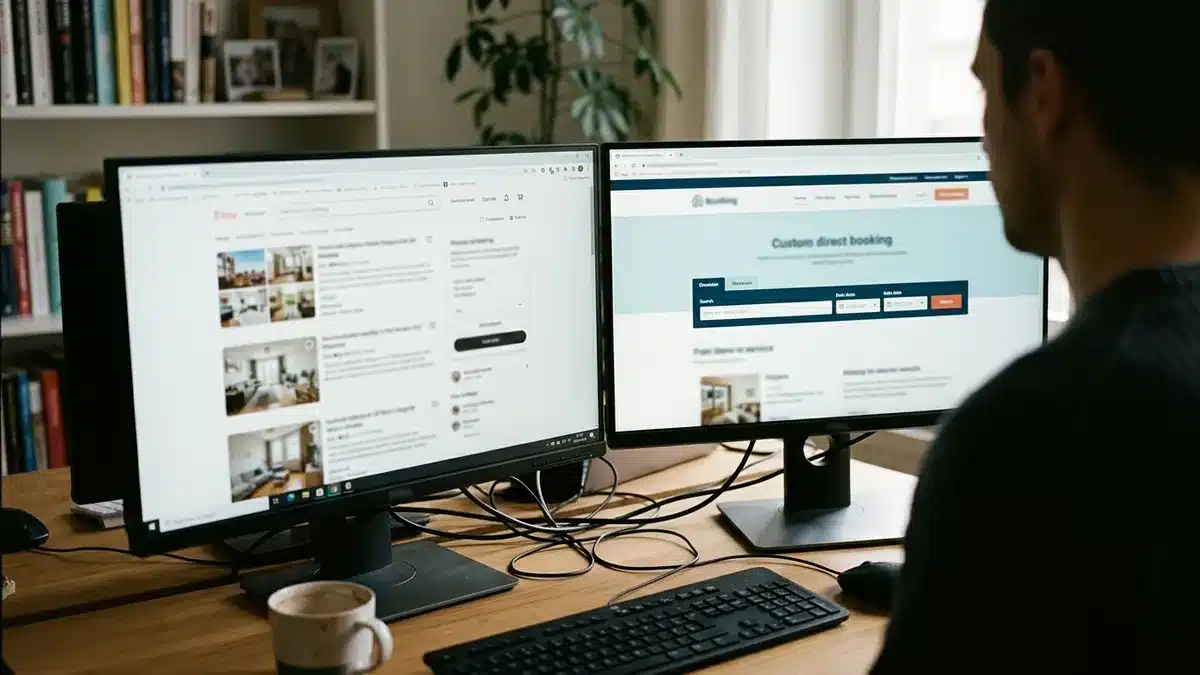
An OTA listing has to compete inside someone else’s search results using their categories. Your own website has none of those constraints, which is precisely why so many hosts write a mediocre “second copy” of their listing for their own site instead of a genuinely rebuilt one. We built this exact rewrite process into Boostly Connect, syncing your live PMS data into SEO-optimized property pages so the description on your site is written for your own search ranking and your own guest, not repurposed from a platform you don’t control. If you’re still deciding whether a standalone site is worth the effort, our direct booking website guide walks through the full case for it.
How Do You Evaluate a Property Description Before Publishing It?
Evaluating a property description before publishing means running it through a repeatable checklist that catches factual errors, unverified amenity claims, and pricing ambiguity before a guest ever reads it. Most guidance on writing property descriptions skips this step entirely and stops at style advice, leaving hosts to publish untested copy.
- Confirm every amenity mentioned (Wi-Fi speed, parking spots, appliance brands) matches what’s physically at the property today, not what was true when you first listed it.
- Check that pricing and fee language on your direct booking site matches what a guest sees at checkout, with no surprise charges added after the description promises a flat rate.
- Re-read your cancellation policy language and confirm it matches what’s actually configured in your booking engine.
- Scan for any accessibility claim (step-free entry, elevator access) and verify it against the property’s actual layout.
- Read the opening sentence out loud. If it could describe five other listings in your market, rewrite it.
- Confirm the CTA points to your own booking flow, not a leftover link to an OTA listing.
Skipping this checklist is how mismatch reviews happen, a guest arrives expecting one thing and finds another, and that gap costs you more in reputation than a slightly longer description ever would. Multi-property operators managing this across a growing portfolio often find manual verification breaks down past a handful of units, which is one reason a connected short term rental website template synced to your live PMS matters more as you scale.
What Data and Benchmarks Should Guide Your Description Length and Structure?
Recommended description length for a short-term rental listing typically falls between 150 and 250 words for a basic listing, or 250 to 500 words when covering the space, guest fit, location, and practical details in full. This range balances enough detail to answer a guest’s questions against the risk of losing a reader’s attention on a mobile screen.
| Element | Recommended Guidance | Why It Matters |
|---|---|---|
| Overall length | 150-250 words (basic), up to 500 words (full) | Long enough for detail, short enough to avoid mobile truncation fatigue |
| Opening hook | Under 30 words, one sentence | Mobile previews often cut off before the second sentence |
| Structure order | Hook, features, guest fit, location, practical notes, CTA | Mirrors how a real guest experiences and evaluates a property |
| Proximity claims | Specific minutes or blocks, never vague | Builds trust that vague phrases like “close to everything” cannot |
These benchmarks come from a combination of property description guidance and vacation rental copywriting specialists, and they’ve held steady as a practical range through 2026 even as guest expectations around transparency continue to rise. The U.S. short-term rental market itself grew to a projected 1.77 million listings in 2026, up from 1.69 million in 2026, meaning your description now competes against more inventory than ever in most markets. That’s exactly why the hook-first structure matters more now than it did even two years ago.
What Mistakes Do Hosts Commonly Make Writing Property Descriptions?
The most common property description mistakes fall into three categories: vague language that could apply to any listing, hidden drawbacks that surface later as negative reviews, and CTAs that don’t match the guest’s stage in their booking decision. Correcting these three issues alone tends to lift conversion more than any single stylistic rewrite.
- Leading with amenities instead of a hook. A bullet list of features before any narrative context reads like inventory, not an invitation.
- Reusing OTA copy verbatim on a direct booking site. This wastes the SEO opportunity of a page you fully control and misses keywords guests actually search.
- Overusing generic adjectives without supporting facts. “Amazing” and “stunning” carry zero informational value on their own.
- Hiding known limitations instead of reframing them. A hidden staircase or lack of parking always surfaces in a review eventually.
- Writing one CTA for every visitor. A first-time visitor and a returning guest need different next steps, not the same generic “book now.”
We see this last mistake most often with growth-stage rental entrepreneurs who built a strong single-property description years ago and never revisited it as their guest base matured. A description written for a first booking rarely serves a fourth-time returning guest well, which is a gap the guest CRM inside Boostly Connect closes automatically by segmenting messaging based on booking history rather than treating every visitor identically.
Frequently Asked Questions
How long should a short-term rental property description be?
Most guidance recommends 150 to 250 words for a basic listing description, or up to 500 words for a fuller version that covers the space, ideal guest, location, and practical details. Keep the opening sentence under 30 words so it isn’t cut off in mobile previews.
What is the best way to start a property description?
Start with the property’s single strongest differentiator stated as a specific fact, not a generic adjective. For example, “a converted carriage house with a private courtyard” outperforms “a beautiful, cozy home” because it gives the reader something concrete to picture immediately.
Should I disclose drawbacks like stairs or no elevator in my description?
Yes. Disclosing a drawback honestly, and reframing it where possible, such as noting that stairs lead to the bedroom with the best view, builds trust and prevents the guest mismatch that leads to negative reviews after check-in.
Can I use the same description on my OTA listing and my direct booking website?
You can, but it’s rarely your best option. An OTA listing is built around a platform’s fixed fields and search ranking rules, while your own website has no such constraints and can be optimized for your own SEO keywords and a direct booking CTA instead.
What is a legal property description and do I need one for my listing?
A legal property description is a formal, surveyor-based identification of a land parcel used in deeds and title records, typically referencing lot, block, and subdivision details. It has no place in a guest-facing marketing description; if you need one, request it from your title company or county records.
How do I write a property description that helps my direct booking website rank in search?
Use specific, searchable phrases guests actually type, such as neighborhood names, walk times, and amenity terms like “pet-friendly” or “fast Wi-Fi,” rather than generic marketing language. For a deeper look at structuring this across an entire site, our SEO for Airbnb listing guide covers keyword placement in more detail.
Do accessibility details belong in a property description?
Yes, and most descriptions underinvest here. Specific details like step-free entry, bed height, bathroom layout, and stair count let guests self-assess mobility fit before booking, which reduces cancellations and mismatch reviews far more effectively than a generic stairs warning.
Conclusion: Turn Your Property Description Into a Direct Booking Tool
The examples of property descriptions above share one underlying pattern: specificity beats generality at every stage, from the opening hook to the closing CTA. A description built around named guests, verifiable proximity details, and honest disclosure will consistently out-convert generic, adjective-heavy copy, whether you’re managing one listing or a portfolio well past 30 units.
Rewriting your descriptions is only half the equation, though. That copy needs a home built to convert it, an SEO-ready property page synced to live availability and pricing, not a static PDF or an OTA profile you don’t control. If you’re ready to see what that looks like with your own property data, get started with Boostly Connect and see your listings synced and live on your own website in under 20 minutes, no developer required.

Rewriting a description is worth far more once it lives on a page you fully control. A synced property page pulls your amenities and live pricing automatically, so the description you write today keeps working without manual updates every time something changes. Book a demo to see your own listing rebuilt this way.