

Knowing how to write blog posts for rental property means treating every post as a bridge between a search query and a booking, not just a page that ranks. The posts that actually convert follow a repeatable structure: they target a specific search intent, answer it fully in the first few sentences, and link directly to a property page with live availability. Most host blogs skip that last step entirely, which is why they generate traffic but never generate revenue.
Key Takeaways
- A rental property blog post should map to one of two intents, informational (local guides, FAQs) or booking-intent (property highlights, seasonal offers), and each needs a different structure and call to action.
- Google and AppFolio’s own SEO guidance recommends placing your target keyword in the first 150 words and in the title, and keeping posts at or above 1,000 words for topical depth.
- Publishing consistency matters more than perfection: industry guidance from vacation rental platforms suggests posting helpful content multiple times a week to a few times a month, depending on your capacity.
- The average blog post runs around 1,333 words and takes close to four hours to write, according to blogging industry compilations, so budgeting time per post is a real planning step, not an afterthought.
- The biggest gap in most rental property blogs is the missing link between a helpful post and a bookable calendar. Every post needs a clear path from “here’s what to do nearby” to “here’s the property, here’s the price, here’s the button.”
- Boostly Connect solves this by giving every blog post a direct route to a live-synced property page, so content you write once keeps sending traffic straight into a booking calendar instead of dead-ending on a page with no next step.
If you manage a short-term rental in 2026, you’re competing against more content than ever. Industry estimates put the number of blogs worldwide above 600 million, with roughly 7.5 million new posts published every day. That volume makes it easy to assume blogging isn’t worth the effort anymore. It’s actually the opposite: most of that content is generic, which means a rental property blog with specific local detail and a working booking path still stands out.
We work with hosts every day at Boostly Connect who ask the same question: why isn’t my blog generating bookings? Almost always, the content itself is fine. The problem is that the post has nowhere for the reader to go next. This guide walks through how to structure, write, and publish rental property blog posts that funnel readers toward an actual reservation, not just page views.
You’ll get a step-by-step writing process, the SEO mechanics that make a post findable, a framework for separating inspiration content from booking-intent content, and the specific gap that we see costing hosts the most traffic-to-revenue conversion: a missing connection between the blog and the property page.
What Is a Rental Property Blog Post, and Why Does It Matter for Direct Bookings?
A rental property blog post is a piece of published content on your own website, typically 800 to 1,500 words, written to answer a specific traveler question or highlight a specific property feature, with the goal of driving that reader toward a direct reservation. It matters because it’s one of the only content assets you fully own, unlike an Airbnb listing description that Airbnb controls and can change or bury at any time.
Blog content also builds the kind of topical depth that search engines reward. A single property page can only say so much about a destination. A blog lets you cover neighborhood detail, seasonal events, and guest questions in a way that a static listing page never could, which is exactly the kind of depth Google’s helpful content system looks for.
At Boostly Connect, we see this play out directly in the sites we build: hosts who pair a direct booking website with a regularly updated blog consistently generate more organic search traffic than those relying on a static homepage alone, because Google has more indexed pages to match against more search queries.
What Is the 80/20 Rule for Blogging?
The 80/20 rule for blogging, as commonly applied by content marketers, suggests that roughly 80 percent of your posts should be genuinely useful, non-promotional content, while about 20 percent can directly promote your property or offer. For a rental property blog, that means four out of five posts should answer a real traveler question, not pitch your listing.
This isn’t a rigid formula you need to track with a spreadsheet. It’s a reminder that a blog stuffed with “book now” posts reads as an ad, and readers (and search engines) can tell. A local hiking guide, a packing list for your region’s climate, or an FAQ about your check-in process all count as the 80 percent, useful content that happens to live on your domain.
The 20 percent, the promotional layer, is where you write about a specific property upgrade, a seasonal discount, or a direct-booking-only perk. Even then, the post should read as informative first. In our experience building sites for hosts, the posts that convert best are the useful ones with a well-placed link to a property page, not the ones that open with a sales pitch.
How Do You Choose the Right Topics for a Vacation Rental Blog?
Choosing the right topic for a vacation rental blog starts with sorting ideas into two buckets: informational topics that attract new visitors searching for destination information, and booking-intent topics that convert visitors who are already close to deciding where to stay. Most hosts only write for the first bucket and wonder why traffic doesn’t turn into revenue.
Informational topics include local guides, seasonal event roundups, and packing or travel-prep advice. These posts rank for broad search terms and bring in new visitors who haven’t picked a property yet. Booking-intent topics include property highlights, amenity deep-dives, guest FAQs about your specific listing, and comparison content between your rental and nearby hotel options.
Common topic categories that work well for rental property blogs include:
- Local guides: restaurants, hiking trails, seasonal festivals, day trips within driving distance
- Property highlights: what makes a specific unit different, recent renovations, standout amenities
- Guest FAQs: check-in process, parking, pet policy, cancellation terms
- Guest stories and testimonials: real stays, written with permission, tied to a specific property
- Travel tips: what to pack, best time of year to visit, transportation options
- Your story: why you started hosting, what makes your property or brand different
The mistake we see most often at Boostly Connect is hosts writing exclusively in the informational bucket. A “Top 10 Things to Do” post can rank well and still generate zero direct bookings if it never links to a property with live pricing. Every informational post needs at least one clear bridge to a bookable page.

What Is the 2% Rule for Rental Property, and Does It Apply to Blogging?
The 2 percent rule for rental property is an investment benchmark, unrelated to blogging, that says a rental property’s monthly rent should equal at least 2 percent of its purchase price for the investment to generate strong cash flow. It doesn’t apply to content strategy, but it’s worth addressing because hosts researching rental property topics often encounter it while researching blog ideas.
Where this becomes genuinely useful content for a rental property blog is writing about it as an educational post for readers who are also property investors or considering buying a short-term rental themselves. If your audience includes aspiring hosts or investors, a plain-language explainer on rental yield benchmarks like the 2 percent rule can attract search traffic from people entering the STR investment space, some of whom may later become guests, co-hosts, or even fellow operators in your network.
That said, don’t force investment-focused content onto a blog meant to drive guest bookings. If your blog exists to fill your calendar, keep the content focused on destination information, property features, and guest experience. Save investment-adjacent topics for a separate content track if you decide to pursue that audience.
Can You Make $1,000 a Month With a Blog, and What Does That Mean for a Rental Property?
Making $1,000 a month from a blog typically refers to ad revenue or affiliate income, which is a different business model than a rental property blog. For a short-term rental operator, the more relevant measure isn’t blog monetization; it’s how much direct booking revenue your blog content drives by converting organic search traffic into reservations.
Think about it in terms of avoided commission rather than ad income. If a single blog post ranks for a local search term and sends even a handful of readers to book directly instead of through an OTA charging 15 to 20 percent commission, that post has already paid for the time it took to write. A guest who books a $1,200 week directly instead of through an OTA keeps that commission in your pocket, not the platform’s.
This is the framing we use with hosts at Boostly Connect: don’t measure blog ROI in page views or ad clicks. Measure it in how many organic visitors clicked through to a property page, checked availability, and completed a direct reservation. That’s the metric that actually changes your margin.
What Is the 7% Rule for Rental Property, and Should It Shape Your Content Strategy?
The 7 percent rule for rental property is another investment-side benchmark some investors use to evaluate whether a rental’s annual return justifies the purchase price, similar in spirit to the 2 percent rule but calculated differently by different investors. As with the 2 percent rule, it’s not a content marketing framework, but it can be a legitimate blog topic if your audience overlaps with aspiring STR investors.
If you run a portfolio and also mentor or sell insight to newer operators, a post explaining these investment benchmarks in plain language, with a disclaimer that the exact figures vary by market and lender, can build authority and attract a different type of reader than your typical guest-facing content.
For most single-property or small-portfolio hosts, though, this topic is a distraction from the content that actually moves the needle: destination guides, property highlights, and guest FAQs that connect directly to your booking calendar. Write it if it fits your audience. Skip it if your blog exists purely to fill your calendar.
How Do You Write a Rental Property Blog Post Step by Step?
Writing a rental property blog post that converts follows a specific sequence: pick a keyword tied to a clear intent, draft an answer-first opening, structure the body around scannable sections, and end with a direct link to a bookable property page. Skipping any of these steps weakens the post’s ability to both rank and convert.
- Pick one keyword and one intent. Decide whether this post targets an informational search (“things to do near [destination]”) or a booking-intent search (“pet-friendly cabin near [destination]”). Mixing intents in one post confuses both readers and search engines.
- Research the keyword before drafting. Tools like Keywords Everywhere can show you related terms and search volume so you’re not guessing at what people actually type.
- Write an answer-first opening. Place your keyword in the first 150 words, per widely cited SEO guidance from property management software providers, and answer the core question directly in the opening paragraph.
- Structure with H2 and H3 headings. Use the full heading hierarchy, H2 for main sections and H3 for subsections, so both readers and search engines can scan the post’s logic quickly.
- Keep paragraphs short. Two to three sentences per paragraph, with bullet lists for anything that’s naturally a list, keeps mobile readers engaged.
- Add one clear internal link to a property page. This is the step almost everyone skips. Link the post to a specific listing with live availability, not just your homepage.
- Write a keyword-informed meta description. Complete this field every time; an empty meta description means Google writes its own, usually worse.
- Publish and promote. Share the post through email and social channels rather than letting it sit and hope for organic discovery alone.
Budget three to four hours for a first draft if you’re new to this process, which lines up with general blogging industry guidance on time investment per post. That estimate shrinks significantly once you’ve built a repeatable template and know your property’s standout details cold.
How Do You Connect a Blog Post to an Actual Booking, Not Just a Page View?
Connecting a blog post to a booking means building a direct, low-friction path from the post’s content to a specific property page with live availability and a working reservation button, not a generic “contact us” link. This is the single biggest gap we see across rental property blogs, and it’s the difference between content that ranks and content that pays rent.
Most host blogs treat the property page and the blog as separate systems. A guest reads a great local guide, finishes it, and has nowhere obvious to go next. No link to check availability, no visible pricing, no reason to leave the article. That’s a wasted visit, even if the post ranks 1st on Google.
The fix is structural, not just editorial. Every informational post needs a contextual link mid-article and a clear call to action near the end, pointing to a specific property or a small set of properties relevant to the topic. A hiking guide should link to the cabin closest to the trailhead. A restaurant roundup should link to the unit within walking distance of downtown.
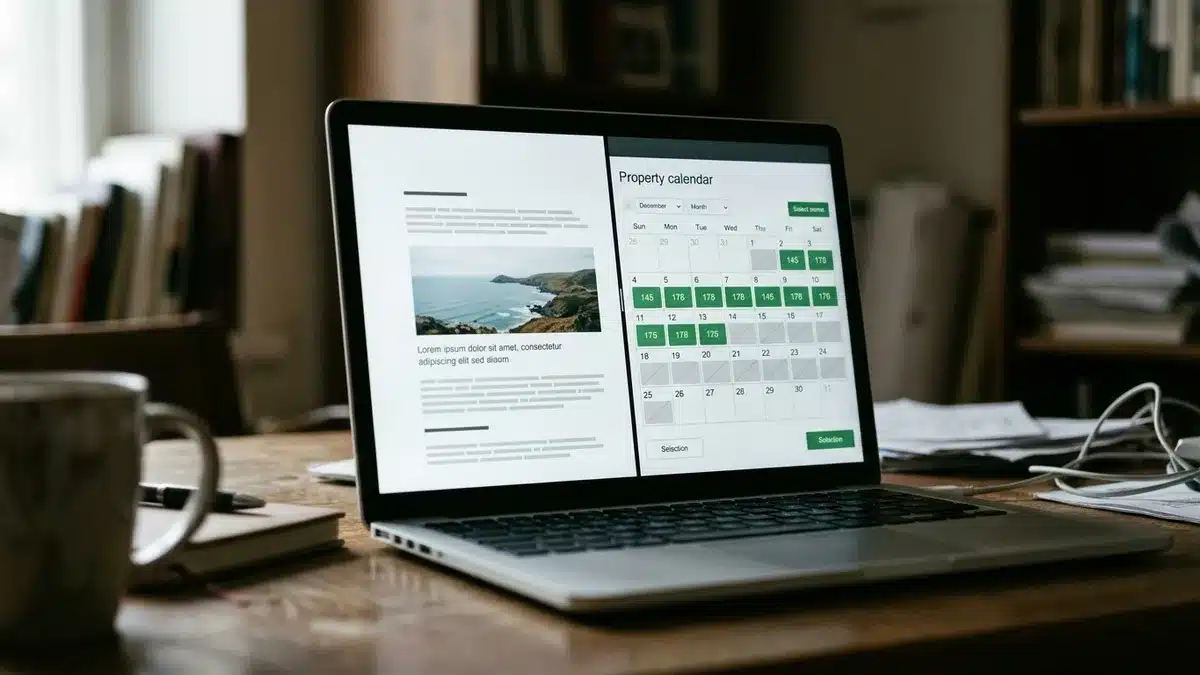
This is exactly the gap Boostly Connect was built to close. Because your direct booking website syncs live availability and pricing straight from your existing property management system, a blog post link doesn’t dead-end on a static “learn more” page; it lands on a property page showing real dates and real prices, ready for the guest to book. If you want a starting point for that kind of site, our guide to short term rental website templates covers how to structure property pages that convert blog traffic.
What Does the Data Say About Rental Property Blogging in 2026?
Rental property blogging in 2026 operates against a backdrop of significant competition and a growing global vacation rental market, currently estimated near $106.5 billion according to Grand View Research, with continued growth projected through 2033. That growth means more travelers are searching for accommodation content, but it also means more hosts and property managers are publishing to capture that search traffic.
The table below summarizes the key benchmarks worth knowing before you set a publishing schedule.
| Benchmark | Reported Figure | What It Means for Your Blog |
|---|---|---|
| Average blog post length | Around 1,333 words (up from 808 words in 2014) | Shorter posts under 1,000 words struggle to compete on topical depth |
| Average time to write a post | Around 3 hours 48 minutes | Budget real time per post; rushed 30-minute posts rarely rank |
| Global blogs published | Over 600 million, 31.6% of all websites | Generic content gets buried; local specificity is your differentiator |
| Daily posts published worldwide | Roughly 7.5 million | Consistency and depth matter more than volume alone |
| WordPress market share | Approximately 43% of all websites | Building your blog on WordPress keeps you compatible with most SEO plugins and themes |
| U.S. short-term rental listings, 2026 | Projected at 1.77 million, up from 1.69 million in 2026 | More competing listings means differentiated content matters more, not less |
Notably, U.S. short-term rental occupancy is forecast to average 57.4 percent in 2026, according to AirDNA data, which means well over 40 percent of nights sit unbooked across the market at any given time. A blog that reliably pulls in direct-booking traffic gives you an edge that OTA-dependent competitors don’t have.
What Mistakes Do Hosts Commonly Make When Blogging for Their Rental Property?
The most common mistake hosts make is publishing informational content with no path to a booking, treating the blog as a standalone content project instead of a lead-generation channel tied directly to their calendar. This single gap explains why so many rental blogs generate traffic without generating revenue.
Other frequent mistakes include:
- Inconsistent publishing. A blog with three posts from two years ago signals neglect to both readers and search engines. Industry guidance suggests publishing at least a few times per month at minimum.
- No keyword research before writing. Guessing at what travelers search wastes the time you spend writing. A quick keyword check before drafting tells you whether a topic has any search demand at all.
- Ignoring meta descriptions and alt text. These fields take minutes to complete and directly affect how your post appears in search results and image search.
- Writing for OTA guests instead of direct-booking guests. If your entire content strategy assumes readers will find you through Airbnb, you’re not actually building an owned marketing channel.
- No email capture on the blog. A reader who isn’t ready to book today should have a way to stay in your orbit. Without an email opt-in, that traffic disappears the moment they close the tab.
That last point connects directly to a bigger operational gap. Many hosts write blog content but have no system to follow up with the readers it attracts. That’s where an integrated CRM matters: at Boostly Connect, every visitor who books direct through your site gets automatically captured into your CRM, so the guest relationship you built through a blog post doesn’t evaporate after checkout. If you’re looking to turn blog readers into repeat guests, our guide on marketing your vacation rental covers the follow-up sequence in more depth, and our related piece on how to re-engage past vacation rental guests walks through what to send once they’re in your system.
How Do You Prove Direct Booking Is Trustworthy Inside a Blog Post?
Proving direct booking is trustworthy inside a blog post means giving readers concrete reasons to book on your site instead of a familiar OTA: visible cancellation terms, rate parity language, secure payment processing, and a perk they can’t get anywhere else. Most rental blogs skip this step entirely, assuming readers will trust a direct booking site by default. They won’t, not without a reason.
Specifically, include a short trust section near your booking links that covers: what happens if the guest needs to cancel, confirmation that your direct rate matches or beats the OTA price, and a note about how payment is processed securely. If you offer a direct-booking-only perk, such as a discount code, late checkout, or a welcome basket, state it plainly near the call to action.
This is a place where specificity beats vague reassurance. “Book direct and save” means nothing to a first-time visitor. “Book direct and get 10 percent off your stay, plus free late checkout until 1pm” gives them something concrete to weigh against the OTA’s familiar checkout flow. For more on structuring this kind of trust signal across your whole site, see our guide on building guest confidence for direct bookings.
How Do You Keep Your Blog Findable Once It’s Published?
Keeping a rental property blog findable requires ongoing SEO maintenance after publication, not a one-time optimization pass at launch. Search rankings shift as competitors publish new content, so a post that ranked well in January can slide by summer without a refresh.
First, revisit your top-performing posts every three to six months, a cadence commonly recommended for content refreshes. Update outdated pricing references, add new photos, and check that every internal link still points to an active property page.
Second, make sure your blog lives on a site structure that search engines can actually crawl efficiently. If you’re still deciding on the underlying platform, our comparison of the best website builder for short term rentals in 2026 walks through what to look for beyond just blogging features, and our piece on vacation rental SEO for 2026 covers the technical side in more depth.
Third, don’t rely on organic search alone. Share every new post through email and social channels the day it publishes. This is a place where an integrated CRM saves real time: rather than manually copying a blog link into an email platform and a separate social scheduler, Boostly Connect’s built-in email and social tools let you distribute a new post to your guest list and social channels from the same system that manages your bookings.
Practical Guidance: How Do You Prioritize What to Write First?
If you’re starting from zero, prioritize posts that answer questions your past guests have already asked you directly. These topics have proven demand because real people asked them, and they’re usually the fastest posts to write since you already know the answer.
- Start with your FAQ. Check-in process, parking, wifi, pet policy. These are quick wins that also reduce pre-booking messages once published.
- Write one strong local guide. Pick the single attraction or activity closest to your property and go deep, not broad.
- Highlight one property feature in detail. A hot tub, a view, a renovated kitchen. Give readers a reason to pick your listing specifically.
- Add a guest story, with permission. Social proof in narrative form reads as more credible than a star rating alone.
- Build a seasonal post for your slowest month. Target the search terms travelers use when planning during your off-peak period.
Common trade-off to understand: writing more posts faster generally beats writing fewer, more polished posts slowly, at least early on, because search engines need time to index and rank new pages regardless of quality. Consistency compounds. A single perfect post won’t outperform six solid ones published over two months.
Frequently Asked Questions
How can I reduce manual work and automate my vacation rental blog and marketing operations?
You can reduce manual work by connecting your blog, email list, and social channels to one system instead of managing them separately. Boostly Connect’s CRM automates guest capture from every direct booking and lets you distribute blog content through email and social from the same dashboard, cutting out the manual copy-paste work most hosts do between disconnected tools.
How do I market to past vacation rental guests using my blog?
Market to past guests by sending them new blog posts relevant to their previous stay, such as a seasonal guide or a new property update, through an automated email sequence rather than a one-off newsletter. Since every direct booking guest lands in your CRM automatically with Boostly Connect, you can segment past guests and send them targeted content without manually rebuilding a list each time.
What tools are essential for someone new to the vacation rental blogging business?
A new host needs a website capable of hosting a blog with SEO-friendly URLs and headings, a keyword research tool to validate topic demand before writing, and a way to capture reader emails for follow-up. Beyond that, a system that connects your blog traffic to live property availability, like Boostly Connect’s PMS-synced website, matters more than any single writing tool.
How do I build a direct booking website that stays synced with my vacation rental PMS availability and rates?
You build a synced direct booking website by connecting your existing property management system to a website builder designed for live PMS integration, rather than manually updating a static page. Boostly Connect supports 8 PMS integrations, including Hospitable, Hostfully, Lodgify, and Guesty, syncing live availability and pricing to your WordPress site typically within minutes of connecting your PMS.
What is a vacation rental direct booking, and how does blogging support it?
A vacation rental direct booking is a reservation a guest makes on the host’s own website, rather than through Airbnb, Vrbo, or Booking.com, meaning the host avoids OTA commission and keeps the guest’s contact data. Blogging supports direct bookings by attracting search traffic that lands on your own domain instead of a third-party listing page, provided the blog links directly to a bookable property page.
How long should a rental property blog post be to rank well?
Most SEO guidance for rental property blogs recommends posts of at least 1,000 words, with the current blogging industry average sitting closer to 1,333 words. Shorter posts can still rank for very specific, low-competition questions, but longer posts generally cover more subtopics and rank for a wider range of related search terms.
How often should I publish new blog posts for my vacation rental?
Publishing frequency recommendations range widely, from a couple of posts a week suggested by some vacation rental platforms to at least four posts a month as a minimum baseline from property management sources. What matters most is consistency: a steady monthly schedule you can sustain outperforms an aggressive burst of posts followed by months of silence.
Conclusion: Write Fewer Posts, But Connect Every One to a Booking
Knowing how to write blog posts for rental property comes down to one habit most hosts skip: linking every piece of content to a live, bookable property page. The mechanics, keyword placement, heading structure, meta descriptions, matter, but they only get you traffic. The link to a synced booking calendar is what turns that traffic into revenue.
Start with the questions your past guests have already asked you, write toward one keyword and one intent per post, and build the habit of publishing consistently rather than perfectly. As the vacation rental market keeps growing through 2026 and beyond, the hosts who win the search traffic will be the ones whose content actually connects to something a reader can book, not just something a reader can read.
If you want your blog content to route into a website that already syncs your live availability and pricing, book a demo with Boostly Connect and see how your PMS, website, and CRM connect in under 20 minutes, no developer required.
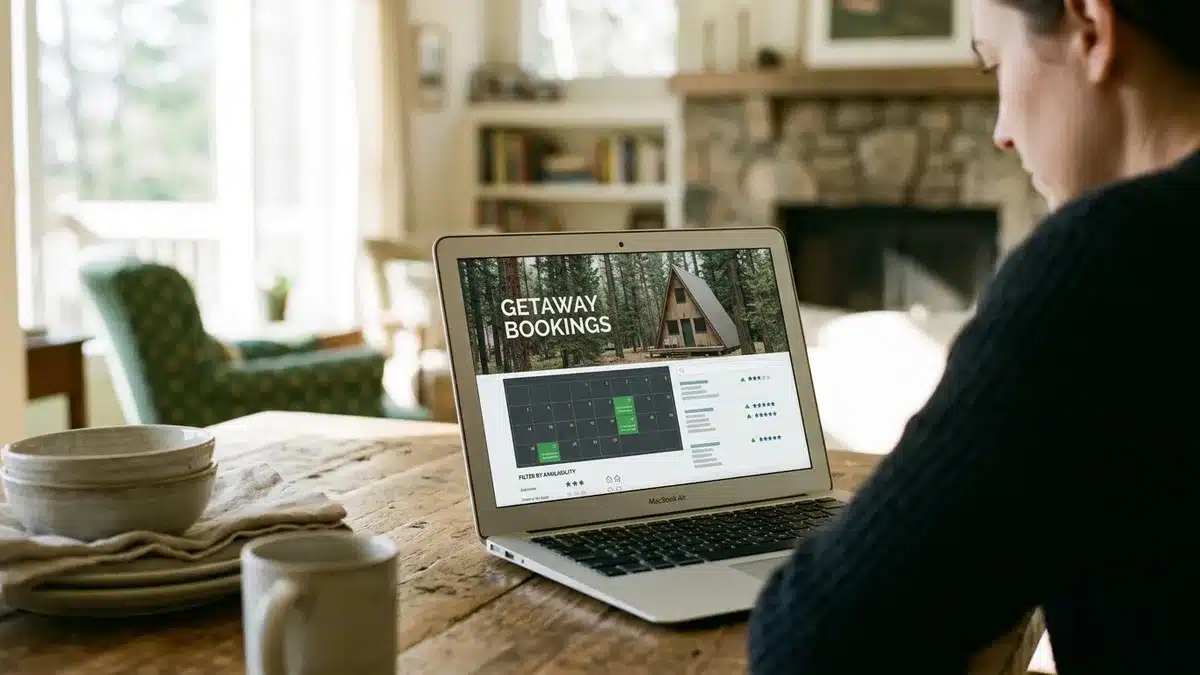
A blog is only as useful as the booking page it points to. A site like this one, with live calendar sync and search-ready structure built in from day one, gives every post you write somewhere real to send a reader. Check out Boostly Connect to see how your existing PMS data can power that page automatically.